Search Icon Search site

Search

Seven Carjacking Co-Defendants Reject Plea Offers 

Seven carjacking co-defendants rejected plea offers from the prosecution before DC Superior Court Judge Robert Okun on Nov. 1. 

Byron Gillum, Jaelen Jordan, Isaiah Flowers, Jahkai Goff, Warren Montgomery, Taj Giles, and Irshaad Ellis-Bey, all 19 years old, are charged with conspiracy, trafficking stolen property, two counts of armed carjacking, two counts of unauthorized use of a vehicle, four counts of possession of a firearm during a crime of violence, and two counts of robbery while armed. 

Additionally, Jordan, Goff, Gillum, Ellis-Bey, Giles, and Flowers are charged with two more counts of unauthorized use of a vehicle, two more counts of possession of a firearm during a crime of violence, armed carjacking of a senior citizen, receiving stolen property of $1,000 or more, and robbery of a senior citizen while armed. 

These charges stem from their alleged involvement in a series of carjackings and subsequent distribution of the carjacked vehicles between April and May of 2023.

According to court documents, the first verified carjacking occurred on April 27, 2023, on 8th Street and K Street, NE. Another incident occurred on May 16, 2023, in the 600 block of Butternut Street, NW. 

Prior to those incidents, the alleged sale of carjacked vehicles by these individuals was under investigation by the Metropolitan Police Department’s (MPD) Violence Reduction Unit (VRU). An undercover officer conducted a controlled buy of a carjacked vehicle and allegedly made contact with Jordan in March of 2023. 

At the hearing, the prosecution read into the record four plea offers that were communicated to all of the co-defendants in January of 2024. 

Goff, Gillum, Ellis-Bey, and Giles were all offered a sentence of 20-and-a-half-years to 31-and-a-half-years of incarceration if they pleaded guilty to armed carjacking, armed robbery, and trafficking in stolen property. In exchange, the prosecution would agree to waive all other charges and enhancements. 

All four co-defendants rejected the plea offer. 

Flowers was offered a sentence of 20-and-a-half-years to 31-and-a-half-years of incarceration if he pleaded guilty to armed carjacking, armed robbery, and trafficking in stolen property. In exchange, the prosecution would agree to waive all other charges but reserve the right to ask for a senior citizen enhancement at sentencing. 

Flowers rejected the plea offer. 

Montgomery was offered a sentence of 20-and-a-half-years to 31-and-a-half-years of incarceration if he pleaded guilty to armed carjacking, armed robbery, and trafficking in stolen property. In exchange, the prosecution would agree to waive all other charges but reserve the right to ask for a senior citizen enhancement at sentencing. 

Montgomery rejected the plea offer. 

Finally, Jordan was offered a sentence of 32-years-and-one-month to 45-years-and-a-half-years of incarceration if he pleaded guilty to two counts of armed carjacking, conspiracy, robbery, and trafficking in stolen property. In exchange, the prosecution would agree to waive all other charges and not indict on additional charges. The prosecution also reserved the right to ask for a senior citizen enhancement at sentencing. 

Jordan rejected the plea offer.

Brian McDaniel, Jordan’s defense attorney, said Jordan was rejecting the offer because the low end of the prosecution’s recommended sentence was nearly twice the amount of time Jordan has been on Earth. 

The prosecution told the court they have tested eight swabs from firearms and magazines for Goff’s DNA, and Goff was likely excluded from five of the swabs.

Donna Beasley, Goff’s defense attorney, said Goff was waiving his right to independent DNA testing. 

Parties are scheduled to reconvene on April 4, 2025, in the cases of Montgomery and Giles, who are being tried separately. 

Parties are slated to reconvene on Sept. 5, 2025, in the cases of Jordan, Goff, Gillum, Ellis-Bey, and Flowers.

‘I Grew Up Without My Dad, I Know How Difficult That Can Be,’ Says Shooting Defendant

DC Superior Court Judge Jennifer Di Toro sentenced a defendant who pleaded guilty to a shooting incident to 32 months incarceration, suspending all but 18 months during a hearing on Nov. 1.

On Aug. 23, David Blanks, 38, pleaded guilty to unlawful possession of a firearm by a convict for his alleged involvement in a shooting that occurred on June 21, on the 1600 block of V Street, NE. No injuries were reported. 

Blanks also had a prior domestic violence charge, but the case was dropped as part of the plea agreement for this incident. His wife was the victim in that case. 

According to court documents, Blanks’ wife alerted officers that Blanks had fired a gun five-to-six times outside of their home while intoxicated in front of their shared children. During a search warrant, a handgun was found in the residence, with seven rounds of ammunition.  

Blanks’ family was present in the courtroom, but Judge Di Toro asked for them to wait in a conference room, since there were young children in the group. Blanks’ wife stayed in the courtroom. 

The prosecution asked for a sentence of 32 months incarceration, leaning toward the higher side of the guidelines. The prosecutor said that they cannot ignore the significance of the incident and the psychological and emotional harm the incident caused to the complainant. 

The prosecution did acknowledge that the complainant in this case, Blanks’ wife, wrote a letter in support of the defendant. 

Defense attorney Angela Ramsay stated that the defendant regrets what happened that day, and that this is, “not what he’s all about.” She stated that Blanks needs assistance with his alcohol use, and said that Blanks knew his actions were reckless.

Ramsay stated that Blanks is an “exemplary father,” and very involved in his children’s lives. She added he’s a hard worker and serves as the sole source of income for their family. According to Ramsay, he works as an electrician, and the defense submitted a letter from his employer in the pre-sentencing report. 

“He has too much going for him to be sitting in jail,” Ramsay stated. 

Ramsay also said that without Blanks’ income, his family is at risk of becoming homeless. 

Blanks’ wife had a chance to speak on his behalf, and to shed light on the impact his incarceration has had on their family. 

She said that Blanks is the, “greatest father I’ve ever known.” She told the court how without him, she and her family of five children have been struggling, not only financially, but in raising their kids. She stated Blanks is her only help, and that her children keep asking why their father isn’t home.

Blanks’ wife stated that she never saw herself as a victim, but rather felt responsible.

“I feel like I should be held accountable,” she explained. “If I wasn’t transporting him to get alcohol, then maybe there would’ve been a different outcome.”

“I took him from them,” she cried. 

Judge Di Toro protested stating that she is not the one on trial; it is Blanks’ actions that led him here. 

Blanks also spoke to the court. He apologized to his family, and took full responsibility for his actions. He said he realized how one mistake can take away your entire life. 

Blanks also talked about his children, saying he teaches them sports, reads with them, and that they enjoy their life.

“I grew up without my dad, I know how difficult that can be,” Blanks stated. 

Blanks also clarified that he never pointed the gun at any of his family. After being asked a question about his drug usage by Judge Di Toro, Blanks stated that he “doesn’t deal with that stuff anymore.”

To his wife, he said, “I want to apologize to you and the boys.” 

Judge Di Toro expressed concern about the potential “escalating violence” that she already sees developing with Blanks and his family. Blanks’ pattern started with a domestic violence incident, and has now accelerated to waving around a gun in front of his family. Di Toro stated that it is not his partner’s responsibility, and she doesn’t want Blanks’ family to take responsibility for his actions.

“It is your responsibility,” she stated.

Judge Di Toro sentenced Blanks to 32 months incarceration, suspending 14 of those months. She assigned Blanks three years of supervised release, and suspended all but 18 months to complete probation. 

Blanks is to enroll in a domestic violence intervention program assigned by Court Services and Offender Supervision Agency (CSOSA), anger management, alcohol abuse treatment, and, at Blanks request, parenting classes. 

No further dates have been set. 

Prosecution Drops Shooting Defendant’s Charge Pre-Trial

DC Superior Court Judge Andrea Hertzfeld accepted the prosecution’s request to drop one of a defendant’s five pending counts during a hearing on Nov. 1.

Deon Jenkins, 46, is charged with unlawful discharge of a firearm, carrying a dangerous weapon outside the home or business with a prior felony, possession of a destructive device, unlawful possession of a firearm, and unlawful possession of ammunition for his alleged involvement in a Sept. 29, 2023, non-fatal shooting that occurred on the 1800 block of M Street, NE.

According to court documents, Jenkins shot multiple times at a moving vehicle that was speeding toward him. The defendant fell to the ground and then fled while the vehicle crashed through a fence and into a nearby yard. 

During the hearing, the prosecution made a motion to drop the unlawful possession of ammunition charge from the case. They provided no explanation.

The defense made no objection and Judge Hertzfeld ruled in favor of the prosecution. 

The parties are set to reconvene on Nov. 4. 

Shooting Defendant Needs Time to Deliberate Plea Offer

A shooting defendant told DC Superior Court Judge Erik Christian he  needed more time to discuss his plea agreement with his lawyer in a Nov. 1 hearing.

Reginald Williams, 64, is charged with unlawful possession of a firearm with a prior conviction and endangerment with a firearm for allegedly firing in the courtyard of his apartment building on July 27 on the unit block of Banner Lane, NW. 

According to court documents, Williams got into a physical altercation with an unknown man, left the scene, returned with a firearm and fired once. No one was injured in the incident. During a police search of Williams’ apartment on Aug. 29, three guns were found, two revolvers and one semi-automatic pistol.

During the hearing, Theodore Shaw, Williams’ attorney, informed the court of Williams’ acceptance of a plea offer. According to Shaw, the terms of the plea offer included pleading guilty to unlawful possession of a firearm with a prior conviction and endangerment with a firearm, in exchange for the prosecution not seeking an indictment.

Williams disagreed with the prosecution that the firearm used during the incident was a “semi-automatic” firearm, insisting he only ever used revolvers. 

Judge Christian explained that the court wanted to make sure that he understood the plea agreement and he knew what information was in the plea, so he rescheduled the hearing.

Parties are slated to reconvene Nov. 26.

Defendant Sentenced to 36 Months for Bluetooth Speaker Stabbing

DC Superior Court Judge Andrea Hertzfeld sentenced a stabbing defendant to 36 months of incarceration on Nov. 1 over an altercation that originated with a stolen Bluetooth speaker.

On July 25, Zoneil Williams, 51, pled guilty to assault with significant bodily injury for his involvement in a stabbing that took place on March 5 on the 4000 block of 4th Street, SE. 

Through the deal, parties agreed to a sentencing range of 18-to-36 months of incarceration. 

According to the court’s discussion, the stabbing stemmed from Williams’ disabled condition and the victim’s friend allegedly stealing the defendant’s Bluetooth speaker. Williams took it out on the victim by stabbing him three times in the back and once in the armpit. 

Williams claimed, “I let my emotions get the best of me” in his apology to the Judge. He explained that when he gets angry, he would call someone to calm him down but he recently lost his phone. 

The prosecution argued for the highest end of the range, given the defendant’s extensive criminal history with twelve arrests and six convictions including incidents for possession of a firearm in a violent offense, robbery, assault, and domestic assault – “just plainly saying, he’s a dangerous person.”

Defense attorney Quo Mieko Judkins explained how most of those convictions were from the early 90s and how Williams suffers from mental disorders including bipolar and PTSD. Williams would like to enter programs such as anger management, mental health, and drug addiction in this “opportunity to go back on the right track,” Judkins explained.

Judge Hertzfeld stated “you’re close to maxing out your criminal history score” in explaining her judgment, “it’s lucky this person is not dead.”

She sentenced Williams to 36 months of incarceration with three years of supervised release. The defendant will also be required to pay $100 to the Victims of Violent Crime Fund and is recommended to enter a facility to receive mental health and drug treatments. 

No further dates were set. 

Over Victim’s Son’s Objections, Murder Defendant Accepts Plea Deal

A homicide defendant accepted a plea agreement extended by prosecutors before DC Superior Court Judge Maribeth Raffinan on Nov. 1. 

Michael Grayton, 42, was charged with first-degree murder while armed for his involvement in the fatal shooting of Danzell Hall, 26, on the 1500 block of Benning Road, NE on July 12. 

During the hearing, Jason Tulley, Grayton’s defense attorney, stated that Grayton will be accepting a plea deal, which requires him to plead guilty to second-degree murder while armed, in exchange for the prosecution’s not seeking an indictment. Through the deal, parties agreed to a sentencing range of 14-to-26 years of incarceration. 

Families of both the defendant and the victim were present via Webex. Grayton’s family expressed concern over his taking the plea and urged him not to accept. Additionally, the prosecution read a letter provided by Hall’s eight-year-old son, which said, “the person responsible should spend life in prison without parole” ending with the statement that he and his family are seeking “justice for Hall.” 

Taking the family statements into consideration, Judge Raffinan accepted Grayton’s plea of guilty. 

Sentencing is set for April 25, 2025.

Judge Allows Limited Evidence of Gang Affiliation in Murder Trial

DC Superior Court Judge Maribeth Raffinan granted a motion allowing the prosecution to provide evidence that a murder defendant is affiliated with a gang and that the shooting was linked to gang rivalry during a hearing on Oct. 30.

Tony Morgan, 31, is charged with first-degree murder while armed with aggravating circumstances, assault with intent to kill while armed, two counts of possession of a firearm during a crime of violence, unlawful possession of a firearm with a prior conviction, and conspiracy, for his alleged involvement in a shooting incident on the 3500 Block of Wheeler Road, SE, on Oct. 20, 2018, which resulted in the death of 19-year-old Malik McCloud

The prosecution submitted a motion to admit evidence of Morgan’ affiliation with, “Solid Gang” (SG), and that the motive behind the shooting is linked to gang rivalry. According to the prosecution, this evidence primarily consists of a YouTube video and social media posts of alleged gang members, which include Morgan as part of the group.

Morgan’s attorneys, Megan Allburn and Steven Kiersh, opposed the motion, arguing that evidence of gang affiliation lacks relevance, is prejudicial, and doesn’t clearly show gang affiliation. 

Judge Raffinan cited prior cases that held gang affiliation is admissible if it is relevant to the case, and argued in this case because McCloud was allegedly a member of a rival gang, providing a motive for an otherwise random shooting. 

However, Judge Raffinan ruled that the prosecution’s evidence of a Youtube music video that features the gang, “SG,” is not admissible in its entirety. Instead, Judge Raffinan ruled that various screenshots, social media posts, and social media messages are admissible to prove gang affiliation. 

The defense objected to photos that featured cash, guns, and any linked identification of Morgan because it is “overly prejudicial.” Judge Raffinan ruled that the prosecution must redact these features and that the terms drug-dealer or drug-dealing cannot be used.

The prosecution also submitted a Drew Johnson motion, which would allow them to call a Metropolitan Police Department (MPD) detective during trial to define slang terms used in Morgan’s messages. The slang terms refer to firearms and firearm accessories. 

For example, “eggs” in reference to a message Morgan sent prior to the shooting that stated, “he needs [eight] eggs.” According to the prosecution, “eggs” is slang for ammunition and an MPD detective can testify to this.

Judge Raffinan made a preliminary ruling that the MPD detective can testify to slang terms, citing previous cases where this is a common practice. Judge Raffinan noted that the final ruling will depend on each specific slang term the prosecution plans to introduce, and the prosecution is tasked with connecting conspiracy to Morgan. 

Parties will reconvene on Nov. 4.

D.C. Witness Investigation Finds Attorneys For The Indigent Face Caseload That’s ‘Started to Explode’

Room “C 10” in the DC Superior Court building is often at its busiest on Monday afternoons as defendants come out of the weekend “lock up” for their initial “presentment” in the city’s criminal justice system.  

A large lightboard outside displays the emerging schedule for relatives, friends and crime victims, much like arrivals and departures in an airport terminal.   

Almost all presentment defendants depend on a court appointed attorney because they can’t afford private counsel. However, finding subsidized legal help has become increasingly difficult because there simply aren’t enough lawyers willing to do this grueling kind of work.

Some have made the journey into this legal labyrinth many times like Louis Wesson, 28, who says without a court appointed lawyer he would literally and figuratively be defenseless.

“It’s one of the scariest places you can imagine,” says Wesson of the courtroom.  “All they care about is, is there enough to make the case?  You never know what’s going to happen.” 

On this day, some 80 cases were heard before DC Superior Court Judge Renee Raymond.  These proceedings must occur within 24 hours of arrest or 48 hours if the offense occurs on the weekend.  Based on the evidence the judge decides whether to hold or release the suspect.

“It’s a dirty, smelly, wonderful ‘emergency room’ of the criminal justice world, but I love it. I think of myself as a kind of trauma surgeon in that ER of the halls of justice. I wouldn’t have any other job,” says Todd Baldwin who’s president of the DC Superior Court Trial Lawyers Association (SCTLA), the official organization for what are known as “panel attorneys.”

The group handles most criminal cases for indigent clients all the way from arrest to disposition that “have started to explode,” says Baldwin.  

Often invisible to the public, and separate from the Public Defender Service (PDS), this freelance panel is, nonetheless, an essential part of the judicial machinery. Panel lawyers operate under the auspices of the federal Criminal Justice Act (CJA) of 1964, guaranteeing legal representation regardless of income.

In the wake of retirements, fewer newcomers are willing to work for the relatively low pay rate.  Baldwin says panel attorneys can only charge $110 an hour, an amount that has changed little in 15 years and a fraction of the hourly rate for lawyers on K Street.  

“Although D.C.[local] Courts modestly increased the hourly rate for court-appointed attorneys in January 2023 for the first time since 2009, the rate remains considerably lower than that paid in Federal Courts,” according to a DC Court budget document. 

Every defendant that comes before the court is constitutionally entitled to an attorney, even if he or she can’t afford one. If not, counsel will be appointed.  Panel lawyers have been picking up as many as 25 cases a day.

In response to the increasing volume, the association has created a sub-group called the Emergency Excess Panel (EEP) backed up by two stand-in attorneys to make an initial contact to be followed up by an essential in depth conversation at a later date. 

He says a panel attorney can limit the number of new cases taken in a single day but many attorneys have taken themselves off the EEP because their case loads are too high.

It’s a voluntary effort to pass around cases as fairly as possible, but, while it hasn’t happened it’s possible there might not be enough attorneys to cover the need on a given day, Baldwin says. 

Among those still on the job is Charles Murdter, assigned on this occasion as a “stand-in” because lawyers to take on the cases full time are not immediately available.  That means the stand-ins fill the gap sometimes without even interviewing a client prior to a court appearance and entering a plea.

Murdter’s cases move quickly–a defendant facing a fugitive arson charge pending in Maryland waived a preliminary hearing and pleaded not guilty.  

Another client accused of harassment was ordered to stay away from the victim and released from his shackles.

The presentment is the beginning of a complex legal process that can take months or even years to resolve and requires skilled representation to keep the scales of justice in balance.

However, based on a months-long investigation talking to lawyers, court officials and reviewing court documents, D.C. Witness has found the system is facing daily case overload.

In terms of providing adequate representation, one panel attorney, who asked not to be identified, called the current approach a “band-aid” when the optimum is to have an assigned attorney from the start. 

Even so, Wesson says his appointed attorney has done an “outstanding” job during the two years they’ve worked together. “He’s there to answer questions, even when he’s out of town.”  

His lawyer, who requested not to be named, says many of those hours were uncompensated based on statutory limits for time that can be billed for each case. 

“Basically, because so few defense lawyers volunteer to pick up cases right now, those who do pick [them] up get an unmanageable burden,” said the lawyer.

That lawyer is also worried even though the problem hasn’t become a constitutional crisis, “quality will decrease for many defendants, and burnout will occur for many of the lawyers who struggle to do the job well.”

In our next report on Nov. 6, why a dilemma over available dollars stands in the way of a solution.  

Case Acquitted: Murder Defendant Rejects Second Plea Deal

Editor’s note: Aaron Murchison was acquitted of all charges by a jury on Feb. 11, 2025.

Aaron Murchison rejected a plea deal offered by the prosecution in front of DC Superior Court Judge Marisa Demeo on Nov. 1. 

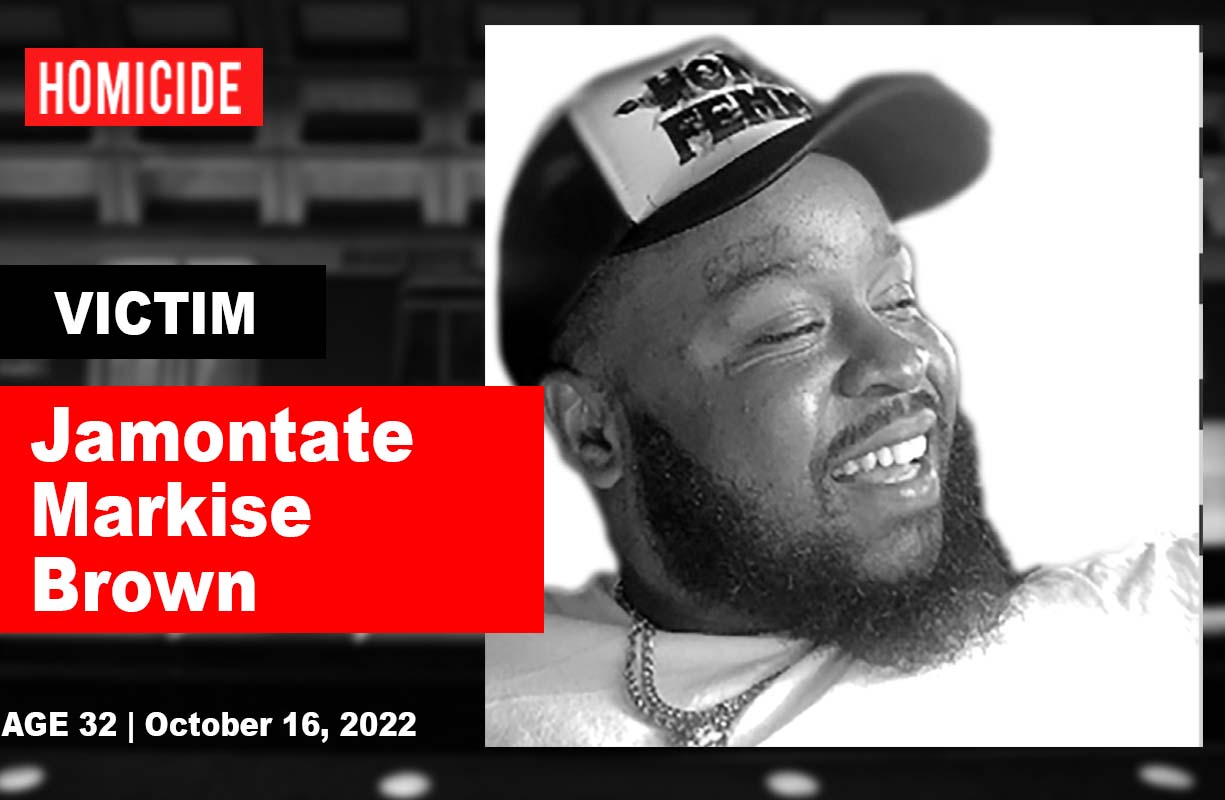
Murchison, 28, is charged with second-degree murder while armed, possession of a firearm during a crime of violence, and unlawful possession of a firearm by a convict for his alleged involvement in the fatal shooting of 32-year-old Jamontate Brown on Oct. 16, 2022, on the 2500 block of Pomeroy Road, SE. 

According to court documents, Brown sustained multiple gunshot wounds and was found on a sidewalk, lying on his back with his hands above his head. 

During the hearing, the prosecution presented a second plea offer that would have required Murchison admit guilty to voluntary manslaughter while armed in exchange for a sentence of 10-and-a-half to 14 years incarceration. 

Through his defense attorneys, Kevann Gardner and Quiana Harris, Murchison rejected the plea deal and requested a trial date.

The trial was set for Jan. 21, 2025. 

The prosecution raised concerns about the trial being delayed due to Gardner’s leaving the Public Defender Service (PDS). 

Gardner said the trial wouldn’t be delayed because, at Murchison’s request, Gardner would continue to represent him for the upcoming trial.

The defense requested Murchison’s release on home confinement and GPS monitoring. They said he had already spent a substantial amount of time incarcerated due to multiple delays of his trial and he was not a flight risk.

The prosecution opposed the defense’s motion, asserting Murchison is still a danger to the public.

Judge Demeo denied Murchison’s motion, stating there had been no change to cause the court to reconsider his release.

Parities are set to reconvene on Dec. 13. 

Homicide Defendant Asserts Right to DNA Testing, Co-Defendants Demur

DC Superior Court Judge Rainey Brandt heard from a homicide co-defendant asserti his right to conduct independent DNA testing and accepted his two co-defendants decision to waive their similar right during a hearing on Nov. 1 

Demonte Gibson, 25, Tre’quan Nelson, 23, and Asani Forte, 26, are charged with first-degree premeditated murder while armed, conspiracy, three counts of possession of a firearm during a crime of violence, assault with a dangerous weapon, assault with intent to kill while armed, unlawful possession of a firearm, and destruction of property less than $1000 for their alleged involvement in the murder of 34-year-old Delonte King that occurred on Nov. 3, 2021, on the 2800 block of 14th Street, NW. 

Nelson and Forte’s attorneys, Jesse Winograd and Susan Ellis, alerted the court that Nelson and Forte are waiving their right to conduct independent DNA testing.

Judge Brandt was satisfied that those defendants their decisions freely and voluntarily.

Gibson’s lawyers, Kevann Gardner and Rachel Cicurel, alerted the court that Gibson was asserting his rights to conduct independent DNA testing.

Judge Brandt was concerned that Gardner’s assertion is coming at the “eleventh hour” as trial is scheduled for March 17, 2025. Judge Brandt confirmed Gibson’s right to conduct independent testing but informed the parties that trial will not be delayed if testing is not completed in time.

According to the prosecution, the evidence that can be tested by Gibson includes 25 cartridge casings, a knife, various pieces of clothing, and two projectiles. From King’s autopsy, they can test a blood card, fingerprints, and a bullet fragment that was lodged in King’s brain. From Gibson’s apartment, there are five guns, jeans, and a black ski mask. There are also buccal swabs from Gibson, Forte, and Nelson.

The prosecution referred to Gibson’s decision to conduct testing as “suspect at best and a delay tactic at worst,” citing the strength and reliability of the prosecution’s test and the timing of Gibson’s decision.

Parties are set to reconvene on Feb. 28.

Competency Exam Ordered for Murder Defendant

During a hearing on Nov. 1, DC Superior Court Judge Rainey Brandt reordered a mental competency evaluation for a murder defendant after he refused to participate in the evaluation the first time.

Niko Hall, 32, is charged with first-degree murder while armed, assault with intent to kill while armed, two counts of possession of a firearm during a crime of violence, and carrying a pistol without a license, for his alleged involvement in the fatal shooting of 25-year-old Anthony Lee on Sept. 26, 2020, on the 2900 block of Martin Luther King Jr. Avenue, SE. 

A letter from the Department of Behavioral Health (DBH) alerted the court that Hall refused to participate in a mental health evaluation.

Hall and his attorney, Wole Falodun, approached Judge Brandt in a private conversation.

Following the conversation, Judge Brand informed the prosecution that Hall was agreeing to participate in another evaluation. 

Judge Brandt reordered a mental competency evaluation for Hall.

Parties are set to reconvene on Nov. 7.

Judge Won’t Release Murder Defendant

DC Superior Court Judge Marisa Demeo denied a murder defendant’s request to be released on Nov. 1. 

D’Andre Montgomery, 18, and Eric Sheffield, 19, are charged with felony murder while armed and robbery for their alleged involvement in the fatal shooting of 28-year-old Kenneth Barksdale. The incident occurred on Dec. 16, 2023, on the 1200 block of 44th Place, SE.  

According to court documents, two individuals identified as Montgomery and Sheffield, attempted to steal Barksdale’s Ford Thunderbird, which was parked at the location. When he tried to stop them, the suspects allegedly shot at Barksdale multiple times, killing him. 

Sheffield’s defense attorney, Daniel Mensah, requested his release, arguing the only evidence against Sheffield is circumstantial. Mensah said Sheffield would have adequate living conditions and supervision if released pending trial. 

The prosecution opposed the request, saying no new reasons to release Sheffield have arisen since the preliminary hearing. They argued new evidence that emerged, specifically from Sheffield’s phone, that strengthens the case against him. 

A trial date is yet to be determined.

Parities are set to reconvene on Jan. 24. 

Murder Defendant Waives DNA Testing In Grill Dispute Shooting

A homicide defendant waived his right to conduct independent DNA testing of the prosecution’s evidence during a hearing on Nov. 1 before DC Superior Court Judge Rainey Brandt

Irv Duff, 33, is charged with first-degree murder while armed, assault with intent to kill while armed, two counts of possession of a firearm during a crime of violence, unlawful possession of a firearm with a prior conviction, and obstruction of justice for his alleged involvement in the death of Darnell Gibson, 26, on Aug. 1, 2023, on the unit block of Forrester Street, SW. 

According to court documents, Gibson was fatally shot while confronting a man who had knocked over his barbecue grill. The sounds of 23 gunshots were detected at the scene of the incident.

During the hearing, Duff’s lawyer, Kevann Gardner, alerted the court that Duff was waiving his right to conduct independent DNA testing of the prosecution’s evidence.

The prosecution told the court there are two swabs of evidence in this case, a swab from a grill lid and a swab from a grill handle.

Judge Brandt was satisfied that Duff understood his rights and made his decision freely and voluntarily. 

Parties are set to reconvene on Dec. 4.

Non-Fatal Stabbing Defendant Accepts Plea Agreement

A stabbing defendant accepted a plea offer extended by the prosecution during a trial readiness hearing in front of DC Superior Court Judge Robert Salerno on Nov. 1.

Harry Jhin, 38, was originally charged with assault with a dangerous weapon, assault with significant bodily injury while armed, and carrying a dangerous weapon outside his home or business. The charges stemmed from his involvement in a non-fatal stabbing on the 1500 block of 17th Street, NW, on Dec. 23, 2021.

Jhin was able to appear in court with the help of a walker. D.C. Witness reported on July 18 that Jhin missed a court hearing and his attorney, Darryl Daniels, attributed his absence to pain from gunshot wounds.

The prosecution described the series of events on the day of the incident. They said Jhin was carrying a knife and assaulted the victim during a verbal altercation, swinging the knife at the victim’s throat and cutting him. Jhin accepted the facts of the incident as true.

Daniels listed the terms of the plea agreement. In return for Jhin’s pleading guilty to assault with a dangerous weapon and carrying a dangerous weapon, the prosecution was dropping the charge of assault with significant bodily injury.

Judge Salerno accepted Jhin’s guilty plea.

Parties are set to reconvene on Jan. 10.

Prosecution Offers Plea Deal to Four Co-Defendants

The prosecution offered a “wired” plea deal to four co-defendants on Nov. 1 before D.C. Superior Court Judge Errol Arthur

Elhadji Ndiaye, 25, Dion Lee, 25, Dionte Anderson, 25, and Tyrone Hawkins, 23, are all charged with conspiracy, assault with a dangerous weapon, carrying a dangerous weapon and unlawful possession of contraband in a penal institution for their alleged involvement in a non-fatal stabbing on May 9, 2023. 

According to court documents, the defendants allegedly stabbed an inmate and injured a corrections officer who tried to intervene in DC Jail on the 1900 block of D Street, SE. 

The prosecution offered to drop indictment charges if the defendants plead guilty to the lesser charge of assault with significant bodily injury. If the defendants accept the plea offer, the prosecution would recommend the charges to run concurrently with time the defendants are already serving from other cases. 

The plea offer is wired, so if one of the codefendants rejects it, none of the codefendants can accept it. 

The prosecution’s offer expires Nov. 18, when parties are slated to reconvene.