Search Icon Search site

Search

Homicide, Carjacking Defendant Accepts Plea Deal 

A homicide defendant, who killed one and injured another, accepted a plea deal before DC Superior Court Judge Anthony Epstein.

Hahqwon Beale, 25, was originally charged with first-degree murder while armed, two counts of assault with intent to kill while armed, four counts of possession of a firearm during a crime of violence, two counts of unlawful possession of a firearm by a prior convict, and armed carjacking, for his involvement in a carjacking and shooting incident. 

The shooting, which killed 43-year-old George Johnson, and injured another individual occurred on May 7, 2018, on the 800 block of Oglethorpe Street, NE.

Hours later, a pizza delivery man was carjacked and robbed of more than 300 dollars at gunpoint on the 400 block of Farragut Street, NW. 

In October of 2022, DC Superior Court Judge Milton Lee granted the defendant’s motion to sever the two incidents from one another, citing that, although the incidents occurred the same day, they were not directly after one another. 

On Feb. 15, a jury convicted Beale of armed carjacking, possession of a firearm during a crime of violence, and unlawful possession of a firearm in connection to the carjacking incident. 

On April 23, Beale’s attorney, Julie Swaney, informed the court that the prosecution had extended a plea offer to resolve the murder incident, and Beale accepted it.  

The deal required him to plead guilty to second-degree murder while armed, in exchange for a dismissal of all other charges in connection to the murder incident. Through the plea offer, parties agreed to a 21-to-25 years of imprisonment, and will request for the carjacking charges to run concurrently.

He is also waiving his right to appeal the carjacking incident conviction.  

According to the prosecution, they would have proved, beyond a reasonable doubt, that Beale was guilty by connecting him to the evidence collected at the scene. 

Parties are slated to return July 26 for sentencing. 

Help Us Continue to Equip You with Criminal Justice Facts in 2024

Our city’s homicide number says it all – 50 more murders this year than at the same time last year. 

But why? What is happening beyond the headlines? Other media focuses on click-bait content, “if it bleeds it leads,” but that does little to keep us informed.  And, good luck getting information from the city or the courts. 

This is where D.C. Witness steps in to fill the information gap, exposing the statistics behind violent crime in the nation’s capital and humanizing those statistics with the heartbreaking stories from the city’s murderous gun crime culture. 

It’s old-fashioned, but we do that with just the facts. Not opinion. 

This year we added the DC Victim Notification System, which sends direct updates on cases without the frustrating, and usually unsuccessful, search for information. It would seem something the city should do. But it doesn’t. So we did. 

We are committed to being your source for violent crime information in DC, so you can understand what’s going on in your community and hold Mayor Bowser, the new police chief and our courts accountable.  

Since we don’t pepper every post with requests for funding, nor take advertisements, we are asking for your generosity as the year winds down to help us continue keeping the information flowing into 2024. 

Please consider a tax deductible donation

Every donation is doubled before Dec. 15. So, if you think it is time for our criminal justice system to be brought into the light, please donate today.

Donations can be made by either clicking on one of the two links above, or entering this url in your web browser: https://dcwitness.org/donations/.

Infographic: A Closer Look at DC Homicides and Violence Interruption Programs

The infographic shows homicides in DC over a two-year span beginning from June 11, 2019-June 11, 2021. There was about a 16% increase in homicides during that period.

The first graphic includes homicides by DC neighborhood, and how those homicides compare to violence interrupter locations.

The second graphic also indicates the sites of the violence interrupter programs that are run out of the Office of Neighborhood Safety and Engagement (ONSE) and the Office of the Attorney General (OAG), noting homicides in the city by year.

2021 Homicides Outpacing Previous Year, Data Shows

DC’s homicide count for 2020 was higher than it was in 2018, 2017 or 2016, according to D.C. Witness data. But so far, the homicide count for 2021 has outpaced the number of homicides reported at this same time last year.

Video by Andrea Keckley

Denying Release, Judge Orders Mental Eval for Domestic Violence Stabbing Defendant

DC Superior Court Judge Carmen McLean denied a release request and ordered a mental competency examination for a stabbing defendant on June 17.

Denita Harris, 29, is charged with assault with a dangerous weapon for her alleged involvement in a domestic violence related stabbing that took place on Jan. 26, at the unit block of Galveston Street, SW. The victim, Harris’ ex-boyfriend, sustained a stab wound to the left thigh from a kitchen knife. 

At the mental observation hearing, Judge McLean addressed another motion for Harris’ release. The request was denied twice by previous judges. Judge McLean said she was inclined to deny it again for lack of new information demonstrating improvement in Harris’ mental health. 

Citing concerns about community safety, even under home confinement, Judge McLean asked about Harris’ mental health treatment thus far. 

Harris’ defense attorney, Alexander Schneider, reiterated his client’s ability to remain in home confinement at her sister’s house, arguing that past release requests asked for only electronic monitoring. He mentioned she was being treated by DC Health Care Services, though this had not been disclosed to the judge. 

Judge McLean expressed dissatisfaction with Harris’ care. She stating the request for home confinement was previously presented to the court, leaving her concerns unaddressed.

Both parties agreed to a full forensic mental competency assessment ordered by Judge McLean. To stand trial, Harris must understand the charges against her and be able to assist in her own defense.

Schneider requested the evaluation be conducted at Saint Elizabeths Hospital on account of Harris’ unspecified diagnoses and documented disabilities.  

Prosecutors did not object and Judge McLean ordered Harris’ transfer.

Parties are scheduled to reconvene July 20. 

Judge Says Her ‘Hands Are Tied,’ Sentencing Special Police Officer for Gun Crime

DC Superior Court Judge Rainey Brandt sentenced Gerald Day, 35, on June 18 to five years of imprisonment for his involvement in a firearm assault. 

A jury convicted Day on Feb. 25 of possession of a firearm during a crime of violence, assault with a dangerous weapon, carrying a pistol without a license outside a home or business, and threatening to kidnap or injure a person, for pointing a gun at a woman after a fight broke out on Oct. 29, 2023 at the intersection of O Street and Carrollsburg Place, SW.

Under DC’s mandatory minimum sentencing guidelines, Day’s possession of a firearm during a crime of violence necessitated at least five years of imprisonment. Day had no prior criminal history, was a Special Police Officer (SPO) at Howard University, and had assisted in Metropolitan Police Department (MPD) investigations.

Special Police Officers are licensed by the District but can only use police powers within a limited jurisdiction.

Judge Brandt said the sentencing situation was “unfortunate” but legally her “hands are tied.” She referenced CCTV video footage of the altercation and stated that what she saw would result in a crime of violence charge “everyday of the week.”

Day read a letter before the court apologizing to the victim, “I made a dumb decision and I truly apologize.”

Eyewitness testimony at trial established that the victim, after getting jumped, returned to her car and said, “I got something for y’all.” Day said that the last time he’d heard that phrase, he was shot 12 times and his brother was killed.

After Day was sentenced, an apparent family member yelled, “one brother dead, one in jail.” US Marshals escorted the family from the courtroom. 

During trial, Day’s attorney Steven Polin said Day pulled his gun because the victim was an “out of control woman…looking for a fight.” At sentencing, the victim said, “I did not deserve that…I am serving a life sentence of fear.”

Judge Brandt responded by saying, “[The victim] did not ask for any of this. Just because she is a strong, confident, unapologetic woman, does not make this her fault.”

The prosecution recommended Day receive concurrent sentences on all charges, amounting to five years total. They stated that if anyone knew the seriousness of pulling a gun, it would have been SPO Day. 

Polin recommended five years for the firearm during a crime of violence charge and told Judge Brandt he understood her “hands were tied” in regard to the mandatory minimum. He recommended all remaining charges run concurrently with sentences at the bottom of their respective guideline ranges. 

Day’s co-defendant, Paul Poston, 32, shot the victim’s car during the altercation. Poston accepted a plea deal and was sentenced to two years of imprisonment on June 26, 2024. Day was offered a plea deal on Feb. 2 and rejected it. 

Prior to sentencing, Day was on release. Judge Brandt denied Polin’s request to allow Day to self-surrender to prison. She justified her decision by saying that after sentencing, “even people with the best of intentions, don’t think straight.”

After incarceration, Day will be on supervised release for three years and will have to register as a gun offender for two years. 

No further hearing dates were scheduled. 

Judge Sentences Domestic Violence Shooting Defendant to ‘Sit For a Long Time’

DC Superior Court Judge Andrea Hertzfeld sentenced a domestic violence shooting defendant on June 18 to 78 months in prison after concluding he lacked remorse.

Nyasar Childs, 28, pleaded guilty on April 13 to assault with a dangerous weapon and unlawful possession of a firearm with a prior conviction greater than a year for his involvement in shooting his child’s mother in the foot. The incident occurred on Nov. 10, 2025, on the 3200 block of 9th Place, SE. 

The prosecution asked Judge Hertzfeld to sentence Childs to 57 months for the assault charge and 27 months for the possession charge, followed by three years of supervised release. 

The prosecutor characterized Childs as cognizant of his wrongdoings, proven by the lengths he went to hide a bullet from the police. According to the victim, Childs reportedly attempted to flush then swallow the bullet.

He concluded his request by highlighting the uniqueness of a domestic violence victim wanting their abuser to be locked up as long as possible, as many victims want them back in their lives, preferring someone to help raise their family. 

The prosecution read a letter from the victim that said she had known Childs her whole life, having his child in late 2024. 

According to the victim, the abuse began in January 2024, when Childs reportedly started hitting her while she was driving because he felt like she wasn’t listening to him. She alleged that he exited the car and jumped onto it, trying to break the windshield. When he couldn’t break it, he reportedly used his blood to write, “I love you.”

The victim claimed the abuse continued to escalate, even after she became pregnant. The victim claimed Childs would hit, bite, and kick her, also tormenting her by saying she would never get away from him, calling himself “the devil.” The victim said she tried to ask the police for help, but to no avail. 

After the baby was born, he would reportedly strangle her and shoot in her direction, and once allegedly threatened to “break every bone in [her] body.” Before he shot her foot, the victim alleged that Childs threatened to kill her.

The victim ended her letter by urging Judge Hertzfeld to consider the mental and emotional stress that she endures making her decision. 

Shawn Sukumar, Childs’ attorney, asked for a 36 month sentence, calling that a “significant amount of time” for Childs to get his head together. He briefly mentioned Childs’ history with the cycle of violence, choosing not to go in-depth as Childs’ family was at the hearing. 

Sukumar also brought up Childs’ bipolar and post-traumatic stress disorders as an additional reason for the three years being ample time for his sentence. 

After Sukumar spoke, Childs addressed the court directly. To the court’s surprise, he began by saying “a lot of the things [the victim] said were highly exacerbated.” 

“Your lawyer’s trying to shut you up right now,” interrupted Judge Hertzfeld, apparently appalled that his initial statement was “anything but extreme remorse.”

Childs then read a letter he wrote, apologizing to the victim and his family. He expressed that he “never should have pulled a firearm.” Childs asked Judge Hertzfeld to “please give [him] [his] sentence.” 

“I don’t believe a word of it,” responded Judge Hertzfeld, continuing to comment on his behavior and lack of remorse throughout the hearing. The judge said that while she was considering a lesser sentence, the conversation with Childs led her to determine that it was no longer suitable. 

“I think you need to sit for a long time,” Judge Hertzfeld flatly stated. 

Going beyond the prosecution’s recommendation, Childs was sentenced to 78 months for the assault charge and a concurrent 36 months for the possession charge, followed by three years of supervised release. Additionally, he has to register as a gun offender in DC and pay $200 to the Victims of Violent Crimes Fund. Finally, the judge ordered Childs to stay away and not contact the victim again.

No further dates were set.

Judge May Allow Arrest Video, Murder Suspect Claims Rights Were Violated

DC Superior Court Judge Todd Edelman considered allowing prosecutors to introduce video from a vehicular homicide defendant’s California arrest during a hearing on June 22.

Kyle Piunti, 37, is charged with second-degree murder and three counts of assault with a dangerous weapon for his alleged involvement in a fatal Jan. 3, 2024, hit-and-run crash on Interstate 295 that killed 54-year-old Michael Scott Hamlin

According to court documents, investigators allege Piunti was driving an Audi Q5 at speeds exceeding 100 miles per hour in a 50-mile-per-hour zone when he struck multiple vehicles and Hamlin before reportedly fleeing the scene.

Piunti is representing himself in his case.

Prosecutors called the lead Metropolitan Police Department (MPD) detective on the case to testify about police car dash camera footage from August 2024, which he received of Piunti’s arrest in Sunnyvale, Calif. 

The video shows Piunti in the back of a police cruiser in California after being arrested for an unrelated offense. The arresting officer informs him that he has an arrest warrant for murder, but she does not provide any more information.

During the recording, Piunti appeared to reference a warrant out of DC. The officer tells him that she did not disclose the source of the warrant.

Later in the video, Piunti said that he did not say “DC,” but rather “Can I see?”

The officer then tells Piunti that it “sounds like you [Piunti] know more about it than I do.”

Piunti filed a motion on Jan. 23 to suppress the video evidence because he had not received Miranda warnings against the potential for self-incrimation. In court, Piunti continued by arguing that, because the lead detective was not present during his arrest in California, he could not testify as to whether the video was edited or doctored.  

The prosecutor argued that the video is admissible because Piunti’s statements were voluntary and not the product of interrogation because the officer did not ask him any questions; he just blurted out information.

Judge Edelman said he would consider the arguments and make a ruling on the admissibility of the evidence at the following hearing.

Judge Edelman then granted Piunti’s request to remove David Akulian, Piunti’s standby attorney, from the case. 

Judge Edelman previously appointed Akulian on May 29 as his standby counsel, but Piunti argued the court was using Akulian to act without Piunti’s knowledge. Because the court appointed Akulian, Piunti believed his standby counsel was in cahoots with the prosecution. Akulian is the seventh attorney Piunti has dismissed in his case.

Piunti said he was open to appointing new standby counsel, but he requested that the new attorney be a woman, as, according to him, his previous standby counsel were all men. Hannah Claudio and Camille Wagner, both women, previously represented Piunti and were appointed by the court.

Judge Edelman conducted a second inquiry to determine whether Piunti wanted to proceed to trial on July 1 without an attorney. Piunti had an identical hearing on Oct. 28, 2025, when he dismissed his first standby attorney.

Piunti accused Judge Edelman of being prejudiced against him and “abusing [his] authority.” He then requested the judge to recuse himself from the case, which the judge rejected.

Before the hearing concluded, the parties discussed arrangements to provide Piunti with relevant information and appropriate trial attire while he remains in custody. The court scheduled a brief hearing for the prosecution to provide Piunti with the material.

Parties are slated to reconvene on June 26.

Defendant Accused of Shooting at Girlfriend’s Car Stays in Jail

DC Superior Court Judge Robert Hildum ruled to continue holding a domestic violence shooting defendant after he waived his right to a preliminary hearing of the evidence against him on June 23.

Tyree Gorham, 26, is charged with assault with a dangerous weapon, for his alleged involvement in a shooting on the 5000 block of A Street, SE on March 10.

According to court documents, Gorham allegedly shot at a vehicle occupied by his girlfriend and an unknown man. As the vehicle drove away, Gorham allegedly fired another shot that struck the rear passenger door. No injuries were reported but two casings were found at the scene.

Gorham’s attorney, Douglas Wood, informed the court of his client’s intent to waive his right to a preliminary hearing. Wood discussed Gorham’s young age and involvement in the community as grounds for release. 

The prosecution requested for Gorham to remain in custody because they argued no conditions of release would keep the community safe.

Judge Hildum acknowledged the defense’s argument, but also weighed Gorham’s prior offenses. Judge Hildum ruled to keep Gorham in custody due to the violent nature of the alleged crime.

Parties are slated to reconvene on July 29.

I Should Come Out There, and Smoke You,’ Homicide Defendant Claims of Victim’s Threat

A homicide defendant testified that a fatal shooting occurred in self-defense after the victim reportedly threatened him in a trial before DC Superior Court Judge Michael Ryan on June 17.

Irv Duff, 35, is charged with first-degree premeditated murder while armed, assault with intent to kill while armed, two counts of possession of a firearm during a crime of violence, unlawful possession of a firearm with a prior conviction, and obstruction of justice for his alleged involvement in the murder of 26-year-old Darnell Gibson on Aug. 1, 2023, on the unit block of Forrester Street, SW. Gibson sustained three gunshot wounds to his upper body.

At his trial, the defense called Duff to testify about the events of Aug. 1, and his relationship with an ex-girlfriend, specifically his issues with her parenting choices. 

According to Duff, his girlfriend often spent time at his apartment because of difficulties with her living situation. Duff testified that he helped support her and young son by paying bills and providing care for the child, but questioned her parenting due to her drinking alcohol and smoke in front of her child.

Duff also testified about disagreements involving his ex-girlfriend’s friend, who testified in a previous hearing on June 15. He claimed that the friend would often encourage his ex-girlfriend to ask him for money, which they later used for partying rather than purchasing necessities.

The night of the incident, Duff said he had planned a dinner reservation and hotel stay for his ex-girlfriend’s birthday, but the plans were canceled because she could not find a babysitter for her son. This led to a verbal altercation between her and Duff, prompting him to end their relationship and drop her off at her apartment, where Gibson lived across the hall. 

Gibson’s girlfriend previously claimed in testimony that she heard a physical altercation between Duff and his ex-girlfriend the night of Gibson’s death, which Duff denied. According to Duff, he kicked a grill reportedly owned by Gibson as he left his ex-girlfriend’s apartment. Gibson then confronted Duff, but Duff said he “had no problems with him,” and did not consider the situation to be serious. 

Gibson’s girlfriend testified previously that she heard Duff repeatedly tell Gibson to “come outside,” which Duff denied. Duff claimed that Gibson came to the apartment window, yelling “I should come out there and smoke you for knocking my sh*t over.” Duff interpreted “smoke” to mean kill, did not reply, and walked away. 

Duff claimed that he was waiting by his car, with his back towards the building, trying to determine his “next move” when Gibson allegedly rushed towards him and pulled a gun from his waist. 

Duff “did a double take” and pulled out a gun given to him by a friend. He claimed the gun “went crazy,” even though he pulled the trigger once, and was reportedly not expecting the gun to shoot multiple times.

Duff’s attorney, Kevann Gardner, asked about Duff’s prior life experiences. Duff explained that several of his friends died from gun violence in front of him and experienced gunshot injuries multiple times. 

Gardner showed Duff a photo of Gibson with a black gun, but prosecutors objected and questioned Duff’s ability to identify the gun as the same one he claimed Gibson had during the incident. They argued that it was dark, and the gun was below Duff’s eyeline. Duff pointed out there was a porch light by the apartment door. 

Gardner showed Duff a photo of his car, which had a hole in the back windshield. Duff claimed the hole was from his gun’s uncontrollable shooting.

After the incident, Duff said he asked his ex-girlfriend over the phone, “What am I supposed to do? Let him hit at me?” Duff clarified that this meant shoot, but he was unaware if anyone was injured and found out that Gibson was shot on Instagram the next morning. 

Gardner also clarified that Duff was convicted in 2009 for carrying a pistol without a license and robbery, robbery while armed in 2012, assault with a dangerous weapon in 2017, and unlawful possession of a firearm in 2021. 

Prosecutors, during cross-examination, highlighted that Duff was not allowed to own firearms but did anyway. They asked Duff if he “frequently” carried guns, and Duff clarified that he did “for protection.” As a result of time constraints, prosecutors’ cross-examination of Duff will resume the following day of trial, on June 18. 

Gardner cross-examined the Metropolitan Police Department (MPD) lead detective, who testified that Duff’s ex-girlfriend’s friend and Gibson’s then-girlfriend told her Gibson had a gun at some point. The detective testified that she did not recall certain statements attributed to witnesses until reviewing her investigative notes.

From a conversation with Duff’s ex-girlfriend, the detective testified she believed the girlfriend was concerned about her child being taken away because of her ties to the case.

The detective testified that she didn’t know if Duff was arrested on obstruction of justice charges for allegedly telling his ex-girlfriend not to talk to the police. She claimed that she arrested him for murder based on the warrant.

Upon reviewing crime scene photos of the recovered vehicle, the detective said she doesn’t know what shattered the car’s rear windshield.

Gardner suggested that a neighbor who called 911 may have had a personal relationship with Gibson and questioned whether that individual could have removed a firearm from the scene before police arrived. The detective testified that no firearm belonging to Gibson was recovered during the investigation.

Gardner pointed out that the detective previously testified that “people often take items away from crime scenes to protect people they care about.”

The detective stated she had no knowledge that the neighbor was physically close enough to Gibson to take the gun, and never had the opportunity to question the neighbor in her investigation. 

During additional questioning, prosecutors emphasized that investigators found no physical evidence showing Gibson possessed a firearm on the night of the shooting. The detective also testified that information suggesting Gibson had a gun came from secondhand accounts rather than direct evidence.

Parties are slated to reconvene on June 18. 

Judge Urges Medical Care For Jailed Suspect in Police Homicide

DC Superior Court Judge Rainey Brandt said she would contact the Department of Correction (DOC) general counsel to help Jerrold Coates access appropriate medical service during his incarceration. 

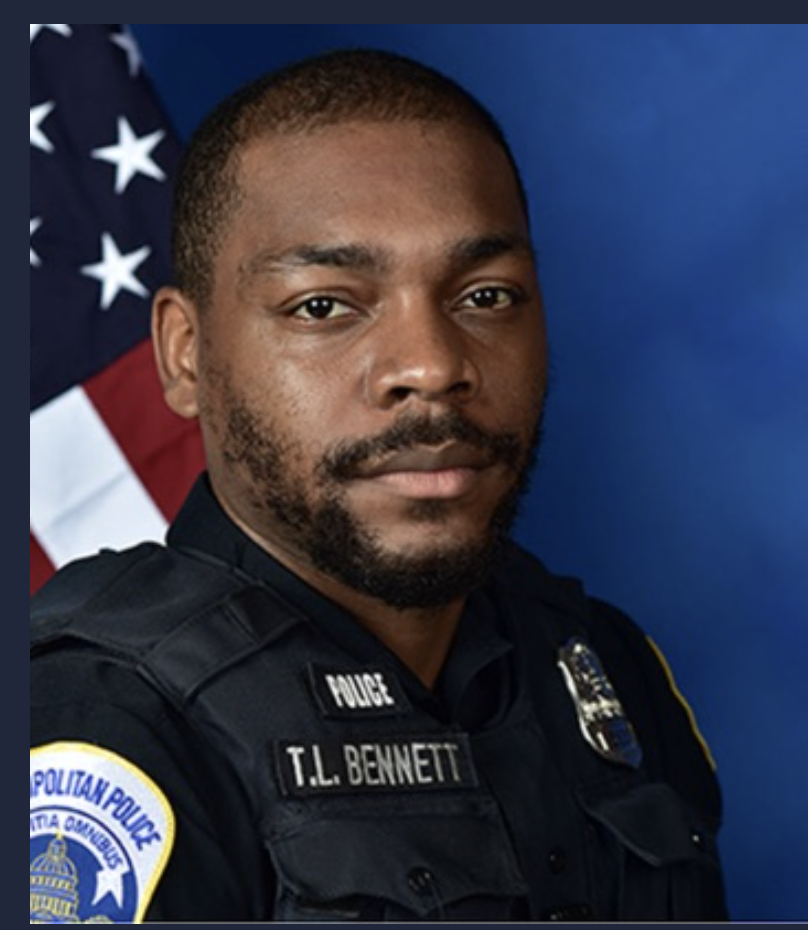
Coates, 48, is charged with second-degree murder while armed for his alleged involvement in the death of 32-year-old Metropolitan Police Department (MPD) Officer Terry Bennett. Coates allegedly hit Bennett on I-695 eastbound near the 3rd Street tunnel on Dec. 23, 2025. Bennett succumbed to his injuries on Jan. 7.

Defense attorney Dominique Winters said Coates has been paralyzed since 2000. She expressed concern over DOC’s handling of multiple health issues related to his condition. 

To address Coates’ urinary tract infections (UTSs), Winters said that DOC failed to use collected urine cultures to properly medicate Cotes. She also said inconsistently sized catheters, or tubes, the jail was using to access the samples risked developing additional UTIs. 

Winters also requested adequate care for Coates’ kidney pain and additional stem caps to protect the tires on Coates’ wheelchair. She also wants physical and occupational therapy to manage the physical symptoms stemming from Coates’ paraplegia. 

Judge Brandt validated these concerns by referencing a previous case where improper medical care for an incarcerated individual with paraplegia turned into a “litigation mess.”

Winters was directed by Judge Brandt to send a medical alert to DOC with the five health concerns she outlined during the hearing. 

Because of his paralysis, on the night of the incident Coates was operating his motor vehicle with hand controls. He claims the hand controls malfunctioned before the crash. 

According to the arrest warrant, when interviewed by an MPD detective on Jan 9., Coates said he remembered “being on the highway, getting cut off a little bit, and then the crash.” Coates allegedly admitted to having consumed alcohol before driving. 

At the time of the incident, Bennett was assisting a vehicle involved in a minor crash. Bennett had deployed emergency lights and road flares to signal drivers of the crash. 

Coates’ next status hearing is scheduled for Oct. 9. 

Judge Compliments Homicide Defendant For Good Behavior on Release

DC Superior Court Judge Michael Ryan told a homicide defendant to “keep up the good work” on June 23, following his compliance with release orders.

Martell West, 24, is charged with second-degree murder while armed for his alleged involvement in the fatal shooting of 18-year-old Treyvon Wilson on Nov. 19, 2023, at the 2300 block of Good Hope Court, SE. Wilson sustained a gunshot to his torso and succumbed to his injuries at the scene. 

On Feb. 26, West was released with electronic GPS monitoring.

At the hearing, Judge Ryan reviewed a notice of compliance sent by a representative from the Pretrial Services Agency (PSA) on June 17. West has been following the judge’s orders and has committed no infractions according to the notice. 

Judge Ryan complimented West for his good behavior and stated, “It is very important for your continued release.” West responded, “I’ll keep it up.”

The parties are scheduled to reconvene on Aug. 11. 

Judge Delays Murder Trial for Possible Insanity Defense

DC Superior Court Judge Todd Edelman granted a defense’s motion to delay a murder trial despite prosecutors’ objections during a hearing on June 22.

Lamont Stephenson is charged with first-degree murder while armed and cruelty to animals for his alleged involvement in the fatal stabbing of 40-year-old Natina Kiah and the killing of a cat on March 6, 2019, at the 5000 block of D Street, SE.

Stephenson’s attorney, Jonathan Lanyi, told Judge Edelman that he had been working with a behavioral specialist to testify in support of Stephenson’s insanity defense who has become unresponsive. According to Lanyi, co-counsel Sara Kopecki, who was absent, sent a private investigator to New Jersey to look into the matter.

To plead insanity a defendant must be incapable of understanding right from wrong and appreciate the criminality of their actions.

Lanyi requested to delay the trial originally scheduled to begin on Sept. 28. The prosecution opposed the request, arguing that there is no basis for an insanity defense and noting that the prosecution completed its testing and provided evidence to the defense in June 2025.

Judge Edelman said he did “not see much of a choice” but to delay the trial, since the defense was not at fault for the unavailable witness and they are looking for a replacement witness.

Stephenson also waived his rights under the Innocence Protection Act (IPA), which allows defendants to do their own DNA testing. The prosecution allegedly obtained Stephenson’s fingerprints, which they plan to use as evidence in the trial.

The court scheduled a status hearing for Aug. 7 and rescheduled the jury trial for July 6, 2027.

Dismissing First-Degree Murder Charge in Stabbing, Judge Finds Probable Cause For Second-Degree

DC Superior Court Judge Neal Kravitz dismissed a first-degree murder charge but found probable cause for second-degree murder in a preliminary hearing on June 15.

Leon Bryant, 36, is now charged with second-degree murder while armed for his alleged involvement in the fatal stabbing of Jonathan Simmons-Miller, 31, on the 700 block of V Street, NW on July 31, 2025. 

Bryant was initially charged with first-degree murder while armed. However, following the testimony of the lead Metropolitan Police Department (MPD) detective on this case, the defense motioned to dismiss all charges. 

While Judge Kravitz agreed that the detective’s testimony did not provide sufficient evidence to show that there was probable cause for first-degree murder, he found probable cause for the lesser offense of second-degree murder.

The lead detective’s testimony continued from a hearing on May 4. He reviewed surveillance footage from security cameras in the area. In the footage, the detective identified Simmons-Miller wearing white while having a conversation with the suspect, who was dressed in black. 

Prosecutors acknowledged that the footage is unclear, but argued that the suspect can be seen stabbing the victim. After the stabbing, the footage shows the victim running through a parking lot before collapsing, while the suspect runs out of the frame.

The prosecution presented footage a person the detective identified as Bryant that had been captured on a police body-worn camera hours before the stabbing. The detective said Bryant had been stopped by MPD for fare evasion on a Metrobus. In the footage, the detective noted Bryant’s distinctive tattoos and claimed his shoes and all black clothes were similar to the suspect’s. 

The detective also described video surveillance of a location near the scene, taken 40 minutes before the crime, that showed the suspect wearing all black, a cell phone that allegedly matched the description of a device registered to Bryant, and a forearm tattoo reportedly similar to Bryant’s. 

According to the detective, a witness identified Bryant as the suspect from that surveillance footage. The witness claimed to be familiar with Bryant, having reportedly seen him in person a week or two before the stabbing.

The detective mentioned a witness in the alley at the time of the stabbing, but was not facing the suspect or the victim and did not see the murder.

A Be On the Lookout (BOLO), alert created by the detective, was presented. It yielded the arrest of an individual who was later determined not to match the suspect’s description. According to the detective, that individual was “heavier and much taller” than the person captured on surveillance.

The prosecution also reviewed the autopsy report, in which a medical examiner described Simmons-Miller’s extensive injuries from a “stab wound to the abdomen.” 

Defense attorney Christen Romero Philips then cross-examined the detective. 

According to Philips, seven witnesses were contacted in the investigation, but only one identified Bryant. The detective said that the identification was not from the scene of the incident; it was from surveillance footage taken 40 minutes before the crime at a separate location. 

The witness who identified Bryant had been asked about him by detectives in a previous investigation and requested reward money for the information, according to the lead detective. Philips argued gaining that potential benefit tainted the identification.

Philips also questioned the officer about physical evidence. He told the court that no clothing or property belonging to the suspect was ever recovered. Several items were found near Simmons-Miller’s body, but the detective said that none of them likely matched Bryant’s DNA. 

A DNA mixture was found on Simmons-Miller’s undershirt, which may have included Bryant’s DNA, the detective said. Philips asked him if he could prove that Bryant’s DNA was on the shirt. The detective said he could not.

As for a motive, the lead detective said there was no evidence that Bryant and Simmons-Miller knew each other or ever interacted and there was no evidence of any person having a motive to kill Simmons-Miller. 

In response the prosecutor noted the clothing worn by Bryant reportedly matched the suspect’s No other person in the area wore similar clothing, he said.

The prosecutor asked asked if the owner of the established where Bryant was identified was interviewed. The detective said that he personally spoke to the owner who was familiar with Bryant, but was not asked to identify Bryant using the footage. 

Following the detective’s testimony, Philips requested Judge Kravitz dismiss all charges. She argued that the evidence against Bryant did not show probable cause because no witness could identify him at the scene of the crime nor was there any evidence of premeditation.

The prosecutor countered that an identification was made 40 minutes before the crime of someone wearing similar clothing to Bryant’s. The suspect also waited until Simmons-Miller looked away before allegedly stabbing him, which the prosecutors claimed showed premeditation.

Judge Kravitz agreed with the prosecution that the identification was sufficient, but did not find probable cause for premeditation. Thus, he dismissed the first-degree murder charge, but found probable cause for second-degree murder. 

At the end of the hearing, Judge Kravitz denied Philips’ request for Bryant’s release. However, he was open to review the matter.

Parties are slated to reconvene on July 17.

Fatal Stabbing Defendant Sentenced to 21-Year Term

DC Superior Court Judge Danya Dayson imposed a 21-year sentence for a fatal stabbing during a June 18 hearing.

Stephen Herring, 26, was sentenced on March 6 to 21 years for second-degree murder while armed. The charges stemmed from his involvement in the fatal stabbing of Marcus Thurman, 30, on Aug. 22, 2023 on the 100 block of M Street, NE.

Thurman was allegedly defending a woman and her baby from Herring, when he was stabbed and ultimately succumbed to his injuries on Sept. 4, 2023.

When Herring was originally sentenced, his attorney, Hannah Claudio, requested her client be held in the DC Jail post-sentence in order to complete his GED.

At the post-sentencing hearing, Herring confirmed that he did not complete his GED, and requested the imposition of his sentence.

Claudio also requested Herring serve his sentence at Federal Correctional Institution (FCI) in Cumberland, Maryland, but the final determination must be made by the Bureau of Prisons (BoP). She also recommended Herring for a Residential Drug Abuse Treatment Program (RDAP). Judge Dayon agreed that Herring continue drug treatment upon release.

No further dates were set.

After Review Judge Finds Homicide Defendant Mentally Incompetent to Stand Trial

DC Superior Court Judge Rainey Brandt found Jafekka Harris mentally incompetent to stand trial on June 18. 

Harris, 34, is charged with second-degree murder of a senior citizen for her alleged involvement in the fatal beating of 79-year-old Bettie Duke on the 3100 block of Martin Luther King Jr. Avenue, SE on Oct. 5, 2024. Duke succumbed to her injuries on Oct. 13, 2024.

Judge Brandt reviewed a report from the prosecution’s medical expert, and with no objections from either party, determined there was no “substantial probability” of Harris regaining mental competence in the foreseeable future. 

In order to be considered mentally competent to stand trial, a defendant must understand the charges levied against them and be able to assist their attorney in their defense. 

If a defendant is found mentally incompetent to stand trial, under the U.S. Supreme Court ruling in the Jackson v. Indiana (1972) case the defendant must be civilly committed or released. 

Civil commitment officially shifts the custody of the defendant from a criminal matter to a medical condition. To ensure Harris continues to receive necessary medical care, the prosecution has 30 days to file a petition for civil commitment. 

In the next phase, the defendant will be admitted to a DC residential facility, where she will receive ongoing treatment. A DC Superior Court judge will review Harris’s mental competency annually and decide whether to renew or discontinue the civil commitment. 

Five years after being found mentally incompetent, the defense can ask a judge to dismiss the charges if they deem the defendant incompetent for the foreseeable future.

Parties are slated to meet on July 17 to verify that the civil commitment filing occurred. 

Judge Denies Shooting Suspect’s Request to Modify Release For Work

DC Superior Court Judge Andrea Hertzfeld denied a shooting suspect’s motion to expand his current home confinement conditions to include work in a hearing on June 17.

Malik Reed, 26, is charged with aggravated assault while armed and possession of a firearm during a crime of violence for his alleged involvement in a shooting on April 15 on the 1100 block of Mississippi Avenue, SE. The victim sustained a gunshot wound to his left arm and lower right back.

Reed’s defense attorney, Alexander Schneider, requested that Judge Hertzfeld modify Reed’s release conditions so that he could go to work. Prior to his arrest, Reed worked at a Target warehouse in Maryland. Under his current release conditions, Reed may not leave his house except to travel to and from court, and he is required to wear a GPS monitor.

Judge Hertzfeld declined to modify Reed’s release given the violent nature of the accusations against him.

Schneider indicated that there was no plea offer on the table but asked for more time to work on a potential agreement to send to the prosecution.

Parties are scheduled to reconvene on Aug. 27.

Co-Defendants in Jail Stabbing Case Consider Plea Deals 

The attorneys for both defendants in a stabbing case notified DC Superior Court Judge Deborah Israel on June 17 that they would consider plea deals before their next hearing. 

Raghee Jordan, 35, and Antonio Kingsbury, 38, are charged with aggravated assault while armed and assault with a dangerous weapon. The charges stem from their alleged involvement in a stabbing that occurred at the DC Jail on the 1900 block of D Street, SE, on Oct. 29, 2025.

When referring to the plea deals available to both defendants, Kingsbury’s attorney, Brandon Burrell, noted that the “situations aren’t exactly the same.”.

Jordan has a global plea deal available that would resolve multiple cases, as he has two other pending cases against him. 

The prosecution has also presented a wired plea deal that would require both defendants’ acceptance, but Burrell noted that he would like to unwire it once they are closer to the next hearing date. 

Judge Israel let both parties know that they should have the paperwork ready prior to the next hearing date, if they choose to move forward with a plea deal. 

Parties are slated to reconvene on July 16. 

17-Year-Old Armed Carjacking Defendant Held Given Concerns About Maryland Charges

DC Superior Court Judge Renee Raymond denied the release of a juvenile carjacking defendant after he waived his right to preliminary hearing on June 18. 

Carlos Smith, 17, is charged with armed carjacking, robbery while armed, and two counts of possession of a firearm during a crime of violence for his alleged involvement in a carjacking on Oct. 1, 2025, at the 1000 block of Emerson Street, NW.

Smith is charged under Title 16, which allows juveniles to be tried as adults for certain serious offenses. 

According to court documents, Smith and three other suspects allegedly pointed a handgun at the victim, struck him with an E-bike, and punched and kicked him while retrieving items from his trunk. During the assault, the victim dropped his phone and a suspect allegedly stole the device.

Smith’s attorney, Steven Roman, revealed that Smith lives with his mom, has a 16-year-old sister with disabilities whom he helps take care of, and attends school virtually. Roman acknowledged that Smith has a pending case in Maryland for similar offenses but said Smith is on release and in home confinement for that case. 

In the defense’s argument, Roman said that Smith’s offense in Maryland reportedly might change from being charged as an adult to a juvenile because of his compliance to release conditions.

However, the prosecution argued Smith’s offenses in Maryland are serious and that he allegedly associates with a group of juveniles alleged to have committed violent offenses in Maryland and DC. According to the prosecution, police are investigating the group for additional offenses.

Judge Raymond ruled that because of Smith’s age and the seriousness of the allegations in both jurisdictions, the defense’s argument was not sufficient to rebut the presumption his release could pose a threat to the community.

The parties are slated to reconvene on July 9 for a felony status hearing before DC Superior Court Judge Andrea Hertzfeld.