

With a total of 287 homicides in 2023, the video breaks down the number of lethal incidents by Ward.

With a total of 287 homicides in 2023, the video breaks down the number of lethal incidents by Ward.

On April 15, DC Superior Court Judge Anthony Epstein heard testimony from a victim’s widow in a patricide trial allegedly sparked by an argument over five dollars’ worth of marijuana.
Stephon Williams, 32, is charged with second-degree murder while armed, possession of a firearm during a crime of violence, and carrying a pistol outside a home or business for his alleged involvement in the shooting of his 49-year-old father Stephen Magruder on Sept. 11, 2020, on the 700 block of 51st Street, NE.
According to court documents, Magruder’s wife and children were present at the time of the incident.
She said she was putting her baby in his crib when she heard Magruder ask Williams for five dollars. She said she asked them to take their argument outside after Magruder became aggressive and began calling Williams names.
“My husband started punching Stephon and telling him to get out, get his stuff,” the witness stated. She described his punching Williams’ face, back, and chest while pushing him toward the back of the apartment, toward the bathroom and near the bedroom where the baby was sleeping.
“I was trying to pull him off Stephon,” the witness explained.
She said Magruder punched Williams so hard he fell at the bedroom entrance. When Williams followed the witness and Magruder back into the living room, the witness stated that she could see that Williams’s mouth was bleeding.
The witness testified that Magruder then pushed Williams insisting, “Get your stuff.”
“Stephon yelled, ‘You’re not going to keep punking me or laying your hands on me,'” the witness recounted.
At that point, the witness became emotional and the proceedings were briefly recessed.
When the witness returned, the prosecutor asked what names Magruder had called Williams. “He called him the B-word,” she answered. “He said to get the f*** out and called him a dopehead.” The witness said Williams didn’t make any comment or fight back.
The widow told the jury she was standing behind Magruder, still trying to pull him away from Williams, when Magruder pushed Williams into the bathroom. She said she looked around Magruder and saw Williams pointing a gun at Magruder, who put up his hands.
“His hands were up but I heard the pop. It was the same second,” the witness testified. She said she then dove into the bedroom next to the bathroom to check that her baby was okay.
“I remembered seeing Stephen on the ground. That’s all I could think of,” the witness said when the prosecutor asked her why she hadn’t told the police detective at her interview immediately after the incident that she had seen Magruder and Williams fighting. “But as time went on, yes, I remembered everything.”
In cross-examination, Williams’ defense attorney, Jason Tulley, asked the witness to confirm that the five dollars under dispute was to pay Magruder for giving Williams some of the marijuana Magruder kept in a box on the stove.
“I wouldn’t know,” the witness said repeatedly.
“I would not know that,” the witness said again when Tulley asked if Williams had been afraid of Magruder.
She confirmed Williams didn’t fight back when Magruder punched him, but instead started crying, saying, “Dad, I got your five dollars,” and, “Dad, stop. Dad, stop.”
When Tulley said, “His voice was scared, right?” the witness answered, “Yeah.”
Tulley showed the jury footage from police body-worn cameras from officers who responded to the scene. In one video, Magruder’s widow tells an officer, “I ran to the living room and I heard a pop,” while in another, she tells an officer apparently contradicting her in court testimony, “I didn’t see it. I heard it.”
Tulley also replayed footage of the witness in an interview room at the police station after the incident.
During a monitored call to a friend before the widow’s police interview, she says, “No, I heard it. I guess it had to be in the f***ing bathroom.” Later, during the interview, the detective asks, “Did you see Stephon with the gun?” and the witness responds, “I didn’t see it.”
Tulley questioned the witness if Magruder had ever physically abused her. The couple was married when the witness was 18 and Magruder was 41. Tulley referred to records of the witness having a bruised eye when police responded to their home to resolve domestic disputes. The witness said she did not remember although she previously testified there were issues in the marriage.
In the redirect, the prosecutor asked the witness if there were other parts of her testimony today, besides seeing the gun, that she hadn’t mentioned in the police interview. The witness confirmed that her police interview hadn’t included testimony that Magruder punched Williams or that Williams had started crying and hadn’t fought back.
In earlier testimony, she described Magruder and Williams’ relationship as “a rocky father-son relationship,” but asserted she had never seen any physical conflict between them before the shooting.
“He treated me with respect–he was never disrespectful to me. We had a good relationship,” the witness said about her interactions with Williams.
According to the witness, Williams had asked to stay with Magruder and his family following the death of a mutual friend.
“They were grieving and bonding,” the witness testified regarding the days leading up to the shooting.
The witness recounted bringing Magruder home from his job on the night of the shooting.
The trial will resume on April 17.

The Metropolitan Police Department (MPD) announced the arrest of an individual in connection to a Jan. 30 shooting that occurred at the intersection of Q Street and Connecticut Avenue, NW.
According to MPD documents, officers responded to the location for the report of a shooting, where they located an adult male victim, inside a vehicle, suffering from a gunshot wound. He was transported to a local hospital for treatment.
On April 15, MPD arrested and charged 56-year-old Rodney Baggott with assault with intent to kill.
The Metropolitan Police Department (MPD) is seeking the public’s assistance in identifying and locating a suspect involved in a shooting that occurred on April 7 on the 2400 block of Elvans Road, SE.
According to MPD documents, officers responded to a local hospital where two adult male shooting victims were seeking treatment for non-life-threatening injuries. The investigation determined the shooting occurred on the 2400 block of Elvans Road, SE.
The suspect was captured by surveillance cameras.
MPD offers a reward to anyone that provides information which leads to the arrest and conviction of the person or persons responsible for each violent crime in the District.

The Metropolitan Police Department (MPD) is investigating a traffic incident that resulted in the death of a pedestrian on April 11 near the Howard University campus.
According to MPD documents, the preliminary investigation revealed that an Audi was traveling northbound on 6th Street, NW, from Howard Place, NW, at a high rate of speed. The vehicle struck a parked car and continued towards Fairmont Street, NW, where it failed to negotiate the left turn and mounted a curb, striking a man who was on or near a crosswalk.
The pedestrian was transported to a local hospital with serious injuries. The driver of the Audi was transported with minor injuries.
On April 15, the man died from his injuries. He was identified as 18-year-old Mohamed Samura.
Anyone with knowledge of the incident should call MPD.
On April 11, DC Superior Court Judge Eric Glover found probable cause that a defendant was the perpetrator in a shooting and ordered him detained during initial presentments.
Jason Dyer, 26, is charged with aggravated assault while armed, unlawful possession of a firearm by a convict, and possession of a firearm during a crime of violence, for his alleged involvement in a non-fatal shooting that occurred on April 7, on the 4400 block of Martin Luther King Jr. Avenue, SW.
According to court documents, Dyer allegedly fired multiple shots at a candlelight vigil that several individuals were attending, wounding three people in the process. He was located by police wounded in a vehicle–which had been reported carjacked the previous day–allegedly in possession of two firearms.
Due to the defendant not being present as a result of being in the hospital, a continuance was issued and a preliminary hearing was scheduled.
Parties are slated to return April 15 before DC Superior Court Judge Lloyd Nolan Jr.
On April 12, DC Superior Court Judge Eric Glover limited the number of hours a vehicular homicide defendant could drive during pretrial release, and ordered a non-fatal shooting defendant be detained.
Olivia Ayong, 49, is charged with negligent homicide for her alleged involvement in the death of 72-year-old Ralph Williams on the 900 block of K Street, NE, on Nov. 25, 2022.
According to documents from the Metropolitan Police Department (MPD), Williams was standing behind his vehicle at the location when Ayong, who was driving a Ford Explorer, ran into the back of William’s vehicle, causing him to be pinned between the two cars. He was transported to a hospital, where he succumbed to his injuries.
During the hearing, the prosecution argued for probable cause stating that surveillance footage showed no visible evidence of her attempting to avoid the crash. They added that, although they weren’t requesting she be detained, they were requesting Ayong be prohibited to drive as she awaits further proceedings, arguing that the accident occurred while she was working.
Errin Scialpi, Ayong’s defense attorney, argued for her ability to drive, stating that she works as a healthcare provider and has to drive for her work.
After hearing arguments from both parties, the judge found probable cause and placed Ayong on pretrial release. Reasoning that Ayong had no prior criminal history, Judge Glover allowed for Ayong to drive during working hours.
Parties are slated to return May 3 before DC Superior Court Judge Rainey Brandt.
Kevin Snead, 41, is charged with assault with a dangerous weapon and possession of a firearm during a crime of violence for his alleged involvement in a non-fatal shooting that occurred on April 3 on the 1500 block of Independence Avenue, SE.
According to court documents, Snead, who was working as a security guard at a Safeway, saw several teenagers stealing items from the store and fleeing the scene.
Hours later, Snead allegedly saw them at the 7-Eleven in the area and pursued them, allegedly opening fire at the teenagers, shooting times.
Following the presentation of evidence by the prosecution, Judge Glover ordered Snead be detained as he awaits further proceedings.
Parties are slated to return April 24 for a preliminary hearing.
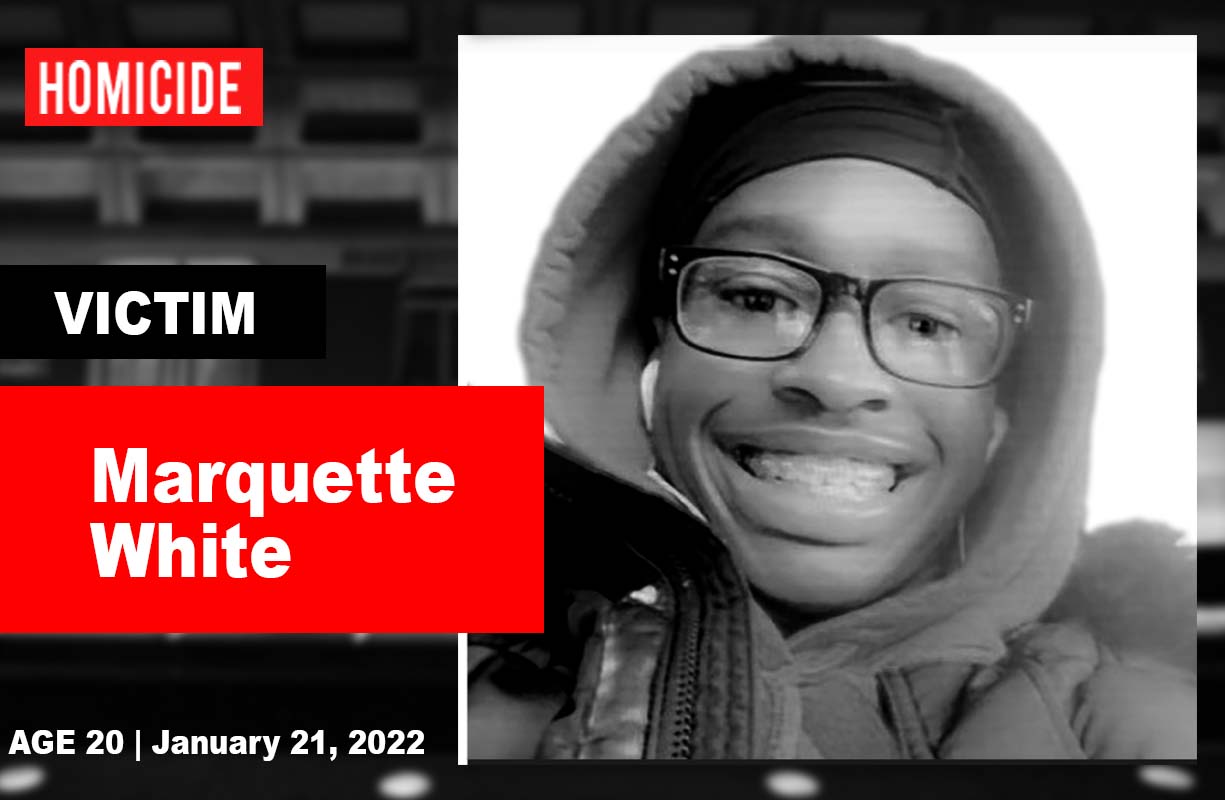
On April 12, DC Superior Court Judge Michael O’Keefe heard arguments from both defense attorney about severing two co-defendants’ cases in a murder trial.
Maurice Williams, 20, and Seaun McDowney, 19, are charged with first-degree murder while armed, two counts of possession of a firearm during a crime of violence, attempt to commit robbery while armed, and conspiracy for their alleged involvement in the fatal shooting of 20-year-old Marquette White on Jan. 21, 2022, on the 3800 block of Commodore Joshua Barney Drive, NE.
“These are real and live issues,” said Williams’ defense attorney, Brian McDaniel, while stating that the two defendants have conflicting stories.
McDaniel further argued that trying the defendants together places an extra burden on the defense because they “not only have to meet the [prosecution’s] argument but also the co-defendant’s argument.”
“If these cases are not tried together, we would present the exact same case twice,” responded prosecutors.
According to court documents, the conspiracy charge is based on a conversation through text message between Williams and his girlfriend that allegedly outlined what the defendants planned to do on the day of the murder.
McDowney’s defense attorney, Kevin Mosley, argued that “[these texts] alone could not prevail the conspiracy charge” and are therefore not admissible against McDowney.
Additionally, Mosley noted that McDowney was not aware of this “pillow talk” conversation and that these statements are “no different than Williams writing a diary to himself.”
“How are any of the statements furtherance of the conspiracy?” argued Mosley.
Prosecutors answered that “white-collar crime is where you have signed documents” and that “what you have here is circumstantial evidence.”
Judge O’Keefe acknowledged that the primary issue was “what constitutes a co-conspirator statement when [the statement] is not between the co-conspirators.”
Mosley’s motion to sever is based on the fact that Williams will not be testifying in court, which could hinder McDowney’s case.
Mosley believes that Williams could provide exculpatory evidence for McDowney because, if subpoenaed, Williams could speak to the fact that he told his girlfriend that McDowney did “nothing.”
Prosecutors argued that “McDowney’s participation is much more insidious. He was the inside eyes.”
Mosley concluded his argument by stating that it is imperative that “the defense has the ability to present their own defense. We have an absolute right.”
Parties are slated to return June 14.
On April 11, DC Superior Court Judge Robert Okun heard testimony from a Metropolitan Police Department (MPD) lead detective during a preliminary hearing to determine probable cause in an apparent revenge murder.
Eliexander Lopez-Burgos, 24, is charged with first-degree murder while armed for his alleged involvement in the fatal shooting of 38-year-old Carlos Javier Blanco Fernandez. The incident occurred on Nov.16, 2023 on the 2200 block of New York Avenue, NE.
The prosecution called the lead MPD homicide detective who said on Nov. 14, 2023, Lopez-Burgos was involved in an altercation with an unidentified group of people.
“We learned that the defendant threatened that group,” the detective said. “And stated that he would kill them.” Later that day, Lopez-Burgos was inside his minivan along with his girlfriend and children when someone approached and shot him in the leg in a McDonald’s parking lot.
The detective stated CCTV video footage from two days later shows a suspect in a minivan fatally shooting Blanco Fernandez. The footage was not presented in court.
On Dec. 4, 2023, Lopez-Burgos was arrested in Glendale, Colorado and extradited to the District on Jan. 4.
During cross examination, the detective testified that none of the witnesses saw Lopez-Burgos allegedly shooting Blanco Fernandez. One of the witnesses saw a “dark-colored arm” extended from the suspect vehicle, but they could not see who the person was, and they were not holding a gun.
The detective then testified that another witness said she saw Lopez-Burgos running towards the same McDonald’s shortly after the shooting.
Defense attorney Roderick Thompson said the basis for the prosecution’s case is that Lopez-Burgos shot Blanco Fernandez as revenge for the Nov. 14 incident. He argued that this is not a valid conclusion because Blanco Fernandez was ruled out as a suspect in the Nov. 14 shooting.
Parties are slated to return May 3.
On April 12, DC Superior Court Judge Michael O’Keefe heard arguments on the prosecution’s motion to admit unspecified statements made by a murder defendant to Metropolitan Police Department (MPD) officers.
Eric Davis, 60, is charged with first-degree murder while armed and possession of a firearm during a crime of violence for his alleged involvement in the murder of 41-year-old Theodore Riley on the 1600 block of Gales Street, SE on July 19, 2021.
According to court documents, Riley suffered from a gunshot wound to the head and was pronounced dead at the scene.
Prosecutors argued that on Sept. 13, 2021, MPD officers conducted a “Terry stop,”which allows police officers to briefly detain someone based on reasonable suspicion of involvement in a crime, and placed Davis in handcuffs.
During the stop, they tried to determine if Davis was in violation of a stay away order for an unrelated case where Davis was charged with possession with intent to distribute a controlled substance.
The handcuffs were later removed when MPD officers concluded that Davis was not subject to a stay away order.
Davis’ defense attorney, Howard McEachern, argued that it wasn’t a Terry stop because officers apparently wanted to talk to Davis about the homicide and that “the stay away is a ruse.”
“There is no valid reason for them to have put him in handcuffs for 30 minutes,” said McEachern.
McEachern further argued that Davis is heard in body-worn camera footage saying that he will talk to the MPD officers because he does not want “this” to happen again. McEachern explained that the “this” being referred to is Davis being placed in handcuffs.
Judge O’Keefe agreed that the MPD officers should not have placed Davis in handcuffs, while noting that the key issue is whether being placed in handcuffs affected whether Davis’ statements were voluntary.
According to McEachern, the statements are “something you can’t justify as being voluntary” because they cannot separate his statements by saying that some are voluntary and some are not.
Prosecutors argued that removing the handcuffs “sufficiently changed the circumstance. It puts [Davis] out of custody for Miranda purposes,” meaning that Davis’ rights to speak with an attorney weren’t violated.
Parties are slated to return April 15 for a ruling on the motion and trial.
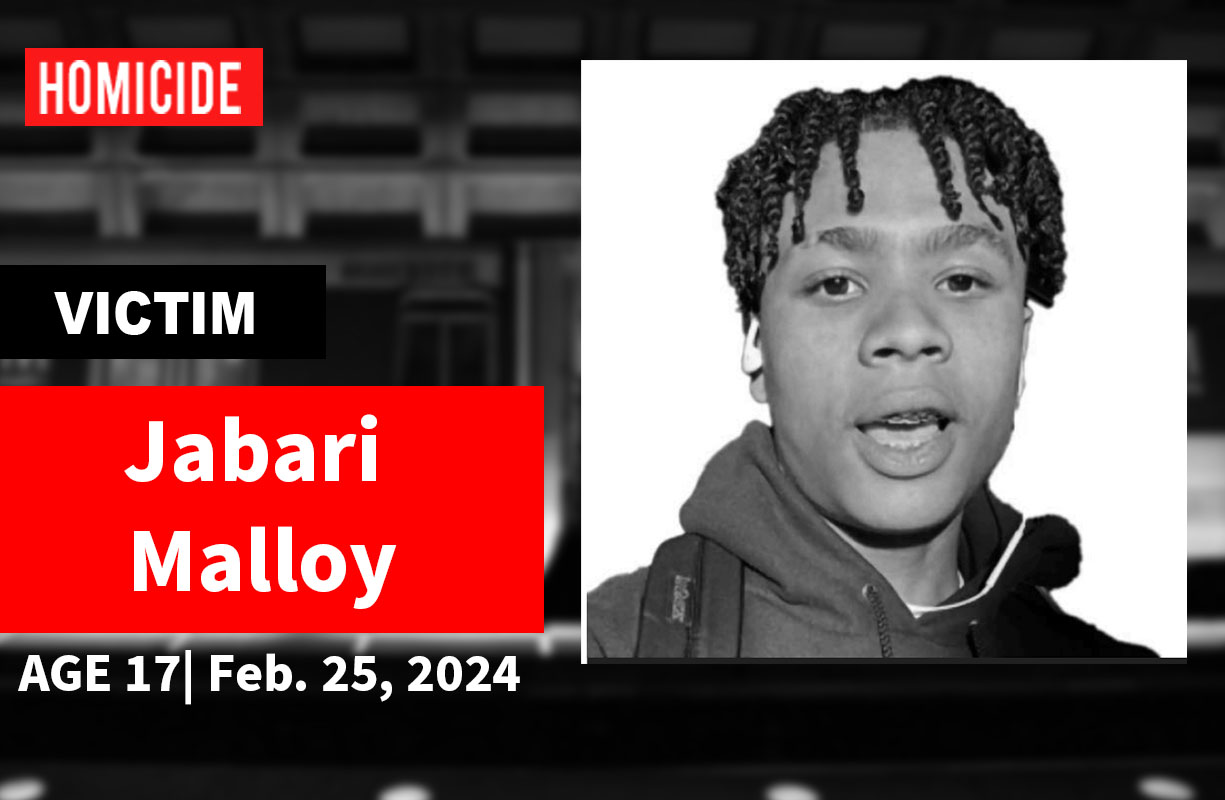
Before finding probable cause in a murder case, DC Superior Court Judge Michael O’Keefe reviewed surveillance footage, as well as text and phone call logs from the defendant’s cellphone.
Rico Antjuan Parker, 42, is charged with first-degree murder while armed for his alleged involvement in the fatal shooting of Jabari Malloy, 17, in an alleyway on the 700 block of Lamont Street, NW on Feb. 25, 2024.
In the footage, displayed in an April 12 hearing, an individual identified as Malloy is allegedly seen giving Parker his phone, moments before the incident occurred.
According to court documents, officers were dispatched to the location due to a ShotSpotter alert for two gunshots. When they arrived, they found Malloy unconscious at the rear of an alley behind Lamont Street, NW. They began CPR until DC Fire and EMS arrived, and despite all life saving efforts, he succumbed to his injuries.
Documents state two gunshots were fired at 7:32 p.m. The surveillance footage showed someone, allegedly Parker, leaving the alleyway with Malloy’s phone and fleeing in his car. No other person was seen entering or exiting the alleyway.
Additionally, Malloy’s cell phone showed a call to Parker’s phone, hours after the murder occurred.
Parker’s defense attorney, David Akulian, brought to the court’s attention that there could have been a different suspect that entered the alleyway out of the video frame.
“There is significant circumstantial evidence,” Judge O’Keefe said, finding probable cause to bring Parker to trial.
After the finding of probable cause, Akulian requested that Parker be released.
Prosecutors argued that Parker was previously found guilty of aggravated assault and therefore he could be a danger to society.
Akulian argued that Parker had successfully completed his parole for the previous charge, and that the incident had occurred 25 years ago.
Judge O’Keefe noted that while there is no clear motive in this case, there is sufficient evidence to consider Parker a danger to society.
There is “no condition that could be put in place that could protect the community from that type of behavior,” said Judge O’Keefe as he denied the release request.
Parties are slated to return June 14.
The Metropolitan Police Department (MPD) are seeking the public’s help in identifying and locating a suspect vehicle involved in a shooting that occurred on April 13 on the 1200 block of Raum Street, NE.
According to MPD documents, officers responded to the location for the report of a shooting. When they arrived, they located a man with gunshot wounds. He was transported to a local hospital for treatment.
The suspect’s vehicle was captured by surveillance footage.
MPD offers a reward to anyone that provides information which leads to the arrest and conviction of the person or persons responsible for each violent crime in the District.
The Metropolitan Police Department (MPD) is investigating the fatal shooting of 15-year-old girl that occurred on April 14 on the 2400 block of Elvans Road, SE.
According to MPD documents, officers were in the area when they heard gunshots. While investigating, they found a teenage girl with gunshot wound injuries inside an apartment building. She died at the scene.
The victim was identified as 15-year-old Niomi Russell.
MPD offers a reward to anyone that provides information which leads to the arrest and conviction of the person or persons responsible for each homicide in the District.
The Metropolitan Police Department (MPD) is investigating a fatal shooting that occurred on April 13 at the intersection of Stanton Road and Mississippi Avenue, SE.
According to MPD documents, officers discovered a vehicle partially parked on the sidewalk at the location. The officer approached the vehicle and discovered an unconscious adult male who was not breathing, suffering from gunshot wounds. He died at the scene.
The victim was identified as 35-year-old Christian Elsberry.
MPD offers a reward to anyone that provides information which leads to the arrest and conviction of the person or persons responsible for each homicide in the District.
On April 12, DC Superior Court Judge Robert Okun reviewed a defense motion to modify a homicide defendant’s release conditions for family reasons.
Christian Johnson, 33, is charged with first-degree murder while armed, possession of a firearm during a crime of violence, carrying a pistol without a license outside a home or business, and unlawful possession of a firearm by a prior convict, for his alleged involvement in the fatal shooting of 25-year-old Lavonte McCould on Nov. 25, 2021, on the 1600 block of Kenilworth Avenue, NE.
Johnson’s defense team requested that his current stay-away order be lifted so that family court can decide on an arrangement that will allow Johnson to visit his child.
A representative of DC’s Pretrial Services Agency (PSA) was also present during the hearing and alerted the court that Johnson has been in full compliance with his release conditions as of March 27.
The prosecution doesn’t believe that Johnson qualifies for reasonable conditions of release, citing that he “couldn’t maintain an evening job at Target due to behavioral issues.”
The prosecution also opposed Johnson’s modification of release conditions in the interest of keeping the witnesses in the case safe as well as the community.
Parties are set to reconvene for trial readiness on Aug. 4.