Search Icon Search site

Search

Judge Orders Mental Competency Exam For Fatal Beating Suspect 

DC Superior Court Judge Neal Kravitz ordered a preliminary mental competency screening on May 22 for a defendant accused of a fatal beating.

Lavaughn Barnes, 35, is charged with first-degree premeditated murder while armed for his alleged involvement in the beating and dismembering of Abdulio Arias-Lopez on Nov. 4, 2022 on the 1300 block of Kearny Street, NE.

According to court records, at the last hearing on April 28, the parties scheduled the present hearing to determine whether Barnes would formally waive his right to a jury trial.

At the hearing, Judge Kravitz inquired if Barnes decided about his trial rights. His attorney, Hannah Claudio requested a preliminary mental competency screening before Barnes makes his decision. To stand trial, Barnes must understand the charges against him and be able to assist in his own defense. 

Judge Kravitz granted Claudio’s request and ordered a preliminary competency evaluation for Barnes. 

The parties are scheduled to reconvene on May 28 for a mental observation hearing.

Court of Appeals Overturns Conviction in 10-Year-Old Stabbing Case

DC Superior Court Judge Neal Kravitz allowed the prosecution time to determine how they will proceed in a stabbing case on May 22 after an appellate court overturned the defendant’s conviction.

A jury convicted Onzay Gibbs, 36, on May 22, 2018 of assault with intent to kill while armed and aggravated assault knowingly while armed for his alleged involvement in a stabbing on Sept. 15, 2016 on the 3300 block of 23rd Street, SE. The victim sustained multiple sharp force injuries to his face, neck, and body that required emergency surgery. 

DC Superior Court Judge Ronna Beck sentenced Gibbs to 20 years in prison on Dec. 14, 2018. 

A mandate from the DC Court of Appeals, filed on May 15, reversed the trial court’s denial of Gibbs’ motion to suppress evidence obtained from a search of his cell phone. The appellate court found the search violated Gibbs’ constitutional rights and therefore vacated his conviction because prosecutors presented the evidence at trial.

The appellate court based its decision on Burns v. United States (2020), a DC Court of Appeals ruling that established warrants for cell phone searches must establish probable cause for narrow, specific data, not an unlimited review of the contents.

At the hearing, Judge Kravitz acknowledged that the prosecutor, and Gibbs’ attorney, Terrence Austin, were both recently appointed to the case. The prosecutor said she was assigned the case the day prior and asked for two weeks to determine whether the case could proceed without the cell phone evidence, or if some evidence would remain admissible under the Burns case.

Austin noted that Gibbs was not present for the hearing because he was in custody of the Federal Bureau of Prisons (BOP) but indicated he will likely file a motion requesting Gibbs release to argue at the next hearing.

The parties are scheduled to reconvene on June 4.

Homicide Defendant Needs More Time to Consider Plea Offer

DC Superior Court Judge Jason Park granted a homicide defendant more time to consider a plea offer on May 15. 

Tyquan Jennings, 27, is charged with second-degree murder while armed, assault with a dangerous weapon, two counts of possession of a firearm during a crime of violence, and carrying a pistol without a license outside a home or business. The counts stem from his alleged involvement in the fatal shooting of 19-year-old Vonte Martin on the 3000 block of Stanton Road, SE, on Aug. 19, 2024.

The offer would require Jennings to plead guilty to voluntary manslaughter while armed. In exchange, the prosecution would dismiss his remaining charges in this case and an unrelated felony possession offense.

The prosecution and defense attorney Nathaniel Mensah addressed the terms in a written plea offer. Mensah said the offer included “additional language” regarding sentencing enhancements that was not previously discussed.

The prosecutor expressed frustration with the delay and said the plea offer has been open for several months. He did not see how the discussion of “reserving step back and reserving allocution” would confuse the terms of the plea offer.

The prosecution suggested a brief “pass” to allow Jennings to talk with his lawyer and return later that afternoon.

Mensah rejected the afternoon return, stating that he was not asking for a 15-minute break but for a separate date to ensure Jennings understood the offer. The prosecution eventually agreed to wait to resolve the plea. 

Judge Park allowed Jennings to confer briefly with Mensah and noted that the law requires a clear record that a defendant has time to consider any offer.

“He’s not prepared to make that decision at this time,” said Mensah because he hadn’t seen “additional language” regarding sentencing enhancements.

Parties are scheduled to reconvene on June 5. 

Homicide Defendant Says He Followed Shooter for Money, Not to Help Him With a Gun

A murder defendant testified that he followed a man outside to get his money back, not bring a weapon inside a club during a homicide trial before DC Superior Court Judge Rainey Brandt on May 19. 

Cotey Wynn, 45, is charged with first-degree premeditated murder while armed, three counts of assault with intent to kill while armed, and four counts of possession of a firearm during a crime of violence for his alleged involvement in a Sept. 23, 2023 mass shooting that resulted in the death of 31-year-old Blake Bozeman and injuries to three other victims at the CRU Lounge, on the 1300 block of H Street, NE. Bozeman sustained two gunshot wounds. 

Under questioning from Brian McDaniel, Wynn’s attorney, Wynn testified that he had no prior interaction with the shooter, did not know Bozeman or anyone at CRU Lounge that night, and had no knowledge that a gun was brought into the club. Wynn said that when he followed the shooter outside it was to retrieve money and that he had no knowledge that the man grabbed a gun before he reached a car. 

Wynn told jurors that after the first gunshot he ducked and that a hand gesture he made was directed at the shooter in confusion for why he fired in the lounge. Wynn maintained he had no plan or intent for anyone to be harmed.

McDaniel also elicited testimony about the security procedures and Wynn’s role at CRU. Wynn testified that he had worked as a promoter at the club since around May 2023, earning a percentage of nightly sales, and that security guards’ pat-down practices varied based on who conducted them. McDaniel asked Wynn to demonstrate the pat down that the shooter received the night of the incident, to which Wynn patted down McDaniel’s waistband and legs in front of the jury. 

Wynn stated he went outside with the shooter prior to the incident over a concern about his table’s open bar tab. Wynn said he retrieved roughly $500 in cash from the shooter, and accompanied that man back through the security tent, where the pat down of the shooter was conducted. Wynn maintained he never asked security to skip patting anyone down and was not trying to help bring a gun inside. 

On cross-examination, the prosecution questioned the lack of documentation for Wynn’s promoter arrangement. The prosecutor noted Wynn was paid in cash and could produce flyers or messages confirming contact with a guest who reserved a table through his services that night. The prosecutor pressed Wynn on his detailed memory of the pat downs against his inability to recall other nights or who had accompanied him, to which Wynn responded that the night had altered his life. Wynn reaffirmed his reasoning for leaving the bar with the shooter was to be paid. 

When questioning Wynn about the hand gesture, the prosecution told Wynn that they were all adults in the room, and asked what his true intent was behind the gesture. Wynn clarified that his hand gesture meant “get the f*** outta here,” and “what the f*** you do that for?” Prosecutors asked if he was telling the shooter to escape, to which Wynn said no. 

The prosecution analyzed video footage of Wynn’s position while the shooting occurred, arguing that he stood upright, rather than ducking behind the bar or laying on the ground. Wynn replied that he was bent over, not upright, and that he was frozen by fear and shock. The prosecutor also asked why it appeared in video that Wynn made eye contact with the shooter, to which Wynn said that he was looking at him out of confusion and frustration as he left the bar. 

On redirect, McDaniel played the incident video at full speed, emphasizing how fast it occurred, and that Wynn did not have the time to react in the ways the prosecution described. McDaniel asked Wynn if his frozen stance or eye contact was a signal to the shooter that the plan was executed, and Wynn said no. McDaniel asked if there was any plan to be executed at all, and Wynn said no. 

Wynn concluded his testimony by reiterating that he did not attempt to hurt anyone that night and he had no relation to any of the people involved in the incident.

Without the jury present, Judge Brandt denied a defense motion to dismiss the case because of the deportation of a bouncer at CRU Lounge and late-disclosed body-worn camera footage that would have accompanied his testimony. 

McDaniel argued that they were not made aware of the identity of the bouncer until January, and that they were unaware the witness had been deported until halfway through the trial. The prosecution responded that they were never asked by the defense to provide additional information about bouncer or the body-worn camera footage. 

Judge Brandt found that the prosecution’s conduct did not violate Wynn’s right to a fair trial, but said it fell short of the prosecution’s obligation to turn over relevant evidence to the defense before trial. She noted that the lost testimony and footage offered a different perspective rather than crucial proof, and ruled the related video could come in for the jury to weigh during the defense’s case. 

The trial is set to resume on May 20. 

‘This Case is Not About Murder, it’s About Survival,’ Asserts Defense in Killing of Three Brothers

The parties disputed whether the defendant or victims fired the first shots in a triple-homicide trial before DC Superior Court Judge Neal Kravitz on May 21.

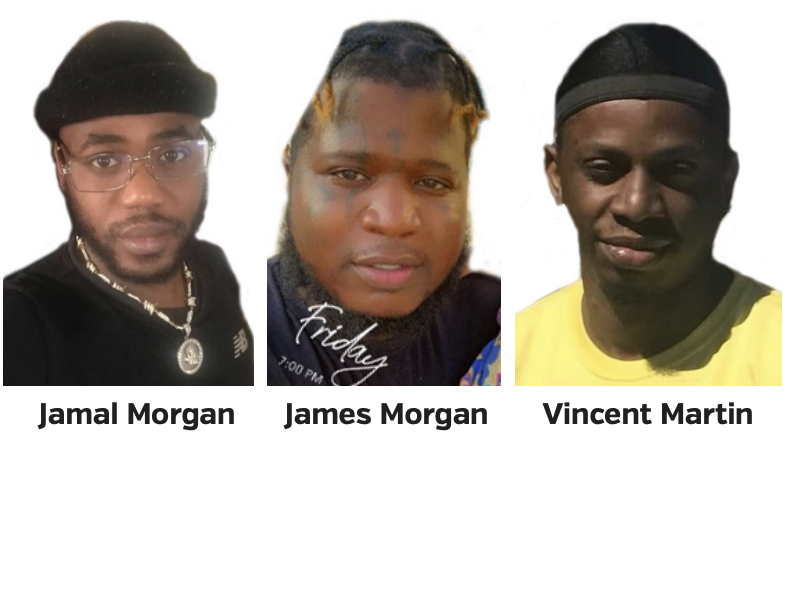
Jalonte Thompkins, 34, is charged with three counts of first-degree premeditated murder while armed, three counts of possession of a firearm during a crime of violence, and unlawful possession of a firearm during a crime of violence with a prior conviction greater than a year. The charges stem from his alleged involvement in a shooting that killed three brothers, 34-year-old James Morgan, 30-year-old Jamal Morgan, and 42-year-old Vincent Martin, on Aug. 5, 2023 on the 2500 block of Ontario Road, NW.

Renza Bryant, 30, was charged with three counts of first-degree murder while armed for his alleged involvement in the same incident. DC Superior Court Judge Robert Okun found there was no probable cause for the charge against Bryant and dismissed his case on Jan. 16, 2024. 

In opening statements for Thompkins’ trial, prosecutors argued he “chose to pursue his own version of justice” that constituted murder. At Unity Park, on the 1700 block of Columbia Road, NW, in the Adams Morgan neighborhood, Thompkins, Bryant, and the three victims had a confrontation. The three brothers walked southeast, Bryant northeast, and Thompkins followed the brothers southeast, said prosecutors. 

A shoot out ensued that left James, Jamal, and Martin dead. “This case isn’t about good guys and bad guys, it’s about decisions,” said prosecutors, and emphasized Thompkins decision to walk the same direction as the brothers after their initial confrontation. Thompkins decided to walk that direction and 37 seconds later, the shooting occurred, leaving 52 shell casings.

The prosecution acknowledged there was no video footage of the shooting itself, only the confrontation beforehand, but said the evidence from the scene would prove Thompkin’s guilt. A firearms analyst expert will testify that the markings on the casings reflect five guns were present. Although, a stand-alone casing could be from a gun unconnected to the incident, said the prosecution. 

According to the prosecutors, two of the firearms were linked through DNA to James and Martin. Thompkins DNA was associated with three .45 caliber casings that likely matched the bullets found in Jamal. The prosecutor said .40 caliber bullets were found in James and Martin. According to court documents, prosecutors previously alleged Bryant fired the .40 caliber firearm.

The case will likely not be a “whodunnit,” said the prosecution because eyewitness accounts, cell site data, and surveillance footage from nearby allegedly place Thompkins at the scene. The prosecution concluded, “you cannot take the law into your own hands,” as they assert Thompkins did.

Thompkins’ attorney, Brandi Harden, asserted “this case is not about murder, it’s about survival.” For Thompkins, Harden said, it was “live or die,” and with less than a second to decide he acted in self-defense. 

In the park, Harden said Thompkins was “confronted with three armed men…who were ready to kill.” Harden asserted that Thompkins went in the same direction as the victims not to follow them, but to retrieve his parked car. Thompkins’ license plate started with “JD,” and Harden told the jurors, “J like justice, D like defending yourself.”

Harden claimed the victims shot first, firing 23 shots at Thompkins, and “bullets were raining down on his head.” According to Harden, a witness will testify that they watched Thompkins crouch and hide from the gunfire. Harden claimed witness testimony will also reveal that one of the victims said, “He right there” when they saw Thompkins nearby. “They had found their target,” said Harden. 

In addition, Harden said the medical examiner will testify that the .45 caliber casings were found in one victim, not three. 

The prosecution’s case is “weak and unreliable,” argued Harden. The evidence will prove the other side fired the first shots and Thompkins “acted to protect himself.” Therefore, the jury must find him not guilty.

The parties are scheduled to reconvene on May 26.

‘I Was 12, and My Father Was Gunned Down in Broad Daylight,’ Says Homicide Victim’s Son at Sentencing

DC Superior Court Judge Todd Edelman sentenced a homicide defendant to 10-and-a-half years in prison after emotional impact statements from the victim’s family on May 15.

Khalid Claggett, 42, was convicted by a jury on Feb. 24 of voluntary manslaughter while armed, possession of a firearm during a crime of violence, and unlawful possession of a firearm with a prior conviction greater than a year. All charges face an aggravating factor of being committed while Claggett was on release for a prior offense. 

The conviction stemmed from Claggett’s involvement in the fatal shooting of 30-year-old Isaac Aull on June 11, 2021, on the 1600 block of Franklin Street, NE. Aull sustained eight gunshot wounds.

At Claggett’s sentencing, Aull’s mother said “that moment shattered me.” She elaborated, “Watching my son call out for help…is something that will live in my mind for the rest of my life.”

“Issac was chased, hunted down, and killed,” asserted his mother and argued Claggett’s actions did not reflect his self-defense claim. “Life should matter,” said Aull’s mother, and asked Judge Kravitz to impose the maximum sentence in the name of accountability and justice.

“Ten days before my birthday, I was 12, and my father was gunned down in broad daylight,” said Aull’s son. “I’ve been lost for words ever since,” he said, and continued that the loss “took a piece of who I was becoming.”

Claggett should “spend life in jail, he shouldn’t get out,” concluded Aull’s son.

In a letter, Aull’s cousin said he was “a light taken too soon,” that “family gatherings are quieter, birthdays are incomplete,” and Aull’s loss is a pain his family carries every day. “We ask for justice not out of hatred, but because his life deserves dignity,” wrote Aull’s cousin.

The prosecution requested a total sentence of 21-and-one-third years in prison, which Judge Kravitz noted was towards the top of the guidelines range. The prosecutor acknowledged that Aull shooting at Claggett in the Walgreens parking lot that day was not right, but argued Claggett responded with “vigilante justice” when “the remedy is supposed to be acting within the law.” 

The prosecutor elaborated that after Aull fired shots, Claggett returned fire, left the scene, and returned with a new gun and different appearance to “conceal his identity.” In addition, the prosecutor noted Claggett “had an opportunity to walk away, to let Aull live,” because video footage and witnesses reported that his gun jammed before he fixed it and fired more shots while Aull was unarmed on the ground.

Claggett declined to accept responsibility prior to sentencing, including his testimony in the trial, asserted prosecutors, and said “that level of selfishness should be concerning.” The prosecutor argued Claggett’s statements were entirely about himself.

The prosecutor also noted Claggett’s two prior felony convictions, multiple revocations of release, repeated possession of firearms, and that he was on release for two separate matters when the shooting occurred.

Howard McEachern, Claggett’s attorney, requested a seven year prison sentence and asked Judge Kravitz to rely on mitigation factors for the below-guidelines sentence. “Claggett’s life was put in danger in this case,” said McEachern.

The conflict between Claggett and Aull did not start in the Walgreens parking lot, but was “a culmination” of events, said McEachern. Prior to that day, McEachern emphasized, Claggett did not respond to their conflict in a way that jeopardized Aull’s life. McEachern acknowledged “certainly different decisions could have been made” by Claggett, but the incident happened in a blur.

In regard to Claggett’s testimony, McEachern said there was no forum to express remorse because he was explaining his actions and the reasoning behind them.

McEachern said during almost five years of incarceration he’s learned Claggett is a “thoughtful, measured, caring individual, and a loving father.” Claggett wants to better himself and prepare for reintegration into society, said McEachern.

Claggett apologized to Aull’s family and said “I know I’ve been a tremendous source of the grief you’ve felt.” To Judge Kravitz, Claggett said, “I would like to ask for leniency.” He concluded, “my emotions got the best of me.”

Judge Kravitz said “the pain experienced by Aull’s mother and son is profound,” and demonstrated the real world impact of violent crimes. “It’s a pain that no one should have to live through” and “a terrible loss for Aull and his family,” said the judge. 

The defense request for a downward departure from the guidelines was “unpersuasive and unavailing,” said Judge Kravitz. The jury already considered the mitigating factor in their verdict since Claggett was originally charged with first-degree murder.

Judge Kravitz did acknowledge Claggett’s demonstration of his capacity to address his needs and make a better life for himself upon release.

Judge Kravitz sentenced Claggett to nine-and-a-half years for manslaughter, five years for possession during a crime of violence, and one-and-a-half years for unlawful possession, all to run concurrently, followed by five years of supervised release. In addition, Claggett will serve an extra year in prison for committing the offenses during release. Upon release, Claggett will be required to register as a gun offender in DC.

No further dates were set.

Prosecutors Claim Homicide Victim Was Ambushed and Executed

Parties delivered opening statements before a jury in DC Superior Court Judge Jason Park’s courtroom on May 20. 

Joshua Allen, 36, is charged with premeditated first-degree murder while armed, assault with intent to kill while armed, aggravated assault knowingly while armed, three counts of possession of a firearm during a crime of violence, carrying a pistol without a license outside a home or business, unlawful possession of a firearm with a prior crime of violence, and obstruction of justice.

The charges stem from Allen’s alleged involvement in the fatal shooting of 28-year-old Delonte Johnson on the 4600 block of Hillside Road, SE on June, 11, 2021. There was one surviving victim who sustained gunshot wounds. Allen’s also charged with coercing a key witness to give false testimony during grand jury proceedings. 

During the hearing, prosecutors claimed Johnson had “no idea he was being hunted” by Allen, who they argued was waiting for Johnson at the location. “He had no idea that the entire time they were being tracked–hunted,” prosecutors insisted. 

Prosecutors stated Johnson and the surviving victim had walked over to “the candy lady’s,” where they said the victims purchased loose cigarettes. When they were walking back to an apartment building, prosecutors claimed, “This was the moment [Allen] waited for. And he shot, and shot, and shot,” and “[the victims] didn’t know they were walking into an ambush.” 

According to the prosecution, both victims sustained gunshot wounds to their backs, while Johnson sustained additional wounds to his head, execution style. 

“He stood no chance,” prosecutors argued, claiming Allen then sped off from the scene in a car, but crashed his silver Mercedes Benz at Bowen and Ridge Roads, SE. There, prosecutors stated, Allen ran from the scene, leaving his phone in the car, which they stated tracked his location throughout the day, ditching the murder weapon and a hoodie throughout his flight path. 

As for the key witness, prosecutors stated she had originally agreed to help Allen with the murder, stating she was would guide him to Johnson. 

Prosecutors also said after Allen’s arrest, he sent her a letter instructing her to lie at the grand jury. According to the prosecution, one of the key witness’ best friends had been murdered after Johnson’s killing, and Allen instructed her to blame Johnson’s shooting on him. 

After the witness allegedly provided false testimony, she found out Allen had known about her best friend “having a hit out for them,” and failed to warn her. Then, prosecutors claimed, is when she changed her mind and told the truth. 

“That was the limit,” they argued, and stated they provided her with immunity as long as she told the truth. 

“Allen had such faith in his control [on the witness], he never thought she’d sit here telling the truth,” the prosecutor stated. 

Sara Kopecki, Allen’s attorney, told jurors she was “sitting here with Mr. Allen,” and would do so until the end of the trial, where the jury would have to find him not guilty. “Be wary of tunnel vision,” she told jurors, claiming the lead detective from the Metropolitan Police Department (MPD) made up his mind before the investigation was over that Allen was the suspect. 

According to the defense, the MPD’s investigation “cut corners and hinders on too many assumptions.” 

“[Allen] is not guilty, and he will remain not guilty,” Kopecki asserted. 

Parties are slated to reconvene on May 21.

Judge Limits Use of Hug as Motive in Homicide Trial

DC Superior Court Judge Rainey Brandt ruled on May 18 that neither party could reference a hug between a homicide victim and a club manager as a potential motive for murder in trial. 

Cotey Wynn, 45, is charged with first-degree premeditated murder while armed, three counts of assault with intent to kill while armed, and four counts of possession of a firearm during a crime of violence for his alleged involvement in the fatal shooting of 31-year-old Blake Bozeman and injuries to three other victims at the CRU Lounge, on the 1300 block of H Street, on Sept. 23, 2023. Bozeman sustained one gunshot wound to the chest and one to the abdomen. 

Before the jury arrived, defense attorney Brian McDaniel said the prosecution’s theory that Wynn’s motive for murder was a hug between Bozeman and the female manager of CRU Lounge was unsupported. McDaniel contended that neither Wynn nor Bozeman had a romantic relationship with the club manager, and that Wynn had no motive or intent to harm anyone at the club. 

The prosecution countered that the argument was not relevant to the jury, as they don’t have a burden to prove motive. Judge Brandt agreed the issue should not reach the jury, stating that no one could use the hug in any arguments, clarifying she was not precluding testimony, just placing “guardrails” on it.

After the jury arrived, the prosecution called the head of security at CRU Lounge on the night of the shooting, who testified that he supervised three guards, checked in with servers and bartenders, but did not personally conduct pat downs. 

The witness told jurors that Wynn was a regular at the club who some people called the “king of H Street.” His role was to bring good business and favors in exchange for bypassing lines. The witness testified that he was familiar with prior incidents involving Wynn, including one that began inside the club and ended outside.

McDaniel objected to portions of the head of security’s testimony about prior incidents, arguing it was inadmissible hearsay, since the witness had not directly seen any of the incidents occur, only heard about them. 

The prosecution argued the defense had opened the door through its cross-examination of the club manager and another security guard, who each testified that Wynn could bypass security and pat downs as a privileged regular.

The prosecution contended this left the misleading impression that Wynn’s special treatment at the club was innocuous, and that testimony about prior incidents involving Wynn was necessary to provide context for why he received that treatment and how it bore on the night of the shooting.

Judge Brandt agreed to permit limited testimony, but ordered that the prosecution stop short of eliciting testimony about a prior incident in which a man was kicked out of the club and returned with a gun. 

In McDaniel’s cross-examination, the head of security acknowledged that he had no idea how a gun got into the club the night of the shooting and that there was no evidence Wynn assisted in getting a gun inside.

The witness also confirmed that a tent outside the club obscured video of pat downs, that standards for pat downs varied among guards, and that a back employee entrance had no guard stationed on the day of the incident. He further testified that he observed no prolonged stares between Wynn and Bozeman and saw no bad interaction between the two.

The defense then called the case’s lead Metropolitan Police Department (MPD) homicide detective who testified that he initially believed an SUV captured on video was a getaway vehicle Wynn had brought for the shooter. The detective acknowledged that he was originally mistaken, and the video showed the shooter arriving separately in a black SUV, with no involvement from Wynn in either vehicle. The detective also testified that the shooter reached the vehicle 16 seconds before Wynn crossed in front of him.

Judge Brandt also addressed a defense motion to dismiss the case filed the previous night, which cited the late disclosure of body-worn camera footage not produced until January and the deportation of a witness in the trial: a bouncer working at CRU Lounge the night of the shooting.

The judge declined to grant the dismissal but indicated she wanted to take some action in response, but that would be determined during later proceedings. 

The trial is set to resume on May 19. 

‘My Strategy is Simple, I’m Innocent,’ Says Vehicular Homicide Defendant Who Wants to Represent Himself

A homicide defendant declared his strategy was his innocence when he asked DC Superior Court Judge Todd Edelman to dismiss his stand-by attorney and allow him to proceed to trial alone in a hearing on May 19.

Kyle Piunti, 37, is charged with second-degree murder while armed and three counts of assault with a dangerous weapon for his alleged involvement in a vehicle crash that resulted in the death of 54-year-old Michael Hamlin. The incident occurred on Jan. 3, 2024 on Highway I-295 southbound around Mile Marker 1.

According to court documents, Piunti was reportedly driving over 100 miles per hour shortly before the crash. The speed limit in the area was 50 miles per hour.

Judge Edelman said he scheduled the hearing to address Piunti’s motion filed on May 5 to dismiss his attorney advisor, Howard McEachern, and proceed without stand-by counsel. 

Piunti said McEachern had not spoken with him since his appointment to the case on Feb. 5, despite Piunti’s attempts to reach out to him multiple times. McEachern acted as a “communication barrier” between himself and the prosecutors, argued Piunti.

McEachern agreed that his communication was not at a level that would make Piunti feel comfortable. “My candor to the court,” said McEachern, was that he was on leave for about four weeks and busy with other trials. McEachern said prosecutors sent him evidence that he could deliver to Piunti at the jail in the next week and improve communication.

Judge Edelman understood Piunti’s frustration with stand-by counsel that had not contacted him, but asked whether McEachern’s promise to visit in the next week satisfied Piunti for now, and then parties could revisit the issue if necessary. 

Piunti said on prior occasions McEachern did not keep his promise to visit the jail and he preferred if the judge would remove him from the case. 

Judge Edelman expressed concern with dismissing McEachern since Piunti’s trial is scheduled to begin on June 29. In addition, the judge said Piunti lost access to computers at the jail because he sent emails to the United States Attorney’s Office (USAO) that violated the Department of Corrections’ (DOC) policies. Without a computer, the judge questioned how Piunti would prepare for trial on his own.

Piunti argued he was “never given rules” with the computers at the jail but the judge said he could not change the situation. 

Judge Edelman did not grant Piunti’s motion, asked McEachern to visit the jail and show Piunti the evidence, and said if Piunti’s concerns remain they will schedule a prompt hearing.

“I don’t want him as my attorney,” said Piunti and continued, “I don’t want him anywhere near my case.” 

Judge Edelman confirmed with Piunti that he wanted to proceed to trial in about one month without counsel. “The odds are vanishingly small” said Judge Edelman that he could find new stand-by counsel that is available and could prepare for the trial. Judge Edelman emphasized that he had never heard of a defendant in a felony case at trial without an attorney or an advisor next to them. Piunti affirmed his request to proceed alone.

The judge asked the prosecution to voice their position on the issue. The prosecutor requested Judge Edelman order a mental competency screening. To stand trial, Piunti must understand the charges against him and be able to assist in his own defense. 

“The guard rails are off” without a defense attorney, asserted the prosecutor and noted Piunti’s attempt to fire his fifth competent attorney, “somewhat erratic behavior,” and “unusual logic” in filings.

Judge Edelman agreed with the prosecutor and said he had his own concerns about Piunti’s mental competency.

“I don’t have to comply in that situation, right,” questioned Piunti. The judge emphasized that if he wants the case to move forward, it’s important for Piunti to comply with the screening. “I’m telling you right now, I’m not going to,” said Piunti.

“My strategy is simple, I’m innocent,” declared Piunti about his trial strategy. 

Judge Edelman said Piunti’s repeated interruptions in the hearing and refusal to comply with the competency screening demonstrated why it would be a “disaster” for him to not have an attorney present at trial. 

The parties are scheduled to reconvene on May 29 for a mental observation hearing.

‘I Made A Mistake,’ Says Victim About Position of Mass Shooting Suspect

A victim admitted he was mistaken about a murder defendant’s location during a mass shooting after viewing surveillance footage during a trial before DC Superior Court Judge Rainey Brandt on May 14. 

Cotey Wynn, 45, is charged with first-degree premeditated murder while armed, three counts of assault with intent to kill while armed, and four counts of possession of a firearm during a crime of violence. The charges stem from his alleged involvement in the fatal shooting of 31-year-old Blake Bozeman and shooting of three surviving victims on Sept. 23, 2023. The incident occurred at CRU Lounge on the 1300 block of H Street, NE.

According to prosecutors, Wynn allegedly aided and abetted the shooter by facilitating his entry into the club with the firearm.

A former security guard at CRU Lounge resumed testimony as a victim in the case. The witness testified that a bullet remains lodged in his chest only centimeters from his carotid artery. He explained doctors advised against surgery because of the risks involved, adding that if his condition worsened, “it’s already too late kind of thing.”

Wynn’s attorney, Brian McDaniel questioned the victim about his role working security at the lounge and his familiarity with Wynn. The witness described Wynn as a “regular” who visited the lounge several times each month and testified they had a “cordial” relationship and never had problems with each other.

McDaniel then focused on the victim’s recollection of the shooting. The victim testified that while wounded on the floor, he looked over his shoulder and initially believed Wynn stood next to the individual in a white cardigan, who the victim said was the shooter.

After viewing surveillance footage, however, the victim acknowledged his recollection was incorrect, “I made a mistake in saying that,” the witness said regarding his prior statement that Wynn stood directly beside the shooter.

On redirect examination, the prosecution asked why the victim previously avoided viewing the surveillance footage. The witness replied, “Stuff is hard to see. It’s hard to see, to sit there and watch yourself.”

The prosecution also called another victim, a postal clerk who testified he was shot twice while at the lounge. The witness stated he underwent security screening before entering the club and did not observe any confrontation before gunfire erupted.

“I remember my body being, I guess, in a state of shock, still not knowing even like what happened or what was really going on,” the witness said.

The victim testified the shooting collapsed his lungs and doctors had to remove his gallbladder and approximately 70 percent of his liver. He said he spent two months hospitalized, was placed in an induced coma, and later had to relear to walk.

The witness also showed the jury scars from his injuries and testified he remains on light duty at the post office.

McDaniel questioned the victim about whether he specifically remembered being patted down that night or relied on his general experiences at the lounge. The witness insisted he distinctly remembered the security check that evening.

The prosecution next called a deputy medical examiner who performed Bozeman’s autopsy on Sept. 24, 2023, and identified two major gunshot wounds to the torso.

According to the expert, one wound entered the right side of the chest, struck the lung and ribs, and left a projectile lodged in Bozeman’s back. A second wound entered above the abdomen and exited through the back after damaging the stomach, pancreas, adrenal gland, aorta–the largest blood vessel in the body–as well as backbones.

While reviewing autopsy photographs and diagrams for the jury, the forensic pathologist testified one gunshot wound showed stippling, in which she described as the kind of the punctate, the little red spots around a gunshot wound which are also referred to as powder tattooing and unburnt gunpowder. She testified that this indicated the shot was fired from close range, potentially within inches, and that the second wound reflected an intermediate firing range of several inches up to approximately three feet.

The analyst concluded the cause of death was multiple gunshot wounds and classified the manner of death as homicide. She explained the injuries caused massive blood loss and “bleeding out.”

The prosecution also called the owner of a nearby smoke shop who testified she had known Wynn for years because he is the father of her cousin. 

The business owner identified surveillance footage from inside her business showing her speaking with a man dressed in white, who is the alleged shooter, at 10:48 p. m. According to court documents, the man entered the establishment approximately 62 minutes before the shooting. 

According to the witness, the man asked where Wynn was located. Although she was not certain, “either down here or CRU,” she told him, pointing in a direction that included the CRU Lounge and nearby establishments.

Before concluding the day, parties argued over the defense calling the lead detective as a witness.

The prosecution objected to questioning about the detective’s personal “beliefs” about the case during his investigation. They argued that these were subjective theories or speculation about what was happening at a particular “snapshot in time” during his investigation. 

The prosecution noted the detective’s initial theories that Wynn arrived at the scene in a specific car and that Wynn was the person who actually had the gun, were irrelevant. “His belief as to that, that’s not relevant,” the prosecution added.

“Their subjective beliefs play no factor in what this jury has to decide,” the prosecution said, adding that “what matters is the facts.”

They contended that unless the defense could prove these beliefs directly led to a specific failure or mistake in the investigation, the detective’s thinking or theory that was then debunked was irrelevant and should not be presented to the jury. 

McDaniel argued the defense should be permitted to question the detective about investigative mistakes and the thoroughness of the investigation.

Judge Brandt ruled the defense may question the detective regarding investigative actions and the thoroughness of the case but cautioned both sides to comply with evidentiary rules.

“Do not play fast and loose,” Judge Brandt said.

Parties are scheduled to reconvene on May 18.

One of Two Shooting Co-Defs Rejects ‘Wired’ Plea, Trial Scheduled

Two shooting co-defendants who police say alternated using an assault-style rifle and a Glock Model 30 .45 caliber pistol appeared before DC Superior Court Judge Judith Pipe on May 19 for a pre-trial hearing.  

Tyjuan Liggins, 29, is facing a sixteen-count indictment for assault with a dangerous weapon, endangerment with a firearm multiple projectiles, possession of a firearm in a crime of violence, unlawful discharge of a firearm, destruction of property of less than $1,000, unlawful possession of a firearm with a prior conviction of more than one year, two counts of carrying a pistol without a license, two counts of possession of an unregistered firearm and two counts of unlawful possession of ammunition. 

Deonte “a.k.a. Baby D” Nolan, 18, is charged in a 15-count indictment for assault with a dangerous weapon,possession of a firearm during a crime of violence, endangerment with a firearm-multiple projectiles, unlawful discharge of a firearm, destruction of property of $1,000 or more, destruction of property of less than $1,000, carrying a pistol without a license, possession of an unregistered firearm and unlawful possession of ammunition.

The pair is accused of shooting at least 13 times in the area of a parking lot on the 1200 block of I Street, SE on Jan. 11.  According to a police report,”It was obvious that both subjects know each other and are working together,” based on surveillance footage. The video also purports to show Liggins exchanging fire with occupants of a white Mercedes at the intersection of 12th and I Streets, SE.  There were no reports of injuries in the incident. 

During the hearing the prosecutor noted that a “wired” plea had been extended to the defendants, meaning that both would have to accept the same terms to resolve the case.  

However, Nolan, represented by Diana Yu, declined the offer which would have dropped most of the charges besides assault with a dangerous weapon and carrying a pistol without a license. 

Liggins attorney, Matthew Covert, said his client was still interested in a deal and was willing to extend the trial deadline to consider another offer. 

Covert argued for Liggins’ release on the grounds that he has family support and would like to attend his five-year-old daughter’s graduation next week.  Further, Covert said Liggins could live with his aunt. 

Judge Pipe noted that Liggins had a prior gun conviction that was set aside.  The prosecutor argued for continued detention given the “concerning nature of the circumstances” and that the shooting occurred outside Liggins home.  The judge ruled in favor of detention. Nolan is also being held in the case. 

The trial is set for July 7 and the next hearing is scheduled for June 26 

Judge Sentences Three Carjacking, Robbery Defendants–Two to Jail, the Third Gets Probation

DC Superior Court Judge Andrea Hertzfeld gave two defendants in a carjacking, robbery case 64 month concurrent sentences but reluctantly released the third suspect on probation in a May 20 hearing. 

“I don’t know what I’m supposed to do here,”said Judge Hertzfeld as she considered the fate of Jalen Dyson, 25, convicted with the two others in a crime the judge described as “horrible” and horrendous.”

Dyson was originally charged with robbery while armed.  His two co-defendants, Yahshaiyah Enoch, 23, faced a count of armed robbery and Xavier Wall was accused of  conspiracy, armed carjacking, possession of a firearm in a crime of violence, robbery while armed, assault to commit robbery while armed and first-degree theft. 

According to a police report, on June 23, 2023, officers responded to a robbery call at the Ivy City Motel on the 1600 Block of New York Avenue, NE. The victim said he was following up an Instagram connection he made with a woman the previous day suggesting they meet for a tryst at the motel and sent the woman $120 on a cash app.

However, once in the motel room two men appeared, one pointing a gun at the victim and pistol whipping him in what turned out to be a robbery and a carjacking.  

What happened next, said the prosecutor, is that the victim was beaten, stripped naked, hog-tied and $200 was stolen from his wallet.  “This could have gone even worse,” she said. 

The prosecutor noted this is Wall’s 18th arrest and fifth conviction.  “He was the most important cog in the machine,” said the prosecutor.  Wall was on probation when the robbery occurred.  Surveillance helped police identify the suspects.  

The victim didn’t appear but the prosecutor said he felt the perpetrators should face severe punishment for their actions. 

Considering their records, the sentencing guidelines for Wall and Enoch were up to 72 months and 32 months, respectively.  Dyson could have gone to jail for 28 months. 

In contrast to the prosecution’s narrative, Dyson’s attorney, Terrence Austin, said his client was deeply remorseful and was fighting to escape from a troubled background and mental health challenges.  

When DC Superior Court Judge Eric Glover found no probable cause that Dyson committed the crime in Nov. of 2023, his case was dismissed. 

At that point Dyson went back to school. “That shows recognition.  I have agency and the ability to speak for myself,” said Austin on behalf of his client.. 

An advocate for Dyson addressed the court saying, “The last three years have been a time of transformation.”   

However, the case was reopened and in March a Grand Jury indicted Dyson on armed carjacking, robbery and related charges. All three defendants then accepted a prosecution offer to plead guilty. 

Fighting back tears, Dyson apologized and said, “I’m not the same person I was in 2023.”  He currently works at Frontline Community Services, an agency that provides care to patients with intellectual and developmental disabilities.  “They absolutely adore Jalen,” says Austin, who argued for probation. 

Wall’s attorney, Carrie Waletz, said his previous arrests were not as serious as the current charges and he doesn’t have a violent record.  Citing Wall’s troubled upbringing, she said he wants to be a better father for his five-year-old child.  In the DC jail he’s nearing completion of his GED and is learning to be a commercial painter.

Wall also apologized for his actions.

Enoch’s lawyer, John Harvey, said the victim wasn’t lured to the motel.  “Unfortunately, the victim thought she met that description.”  Harvey described Enoch’s actions as a “cry for help” based on her history of mental illness.  He emphasized she’s also working on her GED and wants “to be worthy of the love that now exists in the family.”  

In Enoch’s soft-spoken apology, she said she “dreamed to be a better person.”

Acknowledging the challenges facing the defendants, Judge Hertzfeld nonetheless scolded them for committing a “calculated, premeditated [and] horrible offense” against the victim and said the plea deal from the prosecution carried significant benefits. 

During the hearing she sentenced Wall and Enoch to 44 months for the robbery charge, a concurrent 20 months for carrying a pistol without a license and three years supervised release..

Judge Hertzfeld rejected a defense effort to invoke the Youth Rehabilitation Act (YRA) which would have given her more flexibility in sentencing and sealed the offenders’ records if they were successful in prison. 

Clearly, the judge was struggling to thread the sentencing needle for Dyson. “I don’t doubt for a second you didn’t know what was going to happen,” she mused in considering the 10-to-28 month guideline for Dyson’s offense of attempted conspiracy to commit an act of violence. 

“On the other hand, I see the progress you’ve made and the progress you’ve achieved to start over,” said the judge.

Her offer was either do the ten month sentence and be done with it.  Or take 28 months suspended and three years supervised release.  That’s with the understanding that he will remain employed and seek mental health counseling. 

“Talk it over with your lawyer,” said Judge Hertzfeld.  After a brief consultation, Dyson took the release option. 

“I’m giving you a break, so take advantage of it,” said Judge Hertzfeld.  The judge also delayed formally entering Wall’s sentence until he finished his GED at the DC Jail.

No further proceedings were scheduled in the cases.  

Homicide Defendant Extradited to DC for 2023 Murder

DC Superior Court Judge Michael Ryan presided over a homicide defendant’s bench warrant return hearing on May 19, during which the suspect was arraigned for a 2023 murder. 

Jasson Vasquez Pineda, 29, is charged with first-degree murder while armed and possession of a firearm during a crime of violence for his alleged involvement in the fatal shooting of 27-year-old Larry Thomas on Aug. 24, 2023 on the 3600 block of 16th Street, NW. 

Vasquez Pineda’s mom, Emerita Garcia, 47, was previously charged with first-degree murder while armed for her alleged involvement in the same incident. Prosecutors claimed she helped Vasquez Pineda commit the crime by bringing him a bag, which they argued had the gun which was used to shoot Thomas. 

Her case was dismissed without prejudice by the prosecution in the summer of 2024, but it is unclear if they’ll re-open the matter.. 

Vasquez Pineda was extradited to DC from Georgia, where he was arrested in late April on a bench warrant that was issued in March. 

During Vasquez Pineda’s hearing, Camille Wagner, his attorney, alerted the court of his intent to plead not guilty to all charges, and asserted his constitutional rights including the right to a speedy trial. 

Wagner also requested Vasquez Pineda be released, or the court to schedule a detention hearing for parties to argue release. 

Judge Ryan and the prosecution stated they did not currently have sufficient information on the case to consider arguments for release. 

Parties are slated to reconvene June 10.

Judge Curbs Testimony From FBI Location Expert in Homicide Trial

DC Superior Court Judge Michael Ryan struck some testimony from a Federal Bureau of Investigations (FBI) special agent on May 14 that prosecutors allege tracked a defendant’s whereabouts at the time of a homicide.

D’Andre Montgomery, 20, is charged with conspiracy, premeditated first-degree murder while armed, felony murder while armed with aggravating circumstances, four counts of possession of a firearm during a crime of violence, attempt to commit robbery while armed, assault with intent to kill while armed, unauthorized use of a vehicle during a crime of violence, and carrying a pistol without a license outside a home or business for his alleged involvement in the fatal shooting of 28-year-old Kenneth Barksdale Jr. on Dec. 16, 2023 at the 1200 block of 44th Place, SE. Barksdale sustained multiple gunshot wounds to the abdomen and arms.

Kevin Hider, 20, and Eric Sheffield, 21, also face charges for their alleged involvement in Barksdale’s death but will face separate trials.  

The prosecution called a FBI Special Agent and member of the Cellular Analysis Survey Team (CAST), whom the court qualified as an expert in cell site analysis. The agent explained to jurors that cell sites are locations used by carriers to provide service, that call detail records show the date, time, and identifier of a cell site used during a call, and that a phone does not always connect to the closest tower, but rather to the one giving the best signal. 

The agent testified that he analyzed records associated with the phone number of Hider and Montgomery’s GPS data provided by the prosecution. Using mapping software, he walked jurors through a series of locations from Dec. 15 and 16, 2023, including Hider’s reported residence, a restaurant called Sarney’s, and the area near the homicide scene. He described instances in which Montgomery’s GPS and Hider’s phone connected to the same cell site, repeatedly using the term “colocated.”

Montgomery’s attorney, Charlotte Gilliland, objected, arguing the testimony was misleading and revisited an earlier ruling from DC Superior Court Judge Judge Dayson that the limitations of cell site analysis needs to be clear. Judge Ryan agreed that the testimony was problematic, finding that the level of accuracy in cell site analysis does not allow for that degree of location specificity. 

Instead, Judge Ryan ordered the prosecution to use the language: “the GPS data is within the tower’s cover data, where the phone is most likely to be found.”

When the jury returned, Judge Ryan instructed them that the word “colocation” was stricken from the record, and the testimony that accompanied it should be disregarded.

Direct examination continued with the agent describing additional plot points near the homicide location at 8:06 and 8:07 p. m. on Dec. 16. According to court records, the murder allegedly occurred at 8:08 p. m. on Dec. 16. A series of five calls also connected between 10:01 p. m. and 12:01 a. m. on Dec. 16 and 17, which was consistent with the Montgomery GPS and Hider’s phone being close to one another.

In Gilliland’s cross-examination, the CAST agent acknowledged that he had only reviewed Hider’s phone records, not Montgomery’s, and that cell site analysis connects a phone to a tower rather than a specific address. Gilliland emphasized that the prosecution had provided all of Montgomery’s GPS data to the FBI. 

Gilliland also confirmed with the agent that there was a lack of representation of cell tower reach in the prosecution’s exhibits and that there were many other overlapping cell sites in the regions they were found. He also testified that no cell site information suggested Montgomery’s phone was present when a Chevy Malibu was stolen from the 3200 block of O Street, SE on Dec. 15, 2023, the vehicle prosecutors allege the defendants drove to the homicide scene the following night. 

According to court documents, ballistics casings recovered from inside the stolen Malibu were later linked to casings from the homicide scene, and Montgomery’s GPS ankle monitor allegedly placed him near the site of the theft at the time it occurred. 

On redirect, the agent told jurors that the absence of data does not mean a phone was not in a given location, and that it is common for the prosecution to provide the locations he plots.

The prosecution also called a patrol officer from the Metropolitan Police Department (MPD), who was recalled to testify about firearms recovered during the investigation. The officer told jurors that five firearms were located in connection with the case, and that three people were arrested on the night of the shooting.

On cross-examination, Gilliland emphasized that the prosecution had not asked the officer about the firearms during her previous testimony, and had not informed her that she would be recalled. 

The prosecution then established that all of the evidence the officer testified about existed before her prior appearance, and that they were not attempting to hide evidence.

The trial is set to resume on May 18.

Judge Finds Probable Cause That Teen Fatally Shot Friend After Stolen Gun Dispute

DC Superior Court Judge Todd Edelman found probable cause and denied release on May 13 for a defendant accused of fatally shooting his friend because of a stolen gun.

Treshawn Herndon, 18, is charged with first-degree premeditated murder while armed for his alleged involvement in the fatal shooting of 18-year-old Raymond Washington on June 30, 2024 on the 700 block of Marietta Place, NW. Washington died from a gunshot wound to his back.

Byron Sneed, 41, is charged with first-degree murder while armed in a drive-by or random shooting for his alleged involvement as the getaway driver.

At Herndon’s preliminary hearing, the prosecution called the lead Metropolitan Police Department (MPD) detective on the case and played video footage. The first video, the detective said, showed Herndon, Washington, an unidentified juvenile suspect, and an eyewitness in the hallway inside Herndon’s residence at the time, on the 5500 block of Illinois Avenue, NW. 

The detective said he learned in his investigation that the video showed a fight between Herndon and Washington, reportedly over a gun. Herndon’s relative told the detective that Herndon called them and said Washington stole his gun. 

Then, the detective said, the video showed Washington allegedly run down the hallway and Herndon run after him, followed by the juvenile suspect and eyewitness. A short time later, the detective said video showed Herndon and the juvenile suspect returning to Herndon’s residence.

In another video, the detective said Herndon and the juvenile suspect entered the suspect vehicle, allegedly driven by Sneed. According to the detective, both suspects reportedly sat on the passenger side, Herndon in the front seat and the juvenile in the back.

The detective noted that in multiple videos, the eyewitness walked several steps ahead of Washington prior to the shooting, significant because Washington sustained a single gunshot wound to his back. 

In a different video, Washington and the eyewitness run into view, followed by the suspect vehicle. The detective noted the vehicle’s front passenger window was down and the rear passenger window was up. Although there’s no video footage of the shooting itself, according to the detective’s theory of the case, Herndon allegedly fired the fatal shot from the front passenger window.

Video footage then showed the eyewitness run down the street and jump over bushes into a yard on the 5700 block of 7th Street, NW. 

The detective described video footage of the suspect vehicle driving down 7th Street, making a U-turn, and heading back towards where Washington’s body was found. The suspect vehicle stopped on the video, the juvenile suspect exited the vehicle, went in the direction of Washington’s body, and then returned to the vehicle. The footage then showed the vehicle drop the suspects off and then they returned to Herndon’s reported residence.

In cross-examination, Herndon’s attorney, Carrie Weletz, confirmed with the detective that there was no video of the actual shooting and witness accounts of what occurred varied. Weletz noted two witnesses told the detective Washington was injured and then pushed out of the vehicle and two said Washington was chased. In addition, one witness also said they saw someone standing over Washington with a gun.

The eyewitness was the only person who said shots were fired out of a car, noted Weletz, and emphasized that he fled the shooting and jumped over a bush, had open criminal cases, and was forthcoming with information. The detective clarified that the eyewitness was comfortable relating the narrative of events but not naming the suspects. 

Weletz also noted that Herndon and Washington were friends and the detective had no information about fights between them prior to the day of the shooting. In addition, no firearm was recovered.

The prosecutor clarified with the detective that there was no evidence to suggest Washington was dropped from the vehicle and no indication of anyone chasing him.

After the detective finished his testimony, Weletz argued there was no probable cause and claimed the detective’s testimony synthesized the holes in the evidence. The video footage had a blindspot when the actual shooting occurred and there was no forensic, video, or witness that identified Herndon as the person in the car who shot from the passenger seat. 

Weletz emphasized the witnesses “wildly different accounts” of what occurred and said no witness, including the eyewitness, identified Herndon as the shooter or said he was involved. Weletz argued it was “wild assumptions” to believe Herndon was in the suspect vehicle and shot out of it.

Judge Edelman noted the low standard and found probable cause for the charge against Herndon. The judge noted the significant evidence of a fight between Herndon and Washington a short time prior at Herndon’s residence. 

Judge Edelman said, “The video [in Herndon’s residence] is enough to establish his identity.” Herndon entered the suspect vehicle and a shooting occurred shortly after with the only window down where he was seated. The bullets found in the vehicle likely matched the ones used in the shooting. 

Although Judge Edelman agreed with Weletz that the evidence was inferential, he concluded the only way the shooting could have happened was from that car. The other witness accounts are contradicted by video footage, not corroborated, said the judge.

Weletz then asked for Herndon’s release on home confinement with an exception for him to attend and complete high school. According to Weletz, Herndon would live with his godmother, had no adult criminal history, and the prosecution overstated their case. The case lacked physical evidence, was purely circumstantial, and had varying witness accounts, argued Weletz.

The prosecutor requested Herndon remain held because “If you’re willing to kill a friend,” then there is significant risk to the community at large. The case showed Herndon’s easy access to firearms, argued the prosecutor, because his gun was stolen and he quickly retrieved another one used in the murder. They added that the firearm used in the case was not recovered and potentially still accessible to Herndon.

Judge Edelman denied Herndon’s release because of the nature and circumstances of the incident. Herndon apparently had property taken from him and his response was violent and deadly, said the judge. It was “entirely premeditated,” said Judge Edelman, and although the case is circumstantial and inferential, it is fairly strong.

The parties are scheduled to reconvene on Sept. 11 before DC Superior Court Judge Michael Ryan.