Search Icon Search site

Search

‘No Doubt in My Mind,’ Says Judge as He Finds Probable Cause in a Homicide

On Feb. 27, DC Superior Court Judge Robert Okun found probable cause in a homicide case. 

Juan Guerra, 31, is charged with second-degree murder for his alleged involvement in the fatal beating of 31-year-old Peter Miller III, which occurred on Oct. 6, 2023, on the 900 block of Maine Avenue, SW. Miller succumbed to his injuries on Oct. 11, 2023. 

According to court documents, officers responded to the location for the report of a “natural” death, but were suspicious after arriving at the scene and immediately called homicide detectives. 

Miller was located inside of the residence, which he shared with Guerra, and was transported to a local hospital in critical condition. Five days later, Miller was pronounced dead, and the Office of the Chief Medical Examiner (OCME) ruled that the homicide was due to blunt force trauma. 

In the hearing, a detective from the Metropolitan Police Department (MPD) testified about objects found in Guerra’s apartment, which allegedly were firearms, drugs, and a fake identification card with Guerra’s photo. 

The prosecution argued that Guerra, Miller and a witness began shooting dice but the game started to get rowdy because Guerra and Miller started changing the rules.

After that, a witness who was friends with both Guerra and Miller left the apartment. The witness then got a call from Guerra, saying to go back to the apartment, and that is when he saw Miller laying face down on the couch. The witness then turned Miller around and noticed that he wasn’t breathing. They immediately called 911 and began performing CPR on Miller.  

Guerra’s defense attorney, Kevin Mosley, argued that Miller was the main aggressor in this situation and therefore Guerra’s actions were in self-defense. 

The prosecution claimed that this was “an assault turned homicide.” At the time of the incident, Guerra and Miller were the only individuals in the apartment. 

The prosecution argued that Guerra showed a “conscious disregard” for Miller’s life, although he claimed that he acted out of self-defense. 

Guerra had injuries that indicated he had been in a fight, but nothing close to the injuries Miller suffered, according to the prosecution. 

Ultimately, the judge found probable cause. “No doubt in my mind that Guerra killed Miller,” said Judge Okun also stating he didn’t think he did it on purpose. 

Judge Okun took into consideration Guerra’s history, the nature of the offense, and evidence when making the decision on whether he should be released on home confinement or remain detained. 

Judge Okun ruled that Guerra remain detained.

Mosley requested that Guerra be transferred to the Correctional Treatment Facility (CTF) due to the fact that he has a chest injury and the jail conditions are inadequate for a full recovery. Judge Okun agreed, and recommended that he be moved to the CTF. 

Parties are slated to return on June 7 for a status hearing. 

Witness Confirms Path of Suspect Vehicle in 2020 Teen Homicide

On Feb. 28, GPS data and surveillance footage were introduced in a 2020 homicide case before DC Superior Court Judge Rainey Brandt’s courtroom 

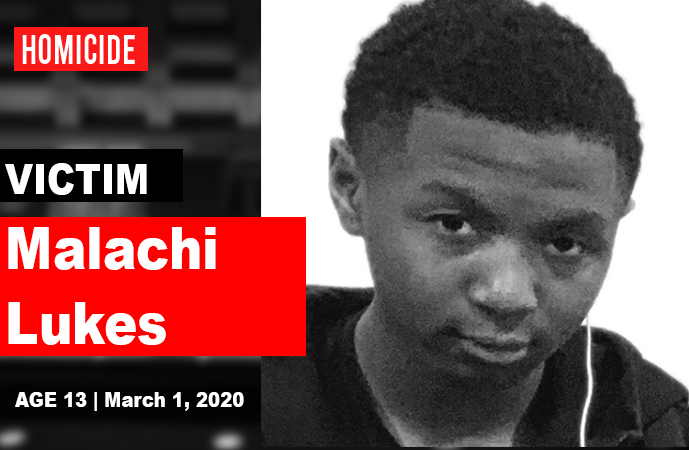
Koran Jackson, 23, Tyiion Kyree Freeman, 24, and Stephen Nelson, 22, are three of five individuals charged with multiple counts of conspiracy, assault with the intent to kill while armed, first-degree murder while armed, carrying a pistol without a license, and possession of a firearm during a crime of violence in connection to the fatal shooting of 13-year-old Malachi Lukes on March 1, 2020 on the 600 block of S Street, NW. The shooting also left a second juvenile victim located in the vicinity suffering from an apparent gunshot wound to the right leg.  

The prosecution’s first witness in this proceeding monitors stolen vehicles for Getaround, a mobile car rental app.

The witness was able to verify GPS data collected from a reported stolen rental from Feb. 27 to March 1 vehicle allegedly involved in Lukes’ shooting.

The prosecution used GPS data provided by the witness to place the stolen car at a BP gas station, located on the 3400 block of Georgia Avenue, NW, approximately one hour before the shooting. In their opening, the prosecution mentioned that video surveillance would place the defendants at the same BP gas station. 

Using the same GPS data, the witness testified that the stolen vehicle’s GPS shows it driving through an alley on S Street, NW on the day and time of the shooting.

The final location the prosecution referenced, the 1800 block of Bruce Place, SE, was an address the vehicle visited on Feb. 28, Feb. 29, and March 1, which is alleged to belong to one of the defendants’ family members. 

In cross examination, Freeman’s defense attorney, Andrew Ain, asked how Getaround would know a vehicle was stolen. The witness stated that Getaround needs a third party to allege a theft, which can be app users or police. 

Ain followed up by asking, “Anyone could lie to you and tell you their car was stolen when it wasn’t and you’d have no way of knowing correct”?.

“Correct” the witness answered. 

Ain then asked the witness if it was possible to calculate the average speed of the vehicle given some of the data he had mapped out on S Street. The witness said that while it was possible, it was “not always an accurate way to measure speed”. 

Nevertheless, Ain had the witness calculate the average speed of the car and found that the longest the car could have stopped for was 19 seconds. 

Similarly, Brian McDaniel, Jackson’s defense attorney, asked the witness if he could tell if the car had stopped at all from the data of S Street. The witness responded that he could not. 

McDaniel asked the witness if because there were no records of the vehicle being rented on Feb. 27, had he ever found out how the vehicle was stolen. The witness claimed the only information he had was a lack of rental record on Feb. 27.  

In their redirect, prosecution addressed asked the witness which third party had alerted Getaround that the vehicle was stolen. The witness replied it was the Metropolitan Police Department (MPD).

Prosecution then called a witness who used to reside in an apartment complex with security cameras located near the crime scene.

He explained that because the cameras installed were registered with DC’s camera rebate program, it was typical for an officer or detective to express interest in acquiring footage from the exterior cameras for investigative purposes.

The witness recalled being contacted by an officer on March 1, 2020, who was interested in footage within a 30 minute time frame, showing “four young Black males” walking in the area after Lukes’ shooting.  

Prosecution played the surveillance footage, which depicted four individuals walking down a sidewalk together.

The witness confirmed the footage was accurate.

Trial is set to resume March 4.

Defense Accuses Prosecution of Destroying Homicide Case Evidence

On Feb. 28, DC Superior Court Judge Maribeth Raffinan denied a defense motion to dismiss indictment charges against a murder defendant, following an accusation the prosecution destroyed evidence in the case.

Daquan Gray, 22, is charged with first-degree murder while armed, possession of a firearm during a crime of violence, and carrying a pistol without a license, for his alleged involvement in the fatal shooting of 15-year-old Jaylyn Wheeler on May 16, 2018, at the 600 block of Alabama Avenue, SE

Gray, who was 16-years-old at the time of the incident, allegedly shot Wheeler and was tried as an adult.

At the hearing, Judge Raffinan stated that the Department of Forensic Services (DFS)  “improperly handled evidence” when taking DNA samples from the firearm and magazine used in the shooting, and that a stipulation by both parties about how the information is was warranted.

Judge Raffinan advised all parties to “jointly draft a jury instruction” and reach a agreed approach to present to the jury regarding the mishandling of DNA evidence in this case. 

Gray’s defense attorney, Dana Page, claimed that the prosecution “destroyed” DNA evidence, and she would disclose that in her stipulation.  

That prompted concern from the prosecution on whether the parties would be able to draft a stipulation together. 

“I think it is going to be difficult to agree on the wording of a stipulation,” the prosecution said. “I’m not hopeful we will reach an agreement.” 

Judge Raffinan said both parties should stay away from using strong or characterizing language in their stipulations. 

“It is a legal instruction but I would stay away from describing behavior or characterizations about what happened,” the judge said. 

The judge said she would step in if the parties could not agree. 

“If parties cannot agree, it can be briefed and we can discuss it in court,” the judge said. “I’ll direct both parties to reach a stipulation.” 

Parties are slated to return on June 12. 

Judge Revokes Probation for Homicide Defendant

On Feb. 29, DC Superior Court Judge Robert Okun revoked a homicide defendant’s probation based on his violation of release conditions. 

On January 21, 2020, Adrian Vinson, 23, pleaded guilty to involuntary manslaughter for his involvement in the fatal shooting of 19-year-old Tahlil Byrd  on Sept. 29, 2019, at the 600 block of S Street. 

Vinson was originally sentenced to five years of incarceration with 18 months of supervised release for involuntary manslaughter. 

When Vinson was placed on probation for 18 months, during his release, he allegedly violated the terms of probation by committing a new offense, causing him to be re-arrested on a Fugitive from Justice Charge, which is being handled in District Court. 

In the hearing, the prosecution asked for an additional six months to be added to his manslaughter sentence and three years of supervised release, insisting he failed to comply with the conditions of his probation for the involuntary manslaughter charge. The prosecution mentioned that during his sentencing, Vinson was “given a gift” and “it should’ve been a wake-up call.” 

The prosecution alerted the court that they are aware that if Vinson didn’t shoot first, Byrd would’ve probably shot him. 

They alleged that Vinson made a rap career out of Byrd’s murder. The prosecution’s main concern was how Vinson showed a lack of remorse for his actions, and used his experience of murdering Byrd, for “clout.”

Vinson’s defense attorney, Douglas Wood, agreed that an additional six months to the original sentence and three years of supervised release was appropriate. 

Judge Okun agreed with all parties and sentenced Vinson to six months of incarceration consecutively and three years of supervised release concurrently with the original sentence. 

No further dates were set. 

Judge Denies Homicide Defendant’s Release 

On Feb. 28, DC Superior Court Judge Maribeth Raffinan denied a homicide defendant’s request for release.

Tywan Morris, 28, is charged with second-degree murder while armed, carrying a dangerous weapon outside a home or business, and two counts of possession of a prohibited weapon, for his alleged involvement in the fatal stabbing of 27-year-old Danielle Stuckey on Oct. 17, 2021, at the 2800 block of Alabama Ave. SE. 

Morris’ partner, Key Juan Sinclair, 26, is charged with assault with a dangerous weapon, carrying a dangerous weapon outside a home or business, and two counts of possession of a prohibited weapon, for her alleged involvement in the stabbing.

According to court documents, Sinclair allegedly received the knife from Morris and began approaching the victim. Morris then took the weapon back from Sinclair and allegedly stabbed Stuckey.

At the status hearing, Morris’ defense attorney, Steven Kiersh, motioned for his release, arguing that Morris had received a recent offer of employment. 

The defense said this offer, in addition to confirmation of his “good behavior” in a letter from the jail, is sufficient evidence to show that he can be compliant with release conditions. 

“Morris has been in fairly good compliance with his conditions,” Kiersh said. “This letter represents not only good but exemplary conduct.” 

The prosecution responded by stating that Morris was previously put on release for this case until the court found probable cause for his involvement in obstruction of justice when he allegedly “bribed” a witness not to come to court to testify. 

According to the prosecution, the fact that probable cause was found in this indicates that “he has not been compliant.” 

The prosecution stated that it should cause the court “deep concern” that the employment offer arrived just before the status hearing.

“The fact that this offer of employment came just before the hearing, despite him having been on release for years, shows timing that is notable,” the prosecution said. 

Morris was re-arrested on Nov. 17, 2023, when prosecutors requested the judge revoke his release for alleged witness tampering in this case. 

Kiersh responded by stating that video footage of the crime allegedly showed clear signs of self-defense, which convinced DC Superior Court Judge Neal Kravitz to release Morris. 

Kiersh also highlighted the domestic responsibilities Morris has, noting he and Sinclair share a child together. 

“Morris being a father does not move the ball in terms of his defense, as this murder occurred in front of the [victim’s] young child,” the prosecution countered.

Judge Raffinan concluded that, because of Morris’ conspiracy and obstruction of justice charges, she would not be granting him release in this matter. 

“In light of the probable cause of the obstruction of justice, even taking into consideration Morris’ good behavior at the jail and the new offer of employment, I am denying Morris’ request for release conditions,” the judge said.  

Parties are slated to return on April 5.

‘You Deserve to Be Punished,’ Judge Says in Sentencing

On Feb. 28, DC Superior Court Judge Sean Staples sentenced a defendant to 72 months in prison with 5 years supervised release for her involvement in a 2023 non-fatal shooting. 

Tiaquana Chandler, 42, was originally charged with conspiracy, first-degree burglary while armed, aggravated assault while armed, assault with significant bodily injury while armed, two counts of possession of a firearm during a crime of violence, and soliciting a violent crime for her involvement in a dispute that led to a shooting on March 28, 2023, on the 3400 block of 13th Place, SE.

On Nov. 6, 2023, Chandler was convicted of conspiracy, aggravated assault while armed, and possession of a firearm during a crime of violence. She was acquitted of all other charges. 

Chandler’s son, Donnell Tucker, 27, was charged with one count of aggravated assault knowingly while armed, one count of burglary while armed, two counts of possession of a firearm during a crime of violence, one count of threatening to kidnap or injure a person, and one count of conspiracy for his alleged involvement in the incident. 

However, a jury acquitted Tucker of all charges on Jan. 31. 

During the Feb. 28 hearing, the prosecution asked Judge Staples to impose the maximum sentence, emphasizing Chandler’s threat to the community. They added that she has shown “no acceptance of responsibility.” 

Chandler’s defense attorney, Adrien Madsen, reminded Judge Staples that Chandler was not the one who physically pulled the trigger. He also discussed her new work experience and how she has been clean of drugs since the day of the incident. 

Madsen asked Judge Staples to vacate the mandatory minimum sentencing requirement, and only sentence her to five years. 

However, Judge Staples said to Chandler, “You need to be punished for the conduct you participated in.” He highlighted the severity of injuries caused to the victim and the violent nature of the crime. 

Ultimately, Judge Staples sentenced Chandler to 72 months with 5 years supervised release. She will serve 60 months with 3 years supervised release for conspiracy, 72 months with 5 years supervised release for aggravated assault while armed, and 72 months with 3 years supervised release for possession of a firearm during a crime of violence, all of which will run concurrently. 

She will also be required to register as a gun offender and pay $100 to the Victims of Violent Crimes Fund. 

Judge Grants Homicide Defendant Additional Time for DNA Hearing

On Feb. 28, DC Superior Court Judge Maribeth Raffinan did not conduct a hearing to determine how the defense intends to independently test for DNA evidence because of insufficient testing resources.

Eric Smith, 24, is charged with first-degree murder and murder while armed, assault with intent to kill while armed against a minor, and five counts of possession of a firearm during a crime of violence, among other charges, for his alleged involvement in the shooting of 38-year-old Rondell Wills on May 3, 2018, at the 200 block of 50th Street, NE. Smith allegedly shot Wills in a drive-by shooting.

Smith’s defense attorney, David Knight, stated that Smith wants to exercise his right to DNA test evidence but is unable to do so, due to multiple labs denying their requests for testing because critical chemical components are not available.

“No accredited lab would do testing on those items,” Knight said. “Smith is not waiving [his right], he practically cannot do the thing he wants to do.” 

According to Knight, doing DNA testing on these items at an unaccredited lab would put Smith at a “disadvantage” when it came to trial. Upon the defense’s request, Judge Raffinan granted Knight more time to find a lab that could conduct the desired testing. 

The prosecution said they will be conducting firearm testing in this case by the end April. 

Judge Raffinan decided that she would not conduct a so-called IPA hearing or waive further discussion because the evidence could not yet be tested for DNA. 

Parties are slated to return on May 17. 

Eyewitness to Shooting Testifies in 2020 Teen Homicide Case

On Feb. 27, two witnesses testified before DC Superior Court Judge Rainey Brandt in connection to a 2020 homicide case.

Koran Jackson, 23, Tyiion Kyree Freeman, 24, and Stephen Nelson, 22, are three of five individuals charged with multiple counts of conspiracy, assault with the intent to kill while armed, first-degree murder while armed, carrying a pistol without a license, and possession of a firearm during a crime of violence in connection to the fatal shooting of 13-year-old Malachi Lukes on March 1, 2020 on the 600 block of S Street, NW. The shooting also left a second juvenile victim located in the vicinity suffering from an apparent gunshot wound to the right leg. 

The prosecution called an eyewitness to testify on the events leading up to Lukes’ homicide. 

They presented an image of Lukes’ taken Christmas 2019 to the witness. The witness turned and looked away. After hesitating to identify Luke’s, he later confirmed the person was Lukes.

At that point, Lukes’ mother became emotional and rushed out of  the courtroom. She later returned. 

The witness explained it was not easy for him to talk about the incident “because my friend died.” He had known Lukes since elementary school.

Prosecution presented an additional photograph exhibit to the witness, where he identified himself, Lukes’ and two other friends in a store before the incident. 

Unable to recall why the group was in a store, the prosecution played video surveillance footage of four juveniles asking an employee for a basketball. Then the witness explained that in order to get to the basketball court, they had to walk through an alley.

The witness stated that he was unable to recall what happened in the alley. 

After the prosecution presented the police interview transcript from the day of the incident, and his grand jury testimony from July 2021, the witness’ memory still wasn’t reminded about the events that took place in the alley. The witness stated he was “reading lines on paper,” rather than remembering on his own.

The prosecution admitted his interview with an officer from March 2020 into evidence. The video was previously adopted as part of his testimony in the grand jury.

In the video, the witness explained to an officer that while the friends were walking down the alley, he heard a car door open and then gunshots. “I wasn’t looking back, I heard the door close, I took off running,” the witness said. 

Later in the interview, the witness explained that he was not aware of any neighborhood feuds. According to his grand jury testimony, the witness admitted that he had learned about feuds in the area.

However, when the witness was presented with the portion of his transcript of his grand jury testimony in court discussing neighborhood feuds, he exclaimed “Do you have a video of me saying that?… I never said that”. 

In his grand jury testimony, the witness stated he knew of Tahlil Byrd, known as rapper “NW Goon”, who was shot and killed on the 600 block of S Street, NW on Sept. 29, 2019. During trial testimony, the witness did not recall the individual or the shooting.

The prosecution showed screenshots of a message exchange between the witness and an unnamed individual from social media from Oct. 2019. 

In the exchange, the witness was asked to remove an image from his story, which depicted the mention of a neighborhood gang or “crew.”

During his testimony, the witness attempted to plead to the Fifth Amendment to protect against self-incrimination regarding his responses to the messages. Judge Brandt denied the request and to confirm he was a part of the message exchange.

The image was a screenshot from a music video of a rapper from the 9th Street area, where an individual was holding up a hoodie that said “9th Street Compound.” The witness was allegedly identified in the image.

Before cross examination, the witness was asked what significance the photo had to him. The witness claimed “it didn’t mean nothing.” 

In his cross examination, Freeman’s defense attorney, Andrew Ain, asked the witness about where Lukes was living at the time of the shooting. 

Because the witness did not recall, Ain used the witness’ grand jury testimony transcript to establish that, while Lukes was not living on 9th Street at the time of the shooting, he had previously resided in the area. 

Turning to the rap video, Ain asked the witness if he was in the videos because it was “a fun thing to do with your friends,” to which the witness agreed. 

Jackson’s defense attorney, Brian McDaniel, asked the witness if Lukes was also in rap videos from 9th Street. The witness did not recall if Lukes participated in any videos. 

McDaniel then asked the witness if he had seen any individuals or distinctive vehicles during the shooting. The witness testified that he had only looked back after the shots and he saw his friend collapse. 

“I started crying,” testified the witness as he explained how he and another eyewitness went back and tried to help Lukes up before the police arrived. The witness testified to having been handcuffed with his friends when police arrived. 

McDaniel revisited the Oct. 2019 messages which included the witness and asked why he had posted the photo. The witness restated that he had “posted it just to post it,” and that he decides what to post on his account. 

McDaniel then asked where the rapper that the witness had testified about in the grand jury had been shot. The witness explained that the rapper had died on 6th Street, NW, which he claims was not associated with the so-called 9th Street Crew. 

Before ending cross examination, McDaniel asked if the witness recognized Jackson. The witness did not. 

According to the witness’s grand jury testimony, Byrd died on the same street as Lukes did.

The prosecution’s next witness was an employee of the Metropolitan Police Department (MPD) who testified the validity of three CCTV street video recordings as well as the records on the database those recordings were stored as collections of metadata. The witness affirmed that all three videos had a correct date and an operational camera to the best of his knowledge. 

In cross examination, Ain asked about where metadata was stored in 2020 and where it is stored now. The witness admitted that the data had been transferred along with records of who had pulled that data since 2020. 

According to the witness, only the prosecution is granted access to the database, and it is their responsibility to share it with the other parties.  . 

Trial is set to resume Feb. 28. 

Shooting Defendant Accepts Global Plea Deal

On Feb. 28, a non-fatal shooting defendant accepted a global plea agreement in front of DC Superior Court Judge Jason Park.

Travone Henderson, 20, was originally charged with carrying a pistol without a license outside a home or business, destruction of property, possession of an unregistered firearm, and unlawful discharge of a firearm for his involvement in a shooting that occurred on May 3, 2022 on the 300 block of Anacostia Road SE. No injuries were reported.

Henderson was also charged with two counts of assault with a dangerous weapon and two counts of possession of a firearm during a crime of violence for his involvement in a non-fatal shooting on the 3100 block of 14th Street, NW, on Nov. 13, 2023. Two individuals sustained gunshot injuries to their legs, and were taken to Howard University Hospital for treatment.

Henderson waived his rights to trial, and accepted a plea agreement, which required him to plead guilty to one count of assault with a dangerous weapon and one count of possession of a firearm during a crime of violence, in exchange for a dismissal of all other charges, including the 2022 case.

Parties are expected to return for sentencing on May 17.

Judge Upholds Probable Cause Following Defense Challenge 

On Feb. 28, DC Superior Court Judge Marisa Demeo rejected a motion to dismiss a non-fatal shooting case on constitutional grounds during a re-opened preliminary hearing.

Tyshay Moore, 26, is charged with assault with intent to kill, possession of an unregistered firearm, and possession of a large capacity ammunition feeding device for her alleged involvement in a non-fatal shooting on May 10, on the 800 block of 7th Street, NW. 

On Jan. 10, Hannah Claudio, Moore’s defense attorney, filed a motion to dismiss due to so-called Napue and Jencks violations. According to Justia Law, a Napue violation is the knowing use of false testimony by prosecutors, including testimony affecting only the credibility of witnesses but not directly touching on the innocence or guilt of a defendant. This, nonetheless, violates the due process clause of the Fourteenth Amendment guaranteeing fair treatment.

In the written motion filed with the court, Claudio claims that during a preliminary hearing, prosecutors allowed a detective to give false testimony. 

On Feb. 28, the prosecution called the detective back to the stand to discuss his handwritten notes that previously had not been disclosed to the court. He testified that he had taken notes regarding the witnesses’ testimonies during his investigation.

During direct examination, he stated that one witness had described the shooter as a heavyset black woman. However, in the security camera footage of the shooting, the shooter did not match this description.

During cross-examination, the detective testified that another witness had stated that he “heard shot three, pulled pistol.” The detective stated that he had interpreted this to mean that the witness had seen the shooter pull out a pistol, and then had heard three shots fired from the pistol.

Neither party made any new argument.

Judge Marisa Demeo upheld her prior probable cause ruling, and did not make any further findings. 

Parties are slated to return to court on May 17.

Document: MPD Identifies Victim Killed in Northwest Shooting

The Metropolitan Police Department (MPD) is investigating a homicide that occurred on Feb. 25, on the 700 block of Lamont Street, NW.

According to court documents, officers responded to the location for the report of a shooting, where they located 17-year-old Jabari Malloy with gunshot wounds in the rear alley of the location. He died at the scene.

MPD offers a reward to anyone that provides information which leads to the arrest and conviction of the person or persons responsible for each homicide in the District.

Homicide Defendant Waives Right for DNA Testing

On Feb. 27, a homicide defendant waived his right to independently test DNA evidence in front of  DC Superior Judge Michael O’Keefe.

Jadohn Bracey, 24, is charged with first-degree murder while armed two counts of assault with intent to kill while armed, and three counts of possession of a firearm during a crime of violence for his alleged involvement in the fatal shooting of 41-year-old Angela Washington at the 3300 block of 10th Place, SE, on Sept. 21, 2021.

According to court documents, the Metropolitan Police Department (MPD) responded to a shooting, where they found a woman with gunshot wounds to the head. Officers attempted multiple life saving efforts, but were unsuccessful and she was pronounced dead at the crime scene. 

During the hearing, the prosecution alerted the court they had concluded their testing of evidence, but did not elaborate which items of evidence.

Pierce Suen, Bracey’s defense attorney, alerted the court he was waiving his right to independently test the evidence recovered from the crime scene.

Judge O’Keefe reminded Bracey that if he changes his mind in the future, he may not be able to test the evidence before his trial.  

Parties are slated to return May 28. 

More Prosecution Testimony in 2020 Teen Homicide Trial

On Feb. 26, DC Superior Court Judge Rainey Brandt heard testimony from responding officers, a detective, a crime scene forensic scientist, and a deputy medical examiner, in connection to a 2020 homicide case.

Koran Jackson, 23, Tyiion Kyree Freeman, 24, and Stephen Nelson, 22, are three of five individuals charged with multiple counts of conspiracy, assault with the intent to kill while armed, first-degree murder while armed, carrying a pistol without a license, and possession of a firearm during a crime of violence in connection to the fatal shooting of 13-year-old Malachi Lukes on March 1, 2020 on the 600 block of S Street, NW. The shooting also left a second juvenile victim located in the vicinity suffering from an apparent gunshot wound to the right leg. 

Prosecution called a Metropolitan Police Department (MPD) homicide detective to testify and authenticate video surveillance footage collected from fixed-cameras near the scene of the shooting. 

The detective explained that in the footage, at the time ShotSpotter went off, she noticed “as traffic starts to move, you’ll see the silver SUV drive” and a black SUV behind the suspect vehicle at a stoplight.

Lukes and friends are seen walking on the sidewalk. The “suspect vehicle”, a silver Kia Soul, passed the group, and the detective confirms that the vehicle made a U-Turn into the alley, where Lukes’ body was discovered. 

In reviewing surveillance footage from another building, the detective “watched the group run into an alley.” Luke’s falls to the ground, one juvenile picks Lukes up and drags him out of the middle of the alley. Shortly after, an officer responds and aids Lukes. Three juveniles then run down the alley. There is no footage available of a Kia Soul driving into the alley, or individuals getting out of the vehicle and shooting at Lukes and his friends.

Following the detective’s testimony, the prosecution called another MPD officer to testify about Ring camera footage collected from a homeowner near the scene. In the footage, 11 gunshots are heard. The Kia Soul drives past the home first, then the black SUV, and finally a white Toyota that drives out from a separate alley.

From his experience, the officer says he was able to recognize New Jersey tags on the Toyota from coloring and lettering of the state tags. However, the officer was unable to decipher tag information for the Kia Soul or black SUV solely from the Ring footage.

Prosecution called a an additional MPD officer who responded to where Lukes’ friends were eventually stopped at the end of the alley to be detained for questioning. 

According to the officer, when he arrived at the “heightened scene,” the three juvenile’s faces were familiar from his patrol duty in the neighborhood. While trying to figure out what was going on, the officer tried to calm the scene and spoke to one of the juveniles. who was shot in the upper right leg.

Seen in the officer’s body-worn camera footage, the officer applied a tourniquet to the individual’s leg in the case of internal bleeding and called for paramedics. The juvenile was transported to the hospital and received treatment for his injuries.

Following the officer’s testimony, the prosecution called a scientist from the Department of Forensic Science (DFS) who responded to the hospital to collect evidence following the shooting including clothes and photos from Lukes as well as another victim of the shooting.

MPD body worn camera footage from the hospital revealed the surviving victim crying “is Mal okay?” in reference to Lukes. 

The scientist testified to taking photos of Lukes’ clothing and one of his shoes at the hospital. The prosecution introduced Lukes’ sweatpants, which he was wearing during  the shooting, and the scientist pointed out that there were no stains or tears. 

The prosecution also introduced the other victim’s clothes, showing stains and tears in the fabric of the victim’s pants from the shooting. 

In his cross examination, Andrew Ain, Freeman’s defense attorney, asked the scientist about the chain of custody for DFS evidence. The scientist admitted that she was not sure as to when the clothing had been sealed and opened prior to appearing in court. 

Ain also asked about the scientist’s discretion in collecting the photos and clothing as evidence for DFS. The scientist affirmed that DFS collects evidence “even if the slightest question of relevance” arises. 

Prosecution’s next witness was an investigator with the Office of the Chief Medical Examiner(OCME) who specializes in forensic pathology. The medical examiner had been the one to perform the internal and external examination during Lukes’ autopsy.  

The conclusion was that Lukes’ cause of death was “a gunshot wound to his chest,” ruling the death a homicide. 

The medical examiner affirmed that Lukes’ gunshot wound hit vital organs and that he “could not have run far given the injury.” 

In his cross examination, Brian McDaniels, Jackson’s defense attorney, pointed out that the medical examiner had not been involved in evidence collection. Furthermore, McDaniels asked the medical examiner if she knew what position Lukes was in when he was shot, demonstrating several possible positions consistent with the path of the bullet . The examiner could not be sure of the victim’s position during the shooting. 

In the prosecution’s redirect, the medical examiner affirmed that the lack of gunshot residue on the Lukes’ skin indicates shot from a distance.

Trial is set to resume Feb. 27.

Judge Issues Bench Warrant for Shooting Defendant


On Feb. 27, DC Superior Court Judge Eric Glover issued a bench warrant for a shooting defendant after failing to appear in court. 

Brandon Tyson, 37, is charged with unlawful discharge of a firearm for his alleged involvement in a non-fatal shooting that occurred on July 17, 2022. The incident occurred at an apartment complex located on the 2900 block of Knox Place, SE. 

According to court documents, Tyson allegedly fired multiple shots at the entryway of the apartment complex. No injuries were reported. 

On Feb. 5, Tyson was released during a presentment hearing and ordered to return on Feb. 27 for his preliminary hearing, for which he failed to appear. 

Tyson’s defense attorney, Thomas Healy, informed Judge Glover that he was informed by the Pretrial Services Agency (PSA) that Tyson was held in another jurisdiction for unknown reasons.

The prosecution requested a bench warrant be issued without bond, which the judge granted.

Parties will return when Tyson is taken into custody by the District.

Homicide Defendant Accepts Plea Deal

On Feb. 27, a homicide defendant accepted a plea deal extended by prosecutors in DC Superior Court Judge Marisa Demeo’s courtroom.

Andre Hicks, 40, was originally charged with first-degree murder while armed for his alleged involvement in the fatal shooting of 34-year-old Daniel Adams on Nov. 25, 2023, on the 1700 block of Benning Road NE. 

Hicks’ defense attorney, Steven Kiersh, told the court that Hicks would like to accept the prosecution’s plea offer, which required him to plead guilty to one count of second-degree murder while armed, in exchange for the prosecution not seeking an indictment.

The prosecution claimed if the case had gone to trial, the evidence would have proven beyond a reasonable doubt that Hicks was the perpetrator in Adams’ death. 

After confirming that Hicks understood the terms of his plea, Judge Demeo ordered a pre-sentence report.

Parties are slated to return for sentencing on May 3.