Search Icon Search site

Search

Murder Trial Suspended Right Before Closing Arguments Due to Defendant’s Positive COVID-19 Test

A murder trial was put on hold after the defendant tested positive for COVID-19. The situation unfolded in a few hours on Dec. 21 during what was anticipated to be the last day of the trial.

DC Superior Court Judge Neal Kravitz announced that a Department of Corrections (DOC) officer went to speak to Tony McClam about possibly getting a haircut on the evening of Dec. 20. The defendant has been on trial for first-degree murder while armed in the shooting of 11-year-old Karon Brown since Dec. 6. He informed the officer that he was experiencing chills and was moved, awaiting a COVID test.

Parties learned about this issue just after 9:30 a.m. the next day, as they were preparing for the trial’s possible conclusion before the case was to be handed off to the jury. They discussed what their plans should be going forward as jurors waited in another room.

The court had been in discussions since Dec. 17 about the jury instructions that were to be issued after closing arguments. Jurors had not been in contact with McClam since Dec. 16 because of this, but everyone else including the defense counsel, prosecution, deputy marshals and court personnel had.

Judge Kravitz explained the situation and said McClam’s jail unit is already on COVID quarantine due to a positive test. An entire unit is put on quarantine if one person within it tests positive. As of Dec. 15, 92 pretrial detainees at the DOC were in quarantine, according to government data. Judge Kravitz told parties he had been in touch with multiple people outside of court in light of the situation, including Chief Judge Anita Josey-Herring, the Department of Corrections and the U.S. Marshals Service. He confirmed that he had been recently informed of a detainee who had tested positive that brought to the court from DC Jail as well. D.C. Witness does not know when the detainee tested positive.

DOC attorney advisor Michelle Wilson informed Judge Kravitz just after 11:00 a.m. that McClam had tested positive for COVID-19. Parties began to discuss what steps they should take going forward to continue the trial.

“These are big issues that can have wider impact on what we do in the courthouse,” Judge Kravitz said during the hearing.

Judge Kravitz and the parties wanted to begin closing arguments early January after the holidays but needed to discuss it with jurors because the trial was not expected to last past December. Defense attorney Jason Tulley said he did not want to resume the trial after the new year but understood the greater responsibility the court had due to being exposed to COVID.

“I wish I had been able to talk to him already,” Tulley said shortly before 11:30 a.m., explaining how he had not gotten in touch with McClam yet. The court had also been attempting to contact McClam since the issue first arose that morning.

Judge Kravitz said he received a text message from Wilson amid conversations.

“They moved him before he could get the call, calling new unit now, he read. Wilson was confirming she was attempting to get in contact with McClam. When the text was sent, Tulley had yet to speak with his client.

Judge Kravitz was hesitant to wait long to speak to the jurors since someone they were in contact with less than a week prior had tested positive for COVID. Just after noon, he said he felt he had to tell the jurors something even if Tullley was unable to speak to McClam.

Judge Kravitz returned from a call with the Chief Security Officer for the court just after 12:15 p.m. He was informed that the court has no ability to administer testing to staff or jurors. The officer did suggest that since the jurors were seated across the room from McClam, they wouldn’t be considered in “close contact” with him.

“The jail’s incompetence is torturing the jurors,” Tulley said.

“Our client is sick and they have not done the basics of putting him in touch with us,” he continued. At the time, the court was still attempting to speak to McClam.

Jurors were brought in at 12:45 p.m., where Judge Kravitz broke the news about McClam’s test.

“I just want to thank you for your cooperation and patience throughout the trial,” he told the jurors. Judge Kravitz explained how parties had worked on finalizing jury instructions the entire day before, so they had been unable to continue the trial.

“In light of what happened, we’re going to have to suspend the trial,” Judge Kravitz said.

He told the jurors he understands what it will feel like to go home for the holidays and not be able to tell their families about what they have been doing in jury duty the past few weeks. “Please feel free to blame it on the judge,” he said.

Jurors were brought in individually to tell the court if they have any scheduling conflicts in the first two weeks of January with the expectation that the trial would resume on Jan. 5.

“Unfortunately, this is completely out of everyone’s control and I know we are not the only ones dealing with unanticipated challenges like this,” he said. Judge Kravitz thanked the jurors for their time and dismissed them with the promise that they would hear from the court by the end of the day with further instructions.

Parties broke soon after the jury left but met again at 3:00 p.m. spoke for a short period of time after the jurors left before going to a break. The defense counsel said they had been finally able to speak with McClam and he waived his right to attend the hearing. After some conversation, parties agreed to notify the jurors of a possible Jan. 4 date to resume the trial. Two jurors had initial issues with this start date and will be emailed separately.

The defense counsel has decided to rest their case in this trial. They were initially supposed to present one more witness and more evidence, but have decided against it in light of McClam’s positive test.

Parties Prepare for New Murder Trial Following Successful Appeal

A judge scheduled a murder defendant to go to trial again in January 2023 after the DC Court of Appeals reversed his convictions.

In October 2017, a jury found Stanley Moghalu guilty of 11 charges, including first-degree murder while armed in the death of 27-year-old Ronald Smith and the non-fatal-shooting of another man on Nov. 14, 2011.

The prosecution alleged that an individual took the two victims to 21st and M Street, NE, to buy the drug PCP when Dwayne Williams shot Smith in the head and Moghalu shot the other man several times, according to court documents. 

The shooting was believed to be an act of retaliation against Smith for his role as a government witness in the investigation into Ervin Griffin’s homicide earlier that year. David Warren went on to be convicted of first-degree murder in Griffin’s death, according to a Department of Justice press release.

Williams took a plea deal and was sentenced to 11 years in prison for second-degree murder while armed, assault with a dangerous weapon, obstructing justice and conspiracy obstructing justice. Moghalu was sentenced to 75-and-a-half years.

After appealing, Moghalu was granted a new trial due to the court’s requirement that his counsel disclose their defense strategy of trying to demonstrate that another person commit the alleged crimes – also known as a Third-Party Perpetrator (TPP) defense – to the prosecution ahead of trial.

“We now clarify that the government is not entitled to know of a third party perpetrator defense pretrial, that (per Winfield) the government has no need to know of a third party perpetrator defense pretrial and that it is an error for a trial court to direct pretrial disclosure of a third party perpetrator defense to the government,”  Associate DC Court of Appeals Judge Catharine Easterly wrote in the concurring opinion.

While preparing for the first trial, defense attorney Jonathan Zucker informed the judge outside of open court that he intends to “elicit TPP evidence” from a cooperating witness for the prosecution in this case, according to court documents. After reviewing the DC case United States v. Winfield, which asserts that counsel may admit evidence that a third person committed the crime at trial if “facts or circumstances tend to indicate a ‘reasonable possibility that such person committed charged offense,” the judge decided that the prosecution should have a say on if the TPP defense should be allowed.

While the Winfield case notes that questions about the admissibility of TPP evidence “should normally be resolved as a preliminary matter before trial,” the Court of Appeals maintained that the case did not mandate the defense strategy be disclosed to the prosecution. The court also cited the U.S. Supreme Court case United States v. Bowman, which precludes the court from ordering the disclosure of any affirmative defense prior to trial, with a few specific exceptions. 

The decision came last November. Moghalu now awaits transfer from federal prison back to DC Jail. During the Dec. 20 proceedings, defense attorneys Zucker and Thomas Healy said that once their client is back in the District, they plan to speak with him about a potential resolution to the case. 

Still, DC Superior Court Judge Marisa Demeo scheduled the new trial to begin on Jan. 4, 2023, if parties do not reach a plea agreement. 

The next hearing in this case is scheduled for Feb. 8.

Document: December 19 Homicide

The Metropolitan Police Department (MPD) is investigating a Dec. 19 homicide.

At 10:53 p.m. officers responded to the 3500 block of Park Place, NW, due to a report of a shooting. Upon arrival, officers located 28-year-old William Conry inside a vehicle with a gunshot wound. H was pronounced dead on scene, according to the press release.

Document: Arrest Made in November Homicide

The Metropolitan Police Department has announced an arrest in relation to a Nov. 22 homicide.

At approximately 10:17 p.m. officers responded to the 4700 Block of South Capitol Street, SE, due to a report of a shooting. upon arrival, officers located 30-year-old Dawann Saunders in a parking lot with gunshot wounds. He was pronounced dead on the scene, according to the press release.

A second victim was also found nearby and treated for non-life-threatening injuries., according to the press release.

On Dec. 20, officers arrested 20-year-old Lloyd Patterson-Ross and charged him with first-degree murder while armed, according to the press release.

Document: October 6 Homicide

The Metropolitan Police Department has announced an October homicide.

At approximately 1:57 a.m. on Oct. 6, officers responded to the 900 block of Maine Avenue, SW, due to a report of an unconscious person. Upon arrival, officers located 31-year-old Peter Miller III and transported him to a local hospital. Miller succumbed to his injuries on Oct. 11, according to the press release.

Document: Two Homicides on December 20

The Metropolitan Police Department (MPD) is investigating two homicides that occurred on Dec. 20.

At approximately 12:03 a.m. officers responded to the 1400 block of P Street, NW, due to a report of a shooting. Upon arrival, officers located 27-year-old Nycholas Hester and 25-year-old Johnny Coles with gunshot wounds. They were pronounced dead on scene, according to the press release.

At approximately 12:26 A.M. officers responded to the  200 block of Allison Street, NW, due to sounds of gunshots. Upon arrival, officers located 17-year-old Samuel Hernandez with gunshot wounds. He was pronounced dead on scene, according to the press release.

Domestic Violence Defendant Set to Accept Plea Once Paperwork is Filed

A DC Superior Court judge continued a hearing for a felony domestic violence defendant who reportedly plans on accepting a plea deal.

The defendant is charged with first-degree burglary and was released into the High Intention Supervision Program (HISP) with a stay away order and GPS monitoring on Oct. 14. He attended the Dec. 20 hearing remotely.

Defense attorney Donna Beasley said her client plans on accepting a plea agreement but had not received, reviewed or filled out the necessary paperwork.

A court official present on behalf of the Pretrial Services Agency said GPS monitoring showed the defendant violated the stay away order from the victim on two separate occasions since Oct. 14 and recommended the defendant’s release into the HISP be revoked.

Beasley asked the judge that her client remain on HISP release until the next hearing when she is more prepared to address any issues with release violations or the pending plea deal. Judge Robert Okun let the defendant go with a warning. 

“You should understand that that sort of violation can lead to the revocation of your release,” Judge Okun told the defendant. “You could be placed back in the DC Jail if it’s established you violated the conditions of your release.”

The defendant is scheduled to return to court on Jan. 6.

Judge Requests Motion for Subpoena for Competency Records for Sexual Assault Defendant Who Was Released

Parties discussed how to proceed with a sex abuse case after the defendant was released from a civil commitment by the Department of Behavioral Health (DBH) in August.

The defendant is charged with assault with intent to commit first-degree sexual abuse. He was arrested in August 2017. Throughout the last four years, uncertainty regarding the defendant’s competency to stand trial due to a permanent brain injury has stalled court proceedings. 

Sloan Johnston, who was present on behalf of the Public Defender Service, said the Department of Behavioral Health (DBH) closed the defendant’s civil commitment hearing on Nov. 15. Parties were unable to access records from either the Office of the Attorney General (OAG) or the DBH on the reason for his release. Defense attorney Thomas Key said during the Dec. 17 hearing that he had not been able to get ahold of the defendant since he was released from St. Elizabeths Hospital, DC’s psychiatric institution, pending a decision on outpatient treatment. When asked if his client would be present at the hearing, Key replied that the defendant did not receive a notice from the court due to his equivocal release circumstances. 

The prosecution took the DBH’s decision to indicate there has been a significant improvement in the defendant’s mental health and that the defendant should be brought in for a psychiatric evaluation to assess his competency. If the defendant were found competent to stand trial, his criminal case would be allowed to proceed.

Johnston said the DBH uses a different standard than the courts and the attorney general when determining whether to renew civil commitment and that the case should be dismissed. 

“Rather than leaving a case where there the defendant doesn’t have any notice, there’s no mechanism to get him into court or having release orders and where the court is dealing with two years of backlog of pandemic cases,” she said. “I think that judicial economy and common sense considerations really mitigate in favor of dismissal without prejudice as permitted by the competency statute.” 

On Nov. 12, the OAG filed a letter of intent not to proceed with the recommitment case and asked for it to be closed.

Julia Fuld, the victim’s lawyer, was present at the hearing and expressed that her client wished to read a written statement if the judge was considering dismissing the case. 

Due to the violent nature of the alleged sexual assault, DC Superior Court Judge Neal Kravitz was hesitant about dismissal. 

“The fact DBH has not proceeded with commitment says nothing about [the defendant’s]  competency to stand trial. The two have nothing to do with one another,” Johnston said. “The petition for recommitment filed in August of 2021 notes that Mr. Spencer has low cognitive functioning.” She said he has brain-related issues including hallucinations.

According to Johnston, the initial commitment case was filed in November of 2018, when the defendant accepted a recommendation of eight months of inpatient care at St. Elizabeths in March 2019. DBH petitioned for outpatient recommitment twice, once in August of 2019 and another time in August of 2020, but the defendant remained at St. Elizabeths pending approval of outpatient care. 

DBH filed again for recommitment in August of 2021, just four days before the defendant was discharged after approximately three years of total hospitalization, more than two of which were while he was formally outpatient committed and was just awaiting placement in the community.

According to Johnston’s timeline, the initial order for a mental exam was made on August 28, 2017 and the court found the defendant competent on Oct. 6, 2017 and again on Nov. 7, 2017. However, the defendant was found incompetent on Jan. 5, 2018 and ordered to St. Elizabeths. He was found competent again in February of 2018 and briefly held at the jail before being found incompetent in June of 2018 again and ordered back to St. Elizabeths. 

The prosecutor noted that the defendant was found competent in other cases, as well as immediately prior to the 2017 incident in a 2016 case. “We’re not asking the court to keep the case open based on nothing. We’re asking because there has been this change documented by the DBH and what we’re trying to find out is what the basis for DBH’s decision was.”

Regarding Johnston’s request to dismiss the case, the prosecution argued that it was the bare minimum to simply request a further competency evaluation. To wait until he is arrested again in another case, the prosecutor said, would put the court in, “not a good position”, stressing the negative optics of simply dismissing a case because a defendant was released without information on why. The defendant has two prior convictions for misdemeanor sexual abuse and the prosecutor stressed the need to exhaust all resources because dismissing the case should be considered.

“In my view, the wisest approach here is to give the government an opportunity to get the records from the DBH and look for something in those records that would suggest whether [the defendant] had attained competency that could be further evaluated,” Judge Kravitz said. 

The statute of limitations for the defendant’s offense is 15 years. “DBH, for whatever reason, made a determination not to proceed with that and now we’re left with a criminal case that has nowhere to go,” Johnston said. “While I understand the seriousness of the offense and the interest that the government may have in reopening the case if and when [the defendant] becomes competent, they have the right to do that.”

Judge Kravitz set a further hearing for Feb. 15 and asked the government to file a motion for the court to issue a subpoena for records on the defendant’s release by Dec. 22.

Document: Arrest Made in Relation to October 1 Homicide

Metropolitan Police Department (MPD) detectives have made an arrest in relation to an Oct. 1 homicide.

At approximately 11:59 p.m. police responded to the 200 block of 53rd Street, NE, due to a report of an assault. Upon arrival, officers located 33-year-old Andre Robertson unconscious and transported him to a local hospital. On Oct. 2, he succumbed to his injuries, according to the press release.

On Oct. 3, an autopsy was conducted and the cause of death was ruled blunt force trauma, according to the press release.

On Dec. 17, MPD officers arrested 28-year-old Darius Robertson and charged him with second-degree murder while armed, according to the press release.

Defendant Accused of Murdering 11-Year-Old Takes the Stand at Trial

The man accused of murdering 11-year-old Karon Brown one summer evening in Naylor Gardens took to the witness stand to testify in his own defense at trial. 

The defendant, Tony McClam, is charged with first-degree murder while armed in Brown’s shooting. 

While parties agree that McClam shot at a vehicle on July 18, 2019, the defense asserts that he did so because he thought the driver intended to attack him. Defense attorney Jason Tulley has argued that, due to his vision problems, McClam did not know Brown was in the car. When Tulley called his client to the witness stand during the Dec. 16 proceedings, he testified that he lost sight in his left eye and can’t see well in his right one. McClam said he was not wearing glasses at the time of the shooting. 

Both parties showed scenes from the events leading up to the shooting in the surveillance footage they admitted into evidence. Tulley presented a clip of what appeared to be kids fighting. McClam said he had tried to talk to the kids but eventually decided to go home.  

McClam said he was not angry during the day’s events. But during his cross-examination, one of the prosecutors in this case showed surveillance footage of McClam appearing to pursue some kids in what the prosecutor described as “following, charitably.” The kids can later be seen getting onto a bus. 

McClam said that after he decided to go home another man asked him to accompany him to talk to the kids. McClam said he agreed to go with him, but wasn’t planning on doing anything since he had already talked to the kids. He said the other man was angry with the kids during the interaction that followed but he was not. McClam said he tried to offer his input during the confrontation but the other man kept telling him to shut up.

The prosecution emphasized McClam’s decision to have a gun on him. “I always take a gun,” McClam said.

The driver of the vehicle involved in the shooting said he saw Brown running away from two young kids and two adults, according to court documents. He said it appeared the child was getting jumped so he and the other witness in the vehicle agreed to give Brown a ride. The witness said he heard gunshots, turned around and saw Brown appearing to be bleeding from the head in the back seat.

During direct examination, McClam said an individual in the car looked like they were reaching for a gun, and he thought a drive-by shooting was about to happen. He said he’s seen a drive-by before in the news media and on YouTube.

While being questioned by one of the prosecutors in this case, McClam seemingly struggled to remember what he said earlier to his lawyer about how many people he noticed were in that vehicle. But he maintained he did not see the child and is  “so sorry” for what happened now that he knows Brown was in there.

The defense said the children in the surveillance footage from the bus appeared to be smiling and laughing. When asked about it by his attorney, McClam said he wasn’t sure if the kids were laughing at him. The prosecutor later asked McClam if he shot Brown because Brown had laughed at him. But McClam did not answer the question because DC Superior Court Judge Neal Kravitz sustained Tulley’s objection to it.

Both parties dug into McClam’s past while questioning him. Tulley highlighted McClam’s past work with children. McClam said he used to make money around the Safeway, BP gas station and CVS on Alabama Avenue in Southeast, DC. He said that while he worked alone at first he eventually began working alongside some kids.

While the jury was outside the courtroom, the prosecutor questioned the relevance of the photos the defense wanted to show of McClam with children. Judge Kravitz let Tulley choose one, allowing it to be a different photo than the one he showed during his opening arguments.

The prosecutor also noted apparent lies McClam told in the past. This included video footage of McClam telling an officer he has no priors when, according to court documents, he does have a history of misdemeanors.

The prosecutor also noted how McClam refused to disclose the location of the gun to police. 

During the investigation into the homicide, McClam said he bought the gun in North Carolina where he maintains a residence despite living in the District, according to court documents. A member of the Metropolitan Police Department (MPD) previously testified that she looked up if McClam had a license to carry a pistol in DC and found that he did not. 

Judge Kravitz is allowing the jury to consider lesser homicide charges of second-degree murder and manslaughter. McClam is also charged with possession of a firearm during a crime of violence, assault with intent to kill while armed and carrying a pistol without a license outside a home or business in this case.

The trial proceedings are set to resume on Dec. 17.

Sex Abuser Pleads Guilty to Another Incident

A defendant pleaded guilty to attempted first-degree sex abuse. This is the second time he has done so in ten years.

On March 25, 2006, the victim was staying at a friend’s house to babysit her child, according to court documents. At 2:30 a.m. she heard a knock on the door and opened it. She saw the defendant, Christopher Grooms, standing there and recognized him from seeing him before with the friend. The victim told him the friend was not home.

Grooms told the victim he was not looking for the friend. He pushed her, forcing her into the child’s bedroom and onto a bunk bed. He held her at gunpoint, stating “if you say anything, I’ll empty this clip in you.”

Grooms proceeded to rape her and “did not use a condom,” according to court documents.

The victim received a rape kit, during which DNA evidence was collected. In 2020, forensic services were able to match Grooms to the rape through DNA he had previously given in a separate incident. In that case, he pleaded guilty in 2012 to the same charge and was sentenced to 51 months.

This charge comes with a mandatory minimum sentence of five years in prison. He will be required to register as a lifetime sex offender. Parties agreed that as part of his plea, Groom would serve eight to twelve years in prison.

DC Superior Court Judge Dayna Dayson sentenced Grooms to be sentenced in February.

Parties Argue Over Lack of Indictment Nearly 15 Months After Murder Defendant’s Arrest

Parties argued during an arraignment hearing over why the prosecutor had failed to file an indictment by the time the proceedings were held.

Nathaniel Bates is charged with first-degree murder while armed for allegedly killing Eddie Crist on May 8, 2020, on the 4000 block of South Capitol Terrace, SW. His presence was waved in this hearing due to his being in quarantine at DC Jail. This case was supposed to receive an indictment during the Dec. 17 hearing.

The prosecutor said that due to some general issues they are having which mostly include the rise in COVID cases in the District, they were unable to reach an indictment by the time this hearing rolled around.

“It’s not for a lack of effort,” the prosecutor said, explaining how their office has many cases to indict and are going through them as efficiently as possible.

Parties went back and forth arguing over why an indictment had not been filed, with defense attorney Prescott Loveland noting how the COVID cases only began rising recently yet 38-year-old Bates was arrested nearly 15 months ago and has been held in jail ever since.

“We can’t just keep using COVID as an excuse,” Loveland said.

Loveland orally motioned for Bates to be released into home confinement because of how long he has been held without an indictment.

DC Superior Court Judge Danya Dayson spoke with the prosecutor outside of open court regarding their reasonings for not having the indictment. She went on to explain that she does not believe the prosecutor has abandoned the indictment.

She scheduled another hearing. She said Loveland can recall the issues he presented today at that hearing.

Detective Takes Stand in Preliminary Hearing for Murder Defendant

The lead detective in a homicide investigation gave his testimony during a preliminary hearing to determine if the case has enough evidence to go to trial. 

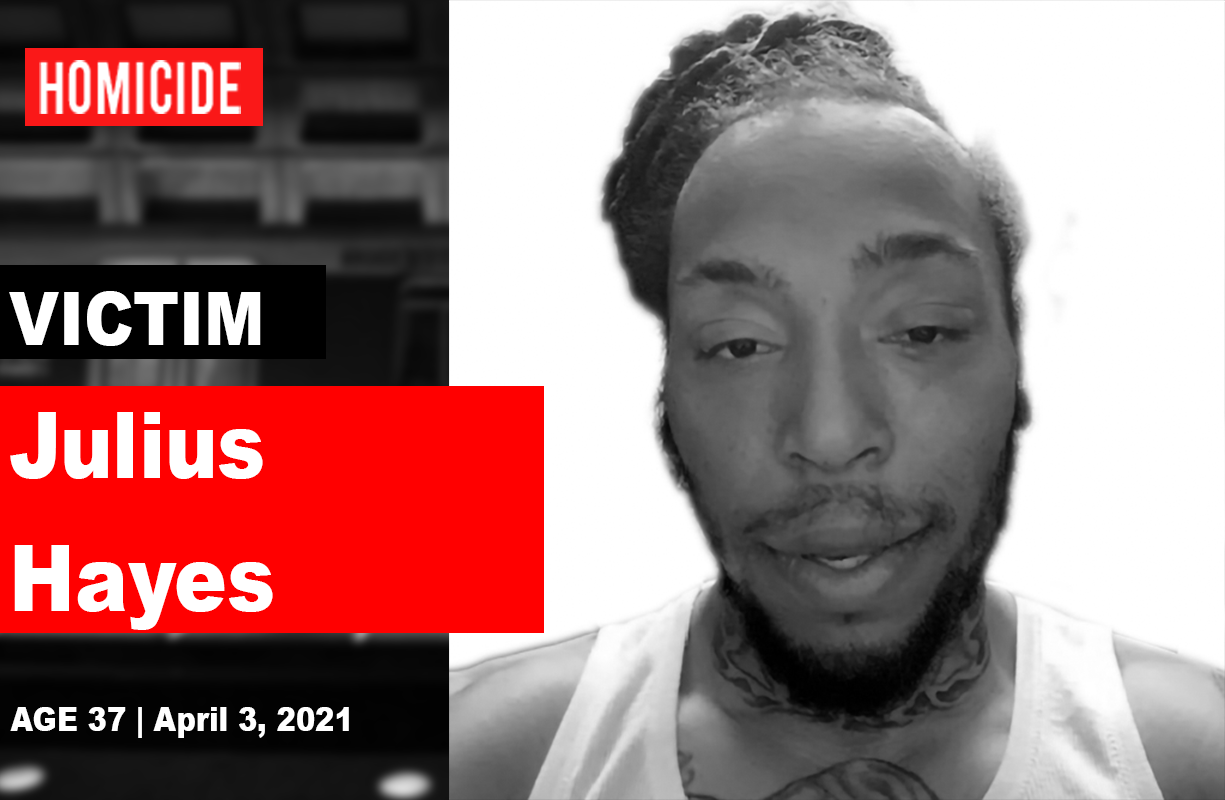
Darrell Moore is charged with first-degree murder while armed in the shooting of Julius Hayes on the 300 block of 18th Street, NE, on April 3. During a Nov. 18 hearing, the defense mentioned that a potential pre-indictment plea deal was on the table but due to the fact evidentiary proceedings have already begun, it appears negotiations have faltered.

Two video clips from surveillance cameras in the neighborhood positioned on opposite sides of the street where the shooting happened were shown. In both, a black sedan is seen driving up to a curb. It parks and the driver who is alleged to be Moore gets out. He leaves the frame of the video before returning less than two minutes later and driving off. Several kids can be seen playing on the sidewalk and around three or four pedestrians walk past the video frame down both sidewalks.

Several minutes later, the same car returns but somewhat double-parks this time, partially obstructing traffic on the street. The same man, who is alleged to be Moore, gets out once again and begins conversing with a shorter man believed to be Hayes. Following an apparent heated argument between the two, the shorter man leaves and crosses the street. The man believed to be Moore then follows him, moving out of frame. Several gunshots ring out and screaming voices can be heard as the alleged shooter ducks quickly back into the black sedan and drives off in the direction of C Street, NE. 

In the second video, two neighbors ran out of their homes to investigate the noise and watched the shooter drive off. Hayes is not visible in either of the surveillance videos after being shot.

Several .40 caliber bullet casings were found in the vicinity but were determined to be irrelevant due to the murder weapon being a long-barrelled revolver. A revolver, unlike a handgun with a magazine, does not expel its casings when fired—casings remain in the cylinder and have to be discarded manually. Two projectiles were recovered from the scene, one on the sidewalk and one from the autopsy. Through forensic analysis, both were determined to have been fired from the same gun. Hayes was shot a total of six times on the right side of his body.

The defense and prosecution also stipulated to the discovery of stippling on Hayes’ body, which was detailed in the medical examiner’s report. Stippling is a secondary effect of getting shot that refers to orange and brownish marks, punctures and abrasions around entry wounds as a result of unburned or expelled powder from a bullet. Stippling marks were not observed by police officers at the crime scene on April 3—they were later discovered during an autopsy.

There was only one witness who identified Moore on the scene. When defense attorney Kevin Irving pressed the detective on the validity of the witness’s statement, he was reluctant to provide any contextual or relationship details that might reveal the witness’s identity.

According to court documents, a witness who provided background information for investigators said an individual by the name of “Greg” was in the area of the 300 block of 18th Street. Irving suggested “Greg” could have been the shooter, but the detective maintained that the investigation showed “Greg” was not at the location during the time of the incident. When Irving asked if the detective had spoken to “Greg” directly, he said he had not and that such a conclusion was reached using surveillance footage and witness accounts. The detective also added “Greg” was much taller than Moore, who is around five-foot-two, and was unlikely to have been the shooter seen on the two video clips. 

Irving also pointed out various passersby, including a pedestrian who glanced at the two men arguing, as potential persons of interest. The detective explained those people were not pursued because they were determined to be irrelevant in the homicide investigation. When pressed on why he did not pursue nor identify at all bystanders for questioning, the detective replied, “I don’t just show witnesses a video and ask them, ‘Is this you?’”

Irving also questioned whether detectives could even tell Moore was driving the car in both video clips. “I mean, I see [Moore] now. I know what he looks like,” the detective replied, explaining how Moore’s skin complexion, physical build and physical height helped identify the defendant as the alleged murderer.

The black Ford Fusion, which the detective said belonged to Moore’s girlfriend, was caught by DC license plate readers entering DC from the lower end of Prince George’s County, Md. on the day of the incident.

The detective said search warrants were issued for Moore’s girlfriend, mother and stepfather’s homes during the course of the investigation. Moore’s stepfather pointed him to a hallway closet that belonged to the defendant. The detective said he found a pair of Timberland boots that were identical to a pair that were identified on the shooter at the incident location. 

In the warrant for Moore’s arrest, a background detail revealed Moore and Hayes had an altercation at a prison between 2006 and 2007. When Irving asked about the details of the incident, the detective replied he could not recall from the investigation whether the defendant and the decedent were cellmates or held in the same cell block, but confirmed the two “overlapped”.

Another piece of evidence entered into the record were cell tower records acquired from several cell phones confiscated from Moore and the residences for which search warrants were issued. The detective said shortly after Hayes was shot, several calls were made in rapid succession that involved Moore’s phone across the regions he came from near Hyattsville and College Park, Md.

Parties were not able to finish the preliminary hearing on Dec. 15. Proceedings are scheduled to pick back up on Jan. 4.

Judge Rules Murder Defendant May Attend Son’s Funeral Virtually

A pretrial detainee in a murder case requested a DC Superior Court judge to allow him to be temporarily released so that he may attend his three-year-old son’s funeral. The judge denied the request but did allow him to be virtually present for the service.

Keshawn Taylor is charged with first-degree murder while armed in the shooting of 26-year-old Tyree Brox on Dec. 21, 2020, on the 5000 block of Bass Place, SE. 

Defense attorney Brandon Burrell filed the emergency motion on Dec. 14. During the Dec. 16 hearing, Judge Danya Dayson was unwilling to grant 22-year-old Taylor’s release due to his criminal history and the nature of the alleged murder. She said she wanted to ensure that he can attend his son’s funeral so she allowed him to go virtually. Taylor’s defense counsel said they can make arrangements with the defendant’s family.

Taylor’s case is currently awaiting indictment. His next hearing is set for Jan. 28. 

Prosecution Calls Final Witnesses in Murder Trial

Prosecutors called their final witnesses to the stand during a trial for the fatal shooting of 11-year-old Karon Brown.

Tony McClam is on trial for first-degree murder while armed in Brown’s death. If the defendant is convicted, prosecutors intend to seek a sentence of life in prison without release, according to court documents. 

McClam is also charged with possession of a firearm during a crime of violence, assault with intent to kill while armed and carrying a pistol without a license outside of a home or business in this case.

The doctor who performed Brown’s autopsy the day after he was killed on July 18, 2019, took the witness stand during the Dec. 15 proceedings. The prosecution admitted photos from the autopsy into evidence and the doctor indicated the entrance wound in the victim’s top right back.

During opening arguments, the prosecution alleged that McClam bought the gun allegedly used to shoot Brown illegally at an out-of-state gun show. A member of the Metropolitan Police Department (MPD) testified that she looked up if McClam had a license to carry a pistol in DC and found that he did not. She also said that no one else in the apartment where McClam was living had such a license. 

McClam purchased the alleged murder weapon in 2019 because he was living in an area with high amounts of crime and shootings, according to his attorneys, Aubrey Dillon and Jason Tulley. Four days after opening arguments, the attorneys motioned to preclude prosecutors from cross-examining McClam on his prior gun purchases in 2013, 2014 and 2016 in the event he takes the stand in his own defense.

In the motion, Tulley and Dillon argue that any firearm McClam purchased or possessed besides the one allegedly used to shoot Brown is not relevant to the case and would be prejudicial.

“Even if Mr. McClam were to testify to the 2019 firearm purchase, this would not ‘open the door’ for the government to cross on prior firearm purchases, due to the risk of undue prejudice,” they state.

DC Superior Court Judge Neal Kravitz has not yet made a decision on that motion. 

The prosecution also called an MPD officer who was at the scene of the shooting on the 2700 block of Naylor Road, SE, to the stand.

The defense’s witnesses included a member of the Office of Unified Communications who testified to a 911 call made the day of the homicide and a courtroom clerk who testified to an arrest warrant that was served in January 2020. A Metro Transit Police Department also took the stand.

The defense also called an MPD detective who investigated the fatal shooting of McClam’s brother. She said McClam testified during grand jury proceedings related to the homicide. She said McClam thought a member of his family was involved in his brother’s death. 

The detective also said that on the day of the shooting he got a call from McClam’s mother. She said she could hear McClam, and he sounded like he was crying.

The trial isset to resume on Dec. 16.