Search Icon Search site

Search

Murder Defendant Held After Two-Day Preliminary Hearing

On July 30, a two-day preliminary hearing concluded with a DC Superior Court judge ruling that a homicide case has enough evidence to go to trial.

Ronnie Melson, 40, is charged with first-degree murder while armed for allegedly shooting 41-year-old Demetrius Jones on the 1700 block of Gales Street, NE, on Nov. 6, 2020.

“This does appear to be a premeditated act of retribution committed in an incredibly dangerous manner,” Judge Neal Kravitz said. 

The preliminary hearing was previously scheduled to take place in April, but it was postponed after Judge Kravitz ordered the prosecution to disclose evidence that the defense argued they should have received.

When proceedings picked back up on July 29, Judge Kravitz said that the evidence in question, which includes a video of police interviewing a witness, should be given to the defense under a protective order.

Defense attorney Bernadette Armand said they had previously only received a summary of the interview’s transcript. Armand said there were no actual answers to some of the questions officers asked the witness in the transcript, implying nonverbal responses that Armand had no way to observe.

“A lot of material was turned over a lot later than it should have been,” Judge Kravitz said.

On July 30, a Metropolitan Police Department (MPD) detective assigned to the case testified that officers responded to shots picked up by gunfire detection technology at about 10:40 a.m the day of the homicide. According to the detective, Melson was identified based on the account of the witness from the interview, who told officers that Jones and Melson had been involved in a dispute.

The detective also testified that the witness in the interview initially said she did not see the incident take place, but during a phone call she made during the interview when detectives were not present, she told someone that detectives knew she had seen it.

Armand said that the descriptions given by multiple witnesses at the scene were not consistent with one another. Armand said the witness in the interview footage described the shooter as wearing a mask, while other witnesses did not, and only one of those other witnesses was able to give any description of the shooter’s hairstyle. Other descriptions of the shooter included information on height and skin tone that was not consistent with Melson’s appearance, she said.

The prosecution said that Melson’s phone was picked up by a cell tower in the area at the time of the homicide and that Melson has a stab wound from a previous altercation with Jones, a story that the witness corroborated during her interview.

The prosecution argued that Melson should remain held at DC Jail, saying that he has 12 prior convictions and has never successfully completed a period of probation. Armand argued that Melson should, at most, be placed under 24-hour home confinement so he could take care of his elderly, medically infirmed relative.

Judge Kravitz decided to hold the defendant based on the dangerousness of the incident, citing the entire magazine’s worth of bullets found on the scene and the collateral damage caused by stray bullets. Judge Kravitz also said there are a number of violent crimes on Melson’s record, including assaults in 2009 and 2019.

Judge Kravitz scheduled Melson’s next hearing for Nov. 1.

Document: 700 Block of O Street, NW

Metropolitan Police Department (MPD) detectives are investigating a homicide that occured on July 31.

At about 11:15 p.m. police were in the area of the 700 block of O Street, NW, when they heard sounds of gunshots. Upon arrival, police found 31-year-old Kervin Sanches with gunshot wounds and transported him to a local hospital. He later succumbed to his injuries, according to the press release.

Crime Alerts: August 1-2

The Metropolitan Police Department (MPD) sent out four crime alerts between 9:00 p.m. on August 1 and 9:00 a.m. on August 2.

An alert was sent out at 11:02 p.m. due to a robbery investigation in the 1300 block of Anacostia Road, SE. Police identified the suspect as a Black male who is about 15-16 years old wearing a black jacket, white tank top, and armed with a gun.

A second alert was sent out at 11:48 p.m. due to a robbery in the 3100 block of 14th Street, NW. Police identified the suspects as a Black male wearing a black hoodie, black pants, black shoes and a black face mask.

A third crime alert was sent out at 12:37 a.m. due to a shooting in the 3700 block of Hayes Street, NE. Police do not have information on the suspect(s).

A final crime alert was sent out at 7:21 a.m. due to a shooting investigation in the 400 block of Burbank Street, SE. Police do not have information on the suspect(s).

Judge Holds One Domestic Violence Defendant During Presentments 

A DC Superior Court judge released eight domestic violence defendants and held one during presentments on July 31.  

In total, 33 defendants were brought before the court. 

The held defendant is charged with simple assault. Judge James Crowell decided to hold him due to the other cases he also has open. He is scheduled to return to court on Aug. 17. 

The released defendants are charged with simple assault, destruction of property less than $1,000, contempt, second-degree cruelty to children, unlawful entry and attempted possession of a prohibited weapon. They are scheduled to return to court on Aug. 2, Aug. 18, Nov. 12 and Nov. 15.

Judge Releases Six Domestic Violence Defendants During Presentments

A DC Superior Court judge released six domestic violence defendants during presentments on July 30.

In total, 32 defendants were presented before the court. 

The charges for the released defendants include attempted threats to do bodily harm, simple assault, unlawful entry, destruction of property less than $1,000, attempted possession of a prohibited weapon, disorderly conduct and obstructing justice.


Judge Renee Raymond scheduled the released defendants to return to court on Aug. 8, Nov. 10, Nov. 12 and Nov. 15.

Opinion: Is D.C. wasting money on violence reduction programs?

As published in the Opinion section of the Washington Post.

Amos Gelb and LaTrina Antoine are publisher and editor in chief, respectively, of D.C. Witness.

Any delusion that our city’s gun violence afflicts only certain (poor) neighborhoods has to have been erased by the past several weeks.

The grisly list includes a mass shooting and killing of a 6-year-old girl in Congress Heights, a shootout outside Nationals Park that set off panic in one of our most protected public sites and then a spray of bullets outside one of the swankiest restaurants on arguably the hippest street in the city.

All that as a coda to D.C. Mayor Muriel E. Bowser (D) sitting in the Oval Office as President Biden intoned that cities needed to do more to stop the national epidemic of surging violent crime.

The D.C. Council is stepping up to that challenge in its 2021-2022 budget that includes huge sums of money aimed at reducing our city’s increasing violent crime. Among the line items is $8 million for doubling current violence interrupter programs that put former prisoners back in their neighborhoods to intervene in disputes and interrupt violence before it happens.

If recent events were not enough justification for such spending, the numbers should be: D.C. has seen about a 10 percent increase in the year-over-year homicide rate for the past three years.

There’s only one problem.

That same data shows that the city’s violence interrupter programs, one run by the Office of Neighborhood Safety and Engagement, and Cure the Streets, run out of the Office of the D.C. Attorney General, aren’t doing what they claim: preventing violence. Rather, they may be merely dispersing it, spreading the killings to nearby areas that previously did not have any.

But how can we state this with certainty when the city says the programs are working and are worthy of healthy increases in funding? The answer: because unlike the city, we have data that measures the programs’ performance.

D.C. Witness is a six-year-old website that tracks every homicide in D.C. from act to judicial resolution, telling every story and gathering data about each case. The goal is to bring transparency and accountability to our city’s criminal-justice system and the policies implemented to reduce violent crime. We are nonpartisan and non-advocacy. We neither advocate for nor oppose any policy. We just share the data and use it to evaluate how official policies are working.

To understand how the D.C. violence interrupter programs were doing, we did the obvious: We asked the organizations running the programs for the data that showed their success.

They didn’t reply.

So, we took the homicide data we have gathered from public information and from sitting in every hearing of every homicide case (we track 104 data categories, including addresses) and mapped it over the areas in which interrupters are deployed. We then compared the differences in homicide distribution in those areas between 2019 to 2020 and 2020 to 2021, which are the periods for which we could find information on the location of the violence interrupters.

You can see the data maps at dcwitness.org. You be the judge.

We offered our data to both offices. Neither was interested.

Will dropping twice as many interrupters into neighborhoods change anything? We don’t claim to know the answer. But it would seem to be a question worth exploring before the city writes a virtual blank check to these programs. The programs themselves seem more driven by politics and messaging than efficacy.

Nor does there seem to be any appetite for oversight. The D.C. Council’s judiciary committee admitted to D.C. Witness that it did not have any data on how the programs were performing and relied on the assurances of the agencies running the programs that in turn relied on the assurances of the organizations hired to implement them.

Sadly, the saga of violence interrupters reflects a pattern in D.C. of more and more policies supported by more and more city money with less and less evaluation. A recent report by the National Institute for Criminal Justice Reform painted an even less flattering picture. The report reviewed all D.C. violent crime reduction strategies and blasted the mayor and council’s approach as ineffective with more than 100 programs that often overlap and even compete with no evaluation. “D.C. is resource rich and coordination poor,” it concluded.

It would be easy to assume from our evaluation that we oppose violence interrupters for political or philosophical reasons or are calling for the programs to be canceled.

Not so.

Rather, we are saying that, as it is run in D.C., the violence interrupter programs are not making the difference they could or claim to. There is a spectrum of violence reduction/prevention strategies that use violence interrupters, ranging from those that support the work of returning citizens with wraparound community services (Roca Baltimore and Chicago Cred are two examples) to the de minimis version that D.C. implements, so there would seem to be plenty of room for adjustment.

We will leave it to experts to explore why the programs are dispersing rather than interrupting the violence. Other data collected by D.C. Witness suggests that the rising homicide rate is driven by a culture of gun violence that has grown over the past few years, so unless that is addressed, any strategy, including violence interrupters won’t significantly reduce the violence.

Just like everyone else in the city, we want the violence and killings to stop. But throwing more tax money at programs that make for great political messaging but aren’t working and aren’t measured isn’t going to get us there.

Domestic Violence Defendant Sentenced for Near-Fatal Stabbing

A DC Superior Court judge sentenced a domestic violence defendant to serve about five-and-a-half years for assault with intent to kill while armed following a near-fatal stabbing.

“I get up, I’m standing in a pool of my own blood,” the victim recalled in an impact statement.

The defendant, 56-year-old Tony Mobley, stabbed her multiple times, including in the neck and head, she said. 

The stabbing took place in her apartment, where she still lives. The prosecution is trying to help her move out so she doesn’t have to keep living in the home where she nearly died.

“Everybody kept telling me to get away from him…I never thought he’d try to take my life,” she said.

Judge Milton Lee told Mobley he came very close to killing the victim, and that if he did, “you would be in prison for the rest of your natural life,” rather than the 66 months he ultimately received.

But the victim expressed dissatisfaction with the plea deal. “To give him five-and-a-half years…I don’t see justice in that,” she said.

Judge Lee said he had an obligation to honor the plea deal. The prosecutor said she took Mobley’s serious struggles with addiction into consideration when she extended him the plea offer, which also allowed his assault with a dangerous weapon charge to be dropped. 

Mobley told Judge Lee he has been receiving treatment for his drug addiction during his incarceration. Judge Lee encouraged him to use the resources available to help him live a peaceful life upon his release.

“The benefit to you, I think, is the journey you already started,” Judge Lee told him. “Because you will have an opportunity to return to the District of Columbia.”

Mobley was also ordered to stay away from the victim.

Man Charged in Six-Year-Old’s Death Held During Presentments 

A DC Superior Court judge held a homicide defendant and released two domestic violence defendants as well as one sex abuse defendant during presentments on July 29. A total of 30 defendants were presented. 

Judge Judith Pipe held 22-year-old Marktwan Hargraves, who is charged with second-degree murder while armed in the shooting of six-year-old Nyiah Courtney on the 2900 block of Martin Luther King Jr. Avenue, SE.

The prosecution said the July 16 shooting wounded Courtney’s parents and three other people as well. They also said the defendant’s vehicle and text messages linked him to the homicide.

Hagraves is scheduled to return to court on Aug. 18.

Two domestic violence defendants were released. Their charges include simple assault and destruction of property. A defendant charged with misdemeanor sex abuse and simple assault was also released. All three of them are scheduled to return to court on Nov. 10.

Crime Alerts: July 29-30

The Metropolitan Police Department (MPD) sent out four crime alerts between 9:00 p.m. on July 29 and 9:00 a.m. on July 30.

An alert was sent out at 2:06 a.m. due to an assault with intent to commit a robbery investigation on the 1500 block of Alabama Avenue, SE. Police identified the suspects as two Black males, one with a slim build wearing a black mask and one with a heavy build and wearing a grey sweatshirt.

A second alert was sent out at 4:37 a.m. due to a robbery investigation on the 600 block of Acker Place, NE. Police identified the suspect as a Black male who is approximately 20-24 years old, wearing a grey sweatshirt and dark pants.

A final crime alert was sent out at 4:39 a.m. due to a robbery on the 600 block of 4th Street, NE. Police identified the suspect as two Black males who are about 20-29 years old. One is wearing a white shirt and dark pants.

Prosecution in Murder Case Accused of Violating Disclosure Rules

A DC Superior Court judge said he was “admittedly frustrated” after telling the prosecution they had violated the Jencks Act, which requires the prosecution to hand over reports made by government witnesses, several times throughout the course of a three-day preliminary hearing to determine if a murder case has enough evidence to go to trial.

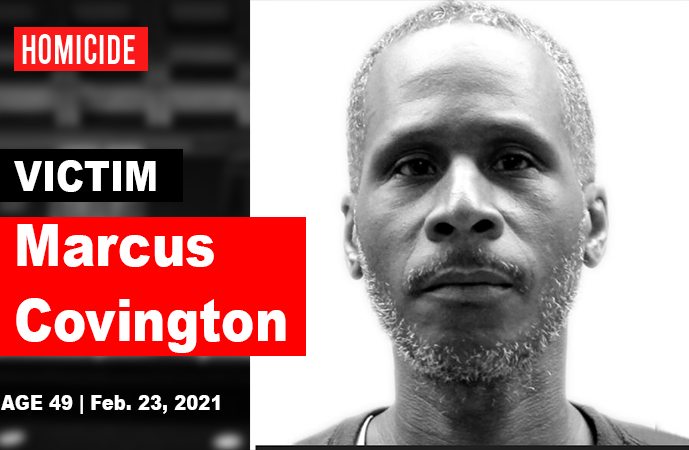
Kirk Spencer, 26, is charged with first-degree murder while armed for allegedly shooting 49-year-old Marcus Covington on Feb. 23 at the Anacostia Metro Station on the 1100 block of Howard Road, SE.

Judge Michael Ryan found probable cause but said the prosecution violated the Jencks Act on four separate occasions with four different judges. He said this caused the hearing to go on longer than necessary. 

On July 27, the second day of the preliminary hearing, Judge Ryan ended the proceedings early after defense attorney Jacqueline Cadman asked the Metropolitan Police Department (MPD) detective about documents and files he obtained throughout his investigation, and he referred to pieces of evidence she said she never got. Judge Ryan told the prosecution they “will have until midnight tonight to find every communication this detective has made.”

When proceedings picked back up on July 28, Cadman spoke to the detectives for approximately five minutes about his emails regarding the case, finishing the cross-examination. 

During re-direct, the detective told the prosecution that, while executing a search warrant on the defendant’s home, he recovered two pairs of shoes which he said were similar to those shown in video footage. 

The footage shows Spencer entering a dumpster enclosure through an alley in the rear of his home after Covington was killed. The suspect exits the dumpster enclosure soon after, wearing different clothing. He then leaves the view of the camera.

According to court documents, previous video footage shows that the defendant allegedly changed into the shoes and coat before the homicide in this same dumpster enclosure nearby his home.

After finding probable cause, Judge Ryan ruled that Spencer should remain held at DC Jail. He is scheduled for a status hearing on Aug. 12.

Judge Rules Homicide Case Has Enough Evidence to Go to Trial

Despite a defense attorney’s arguments that his client acted in self-defense during a fatal stabbing in May, a DC Superior Court judge ruled that the case against his client has enough evidence to go to trial.

Aaron Kenon is charged with second-degree murder while armed for allegedly stabbing 29-year-old Keith Frye to death on May 8. That evening, police found Frye outside a 7-Eleven convenience store on the 400 block of 8th Street, SE, suffering from a stab wound. He was pronounced dead on scene. 

On July 21, defense attorney David Akulian argued that his 43-year-old client should be released due to the limited evidence against him, saying the prosecution “would not be able to disprove” that Kenon acted in self-defense, D.C. Witness previously reported. Towards the beginning of that hearing, Judge Milton Lee commented, “this might be a pretty good self-defense case,” but he said he was “not so sure” that Kenon’s alleged use of force was reasonable, telling parties this issue is probably going to be relevant in Kenon’s upcoming preliminary hearing.

“Bringing a weapon to a fistfight wouldn’t be justifiable defense,” said Judge Michael Ryan during the July 27 preliminary hearing. “He commented on his own intent repeatedly. His intent seems quite clear.”

Judge Ryan made a finding of substantial probability.

The prosecution played surveillance footage from the 7-Eleven, which shows one man punching another in the face. The second man follows the first man off-camera and is later seen walking back in the other direction.

A Metropolitan Police Department (MPD) detective assigned to the case identified the first man as Frye and the second man as Kenon. The man who the detective identified as Kenon can be seen in the video with an object dangling from his belt as he walks back into view, which the detective said was the sheath for a large knife.

The detective said Kenon admitted to stabbing Frye with a knife during his police interview, saying he carried the knife with him every day since Jan. 6, when The U.S. Capitol was attacked. The prosecution also showed photographs of three large knives found in Kenon’s home, one of which he reportedly told police was the one he used to stab Frye.

Kenon allegedly demonstrated the stabbing motion he used and told police that he stabbed Frye to get him to go away.

However, Akulian said the stabbing motion Kenon demonstrated was not consistent with the findings from the medical examination of Frye’s wound.

The detective said the doctor who examined Frye after his death said he would not have survived, even if he were stabbed in the emergency room. 

Akulian also said that police never determined what the object the MPD detective theorized was a sheath actually was. Additionally, the MPD detective said the plastic covering over the photographed knife Kenon said he used did not match the sheath from the video, nor did it match the size or shape of Frye’s wound.

Akulian argued that Kenon was acting in self-defense. He said the punch that Frye delivered to Kenon’s face, which was strong enough to knock Kenon onto his back, would have constituted aggravated assault if it had knocked him out. 

Akulian told Judge Ryan that this could be a different case with a different victim and defendant if things had gone slightly differently.

The prosecution argued that Kenon was not acting in self-defense because he followed Frye and because of his “disproportionate use of lethal force in what was a fistfight at best.”

The prosecution also claimed that, after the stabbing, Kenon made statements including, “I finished you,” and, “you f*** with me and I’ll kill you.”

Judge Ryan ruled that Kenon should remain held at DC Jail. He scheduled a felony status conference for Oct. 1.

Fatal Stabbing Case to Go Before Jury in 2022

A DC Superior Court judge scheduled a jury trial for a murder case. 

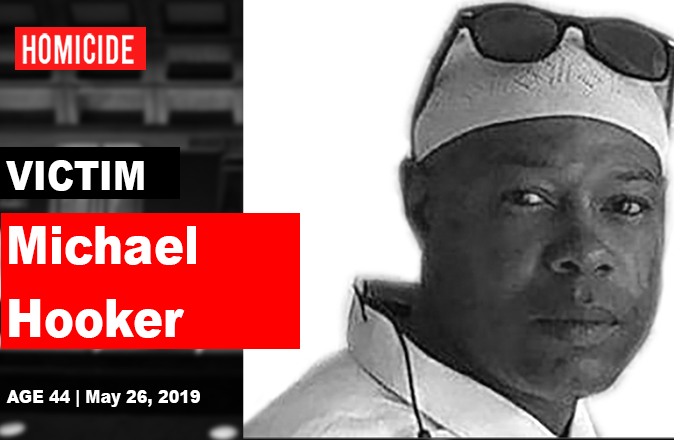
Travis Russell, 37, is charged with first-degree murder while armed for allegedly stabbing 44-year-old Michael Hooker in the neck with a piece of glass on May 26, 2019, on the 2700 block of Martin Luther King, Jr. Avenue, SE. 

Russell is also charged with carrying a dangerous weapon. 


During the July 29 hearing, Judge Neal Kravitz set aside June 15 through July 1, 2022, for the trial. He also has a trial readiness hearing scheduled for Nov. 12.

Judge Sets Prelim For Murder Defendant Arrested in Georgia


On July 28, a DC Superior Court judge scheduled a hearing to determine if a murder case has enough evidence to go to trial.

Byron Brooks is charged with second-degree murder while armed for allegedly stabbing 43-year-old Kareem Elliot Watkins on the 1500 block of Maryland Avenue, NE, on May 11. The 35-year-old defendant was arrested by law enforcement officers in Fulton County, Ga. pursuant to a DC Superior Court arrest warrant on June 3.

Judge Juliet McKenna scheduled the preliminary hearing for Sept 8. 

Crime Alerts: July 28-29

The Metropolitan Police Department (MPD) sent out three crime alerts between 9:00 p.m. on July 28 and 9:00 a.m. on July 29.

A crime alert was sent out at 11:16 p.m. due to an armed robbery in the 6600 block of Luzon Avenue, NW. Police identified the suspects as two Black males wearing black sweatshirts, ski masks, and armed with handguns.

A second crime alert was sent out at 11:41 a.m. due to an armed robbery at the  4500 block of 14th Street, NW. Police identified the suspects as two Black males armed with a handgun who were last seen getting into a grey sedan.

A final crime alert was last sent at 4:36 a.m. due to a stabbing in the 5000 block of Benning Road, SE. Police do not have information on the suspect(s).