Search Icon Search site

Search

Defendant Pleads Guilty to Thwarting Boyfriend’s Murder Arrest

A defendant, accused of helping her boyfriend avoid arrest for his involvement in a homicide, pleaded guilty before DC Superior Court Judge Jason Park on Oct. 2. 

Keevasayah Polite, 23, was originally charged with four counts of accessory after the fact while armed and obstructing justice while armed for her involvement in assisting her boyfriend avoid arrest for a homicide in 2021. 

Polite’s boyfriend, Nyjell Outler, 22, was convicted by a jury on March 18 of voluntary manslaughter while armed, aggravated assault while armed, and two counts of possession of a firearm during a crime of violence for the fatal shooting of 21-year-old Demetris Johnson at a gender reveal party on March 20, 2021 on the unit block of Madison Street, NE. 

Prosecutors alerted Judge Park they had reached an agreement with Polite. The deal requires Polite to complete 72 hours of community service within six months, and in exchange the prosecution will dismiss the case. 

The prosecution stated that if this case had gone to trial they would’ve proven beyond a reasonable doubt that on or about March 26, 2021 Polite knowingly made a false report to MPD about her boyfriend’s whereabouts, who was on GPS monitoring. Moreover, Polite didn’t state to the Metropolitan Police Department (MPD) that earlier that day he came to her residence and cut off his ankle monitor. 

The parties are slated to reconvene on April 7. 

Shooting Defendant Rejects 7 Year Plea Offer   

A defendant in a daytime shooting rejected a plea offer before DC Superior Court Judge Dayna Dayson on Oct. 3.

Andrew Black, 52, is charged with assault with intent to kill while armed, aggravated assault knowingly while armed, assault with a dangerous weapon, and three counts of possession of a firearm during a crime of violence, unlawful possession of a firearm by a convict, possession of an unregistered gun, carrying a pistol without a license, and unlawful possession of ammunition.  

The charges stem from his alleged involvement in a non-fatal shooting on the 400 block of Connecticut Avenue, NW, on Sept. 9, 2023. One individual sustained injuries during the incident. 

According to court documents, the victim was shot in the abdomen and remained on life support for 48 hours. After regaining consciousness, he reported to Metropolitan Police Department (MPD) officers that he recognized Black as the suspected shooter. 

During an Oct. 3 hearing, the prosecution offered Black an agreement to plead guilty to assault with intent to kill while armed and unlawful possession of a firearm (more than one year prior conviction) in exchange for the prosecution’s dismissing all other charges, and a seven year sentence. 

Black knowingly rejected this offer and the court decided it will move forward towards a trial. 

Parties are slated to reconvene Feb. 20. 

Woman Convicted in Mass Shooting Denied Acquittal on One Charge

DC Superior Court Judge Neal Kravitz denied a motion for acquittal of one charge and decided to wait to rule on another for a woman convicted in a mass shooting on Oct. 3.

Toyia Johnson, 53, was convicted of accessory after the fact and tampering with physical evidence for her involvement in assisting other defendants with discarding evidence and avoiding arrest following a mass shooting that occurred on the 600 block of Longfellow Street, NW on Sept. 4, 2021. The shooting killed 31-year-old Donnetta Dyson, 24-year-old Keenan Braxton, and 37-year-old Johnny Joyner, and three others were injured.

Mussay Rezene, 32, was convicted on the same charges as Johnson. 

Erwin Dubose, 31, Kamar Queen, 28, Damonta Thompson, 28, and William Johnson-Lee, 23, were convicted of conspiracy, premeditated first-degree murder while armed, assault with intent to kill while armed, assault with significant bodily injury while armed, among other charges, for their involvement in the mass shooting. 

Throughout the trial, prosecutors argued that Johnson provided the shooters the car that was used in the shooting, and reported it stolen when Dubose told her to. 

According to court documents, Johnson filed a motion for judgment of acquittal in June, before her conviction. Johnson’s defense attorney, David Akulian, argued that the prosecution did not have sufficient evidence to support that she acted as an accessory to the assault with intent to kill charge against Dubose. He also argued that there is not enough evidence that she actually assisted with the crime and tried to hinder Dubose’s arrest, trial or punishment for that charge.

The prosecution argued that she reported the car stolen after a phone call from Dubose, during which he told Johnson that it was used during the murders. However, they do not have a recording of the call.

Body-worn camera footage of the conversation between a Metropolitan Police Department (MPD) officer and Johnson when she reported the car stolen showed the officer telling Johnson that the suspected black Honda was used in a “triple murder.” This wording is at the center of Johnson’s motion for acquittal. 

Akulian argued that the officer saying it was a triple murder does not indicate who committed it, if weapons were used and if anyone else was injured but not killed during the incident. According to Akulian, Johnson’s conviction is connected to assault with intent to kill and not murder, and there is not enough evidence from the footage to prove she knew that the incident was also a non-fatal shooting.

The prosecution opposed this argument, saying that “it is a reasonable inference” that she knew the shooting killed some and injured others. They said that they have evidence that Johnson had consciousness of guilt, as she stopped messaging Dubose on Instagram after the incident.

Judge Kravitz said this evidence makes it a closer question, but he sees both sides.

“I think the defense has a pretty strong argument,” he said.

Akulian said that Johnson would have had to have knowledge of each element of assault with intent to kill, saying the officer did not tell her the car was used in the Longfellow shooting. Kravitz questioned this argument.

However, Kravitz said there is sufficient evidence to prove Johnson knew the car was used in a serious crime and lied to the officer when she reported it stolen. He said this disproves the argument that there is not enough evidence that she actually assisted and intended to hinder the investigation, since she tried to interfere.

Akulian also argued that there is not enough evidence that Johnson knew there was an official proceeding underway and that she tampered with the evidence to conceal it. Kravitz denied that aspect of the motion, saying she lied to the officer.

Kravitz denied the motion for acquittal in regards to the tampering charge, but told the parties to file briefs of their arguments in mid-October so he can review the arguments and make a final decision for the accessory charge, as it could affect Johnson’s sentencing. The sentencing for Johnson and the other co-defendants is scheduled for Oct. 30.

Akulian said that if there is not enough evidence, she could be sentenced to probation only and will appeal her case if Judge Kravitz does not grant her motion.

“She will be exercising her constitutional rights,” Akulian told D.C. Witness.

Parties are set to reconvene on Oct. 24.

Murder Defendant Allowed to Work

DC Superior Court Judge Neal Kravitz allowed a murder defendant to work on Oct. 3.

Oliver Gomes, 55, is charged with second-degree murder while armed for his alleged involvement in the death of Thomas Gray, 61, who died after being struck with a wooden plank on Oct. 14, 2022 at the intersection of 11th and L Streets, NW.

According to court records, Gomes has been on release since February. On July 25, his release conditions were modified to allow him to seek employment and visit his mother.

Gomes’ defense attorney, Sara Kopecki, asked Judge Kravitz to further modify his release conditions because he now has a job he wants to attend. Kopecki said he needs the income, as he has been falling behind on rent while in home confinement.

The prosecution opposed this, arguing that Gomes will have to take public transportation to get to and from work, and he has prior incidents involving buses.

Kravitz allowed Gomes to work, but reminded him that he can only travel between home and work and his location will always be monitored.

Kopecki also asked Judge Kravitz to allow Gomes to attend an apprenticeship with the Department of Employment Services (DES), which would have him leave his home for an additional day each week. Judge Kravitz denied this request for now.

“There should be some incremental approach here,” he said.

Gomes also wanted to speak with Judge Kravitz about getting a new attorney. Kravitz told Gomes to tell him the issues he has with his attorneys’ trial prep during the next hearing.

Parties are set to reconvene on Oct. 10.

Judge Denies Release for Paralyzed Murder Defendant Over Jail Care

DC Superior Court Judge Jason Park denied release for a paralyzed murder defendant suffering from alleged medical negligence by the Department of Corrections (DOC) on Oct. 3. 

Desmond Barr, 23, is charged with second-degree murder while armed, possession of a firearm during a crime of violence, and unlawful possession of a firearm with a prior conviction, for his alleged involvement in the death of Ambria Farmer, 20. The incident occurred on July 13, 2024 on the 3600 block of F Street, SE.  

Barr’s defense attorneys, Hannah Claudio and Dominique Winters, argued for Barr’s release. They proposed relocating him to home confinement at his older sister’s residence, which is near a healthcare facility they argued could better address his medical needs. They also requested GPS monitoring. 

The defense argued that the DOC was not providing adequate healthcare. They cited a lack of sanitary physical therapy, Barr’s worsening open wounds, urinary tract infections, blood clots, and what they described as a serious laceration sustained from a defective shower rod. They also claimed Barr’s medication had been changed, leading to seizures.

Two representatives from the rehabilitation sector of the proposed healthcare facility sat with the defense and argued in favor of Barr’s release. The representatives testified that the facility near Barr’s sister’s home has the equipment and trained staff to handle his medical issues. The women emphasized theif willingness to support him. 

A witness for the Department of Corrections (DOC), testified that Barr was receiving consistent care. He claimed the DOC had provided four wheelchairs, two of which Barr declined, and confirmed that the jail was conforming to the Americans with Disabilities Act (ADA). He also reported that a special wheelchair assigned to Barr was inoperable, as was a handicap shower in the jail, though the shower has since been repaired.

The DOC witness also cited the jail’s healthcare director, who reported that Barr has received 103 wound treatments, more than 80 doctor appointments, mental health services, and a urology consultation. He said one of Barr’s wounds was nearly healed. He did not provide details on physical therapy.

Judge Park denied the motion for release, noting the case is an “extremely violent murder”. He also cited Barr’s pending charges in another case, which include assault and strangulation. The judge stated that detention was warranted and that the issues raised centered on the conditions of imprisonment rather than release. He, consequently, suggested Barr be transferred to a different facility. 

Park said the expressed claims showcase a dispute of facts between the defense and DOC. He requested documentation and testimony from a DOC medical expert to clarify the extent of Barr’s treatment. He also ordered the DOC representative to have the jail provide information about why previous orders by DC Superior Court Judge Michael O’Keefe were not followed. 

The parties are slated to reconvene on Oct. 24. 


Homicide Defendant’s Release Motion Denied

DC Superior Court Judge Todd Edelman denied an individual’s pro-se release motion filed on his on behalf on Oct. 3.

Emmanuel Lewis, 36, is charged with first-degree premeditated murder while armed, possession of a firearm during a crime of violence, unlawful possession of a firearm, carrying a pistol without a license outside his home or business, and tampering with physical evidence for his alleged involvement in the fatal shooting of Kwame Keith, 25, on the 1800 block of Fairlawn Avenue, SE, on Oct. 30, 2023. 

During the hearing, Judge Edelman stated that he had received a motion filed by Lewis that requested a reconsideration of his bond status after an incarceration period of 16 months. 

Russell Hairston, Lewis’s defense attorney, said that he had not seen the motion yet, and neither had the prosecution.

Judge Edelman noted that Lewis has had a violent history, and was on probation for an assault charge during his arrest for his alleged involvement in Keith’s murder.

With that Judge Edelman stated that DC Superior Court Judge Renee Raymond first found probable cause on May 8, 2024, as did a grand jury on June 11, 2024, and did not believe that anything had changed since. 

Judge Edelman therefore denied Lewis’s motion for reconsideration of his detention. During the hearing, Lewis also waived his rights to independent testing of evidence.

Parties are slated to reconvene May 15, 2026.

Shooting Defendant Accepts Plea Agreement During Trial

A shooting defendant accepted a plea agreement before DC Superior Court Judge Todd Edelman on Oct. 7, days before the scheduled end of his trial.

Nigel Pulliam, 32, was initially charged with two counts of assault with the intent to kill while armed, assault with significant bodily injury while armed, assault with the intent to commit robbery while armed, four counts of firearm possession during a crime of violence, two counts of the unlawful possession of a firearm with a prior conviction of over a year, two counts of carrying a dangerous weapon outside of a home or business, two counts of unregistered firearm possession, and two counts of unlawful ammunition possession for his involvement in a Sept. 23, 2022 robbery on the 1400 block of Maryland Avenue, NE, and a non-fatal shooting that wounded one individual on the 2000 block of Benning Road, NE, on Aug. 29, 2022.

After a week-and-a-half of trial, Pulliam pleaded guilty to assault with a dangerous weapon and possession of a firearm during a crime of violence. In exchange, the prosecution will dismiss all other charges. The defendant also agreed to register as a gun offender.

Both parties agreed to a sentencing range of six-to-ten years in prison.

Parties are set to return for sentencing on Feb. 6.

Victim Who Didn’t Want to ‘Stir Up Dirt’ Testifies About Shooting Lead-in

The victim in a shooting recounted the harrowing night he was shot before DC Superior Court Judge Todd Edelman on Sept. 30.

Nigel Pulliam, 29, is charged with assault with a dangerous weapon and possession of a firearm during a crime of violence for his involvement in a shooting that occurred on Aug. 29, 2022 on the 2000 block of Benning Road, NE.

Trial resumed later than scheduled due to new security concerns, as the victim was reported to have been threatened prior to his testimony. In response, the judge approved additional court security and ordered that all cell phones be removed from the courtroom. The defense objected, arguing the restriction was unfair, but the judge prioritized safety.

The victim explained the events of the night he was shot. He claimed that in the lead-up to the incident, he had been threatened by Pulliam over the phone, as Pulliam believed that the victim was pursuing his girlfriend. Police were called to the scene after Pulliam allegedly banged and kicked on the door. While police were on the scene, Pulliam allegedly called the victim and the two exchanged threats.

The following day, the victim testified, he agreed to a meeting set up by a mutual friend to discuss the issue. He testified that after waiting for Pulliam to arrive for several hours, the defendant had become angered as he looked through text messages between the victim and the girlfriend. Then the defendant and an unidentified man, who had been wearing a mask, pulled guns on him and escorted him out of the apartment. 

In the hallway, the victim testified, the masked man ordered him to empty his pockets, then hit him on the head with a gun when he did not comply fast enough. The victim ran back to his car with a friend and made it onto the highway, at which point two cars pulled up and someone inside shot at his car before quickly driving away. The victim had been hit in the forearm and went to the hospital to receive treatment. Even so, the bullet was not removed until a month-and-a-half later.

One witness, an elderly woman currently living in a rehabilitation facility, testified about her close relationship with the defendant and the victim. She described the incident as a heated argument in her apartment over text messages between the victim and Pulliam’s girlfriend. Pulliam allegedly pulled a gun and escorted the victim out. She later heard gunshots but did not witness the shooting.

The defense challenged her credibility, focusing on her past drug use, mental health issues, and memory gaps. Despite repeated objections and a combative tone from the defense attorney, the witness remained emotional but firm in her factual account. After her testimony, a dispute arose between parties about an undisclosed 911 call and police report, which the judge ordered to be located for review.

The court also addressed several evidentiary issues. Jail phone calls involving drug references and threats were ruled admissible, as were the drugs found in a vehicle tied to the incident, and testimony from an officer who recovered the firearm. 

Parties are slated to reconvene Oct. 1.

Defense Attorney And Victim Argue in Shooting Trial

A victim argued with a defense attorney in the ongoing trial of a shooting defendant before DC Superior Court Judge Todd Edelman on Oct. 1.

Nigel Pulliam, 32, also known as “Michi,” 27, is charged with assault with intent to kill while armed, two counts of assault with intent to commit robbery while armed, assault with a dangerous weapon, five counts of possession of a firearm during a crime of violence, two counts of carrying a dangerous weapon outside home or business, two counts of unlawful possession of a firearm, two counts of possession of an unregistered firearm, two counts of unlawful possession of ammunition, for his alleged involvement in two separate 2022 shootings: an alleged highway drive-by on Aug. 29, 2022, and a September 23, 2022, shooting outside an apartment on the 2100 block of Benning Road, NE. 

Prosecutors introduced surveillance footage from Aug. 29, 2022, showing a person said to be Pulliam in a store before returning to a vehicle, followed by later video capturing gunfire. Law enforcement also verified photographs of Pulliam as the suspect.

The victim testified under subpoena, recounting that he had received text messages from Pulliam about a firearm the day before the shooting. The victim also described Pulliam pressing a pistol against his side and later being shot in a drive-by. The victim admitted he did not call the police immediately, saying he “didn’t have time.”

During cross-examination, defense attorney Sara Kopecki highlighted how the victim did not disclose all details of the incident to the police while in the hospital, suggesting he was untruthful during the initial investigation, the grand jury process, and his current testimony. When confronted, the victim acknowledged the error, telling Kopecki, “You did good; you got that one. I made a mistake.”

Questioning by Kopecki quickly became heated, marked by aggressive exchanges and repeated objections.

The victim testified that he went to get medical attention on his own after sustaining a gunshot wound in the incident on Aug. 29, 2022. Surveillance footage from United Medical Center was introduced, showing him attempting to walk out of the hospital. 

When asked by the defense whether he was trying to leave to avoid law enforcement, the victim responded firmly, “Hell no.” When the question was repeated, he added, “You can’t be that dumb. Hell no.”

Much of the defense’s questioning focused on why the victim did not initially disclose the involvement of an individual known as “Michi” during police interviews. The victim admitted to withholding information, stating that he was disoriented, in pain, and concerned about incriminating himself.

“I said what I said just to get them out of my face,” he testified. “My opportunity is now… I am telling the truth right now under oath.”

The tone escalated when Kopecki pressed him on perceived inconsistencies, prompting the victim to exclaim, “You are acting like him [the defendant], a d***!” The outburst led to a momentary pause as the court restored order.

The victim also admitted under oath that he had lied to law enforcement during initial interviews, citing confusion and emotional distress in the aftermath of the shooting. He described struggling to recall specific details and expressed frustration at the repetition of the defense questioning. 

Following the victim’s testimony, the prosecution called the victim’s close friend, a longtime acquaintance of both the victim and the defendant. He testified that he had previously acted as a mediator during a dispute involving the victim and the defendant, though he claimed to have limited recollection of events due to past drug use and ongoing medication. 

He stated he did not recognize the defendant in the courtroom.

Parties are slated to resume the trial on Oct. 6. 

Witness Says She Was Threatened Not to Testify in Shooting Trial

A jury trial for a shooting defendant began with the defense raising concerns it should have received important evidence from the prosecution. Meanwhile, a prosecution witness implied her life was threatened if she took the stand. The proceeding was before DC Superior Court Judge Judith Pipe on Oct. 1.

Dominick Jackson, 41, was charged with assault with a dangerous weapon, possession of a firearm during a crime of violence, assault with significant bodily injury while armed, aggravated assault knowingly while armed, unlawful possession of a firearm in an intrafamily offense, and obstructing justice by attempting to influence or delay a witness or officer. 

These charges stem from an incident that occurred Nov. 20, 2022 on the 700 block of 12th Street, NE, leaving one individual with gunshot wounds. 

According to court documents, eight gunshots were heard and four shell casings were discovered at the scene. Responding officers from the Metropolitan Police Department (MPD) noticed damage to a vehicle and learned that there was a victim who was transported to a local hospital for the treatment of non-life-threatening injuries.

Defense attorney Kevin Robertson said he had not received any paperwork from the prosecution indicating that an eyewitness failed to appear before the grand jury and did not cooperate with prosecutors. 

Further, prosecutors had not documented they allegedly threatened the witness with a warrant for failing to cooperate.

Judge Pipe concluded the prosecution violated what’s known as the Brady rule for not communicating this information. 

The rule requires prosecutors to disclose potentially exculpatory material to the defensef.

Judge Pipe said prosecutors are responsible for disclosing that their “critical, key witness … refuses to cooperate.”

In response, prosecutors argued that whether this information is important enough to turn over is “subjective.”

“Her stated reason is not dispositive,” Judge Pipe said, ultimately inconclusive.

The judge clarified she will not require the prosecution to provide every phone call, but they must tell the defense whenever they resort to different means.

Robertson said he told the witness not to mention during his testimony that he met the defendant in jail because it is irrelevant. Judge Pipe agreed. 

Roberston said prosecutors planned to show the jury footage of the victim in which “they’re cutting his clothes off. He’s naked.”

Jude Pipe appeared surprised and asked the prosecutors whether they planned to do so, adding she did not think the victim would want that clip to be shown in front of the jury. The judge asked the prosecution to redact that portion of the footage.  

During the opening statements, the prosecution claimed that Jackson shot into the victim’s car multiple times, injuring the victim’s legs. The prosecution stated they had Ring camera footage which was somewhat blocked by trees, but still clear enough to suggest Jackson could be found guilty. They also highlighted that Jackson, the victim, and the eyewitness were the only people at the crime scene.

Further, the prosecution stated the witnesses they planned to bring in, including the victim, an eyewitness, and doctors who treated the victim, among others. 

They insisted all evidence would prove Jackson’s guilt. 

However, Robertson argued that the prosecution’s statements were purely theoretical, saying “They weren’t there,” and that their case was built almost entirely on two witnesses. He claimed they had very little independent evidence, highlighting a lack of DNA, fingerprints, or cell location data evidence. 

Robertson claimed that the victim is a known drug dealer and possibly abuser. He argued that a proper investigation into the crime could have removed Jackson from the situation, but that the prosecution didn’t follow through.

The prosecution called on an eyewitness who used to date Jackson. She said she has two children with Jackson, but stopped dating him sometime in 2021 and lost contact after the incident in 2022.

She first noted that she did not want to testify and that she was forced to be at trial. She later elaborated that she struggled to testify against the father of her two kids.

The witness claimed she was good friends with the victim. She said she visited him multiple times during his time in the hospital and took him in during his recovery. She said she had no relationship with the victim beyond being good friends.

When asked about the incident, the witness said she was cooking a meal for her kids as Jackson was on his way to drop them off. She got a call from the victim at one point who said he wanted to visit. She told the victim that he shouldn’t come over, fearing an altercation between him and Jackson. The victim visited anyway.

The witness and Jackson were both heading outside as the victim arrived. The witness turned around to go back inside to get her phone when she heard gunshots behind her. When she turned back, she said she saw the victim’s car driving away and Jackson fumble something in his hands as he returned to his car. She could not tell what the item was.

The prosecution asked if the witness recalled getting a voicemail from Jackson in which he allegedly threatened the victim. She said she did not, so the prosecution played a recording of it for her. In the voicemail, Jackson can be heard threatening to harm someone – which the prosecution claimed was aimed at the victim. 

The witness remembered it afterward, and required a short break to calm down.

Once she returned, the prosecution asked if the witness was threatened against testifying and if that was why she didn’t want to testify. The witness agreed she was threatened, and testified Jackson was the one that told her not to testify.

The prosecution asked if she recalled the exact threat. She recalled Jackson saying “Snitches get stitches, and bitches end up in ditches.” She said she did not take the threat seriously at the time. 

Due to time constraints, the witness’ testimony was not concluded. 

Parties are slated to reconvene Oct. 2.

Prosecutors Claim Shooting Defendant Wanted Revenge For Robbery 

A jury heard closing statements about a non-fatal shooting before DC Superior Court Judge Deborah Israel on Oct. 1 that was characterized as either in revenge or self-defense.

Daquan Toland, 25, is charged with assault with a dangerous weapon, aggravated assault knowingly while armed, two counts of possession of a firearm during a crime of violence, possession of unregistered firearm, unlawful possession of ammunition, and carrying a pistol without a license outside of home or business.

The charges are in connection to his alleged involvement in a non-fatal shooting on the 1100 block of 4th Street, SW on June 2. One individual sustained injuries.

In their closing statement, the prosecution claimed that Toland provoked a violent shootout with two unidentified individuals. They stated that they know the shooter in white on surveillance footage is Toland because they tracked him in the video.

The footage included many “costume changes” and included Toland’s arrest after he came out of the Gallery Place Metro Station. During his arrest the police said that Toland had a firearm, according to prosecutors. Cartridge casings from the scene suggest that the firearm was used during the shooting.

Prosecutors also insisted that the victim was shot by Toland because the trajectory from where Toland was shooting in the footage matches the location of the victim.

Prosecutors maintained that Toland did not act in self-defense, rather he intentionally provoked the other shooters and was looking for a fight.

The prosecution stated that Toland’s mother saw him on a bike and he was angry and upset about being robbed earlier in the day. They said his mother wanted him to go to the police, but he ignored her, armed himself, and went looking for the people who allegedly robbed him. Prosecutors played an audio recording of Toland on the phone with his mother allegedly stating that he went home and got a gun.

Surveillance footage of Toland on a bike allegedly “searching” for the robbers about 20 minutes before the shooting was played for the jury. When coming into contact with the individuals who allegedly robbed him, prosecutors claimed that Toland reached for his firearm and the two began backing up. Prosecutors argued that the defendant could’ve retreated, but was the first aggressor.

The prosecutors stated that they previously established that Toland was not licensed to carry a pistol and was in possession of an unregistered firearm and ammunition. They also stated that the assault charges are “transferred intent,” meaning that even if Toland intended to harm someone but accidentally harmed someone else, the intent for that individual still applies to the unintended victim.

Prosecutors also mentioned concurrent intent, meaning that by firing multiple shots Toland created a zone of danger and it can be inferred that he intended to harm everyone in that zone.

In the defense’s closing statements, Henry Druschel, Toland’s attorney, stated that Toland did not shoot first and was ambushed by the two men that robbed him previously. Shots were fired at Toland before he raised his gun, according to Druschel.

Druschel argued that the prosecution changed their story, going from Toland seeking revenge to Toland provoking an attack. He asserted that neither story had supportive evidence.

He argued that the prosecution did not present any evidence regarding the robbery and that Toland was defending himself as the law allows him to.

Regarding the firearm, Druschel asserted that Toland obtained a gun because he was scared and in imminent danger, noting that he only used the weapon after he was shot at first.

He also noted that it doesn’t make sense that Toland would know the two men would be in that location, since there has been no evidence about where the robbery took place. Toland’s mother said he went to a place where he usually hangs out and Druschel noted that Toland did not see the individuals who robbed him.

Druschel argued that Toland was just a young man on a bike and the prosecution tried to make that seem nefarious. What did seem nefarious, according to Druschel, was the other two men walking around with their hands on their waistbands, presumably where their firearms were located.

According to Druschel, the two men spotted Toland, hid from his line of sight, and then waited for him. He noted that it’s normal for a parent to want to keep their child safe or close after something bad has happened to them, but what a mother wants her son to do does not always happen. Toland was not required to stay home after being robbed.

Additionally, the investigation into the robbery was handled poorly with a detective testifying that they did not investigate the robbery because it wasn’t their job, according to Druschel.

Regarding the phone calls, Druschel noted that you don’t hear Toland say that he was looking for the people who robbed him.

Druschel also stated that the prosecution was “cherry picking” evidence as they did not show the jury what happened before the shooting and primarily focused on Toland in the footage. Footage played for the jury said to show two men backing up while drawing their guns, one of them allegedly shooting at Toland before he raised his firearm.

The multiple witnesses called by the prosecution did not advance the jury’s understanding of what led to the shooting, said Druschel. The prosecution also only talked about six shell casings consistent with Toland’s firearm but ignored 11 casings connected to the other firearms.

Druschel claimed that a complete and thorough investigation was not done as the lead detective did not interview every witness, which they testified is usually the case.

Druschel asserted that the prosecutors are looking at everything Toland does through a lens of guilt. He reminded the jury that their role is to review Toland’s actions with the presumption of innocence. He urged the jury to consider Toland’s perspective as he was not able to pause or rewind, he had to make a decision in seconds. He urged the jury to find Toland not guilty.

Regarding their change of story, prosecutors stated that their account has not changed and they still maintain that Toland was out for revenge.

Prosecutors also asserted that they embrace the burden of proof and that they still have to establish their case even if the defense is not contesting certain things.

With regards to witnesses, the prosecution claimed that one witness testified about the direction of gunfire and another witness said they heard shooting and identified the person in the surveillance footage.

Concerning the investigation, prosecutors noted that the detective’s focus was the shooting. They stated that Toland did not deserve to be robbed but that did not give him the right to take justice into his own hands. They also claimed that the detective wasn’t able to fully investigate the robbery because Toland did not report it and that the detective was not required to speak to every witness.

The prosecution also insisted that Druschel made “inflammatory statements” to distract from the case. They argued that the victim possessed a firearm even before the robbery. They stated that he was riding his bike around Waterfront 20 minutes before the shooting, he was in no imminent harm.

Prosecutors stated that the other two men weren’t blameless and their actions are still being investigated. However, they maintained that Toland was the provocateur and the first aggressor and had the opportunity to retreat.

Following closing statements final jury instructions were given.

Parties are scheduled to reconvene on Oct. 2.

Witness Spars With Judge, Prosecutor in Teen Homicide Trial

A reluctant witness delivered heated testimony in a homicide trial before DC Superior Court Judge Rainey Brandt on Oct. 1.

Reginald Steele, 26, is charged with conspiracy, first-degree murder, ten counts of assault with intent to kill while armed, assault with a dangerous weapon, 11 counts of possession of a firearm during a crime of violence, four counts of carrying a pistol without a license, five counts of possession of an unregistered firearm, and two counts of tampering with physical evidence. 

The counts stem from Steele’s alleged involvement in four separate shootings including the murder of 13-year-old Malachi Lukes and injury of another juvenile on March 1, 2020, on the 600 block of S Street, NW. Steele’s accused of a separate shooting the same day with no reported injuries on the unit block of Channing Street, NE.

Steele is also accused of include a non-fatal shooting that injured two individuals on Feb. 22, 2020 on the 700 block of Farragut Street, NW, and a non-fatal shooting that injured three on Feb. 24, 2020 on the 1700 block of 9th Street, NW.

Arrested by US Marshals and compelled to testify, the handcuffed witness was brought into the courtroom. As the questioning proceeded he became increasingly combative to the prosecution and the judge.

When asked if he wanted to be in court, the witness stated, “I ain’t got no choice but to be here.” 

He continued, “Y’all swarmed me like I was a suspect or something.”

At one point, Judge Brandt threatened to remove have him stating “I’m holding the pen that’s keeping you locked up, the longer you make this take, the longer you will be locked up.”

The witness ranted against the proceedings calling a prosecutor a b****, while being escorted out of the courtroom. 

Judge Brandt responded, “I do not tolerate disrespect in my courtroom.” She said when you are disrespecting the prosecutor, “You are disrespecting me.”

During his testimony, the witness was able to identify images of Steele as “Gordo”, and a co-defendant who has already been sentenced in this case, Tyiion Freeman, 26. The witness also confirmed the identity of 19-year-old rapper Tahlil Byrd. calling him “that dead guy you keep asking about.” Byrd, also known as the NW Goon, was killed on Sept. 29, 2019 which may have triggered the mass shooting in retaliation as part of an ongoing feud with the 9th Street crew.

Steele and his alleged co-conspirators are said to belong to the 3500 crew, a criminal gang according to the prosecution. 

With the jury in the room, the witness was asked about his relationship with Freeman. He explained that Freeman lived with him a few times around 2020. 

The witness also said that he would take Freeman to his girlfriend’s house, but does not remember her name. In his grand jury testimony, he reportedly identified Freeman’s girlfriend by a nickname.

When asked about the relationship between Freeman and Byrd, the witness confirmed that they were best friends. 

The witness claimed he was informed about Byrd’s death through a video in which he heard Byrd screaming and the sound of gunshots. 

The prosecution asked the witness if he was aware of any feuds between 9th Street crew and the 3500 block crew. The witness said he was unaware of any conflicts. 

However, in his grand jury testimony, the witness explained, “You all know it’s a war zone, you all know it’s a conflict, that’s common sense,” allegedly referring to the beef between 9th Street and the 3500 block crews. 

But during his testimony the witness claimed, “I was talking about Northwest. I ain’t say nothing about 9th Street.”

Additionally, the prosecution also asked the witness about a phone when the witness told a prosecutor that she ruined his reputation in the streets. 

The witness denied ever saying that .

Parties are slated to reconvene Oct. 2. 

Judge Orders Full Mental Exam For Stabbing Defendant

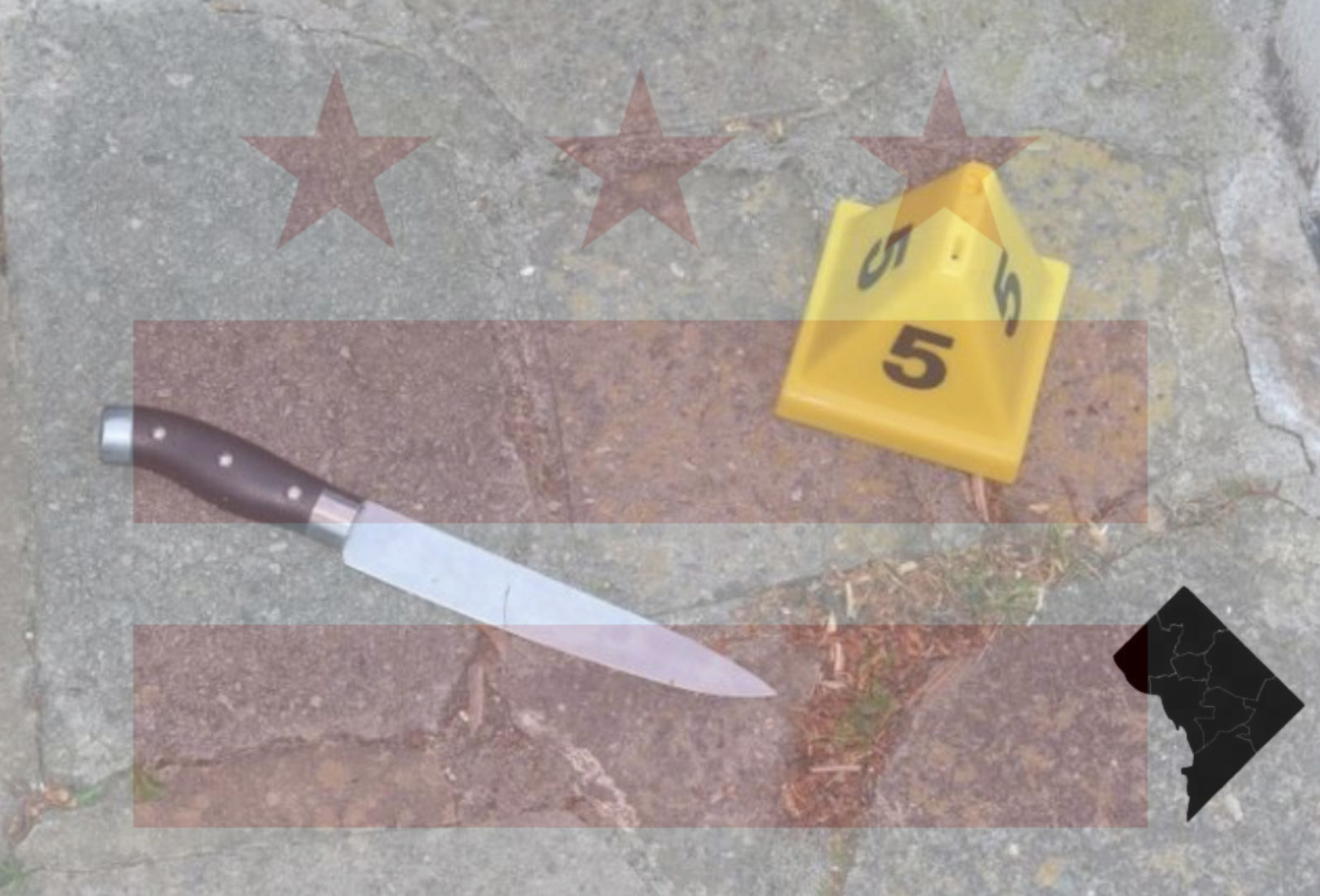
DC Superior Court Judge Errol Arthur ordered a full competency evaluation for a defendant accused of stabbing his stepfather on Oct. 6.

Darryen Kenney, 24, is charged with assault with a dangerous weapon for his alleged involvement in a domestic violence related non-fatal stabbing on Aug. 23 on the 3400 block of 18th Street, SE. 

According to court documents, Kenney and his stepfather were allegedly in a verbal argument that escalated into a physical altercation during which Kenney reportedly cut his stepfather with a knife. The stepfather sustained a severe laceration to his hand.  

Judge Arthur granted Kenney’s defense attorney, Sharon Weathers’ request for a preliminary competency screening on Sept. 23. 

Following a discussion with parties at the bench, Judge Arthur ordered Kenney undergo a full competency examination. The judge also ordered Kenney’s transfer from the DC Jail to Saint Elizabeths Hospital. To stand trial, a defendant must understand his charges and be able to help his attorney.

Parties are scheduled to reconvene on Nov. 4.

Homicide Defendant Deemed Incompetent to Stand Trial, Restoration Ordered

DC Superior Court Judge Todd Edelman ordered a homicide defendant undergo competency restoration on Oct. 3, after receiving a report from the Department of Behavioral Health (DBH) that initially concluded he was incompetent to stand trial.

D’Aundrey Scott, 31, is charged with first-degree murder, assault with intent to kill, and two counts of arson after allegedly igniting multiple fires on May 13, 2020 on the 900 block of H Street, NE. 62-year-old Darryl Finney died from burns on May 15, 2020, from a firebomb that Scott allegedly threw at him. 

The DBH report said that Scott was unable to understand the complexities of his own case, but claimed that Scott’s competency could be restored, if transferred for treatment to Saint Elizabeths Hospital for DC psychiatric patients.. 

Jesse Winogard, Scott’s defense attorney, stated that DBH’s report was not just about Scott’s competency, but also about the possibility of using a Not Guilty By Reason of Insanity (NGRI) defense. Winogard said that in Scott’s current state, it had been difficult to communicate the pro’s and con’s of the NGRI defense with his client, meaning he would claim he didn’t know right from wrong when commiting the crime and couldn’t conform his conduct to the law.

Judge Edelman ordered that Scott, therefore, be transferred from his current placement in the Central Treatment Facility (CTF) at DC Jail, and undergo treatment for competency restoration. All previously scheduled dates were also vacated until when and if Scott’s competency is restored.

Parties are slated to reconvene on Nov. 14. 

Judge Finds Probable Cause in Fatal Stabbing, Rape Case

DC Superior Court Judge Rainey Brandt found probable cause that a defendant was the perpetrator in a homicide incident during a hearing on Sept. 29. .

George Mudd, 71, is charged with first-degree murder while armed for his alleged involvement in the fatal stabbing of 24-year-old Susan Cvengros on May 21, 1999, on the 400 block of F Street, NE.

According to court documents, Mudd entered Cvengros’ apartment, raped and stabbed her 13 times in the neck and torso. His DNA was allegedly found on her vagina and nightgown.

During the hearing, Judge Brandt alerted the parties that she found probable cause for Mudd’s involvement in Cvengros’ fatal stabbing, citing seven different factors, including his DNA evidence allegedly recovered from her body, the fact that Mudd lived near the scene of the crime, and Mudd’s reported habit of getting high and grabbing a knife while under the influence.

Judge Brandt cited a Metropolitan Police Department (MPD) detective’s testimony, who stated that they knew that Cvengros was seeing a man from Massachusetts, and would practice safe sex due to a fear of contracting HIV. 

The defense called on an investigative specialist working for the Public Defenders Service, who stated that an ex-boyfriend of Cvengros, who lived in Baltimore, had threatened to kill her between 1997 and 1998.

During arguments, the prosecution hammered at the fact that Mudd’s DNA had an extremely high probability of being on Cvengros’ vaginal wall and on her nightgown. 

They also brought up Mudd’s prior convictions in 2000 and 2004 for similar crimes relating to assaulting women with “pointy objects.” 

Mudd’s attorney, Terrence Austin, stated that since the DNA evidence was found to be a match in 2012, the prosecution was relying on one piece of evidence, compared to the numerous other things that could point to someone else, and argued that the prosecution did not have probable cause.

During arguments for release, Austin argued that since Mudd is 71 years old, has a variety of health problems, and has been out of trouble for the better part of a decade, along with the fact that a trial is far out in advance, Mudd should be released from jail.  

The prosecution argued that since Mudd had committed two similar crimes in 2000 and 2004, and had been arrested for a DUI in 2019, Mudd should be held for now. 

Judge Brandt ordered Mudd to remain held pending further procedures.

Parties are slated to reconvene on Dec. 9.