Search Icon Search site

Search

Homicide Defendant Gets Mental Competence Evaluation

DC Superior Court Judge Danya Dayson ordered a mental competence evaluation for a homicide defendant in a hearing on Sept. 26.

Jordan Therman, 26, is charged with armed robbery, three counts of firearm possession during a crime of violence, felony first-degree murder while armed, premeditated first-degree murder while armed, and unlawful possession of a firearm with a prior conviction for his alleged involvement in the shooting of Denzel Greenwood, 33, on the 1900 block of 13th Street, NW on Aug. 4, 2023.

He is also charged with two counts of assault with the intent to kill while armed, four counts of firearm possession during a crime of violence, aggravated assault while armed, unlawful possession of a firearm with a prior conviction, and endangerment with a firearm for his alleged involvement in a non-fatal shooting incident that wounded an individual on the 3900 block Martin Luther King Jr. Avenue, SW on Feb. 7, 2024.

The prosecution extended a plea offer for assault with a dangerous weapon for the non-fatal shooting and second-degree murder for the homicide. If Therman pleaded guilty, the prosecution would dismiss the other charges. Additional terms of the plea offer were unspecified. 

When asked if he had discussed the plea offer with his attorney, Therman didn’t answer, leading Judge Dayson to acquiesce to defense attorney Thomas Key’s request for a mental competence evaluation.

Parties are slated to reconvene on Oct. 3.

Plea Enables Stabbing Defendant to Continue Substance Abuse Treatment

A stabbing defendant pleaded guilty and received a suspended sentence with substance abuse treatment after she spoke to DC Superior Court Judge Jennifer Di Toro on Sept. 29 about her willingness to get help to control her alcohol abuse issues.

Saundra Berry, 57, was originally charged with assault with a dangerous weapon and simple assault for her involvement in a stabbing that occurred Sept. 7 on the 200 block of N Street, SW. 

Berry accepted a plea deal that involved the stabbing and her other misdemeanor cases. She pleaded guilty to possession of a prohibited weapon and simple assault and prosecutors dismissed the assault with a dangerous weapon charge. The maximum sentence for possession of a prohibited weapon is one year in prison and six months for simple assault.

Berry’s defense attorney, David Akulian, requested that Berry’s incarceration be suspended, so she could get supervised probation and continue getting mental health and substance abuse treatment.

He said he believes the underlying issue in the incidents was Berry’s alcohol dependency. This dependency was clear, said Akulian, from body-worn camera footage of Berry refusing to give a can of beer to a uniformed officer during a separate incident. 

The prosecution requested Berry serve the maximum sentences, with 18 months of supervised probation upon her release. The prosecution requested this length of time due to Berry’s past behavior of threatening and assaulting others.

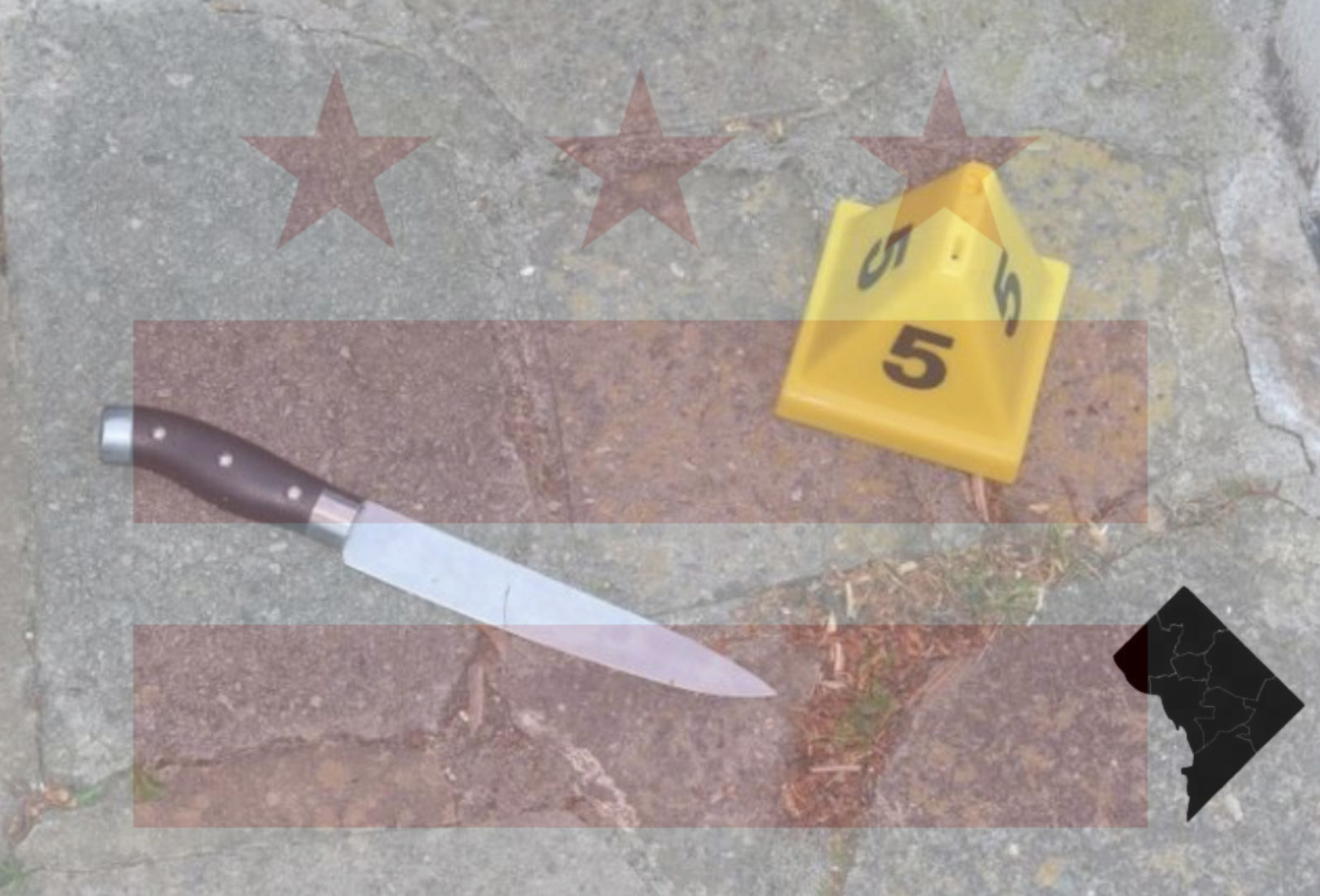
According to court documents, the incident occurred at Berry’s apartment, where a verbal dispute between the victim and Berry escalated. Berry then struck the victim with a kitchen knife on the finger and bit a second victim who was attempting to restrain her during the altercation.

Berry expressed her regrets and her desire to handle her problem with alcohol. She acknowledged that she needed to get the problem under control to prevent future incidents.

Judge Di Toro sentenced Berry to six months in prison, suspending the entire duration, and 18 months of supervised probation. Berry will continue substance abuse treatment with Prestige Healthcare.

No further dates were scheduled in this case.

Judge Modifies Non-Fatal Shooting Defendant’s Release

DC Superior Court Judge Deborah Israel modified the release conditions of a non-fatal shooting defendant on Oct. 1.

Davian Raines, 20, is charged with three counts of assault with a dangerous weapon and one count of possession of a firearm during a crime of violence for his alleged involvement in a non-fatal shooting. The incident occurred on the 900 block of U Street, NW on May 11. Three individuals sustained injuries.

During the hearing, Raines’ attorney, Todd Baldwin, made representations to Judge Israel that were not disclosed to the public. Following the representations, Judge Israel stated that Raines’ release would be switched from home confinement to a curfew with GPS monitoring. All other conditions remain the same.

Parties are slated to reconvene on Nov. 14.

Shooting Defendant Requires Continued Mental Health Services

A shooting defendant’s defense attorney asked DC Superior Court Judge Judith Pipe on Sept. 26 to delay proceedings, so his client could continue mental health treatment. 

Donnell Hannah, 26, is charged with assault with a dangerous weapon and unarmed carjacking for his alleged involvement in a shooting incident on July 21, 2022 on the 800 block of Southern Avenue, SE. Hannah and another individual allegedly fired gunshots before stealing a victim’s car.

“He is in restoration, so we’re doing continued restoration,” Judge Pipe said in agreement with Hannah’s defense attorney, Russell Hairston. 

Hannah is receiving competency restoration treatment because Judge Pipe previously determined he was unable to understand his charges or provide aid in his own defense. 

The prosecution did not object and the case was continued. 

Parties are slated to reconvene Oct. 30.

Victim Haunted By Sounds of Gunfire, Defendant Sentenced to 5 Years of in Prison

A shooting victim revealed on Sept. 26 the debilitating impacts of being shot in the neck as DC Superior Court Judge Judith Pipe sentenced the defendant to 60 months of confinement. 

On July 23, Marquise Carter, 28, pleaded guilty to assault with intent to kill and carrying a pistol without a license for his involvement in a non-fatal shooting that injured two people on July 25, 2024 on the 1400 block of Park Road, NW.

The prosecution read the victim impact statement before Judge Pipe. In it, the victim described the debilitating aftermath of being attacked.

“When I hear loud noises I get scared. … I still hear the gunshots in my head,” one of the victims wrote, adding that she no longer goes outside. 

The prosecution asked for Carter to be sentenced to 72 months of confinement for assault with intent to kill and 19 months of confinement for carrying a pistol without a license. 

“[She] now has to deal with the trauma … from being shot,” the prosecution said, adding that the victim was celebrating her sister’s birthday the day the shooting happened. 

“They were just trying to get home,” the prosecution said. 

The prosecution said the victim could not go to work for three months because her mouth was wired shut. They said the shooting was “completely senseless” because Carter had no reason to fire. 

Defense attorney Stephen LoGerfo asked Judge Pipe to impose the bottom of the guideline for sentencing for assault with intent to kill, which is two years. 

He said Carter “does not have a significant criminal history” but has a “significant history” of mental health issues. 

LoGerfo said Carter saw the car heading in the wrong direction and “freaked out.”

“He suffers from significant mental health issues and PTSD,” LoGerfo explained. 

He said Carter regrets his actions and has ample support from his family who was present at the hearing.

Carter also apologized to the victim. 

Judge Pipe thought Carter’s actions were “a trauma response” caused by “the life he’s lived” and him thinking he was in danger of getting hit. She said she understood why he reacted the way he did but maintained he should not have fired a gun, adding that his actions caused significant damage and he must be held accountable.

“It’s why people who aren’t licensed with firearms shouldn’t have firearms,” Judge Pipe said.

She chose to impose a sentence in the middle of the guidelines because she believed there is opportunity for mitigation.

Jude Pipe sentenced Carter to 60 months of incarceration with three years of supervised release for assault with intent to kill and 12 months for carrying a pistol without a license. The sentences are set to run concurrently. 

Carter must register as a gun offender in DC when released. 

No future hearings were scheduled.

Detective Demonstrates Witness’s Description of Shooter’s Pose

During a lead detective’s testimony Sept. 22, he demonstrated the defendant’s position during a shooting that left a 23-year-old dead.

Kareem Thomas, 37, is charged with second-degree murder for his alleged involvement in the fatal shooting of 23-year-old Jakele Allen that occurred on Oct. 21, 2024, at the intersection of 16th Street and Kentucky Avenue, SE. 

The lead detective on the case, working in the Homicide Branch of the Metropolitan Police Department (MPD), said the victim died from a gunshot to the chest.

The detective testified to the conversations he and a coworker had with two witnesses while investigating the shooting. His coworker had interviewed the witnesses on the day of the incident while he spoke with them in mid-November.

One of the witnesses discussed in court had seen the shooting from their porch. The witness told the detective that they heard shouting and saw a person in a red jacket in the doorway of a vehicle. The person allegedly used the roof of the car as a shooting platform for what the witness described to be a very large handgun. 

The detective said that the witness had demonstrated the position the shooter had taken, with his arms, head, and shoulders above the car. He mimicked the description to show the court as well. 

The witness saw the vehicle drive away immediately after the shooting, which was corroborated by video footage showing the vehicle fleeing quickly on 16th Street, SE. 

The detective said the witness did not have any other description of the suspect except for the red jacket.

Due to time constraints, the detective’s testimony was not concluded. 

DC Superior Court Judge Jason Park ordered the parties to reconvene on Sept. 30 to continue the preliminary hearing.

Stabbing Defendant Refuses to Attend Court

A defendant accused of stabbing another inmate at the DC Jail refused to attend his court hearing before DC Superior Court Judge Jennifer Di Toro on Sept. 24.

D’Andre Montgomery, 19, is charged with assault with significant bodily injury for his alleged involvement in a stabbing on April 17 at the jail located on the 1900 block of D Street, SE.

Before the hearing, the court was alerted that the defendant refused to get off the bus. His presence was waived by his attorney, Emily Sufrin.

The appropriate course for the case is still being determined.

Parties are slated to reconvene on Nov. 3.

Judge Severs Four Gun Charges Before Shooting Trial Begins

DC Superior Court Judge Danya Dayson severed four counts of possession of an unregistered firearm from a shooting defendant’s charges on Sept. 25, just days before the parties were set to go to trial. 

Ato Ocran, 46, is charged with assault with intent to kill while armed, aggravated assault knowingly while armed, two counts assault with a dangerous weapon, four counts possession of a firearm during a crime of violence, five counts possession of an unregistered firearm, destruction of property of $1000 or more, and carrying a pistol without a license outside the home. The charges stem from his alleged involvement in a shooting on the 2200 block of 13th St. NE, on June 3. 

One person was harmed during the incident. 

During the hearing, defense attorneys Kevann Gardner and Elizabeth Paige White motioned to sever four gun-related counts from the charges set to go to trial and change the court’s position on several key items of evidence.

The defense’s motion to sever the firearms charges was met with little opposition from prosecutors who told Judge Dayson that they had modified their stance from an earlier objection and no longer opposed the motion. 

“The reason they’re not contesting severance is because they realize there are vital things that were not provided to the defense,” Gardner said.

Judge Dayson severed the counts from the trial charges, though she did not grant the defense’s request to dismiss the charges. 

Defense attorneys and prosecutors also went back and forth on evidentiary issues about the defendant’s phone and the victim’s car. Shortly before the hearing, the defense asked prosecutors to release the phone so that they could access potentially exculpatory evidence on it.

Prosecutors objected to a full release of the phone to the defense, arguing, instead, that the defense provide prosecutors with the phone password and attain the information through a forensic analyst. 

Gardner argued that prosecutors were asking them to weigh their client’s right to access evidence with his right not to incriminate himself. Prosecutors argued that the defense was using the phone evidence as both “sword and shield” to release the phone into their custody.

Ultimately, Judge Dayson ruled that the defense could temporarily access the phone through a walled off attorney to gather the evidence they needed while not breaking the chain of custody. 

The parties also disputed whether the prosecution could enter the victim’s Jeep as evidence in the case. Gardner argued that police had failed to properly secure the Jeep as evidence, allowing it to return to the victim after it was first taken into police custody. 

Paige-White argued that bullet holes in the Jeep were tampered with and that a knife was removed from the vehicle before the prosecution regained custody of it. 

Prosecutors argued that police did not have custody of the vehicle when they first searched it after the shooting and that the physical presence of the knife in the vehicle was not exculpatory. Judge Dayson noted that whether or not the knife was exculpatory hinged on the custody issue of the vehicle and ordered parties to prepare briefs on the subject before the next hearing. 

Parties are slated to reconvene Sept. 29. 

_____________________________________________________________________

Mental Competency Examination Inconclusive for Uncooperative Shooting Defendant

DC Superior Court Justice Neal Kravitz said at a Sept. 24 hearing that a doctor could not write an opinion on a shooting defendant’s mental competency after he did not fully cooperate with the examination.

Mario Kirksey, 36, is charged with assault with intent to kill while armed, assault with significant bodily injury while armed, assault with a dangerous weapon, three counts possession of a firearm during a crime of violence and unauthorized use of a vehicle. The charges stem from his alleged involvement in a shooting on the 1300 block of Okie Street NE on Feb. 28, 2024. 

One person was injured during the incident. 

Parties met Sept. 24 to discuss the results of a mental competency screening Judge Kravitz had ordered for the defendant at an Aug. 25 hearing. 

Judge Kravitz kicked off the hearing by noting that a psychiatrist from the Depart of Behavioral Health (DBH) who worked with Kirksey had been unable to offer an opinion about his competency. Kirksey was “unengaged and unforthcoming” during the exam, Kravitz said. 

Kirksey’s attorney, Terrence Austin, told the court that he would like to locate his own expert to evaluate Kirksey and return in 30-to-45 days. Judge Kravitz and the prosecution expressed no opposition to Austin’s plan, though the prosecution asked that DBH attempt to examine Kirksey again in the meantime. 

“We’ll issue an order asking DBH to interview Mr. Kirksey again,” Kravitz said. 

Kravitz instructed Kirksey on the importance of the examination and asked him to work with DBH going forward. Kirksey responded that he had a hard time working with DBH because the examination felt forced. 

“When you feel like you’re being forced and bullied into something, it’s hard to communicate in the situation,” Kirksey said. 

Parties are slated to reconvene Nov. 14. 

_____________________________________________________________

Parties Dispute Victim, Key Witness Testimony Discrepancies

DC Superior Court Judge Michael Ryan heard prosecution witnesses in the ongoing jury trial of a non-fatal stabbing defendant on Sept. 29. 

Jerrell Smith, 31, is charged with aggravated assault knowingly while armed and carrying a dangerous weapon outside a home or business for his alleged involvement in the non-fatal stabbing of a victim on June 2, 2023. Court documents are not clear on where the incident occurred but police responded at the United Medical Center on the 1300 block of Southern Avenue, SE. 

Defense counsel Emma Mlyniec started by cross examining a Metropolitan Police Department (MPD) witness.

Attorney Mlyniec asked the now detective but officer at the time of the incident if she would agree that it is important to conduct a thorough investigation. The detective said yes. 

Following up, Mlyneic asked if the witness knew that if a thorough investigation was not conducted it could result in an innocent person being arrested, the officer affirmed. 

When asked if the lead detective on the case told her not to canvas the area the complainant said he was attacked at, she said that she could not recall. The defense then played the witness’ body camera footage from the night of the incident where the lead detective could be heard saying, “You don’t need to canvas nowhere”. 

The prosecution also called a forensic scientist from the Department of Forensic Sciences (DFS). She worked the crime scene and later put evidence into storage from the incident.

She testified to taking photographs of the vehicle in which the incident occurred. On the stand she pointed to places in the photos where suspected blood splatter could be seen. She pointed to portions of the passenger seats and the middle console. 

The prosecutor asked the witness if it was unusual for her to process the scene like the incident scene and not collect any forensic evidence, she said it was not unusual. 

The DFS scientist was then asked to identify two articles of clothing worn by the victim, given to her by detectives on scene, an orange jersey and a white tank top. In court she held up the items identifying where the suspect blood splatter was on the items.

When asked if she was able to photograph the victim other than his clothing, she stated she was not able to because he was already in surgery for his injuries. 

During cross examination, Mlyniec asked if the scientist was asked to do anything more than a compulsory search of the vehicle. She stated she was only asked to do the initial search and photograph the vehicle. 

She testified as well that she was not asked to do inventory of the items in the vehicle, swab the exterior or the interior for DNA or fingerprints, and test the suspect blood splatter. 

In redirect by the prosecution she was asked if she knew about any of the searches conducted by the police before she arrived or if she knew about any of the conversation between the police and witnesses at the scene, she stated she did not. 

Prosecutors called in a doctor who is the chief of trauma surgery at George Washington University (GWU) Hospital. The doctor confirmed that he treated the victim on June 2, 2023 after he was transported from United Medical Center. 

According to the doctor, the victim had bled profusely from his neck and was brought in as a trauma yellow, which indicates a priority patient. 

The doctor explained that the victim sustained external jugular vein injuries and underwent two blood transfusions. The doctor stated, “If he was not brought to the hospital, he would have bled to death.” 

Additionally, tests revealed that the victim had a .122 alcohol level in his system, one-and-a-half times the legal limit of .08. 

Before the next witness was called, the defense requested a judgement of acquittal, arguing that the prosecution had not established the defendant’s involvement beyond a reasonable doubt in this case. 

They continued by stating that two witnesses, the victim and his close friend, had given two different testimonies, specifically identifying where the assault occurred. The victim said the incident occurred in DC, while his close friend said that it occurred on a highway in Maryland. 

The defense argued that the close friend’s testimony is more credible because he was the driver of the vehicle. However, the victim testified to having been familiar with the area they were driving in while his close friend said he was unfamiliar with the area. 

Judge Ryan denied the defense’s motion of a judgement of acquittal, stating that in the case of aggravated assault the victim’s injuries were significant and “a reasonable juror can look at the damage that was done.”

Defense attorney Hannah Claudio called in an MPD detective. 

The detective, who was not the lead detective and had a limited role in the case, interviewed the victim on June 3, 2023. 

When asked where the incident occurred, the victim said he was assaulted in an apartment complex across the street from UMC, according to the detective. 

Initially, the victim said he was alone, but then said that his brother was with him. The victim also said that he was on foot – not inside a vehicle. The victim was unable to identify who stabbed him but, according to the detective, said that he did not think his brother did it. 

Judge Ryan explained to Smith his right to testify or not. Smith wished to remain silent. 

Parties are slated to reconvene for conclusions on Sept. 30.

_______________________________

Ryan Hawkins, Olivia Swaney

Homicide Defendant Again Won’t Appear in Court

A homicide defendant once again failed to appear before DC Superior Court Judge Neal Kravitz on Sept. 26, further delaying a case that has been ongoing for more than six years. 

Mark Price, 30, is charged with first-degree murder while armed, two counts of assault with intent to kill while armed, assault with a dangerous weapon, threat to injure or kidnap a person, four counts of possession of a firearm during a crime of violence, unlawful possession of a firearm by a convict and first-degree burglary while armed.

Price’s charges are connected to the fatal shooting of 47-year-old Andrew Hakim Young on July 30, 2019, on the 1500 block of 19th Street, NE. 

Price was previously sentenced to 50 years of imprisonment for a widely reported mass shooting on the 5300 block of 53rd Street, NE, on July 16, 2018 which killed ten-year-old Makiyah Wilson, and left four other individuals with gunshot wounds.

On March 14, Price similarly failed to appear in court before Judge Kravitz. In March, Price had told his attorney, Destiny Fullwood-Singh, that he was not feeling well and refused to get on the bus from DC Jail to court.

On Sept. 26, Fullwood-Singh said she spoke to Price the night before, and suspected he may fail to appear in court again. She told Judge Kravitz that Price was refusing to subject himself to what he termed the inhumane treatment that inmates are subjected to when they appear in court, and therefore would not get off the bus that brought him from the jail to court.

Judge Kravtiz noted that Price had not yet waived his right to appear in court, and gave Price one more opportunity to appear in court at the next status hearing.

Judge Kravitz warned that if Price fails to appear again, Judge Kravitz and both parties, as well as a court reporter, would need to visit Price in his cellblock to waive his right to appear in court in order to move forward with the case.

Parties are slated to reconvene on Nov. 14.

Homicide Defendant to Undergo Second Mental Evaluation 

DC Superior Court Judge Neal Kravitz ordered a second full mental competency exam on Sept. 26 for a murder defendant requesting to represent himself in trial.

Marcus Barringer, 34, is charged with first-degree murder while armed, two counts of assault with a dangerous weapon, two counts of unlawful possession of a firearm, two counts of obstruction of justice, three counts of possessing a firearm during crime of violence, and six counts of possession of a large capacity ammunition feeding device.

These charges are in connection to his alleged involvement in the fatal shooting of 32-year-old Rashad Davis that occurred May 6, 2022 on the 2300 block of Nicholson Street, NE.

On Sept. 11, Judge Kravtiz deemed that Barringer was mentally competent to stand trial after receiving a report from the DC Department of Behavioral Health (DBH). The report stated that after receiving mandated medication to moderate dangerousness, Barringer was competent to stand trial, and suggested that Barringer continue to be held at Saint Elizabeths Hospital for psychiatric patients. 

However, on Sept. 26, the prosecution told Judge Kravitz that following the Sept. 11 hearing, they had received another report from an independent expert at the hospital that believed that although Barringer’s state had improved, he was still not competent enough to stand trial.

The prosecution also told Judge Kravitz that Barringer also wished to represent himself in trial. A previous ruling on Oct. 24, 2024 by DC Superior Court Judge Robert Okun ruled that Barringer was incompetent to do so.

Lisbeth Sapirstein, Barringer’s attorney, affirmed that Barringer still wanted to represent himself with his defense counsel on stand-by. 

Judge Kravitz ordered another competency exam from DBH to evaluate Barringer’s competency to waive his rights to counsel. Barringer’s trial date is set for Feb. 1, 2027.

Parties are slated to discuss the findings from the latest mental competency exam on Nov. 11.

Defense Challenges Prosecution Evidence in Teen Homicide Trial

Witnesses, including the mother of a convicted defendant, testified in a jury trial before DC Superior Court Judge Rainey Brandt on Sept. 23. 

Reginald Steele, 26, is charged with first-degree murder while armed, conspiracy, ten counts of assault with intent to kill while armed, 11 counts of possession of a firearm during a crime of violence, four counts of carrying a pistol without a license, two counts of tampering with physical evidence, and five counts of possession of an unregistered firearm. 

The charges are in connection to his alleged involvement in four shootings, including the fatal shooting of 13-year-old Malachi Lukes, at the 600 block of S Street, NW, on March 1, 2020. Another individual sustained injuries during the incident. 

Steele was also allegedly involved in a non-fatal shooting on March 1, 2020 at the unit block of Channing Street, NE, and a non-fatal shooting on Feb. 22, 2020 at the 700 block of Farragut Street, NW. No individuals sustained injuries.

Additionally, Steele faces charges for his alleged involvement in a non-fatal shooting on Feb. 24, 2020 at the 1700 block of Ninth Street, NW. Three individuals sustained injuries during the incident.

A witness from the DC Department of Forensic Science (DFS), was called to the stand to discuss his involvement in a search warrant search for a home on the 2600 block of Douglas Street, SE, which according to court documents is Steele’s listed home address. 

The search occurred on May 29, 2020, and the witness described his role as photographing and bagging evidence that police previously identified as noteworthy to the investigation. 

When asked by the prosecution why forensic scientists need to document a warrant search scene, the witness said they need to show evidence that’s present at the scene. 

“Obviously it’s pretty incriminating if you show a gun,” stated the witness, to which the defense immediately objected. Judge Brandt told the jury to ignore the statement, and strike the prosecution’s previous question, from the record. 

Other photos were shown of Steele’s residence, including key pieces of alleged evidence–a loaded Glock 19 with a magazine, a cell phone, and Balenciaga size nine shoes. 

The witness stated that in addition to being loaded, the gun also didn’t have a safety attached. “If you pull the trigger, it went bang,” stated the witness. There were also ten cartridges still in the magazine.

The prosecution then brought the gun out for the witness to identify in front of the jury, and he confirmed it had the same serial number as the gun said to be found in Steele’s home. 

Also brought out for the witness to identify was a pair of Balenciaga shoes, which were found in another room of Steele’s home. Court documents show these shoes were used to identify Steele through gas station’s CCTV footage. The witness confirmed these were the same shoes said to be in Steele’s home. 

Cross examination by defense attorney Megan Allburn focused on the witness’ role in the warrant search, including that the witness had no knowledge of how the items arrived in the home, just that they were present. The witness agreed, and Allburn closed cross examination by boiling the witness’ job down to just “photos and baggies”. 

Four other witnesses testified about search warrants executed on May 29, 2020 in reference to Steele’s codefendant, Koran Jackson, 25. 

One search warrant was executed in Jackson’s listed home address, at the 3600 block of 11th Street, NW. A Metropolitan Police Department (MPD) detective testified to being a member of the team that executed the search warrant. 

The witness stated that the most important piece of evidence found was a pair of Nike Foamposite sneakers size 10.5 shoes that belonged to Jackson. Prosecutors brought the pair of shoes out for the witness to identify and show the jury. 

Allburn emphasized in cross examination that the detective did not bag the shoes himself– according to Allburn, this means the shoes seen in court could technically be a different pair than the ones documented to be in Jackson’s home. 

The last three witnesses testified to a search warrant executed at a house on the 1900 block of  Trenton Place, SE, identified as Jackson’s mother’s home. A cellphone, pair of shoes, and a sweatshirt were all found inside the home. 

Prosecutors called on Jackson’s mother to testify. She confirmed the home address, and uncovered the moments when her home was searched. According to Jackson’s mother, the search lasted three hours. 

However, as questions about clothing that Jackson owned, specifically a NASA sweatshirt, as well as his connection to Steele, co-defendant Tiiyon Freeman, 26, and 19-year-old Tahlil Byrd who was killed on Sept. 29, 2019, Jackson’s mother could not remember details like how the individuals met, where they attended school, and how close they were. 

Jackson’s mother was impeached–her credibility attacked– twice by not remembering the details she provided in her grand jury testimony. Judge Brandt stated, “She does not want to be here. When questions get too close to who grew up with who, she gets memory lapses and does not cooperate.” Judge Brandt also observed changes in Jackson’s mother’s demeanor, noting that she smirked, turned, and mumbled under her breath when asked questions about the photographs of Jackson’s NASA sweatshirt. 

Defense Attorney Meghan Allburn questioned, “what does her demeanor have to do with her credibility?” with the prosecution arguing that she was very forgetful as it pertained to the relationship between Jackson, Freeman, and Bird. 

Additionally, a jail phone call between Jackson and his mother was played in court. In the call, she allegedly advised Jackson to tell Freeman, who was referred to as Ty, “not to be running his mouth.” Jackson’s mother explained that, “they don’t know who these people are, so don’t talk to anybody” as her reason behind that statement. 

An MPD officer confirmed that a grey cellphone, pair of Nike shoes, and a NASA sweatshirt were all found inside the home. Additionally, the witness testified to Jackson’s mother identifying her son wearing these clothes in pictures provided by detectives. 

Parties are slated to reconvene Sept. 24. 

________________________________________

Ryan Hawkins, Lizzie Twardock

MPD Officers, Detectives Break Down Security Footage in Shooting Trial

The responding detective testified in a shooting trial before DC Superior Court Judge Deborah Israel on Sept. 29.

Daquan Toland, 25, is charged with aggravated assault knowingly while armed, assault with a dangerous weapon, two counts of possession of a firearm during a crime of violence, carrying a pistol without a license outside a home or business, possession of an unregistered firearm, and unlawful possession of ammunition. The charges stem from his alleged involvement in a non-fatal shooting that took place at the Waterfront Metro station on the 300 block of M Street SW on June 2.

The prosecution called the Metropolitan Police Department (MPD) detective that responded to the incident to testify about videos from the crime scene and the arrest of Toland. Surveillance footage from inside the station, police cameras, security tapes from the Safeway across the street, and body-worn camera video from the arresting officers were entered as exhibits and confirmed by the witness.

Footage from the incident showed someone in a white shirt, who prosecutors alleged was Toland, riding a bike past the Metro station where he came into contact with two individuals wearing all black. 

The individual wearing white and one wearing black then pull out firearms and retreat while firing at each other. The individual in white sprinted into the Metro station. Different video footage showed an individual in a white shirt who boarded a Green Line train, and exited at the Gallery Place-Chinatown station. Toland is supposedly captured on body-worn camera footage exiting the Chinatown stop where he was apprehended by police.

When the MPD detective was cross examined, Henry Druschel, Toland’s defense attorney, pointed out two individuals in orange vests while reviewing the surveillance footage from a Safeway. He asked why they were not considered witnesses or suspects. The detective was able to confirm that they were not WMATA officers, but did not consider them witnesses or suspects, and they remain unidentified.

Druschel also asked the detective about a ballistics report that the detective filed for this incident. In his first testimony, the detective claimed they found evidence of two weapons being fired. During the cross examination, he noted that there may have been a third, but that he would need to review the report to verify.

Druschel also called in an MPD officer who responded to the scene to testify and review body camera footage. In the video, Druschel pointed out an individual in an orange vest seen in the Metro station and asked if the police considered them relevant to the case. The officer didn’t regard the individual on the day of the crime, as she was focused on getting to the scene.

The prosecution submitted three additional pieces of evidence, which were audio recordings. One was a piece of an interview with on-scene witnesses, who identified one of the suspects as wearing a white shirt.

The other two recordings were from calls reporedly between Toland and his mother regarding an alleged robbery against Toland. In one, his mother can be heard asking why Toland had a gun, but the recording ends shortly after with no clarification.

After the jury left for the day, Druschel motioned for acquittal but Judge Israel declared that she believed a reasonable juror would be able to convict Toland beyond reasonable doubt. 

Parties are slated to reconvene on Sept. 30.

__________________________________________________

Jackson Nielsen

Sean Kildea

‘My Son Does Not Have the Comfort of Going Home,’ Victim’s Father Tells Court About Ailing Murder Defendant

DC Superior Court Judge Neal Kravitz granted the release of a murder defendant to home confinement on Sept. 29. 

Dione Dorn, 42, is charged with first-degree murder premeditated while armed for his alleged involvement in the fatal shooting of 23-year-old Jaydon Parson, which occurred on Feb. 18 on the 700 block of H Street, NW. 

On July 10, Megan Allburn, Dorn’s attorney, requested that Dorn be released to home confinement given Dorn’s continued decline in medical health since first entering the DC Jail in May. Dorn has been diagnosed with diabetes, end-stage renal disease, congestive heart failure, kidney failure, and neuropathy.

Following the July hearing, Judge Kravitz ordered for a medical expert to determine whether Dorn’s condition stemmed from defiance medical advice or a lack of care provided by the jail, and to consider whether Dorn’s medical conditions would make him less dangerous to the public. 

The report from the medical expert stated that much of Dorn’s defiance was isolated events, and were largely protective measures. With that, the expert stated that Dorn’s worsening state could not be the result of from his own actions, and was compounded by inadequate care.

The expert concluded the report by stating that it would be beneficial for Dorn to return to his home in order to receive more intensive care for his conditions. 

The prosecution argued that the report did not address any change in treatment to Dorn’s current medical agenda, other than the fact that Dorn would receive a superior level of care outside of the jail. The prosecution also stated that Dorn has already been placed on a specialized diet for his conditions.

However, Allburn argued that Dorn’s care recently lapsed after a flare-up in gastrointestinal issues, which resulted in a four-week hospital stay.

The defense told Judge Kravitz that if granted home-confinement, Dorn would first need to visit the hospital in order to receive secondary colonoscopy and endoscopy procedures, and be given a C-PAP machine to treat sleep apnea, which is banned in DC jail.

Allburn also stated that the hospital would need to assign Dorn a specific dialysis treatment center to visit with a caretaker. However, the defense stated that Dorn could learn to administer his own dialysis care at home.

Before Judge Kravitz made his ruling, two of Parson’s family members wished to address the court. 

Parson’s father appeared remotely.

“Our lives were shattered in that moment,” the father said. “And let me be clear: my son does not have the comfort of going home or ever taking another breath.” 

Parson’s dad also pointed out that his son suffered from three gunshot wounds to the head, and was shot a total of five times.

“Every day we live with the pain and the trauma of this violent matter,” he said. 

“I am here on behalf of my sister, who does not have the strength to be here because she is suffering from a broken heart,” Parson’s aunt said. “What he has done to our family, he has destroyed our family.”

With tears in her eyes, Williams told Judge Kravitz that she urged him to put a great amount of consideration into his ruling.

Judge Kravitz thanked both family members for their words, and their voices highlighted the impact of crime in the District, and the human loss at hand.  

Judge Kravitz turned to say this issue fell under the bail statute, and told the court that while probable cause had been found against Dorn, he had not yet been proven guilty. With that, Judge Kravitz stated that after reading the medical report, he believed that Dorn was less dangerous to the community than when he was first detained. 

Judge Kravitz ruled that Dorin was to return to his home under 24/7 home-confinement with GPS tracking, only to leave his home for pre-approved medical appointments for his various medical needs.

“This is much less about compassionate release, and more about the analysis of the bail statute,” Judge Kravitz said. 

Parties are slated to reconvene on Nov. 14.

——————————————————————————————————–Luci Garza