Search Icon Search site

Search

Is Davon Peyton Guilty?

The prosecution, during the second week of a 2015 murder trial, referred to 27-year-old Davon Peyton as an angry man, who showed a “conscious disregard” to the possibility of death or serious bodily injury.

Assistant United State Attorney Katie Earnest told the jury Feb. 14, during her closing statement, that the homicide of Ray Andre Harrison was not an accident. The trial began on Feb. 6. Peyton is charged with second-degree murder while armed.

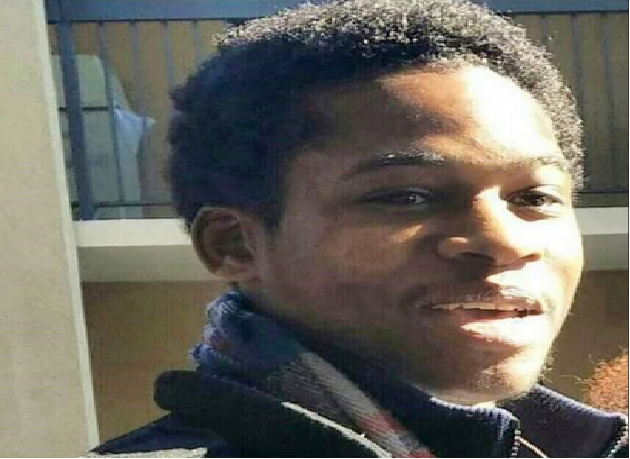
During the prosecution’s closing argument, Earnest presented a picture of the 21-year-old murder victim and pressed the jury to find Peyton guilty of second-degree murder while armed.

Earnest also contested the defense’s argument that Harrison’s 2:30 a.m. visit on Nov. 13, 2015, was unexpected. She referred to Peyton’s phone records, emphasizing that Peyton made outgoing calls after screening two calls from Harrison after midnight.

Additionally, Earnest replayed the 911 call made by Harrison’s girlfriend after he was shot. During the call, Peyton is heard urging the girlfriend to give an incorrect address to the operator.

The prosecution also stressed the fact that Peyton fled the scene and hid the gun used to shoot Harrison in a closet in a second girlfriend’s home.

According to the prosecution, Peyton’s actions were intentional.

Peyton’s attorney, Matthew Davies, said everything Peyton did on the night of the altercation was in reaction to Harrison.

Davies said that Peyton “woke up to a parent’s worst nightmare” when he heard banging on his 7-year-old daughter’s window in the middle of the night.

According to the defense, Harrison felt disrespected by Peyton ignoring him and started to assault him at his doorstep. In the midst of the tussle, Peyton’s gun went off accidentally.

Davies also said the prosecution had not proven their case and that “Ray Harrison died in a tragic accident.”

At the end of his closing statement, Davies played a video of Peyton’s girlfriend talking to an officer after the shooting in which she said “he didn’t mean to” shoot Harrison. He also showed a video of her speaking to detectives in which she says “it was an accident.”

The prosecution is scheduled to give their rebuttal on Feb. 15.

Jury deliberates on 1991 murder trial

On Feb. 14, the prosecution responded to the defense’s allegations of conspiring witnesses against the defendant.

Assistant United States Attorney Laura Bach reminded the jury that even though the government provided witness testimony from the grand jury, the government could not say whatever it wanted. Rules still needed to be followed, she said.

The four week-long triple homicide trial against Benito Valdez, who is charged with first-degree murder while armed, is now in the stage of jury deliberations. The trial began on Jan. 23.

Bach told the jury that while the prosecution should be held to a high standard of proving the crimes beyond a reasonable doubt, they were not required to prove anything with absolute certainty since the crimes happened more than two decades ago.

She said the only thing the prosecution had to prove were the elements of the crime. Bach told the jury there was no doubt three people were killed with two separate guns, DNA from the defendant was found on Samantha Gillard‘s clothing, and Michael Green, an eyewitness in the trial, pled guilty to three counts of voluntary manslaughter for the homicides of Curtis Pixley, 29; Keith Simmons, 24; and Gillard, 23 on April 23, 1991.

Furthermore, Bach said multiple witnesses testified that Valdez not only admitted to the homicides, but also to being the sole shooter.

Counsel delivers closing arguments for 1991 triple homicide trial

Four weeks after the murder trial against Benito Valdez began, counsel gave their closing arguments for the 1991 triple homicide case. The trial began on Jan. 23.

During the prosecution’s closing argument, Assistant United States Attorney Laura Bach reviewed DNA samples found on Samantha Gillard‘s body. Bach said Gillard, 23, and Valdez’s DNA were mixed together and found on Gillard’s left arm jacket sleeve and on her pants.

The prosecution also said making the victims lay face down and firing 17 times with two separate guns qualified as first-degree murder.

The defense disagreed, saying Valdez was not guilty. Valdez’s attorney, Madalyn Harvey, said the prosecution had not proved its case.

Judge Judith Bartnoff also struck Michael A. Green’s testimony about Valdez paying someone named “Tricky Rick” to tell officers that he and Valdez were elsewhere during the homicide.

The prosecution is scheduled to give their rebuttal on Feb. 14.

Valdez is charged with first-degree murder while armed for allegedly fatally shooting Curtis Pixley, 29, Keith Simmons, 24, and Gillard.

Alleged shooter claims death was an accident

The defendant in a 2015 homicide case took the witness stand Feb. 13 to explain that the fatal shooting of 21-year-old Ray Andre Harrison was accidental.

Davon Peyton, 27, testified that he had a “business” relationship with Harrison, and that he would often provide Harrison with marijuana in exchange for rides.

Peyton said he spoke to Harrison on the phone during the afternoon before the shooting, but Harrison did not indicate he had plans to show at Peyton’s apartment later that night.

According to Peyton, Harrison became defensive and angry and began assaulting him while at his apartment. After being punched in the face, Peyton said his gun went off by accident.

When he realized that Harrison had been shot, Peyton said he tended to Harrison and instructed those around him to call 911.

“I feel horrible,” said Peyton. “I didn’t mean for him to die. It wasn’t supposed to go like that.”

A toxicology expert told the jury that Harrison had a blood alcohol concentration level of 0.16 percent. The legal limit in D.C. in .07 percent.

Peyton is expected to be cross examined by the prosecution on Feb. 14.

Was a 2015 homicide self defense or premeditated?

Was a late morning homicide in Ward 3 spurred by self defense or premeditated?

Kevin Chase and Demetrious Brandon are charged with first-degree murder while armed and possession of a firearm during a crime of violence in the alleged fatal shooting of Marcus Manor on the 2900 block of Sherman Avenue, NW on Oct. 20, 2015. Chase is also being charged with unlawful possession of a firearm, carrying a pistol without a license and assault with significant bodily injury. Brandon is also being charged with accessory after the fact for an assault with the intent to kill while armed. The murder trial began on Feb. 12 and is expected to continue until March 5.

On Feb. 13, the prosecution presenting Manor, who was 38 at the time of his death, as a father of two sons and a daughter. The prosecution said Manor, who was involved in a romantic relationship with Chase’s sister since the Spring of 2015, only went to her residence to get her back.

The prosecution admitted the relationship between the sister and Manor was violent, but said the two also shared moments of love. According to the prosecution, when the sister finally kicked Manor out of her apartment, she did not want to take him back, but Manor kept trying. So, Chase, 30, planned to take care of his sister’s problem indefinitely and called Brandon, 30. The two planned the homicide, the prosecution said.

Depicting Chase’s ill will towards Manor, the prosecution also cited an assault on Oct. 16, 2015, where Chase broke Manor’s nose and cheek bone.

However, Chase’s attorney, Kevann Gardner, depicted a very different picture during the defense’s opening statements.

The defense argued the homicide was not a crime; it was self defense. “He is going to kill me,”Gardner said, referencing Chase’s thoughts in the seconds before the shooting.

According to Gardner, Manor, who was allegedly known as “killer” on the streets, put Chase in a predicament where it was either shoot or be killed.

“None of us should have to find ourselves in the place Kevin Chase found himself on that day,” Garner said. He said Chase only protected himself, which is what the law allows.

James Williams, Brandon’s attorney, added that Brandon didn’t know about the relationship between Manor and Chase’s sister nor was he holding a gun. Williams said, Brandon was only at the residence to visit with his longtime friend.

Throughout the rest of the day, the prosecution called seven witnesses, the younger brother of Manor, two Metropolitan Police Department officers and one detective, three area residents and a technician from the D.C. Department of Forensic Science.

Manor’s brother supplied the jury with biographical information about the decedent and emotionally identified him on a poster in the courtroom. The officers and technician discussed their actions while on the crime scene that day and the residents, who were in the area during the time of the shooting, told the jury what they saw after hearing the gunshots.

One resident said he saw a black man holding a gun with two hands facing a black truck, which was identified as a Ford Explorer. Later, that same resident saw a thin black man get into a car at a gas station on the corner of Sherman Avenue, NW and Harvard Street, NW. Another resident said she saw a thin black man running southward on Sherman Avenue, NW after the shooting with a four door sedan following behind him.

In addition to the testimonies, the prosecution also submitted numerous photo exhibits and two 911 calls into evidence.

Witness unable to testify in triple homicide trial

A witness called to testify, in a triple homicide murder trial, did not appear in court Feb. 12 because of an undisclosed medical condition.

According to the defense, the witness saw Benito Valdez while the witness was running away from gunshots in Langdon Park on the night of April 23, 1991.

However, the prosecution said the witness told police they weren’t at the park at all on the night of the homicides.

Judge Judith Bartnoff questioned if the witness would be able to testify because of their medical condition. The defense requested to use testimony from the witness’ doctor.

The doctor’s testimony could determine whether the case against Valdez would be postponed until the witness could testify or if closing arguments would begin Feb. 13. The trial began on Jan. 22.

Valdez is charged with first-degree murder while armed for allegedly fatally shooting Curtis Pixley
, 29, Keith Simmons, 24, and Samantha Gillard
, 23.

Records show victim’s visit not so ‘unexpected’

On Feb. 12, the prosecution rebutted the defense’s claim of an unexpected visit as a cause to the decedent’s death in a 2015 homicide by presenting phone records.

The government called a custodian of records from T-Mobil USA to expose Davon Peyton’s phone records on the night of Ray Andre Harrison’s death.

Although Peyton’s attorneys, Matthew Davies and Joseph Wong, alleged that Harrison showed up at Peyton’s apartment unexpectedly on the night he was shot, the phone records showed that Harrison, 21, called Peyton, 27, twice after midnight.

Even though the records showed that Peyton did not answer any calls from Harrison, they also showed that Peyton made outgoing calls after Harrison’s calls went to voicemail.

During cross examination, Wong stressed the fact that Harrison’s calls went to voicemail and that Peyton never actually spoke to Harrison.

In addition to the phone records, the prosecution also called two DNA experts to corroborate that Harrison was allegedly shot with Peyton’s gun.

Peyton has been charged with second-degree murder while armed. The trial is expected to continue on Feb. 13.

Spires receives 35 years for Kevin Sutherland homicide

The man who pleaded guilty to fatally stabbing Kevin Sutherland was sentenced to 35 years on Feb. 9.

In addition to his sentence, Jasper Spires will be required to serve five additional years under supervised release. The court has ordered that Spires, 21, also receive mental health treatment and undergo a mental evaluation prior to his release.

“I do not hate the defendant, but I hate what he did to my son,” Sutherland’s father, said during the sentencing. Sutherland’s parents spoke about their love for their only son.

Sutherland, who was 24 at the time of his death, was robbed and stabbed on a Red line metro train as it approached the NoMa-Gallaudet University metro station on Independence Day in 2015. According to reports, Spires also robbed other people before leaving the metro station.

“Our grief will go beyond 30 to 35 years, and I am glad we are not beholden to this courthouse, because Kevin never lived in these four walls,” Sutherland’s cousin said. “He lived in this city.” The trial began in October of 2015.

As part of the plea deal, the government would not pursue other charges that are not related to the homicide.

Craig Hickein, Spires’ defense attorney, said Spires wanted to take responsibility for his actions.

According to a report from St. Elizabeths Hospital, D.C.’s psychiatric facility, issued on May 10, 2017, doctors said that even though Spires was suffering from paranoid schizophrenia at the time of the murder, he still had control over his actions.

Judge Judith Bartnoff said that while Spires’ mental illness provides some explanation, it is not enough for the family and friends of Sutherland.

In preparation for sentencing, the judge said she received and read 60 impact statements from several members of Sutherland’s family and the community, detailing how the homicide has affected them both personally and professionally.

Sutherland graduated from American University in 2013. He served as an intern for Rep. Jim Himes (D-Conn.) and worked as a digital political strategist for digital strategy firm New Blue Interactive.

Prosecution questions testimony of murder defendant’s ex

The validity of the testimony of the ex-girlfriend of alleged shooter Davon Peyton was questioned Feb. 8.

Peyton, 27, is charged with the 2015 shooting death of 21-year-old Ray Andre Harrison.

Even though the ex-girlfriend testified that she never saw Peyton grab his gun on the night of the homicide, the prosecution presented video clips from the Metropolitan Police Department that showed the ex-girlfriend telling police that Peyton grabbed his gun after seeing someone at the window.

The ex-girlfriend also signed a police report where she stated that she “witnessed Peyton shoot Harrison.”

Peyton’s attorney, Matthew Davies, emphasized that the ex-girlfriend also said Peyton “didn’t mean to” shoot Harrison and that the shooting was an accident. He claimed the prosecution was trying to impeach the ex-girlfriend’s testimony.

As the ex-girlfriend recalled the night, she said Harrison called “four to five” times, but Peyton didn’t answer because he thought Harrison tried to steal from him the week before.

She also said she was nervous to be at the trial and wouldn’t have showed if she hadn’t been subpoenaed. The ex-girlfriend said her relationship with Peyton had been rocky.

The trial is expected to continue on Feb. 12.

1991 triple homicide trial expected to wrap up next week

On Feb.8, Judge Judith Bartnoff said she expects a triple homicide trial against an alleged drug dealer to end next week. The trial began on Jan. 23.

Benito Valdez is charged with first-degree murder while armed for allegedly fatally shooting Curtis Pixley, 29, Keith Simmons, 24, and Samantha Gillard, 23, on April 23, 1991.

During the fourth week of trial, the defense is expected to call their final witnesses on Feb. 12. Closing arguments are expected on Feb. 13.

Prosecution discredits expert witness’ testimony during 1991 homicide trial

An expert witness for the defense was discredited Feb. 7 during a 1991 triple homicide trial.

Ross Gardner, a crime scene analyst who created a report on the shootings, told the jury how he used trigonometry to determine where the shooter was in relation to the victims. He said, based on the wounds, it was impossible for the shooter to be behind the victims when they were shot.

However, the prosecution revealed errors in Gardner’s report.

Assistant United States Attorney Laura Bach said Gardner attributed some wounds with the wrong caliber and mislabeled two wounds found on Curtis Pixley‘s body.

“There were many mistakes, [Bach] didn’t even get to all of them,” Gardner said. “I was required to put together this report in three days.”

On Feb. 6, officer James Fields testified about a bag of crack cocaine that was found in Samantha Gillard‘s jacket pocket. Even though the same jacket had previously been processed and inspected by three other investigators, Fields said the drugs were found in 1992 by an unidentified FBI investigator.

Benito Valdez is charged with first-degree murder while armed for fatally shooting Pixley, 29; Gillard, 23; and Keith Simmons, 24. The trial is expected to continue on Feb. 7.

Decedent’s girlfriend recalls night of homicide

On the third day of a 2015 murder trial, Ray Andre Harrison’s girlfriend testified about the events that occurred on the night he was shot.

According to the girlfriend, her best friend came into town for a surprise visit and met Harrison that night. She said they wanted to show her a good time, so they decided to go to Davon Peyton’s house to get marijuana. Peyton was Harrison’s alleged dealer.

Harrison’s girlfriend said that he called Peyton, 27, “at least two times” before they decided to go to his residence, but Peyton never answered the phone.

The girlfriend said, when Peyton answered door, the two men got into an arguement. She said she heard Harrison tell Peyton to calm down before she heard a gunshot.

Assistant United States Attorney Katie Earnest played the 911 call for the jury. Peyton is heard in the background telling Harrison’s girlfriend to give a different address to the dispatcher. The girlfriend said Peyton fled the scene following the shooting.

Peyton’s attorneys, Joseph Wong and Matthew Davies, prodded the girlfriend about whether Harrison had been drinking that night. She confirmed that he was.

The defense team also emphasized that the girlfriend never actually saw Peyton point the gun.

The girlfriend did confirm that after Harrison was shot, Peyton apologized, tried to help Harrison, and told them to call an ambulance.

Peyton is currently charged with second-degree murder while armed. The trial is expected to continue on Feb. 8.

Criminally-insane patient seeks unsupervised release from St. Elizabeths

James Swann Jr. is requesting conditional release from the district’s psychiatric facility, again.

Swann, 53, was found not guilty by reason of insanity to 32 charges in a 1993 murder spree in the Columbia Heights and Mount Pleasant areas of Washington, D.C. According to news reports, four people died and several others were wounded throughout the rampage that lasted for several months. Swann has been held a St. Elizabeths Hospital, D.C.’s public psychiatric facility, since the the verdict in 1994.

Kimberly Clarke, Swann’s defense attorney, addressed Chief Judge Robert Morin Feb.7 about a motion she filed on Dec. 28, 2017, to allow Swann to hold employment in the community and visit family members. According to Clarke, Swann has completed the employment readiness program at St. Elizabeths.

However, according to a Feb. 2 letter from the D.C. Department of Behavioral Health, the hospital opposes the motion for conditional release.

“The Hospital is unable to support [Swann’s] request to visit his sister and family in the community as the family has not been involved in his treatment and has not had contact with members of the treatment team. Employment in the community cannot be supported , at this time, as Mr. Swann remains on two-to-one supervision when entering the community with Hospital staff,” the letter said.

Swann is diagnosed with paranoid schizophrenia, antisocial and narcissistic personality disorder.

Similar motions for Swann to visit his father and mother were filed in 2017 and 2011, respectively. The motions were denied.

The court scheduled Swann’s readiness and evidentiary hearings in September, where the motion will be decided. Lawyers of the defense and prosecution said they expect the evidentiary hearing to last several days.

Montez Warren takes plea deal for 2016 murder

Montez Warren pled guilty Feb. 5 to second-degree murder while armed in the shooting death of Dante Miller.

According to the office of the United States Attorney for the District of Columbia, if accepted by the court, Warren, 36, would face a potential sentence between 15-20 years in prison. Warren is scheduled to be sentenced on April 27, 2018.

On Aug. 21, 2016, Warren fatally shot Miller, 27, eight times while at a cookout on the 1200 block of 18th Place, NE. Warren was arrested on Oct. 12, 2016.