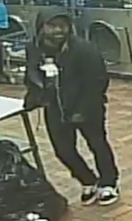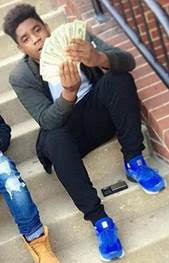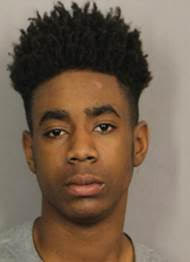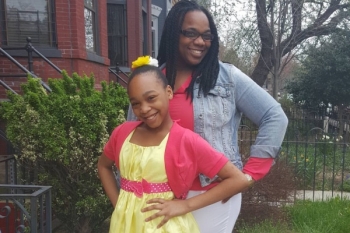
Reginald Parks was fatally shot June 19, 2017.
[documentcloud url=”http://www.documentcloud.org/documents/3877992-Reginald-Parks-homicide-reward-flier.html” responsive=true]
Reginald Parks was fatally shot June 19, 2017.
[documentcloud url=”http://www.documentcloud.org/documents/3877992-Reginald-Parks-homicide-reward-flier.html” responsive=true]
Jason Dale was fatally shot on June 12, 2017.
[documentcloud url=”http://www.documentcloud.org/documents/3866484-Jason-Dale-homicide-reward-flier.html” responsive=true]
Police are investigating the fatal shooting of 28-year-old Julius Leroy Foreman.
Foreman was found fatally shot a little after midnight on June 14. When he was found by police, Foreman was suffering from what appeared to be multiple gunshot wounds.
Police have not yet released any suspect information.
The trial for Delonte Wynn finally boiled down to closing statements on Wednesday afternoon.
Only one witness was called for the defense before the end of the trial. Wynn is charged with the murder of Darlene Bryant.
Kaleb Berhane works for Wynn’s attorney in the Superior Court, where he is a primary defense investigator. His job was crucial to the defense since he was the one to get statements from key witnesses. One of the most controversial testimonies in this case was that of Donnell Howard, who has been accused of changing his story in order to shorten his current sentence and receive a reward of $25,000. Howard claimed on the stand that if any parts of his earlier testimonies didn’t match up it was because Berhane rushed him. During his testimony, however, Berhane claimed that he never rushed Howard and gave him the option to leave at any point throughout the interview.
Berhane was the only witness called by the defense, leaving the jury without any statement from the suspect, Wynn. Wynn remained silent in his seat throughout the entirety of the trial other than to introduce himself every morning to the judge and the jury.
The prosecution gave a closing statement, going through every single testimony and piece of evidence that had been brought to the courtroom. Their interpretation of the evidence claims that Bryant’s murder was pre-meditated. They referred to text threads and phone calls between Wynn, his girlfriend, and Bryant. Although Wynn’s girlfriend claims that Wynn was calm in the moments leading up to Bryant’s death, the prosecution argues the opposite. The video footage from the Geraldine Apartments catches an assumed-to-be Wynn walking towards the complex and then running away from it moments later. The DNA samples from the crime scene, while not matching Wynn, do not entirely suggest his absence since he did not have to touch her to stab her, the prosecution said. As for Howard’s testimony, the prosecution used evidence from the scene of the crime to corroborate his story — $4 and a lemonade bottle, which Howard claims to have bought for her moments before she was killed. Additionally, the prosecution emphasized the agreements made with both Howard and Charles King to reassure the jury that the two witnesses would not lie on the stand since they have to tell the truth to receive any benefits. The prosecution ended their statement by begging the jury to look at the evidence, to use “common sense” and to put Wynn in prison.
The defense, on the other hand, did not go through the evidence piece by piece. The testimonies given by Howard and King were the focal point of this closing statement, claiming that without these two “stories,” there is no evidence to convict Wynn — no DNA and no motive. As before, Wynn’s attorneys targeted the motives of Howard and King, trying to strip away legitimacy of each testimony. Howard claimed to have overheard an angry phone call conversation between Wynn and Bryant. The defense drew from this testimony, finding that the phone records show no phone call between the two. The defense emphasized the inconsistencies and begged the jury to keep an innocent man out of jail.
During these closing statements, different reactions came from the audience. The prosecution put a scowl on Wynn’s mother’s face. The defense left the mother of Darlene Bryant frustrated. When approached, Dolores Bryant said “I just want to leave this all behind when it’s over.”
The D.C. Police are investigating the fatal shooting of 51-year-old Reginald Parks.
Parks was found in the 300 block of 54th St. NE, on June 19 a little after 10 a.m. Parks was found suffering from what appeared to be multiple gunshot wounds and was declared dead.
Police have not yet released any suspect information.
Police are investigating the fatal shooting of Jason Antonio Dale, 33, of Southeast D.C.
Dale was discovered by police around 9:30 pm June 12, on the 500 block of Parkland Place, SE. Police, who were responding to a report of a shooting, found Dale in an alley.
He was taken to a hospital where he died from his injuries.
Police are investigating the fatal shooting of 25-year-old Malik Hill.
Hill, along with two other victims were discovered around 10:43 p.m. on June 16, on the 2700 block of Langston Place, SE. The police, responding to a report of a shooting, found two adult males and a juvenile male suffering from gunshot wounds. All of the victims were transported to the hospital.
Hill was pronounced dead at the hospital.
Murder suspect Jonathan Taylor testified at his own trial, accused of the murder of Dexter Motley.
On the stand, Taylor told of his own version of events in August 2014, when Motley was killed.
Taylor said on the night of Motley’s murder he borrowed a car from someone he was romantically involved with and went to a friends house. There, the friends drank and hung out. Later, a friend asked to borrow the car to get more liquor. When he returned, Taylor said his friend told him he had just killed someone he was fighting with.
A few days later Taylor went over to a different romantic interest’s house and said he told her that one of his friends had just killed someone.
Taylor also admitted that he lied to detectives on several occasions because he didn’t want to involve himself with. He mainly denied knowing many associates of the Oxford Manor and using the car or knowing of the owner of the car.
In the government’s closing statements they emphasized the importance of finding accountability for Motley’s death, and addressed any inconsistencies in witness credibility and statements as human error. Though Taylor may not be the one who killed Motley, he was still involved, and is as guilty as the person who pulled the trigger.
The defense attacked the credibility of most of the government’s witnesses. The defense also argued that there was no evidence to put their client at the scene of the murder, and argued that Taylor’s appearance was not the same as the one described by witnesses.
Over a year ago, three men were charged with the murder of Matthew Shlonsky. The victim was caught in crossfire as he was exiting a car in the Shaw neighborhood.
On Monday morning, suspects Andrew Dudley, Christopher Proctor, and Marcus King sat shackled in the courtroom while attorneys debated pushing the trial date further back. While the prosecution requested to delay the trial, each defense attorney asked that they consider how long the suspects have been held already.
When told that King wants to testify on behalf of Proctor, the defense and the prosecution could not come to terms on whether or not to try the three men separately. Judge Lynn Leibovitz argued that trying all men together and hearing testimonies from suspects for another suspect would confuse blame and, ultimately, confuse the jury. The issue also arose that some statements are only admissible against one suspect and not all three, which would further complicate the case in the eyes of the jurors.
The defense made a last request before the hearing came to an end, asking that the judge separate the suspects in prison. Leibovitz refused, saying it is not her role to intervene in prison placement.
Leibovitz asked that she be given more time to study the case and follow up on July 14.
As the trial for Delonte Wynn continued Tuesday, the courtroom’s seats filled to the brim with family and spectators.
Attorneys began Tuesday morning, arguing over the legitimacy of witness Chester Taplette’s testimony. After deciding that everything was admissible in court, Judge Bush assured the defense that if the prosecution used Taplette’s words in their closing statement the issue could be reconsidered.
A main focus of the prosecution’s argument has revolved around a text thread between Wynn, his child’s mother, and Bryant. An expert witness helped to identify messages from Bryant that may have been purposefully deleted by Wynn, but the defense argues Wynn deleted messages on a regular basis from many people.
Charles King has been brought up on numerous occasions in previous testimonies, but his role as a witness has been unknown to the jury until Tuesday when he took the stand. On May 13, the witness passed Wynn as he walked in ahead of him on the sidewalk, heading for the Geraldine Apartments. From his view, King said it was difficult to see if a mask covered Wynn’s face. Shortly after following Wynn into the apartment building and parting ways, though, did the witness see an assumed-to-be Wynn walking back down the stairs. King claims that he knew it was Wynn because his clothes were the same as before, with the exception of a new accessory – the mask.
King sat in shackles and an orange jumpsuit as he spoke to the jury. The defense accused King of saying whatever needed to be said to convict Wynn and receive a shorter sentence since he had previously been caught on record lying in court. King denied all allegations of corroborating the same story with Howard, and of receiving a bribe. In the end, the prosecution went so far as to review the agreement that had been made, to reassure the jury of King’s story.
The final witness called by the prosecution was Travis Barton, the homicide detective in charge of the case. When he arrived at the scene of the crime on May 13, Barton testified he saw none of the witnesses mentioned other than the suspect, who was spotted in the parking lot behind the Geraldine Apartments. Since the day of Bryant’s death, he has personally talked to all witnesses, and all of those able to identified Wynn from a photo line-up.
On Tuesday morning the defense expressed concern that the jurors may not be able to focus due to the heat, questioning their ability to come to a fully-informed verdict. Wynn’s trial will resume Wednesday morning.
At the beginning of the second week of Jonathan Taylor’s trial, the government presented its final witness and rested its case.
Before the day’s official proceedings began, a juror was dismissed. The juror reported feeling unsafe remaining on the jury, and said they heard some threatening comments.
Taylor is on trial for the murder of Dexter Motley.
A very close friend of the victim, recounted his experiences on the night of August 13, 2014 to the jury. The witness ran into his friends on a street corner and began to have a conversation with them. About five minutes later, a gold car drove past the witness and his friends suspiciously slow. The people in the gold car all looked at the witness and his friends and then turned onto to another street. The witness got a weird feeling and decided to go get some cigarettes. On his way to the store the witness heard several gunshots and ran back to where his friends were. On his way back he saw the same gold car that he saw earlier speed and weave in and out of traffic from the scene. On the way back he saw one of his friends, who had been shot. The witness then carried his friend to a safe spot around the corner and continued to look for his other friend, Motley. The witness saw Motley in the fetal position on the ground with a gunshot wound to the head.
An expert witness testified about the capabilities of shot spotter technology. In his testimony he talked about the accuracy of shot spotters, which helps determine where exactly the shots were fired as well as how many shots were fired. The expert testified that on the night of August 13, 2014 he determined that five rounds were shot over the span of seconds at 9:32 p.m. near the crime scene.
After the jury was dismissed for the day, Taylor’s attorney motioned to have all of the charges against him dropped. He claimed that there was no evidence that point to his client being in the car, and no testimony saying that Taylor had a gun on the night of the shooting. He also motioned to have the obstruction of justice charge dismissed. The prosecutors claimed that the defendant’s confession to one of the witnesses implicates him in this crime. There is also video evidence and witness testimony that the defendant was in possession of a gold car at the time. After considering both sides, Judge Jose Lopez denied the motion.
The trial is set to continue on Tuesday June 20, at 10 am.
Testimony by Special Agent Michael Easter started the trial Thursday for Delonte Wynn. In an attempt to make sense of it all, jurors asked if they could ask their own questions of the witnesses, and were ultimately denied.
Agent Easter specializes in tracking cell phone calls and text messages, using cell towers to determine the location of the caller. Easter provided the location of the victim, Darlene Bryant, Wynn and Wynn’s girlfriend throughout the many phone calls to one another on the days leading up to May 13. Based on the witness’ testimony, Wynn can be tracked having made his way back to Wheeler Road around the time witness’ claim Bryant was attacked. The cell phone records also indicated that the morning another witness Donnell Howard allegedly heard a conversation between Bryant and Wynn, there was, in fact, no record of them speaking.
Gilbert Allen approached the witness stand, and when he began to speak sentences became difficult to form. “Is this hard for you to talk about?” the prosecution asked, to which Allen responded, “yes… today, it is.” On the evening of May 13, Allen heard a loud knock on his door and opened it to find Bryant covered in blood and unable to communicate what had happened to her. Attorneys played the 911 call that Allen made to help his memory, in which Allen is heard saying “Darlene, Darlene… she’s passing out… she’s gone.” When asked, the witness claimed he did not know who had attacked Bryant or what had happened to her.
On this same day, a witness who lived in the Geraldine Apartments on Wheeler Road claimed to have seen Bryant just hours before her death when she asked to use the resident’s bathroom. “It’s hard being a woman, homeless, squatting in the streets,” the witness said when asked why she let Bryant into her apartment that day. From the time Bryant used the witness’s bathroom to the time the witness was speaking to the police about the victim’s death, she claims to have been listening to music and heard nothing in her hallways that sounded like an attack.
While used to support different arguments, DNA testing was referenced in both the prosecution and defense opening statements on Tuesday. An expert witness of forensic sciences was able to testify that the DNA collected from under Bryant’s fingernails “excluded” Wynn, meaning his DNA has not found on the victim. The defense made sure to confirm whether or not this ruled him out completely as the alleged attacker, to which the witness said no and that DNA testing can never be certain.
During another officer’s testimony a series of physical evidence, including pairs of pants, sweatshirts, and identification found on the floor of Wynn’s apartment was introduced.
A final witness was called to the stand. Chester Taplette knew Bryant from the many times she had bought cigarettes from him, as well as the time she stole his phone. When the prosecution learned that Taplette had become angry and possibly physical with the victim after the theft of his phone, they questioned his role in her death. The witness went on to claim that Wynn confided in him his anger with Bryant for taking his car, and not long after this conversation did Taplette look out his window and see Bryant collapse on the porch across the street.
The trial will continue Monday morning with the remainder of Taplette’s testimony.
Judge Jose Lopez signed a subpoena for 30-year-old Keith Loving’s medical records to be released from St. Elizabeth hospital.
On May 3, 2016, the defendant allegedly hijacked a city bus and struck 43-year-old Anthony Payne who died from injuries sustained during the collision.
The hospital has until June 30 to release his medical records and then Loving’s attorney can propose redactions to the records before July 7. His attorney did state that if there is a risk assessment in the records that he wants that redacted as well.
Payne is next due to appear in court on July 21.
The trial of Delonte Wynn, charged with the murder of Darlene Bryant, continued Monday and is expected to conclude this week.
Before jurors entered the room Monday morning, attorneys debated whether or not a key witness’ testimony was able to be readdressed since he claimed to not remember what the defense considered a vital piece of the puzzle. The trial on Friday adjourned for the weekend as witness Chester Taplette was in the midst of giving his testimony, and Judge Zoe Bush ultimately decided any questions to do with a prior witness,Donnell Howard, could be addressed to Taplette.
As Taplette continued his testimony, he claimed that Howard confided in him days following Bryant’s death. During this alleged conversation, Howard saidthat Darlene Bryant had been killed because she took someone’s car. Howard was arrested for separate charges shortly after this conversation, and Taplette proceeded to call the police with Howard’s claim.
An MPD officer, familiar with the 4300 block, provided the jury with a variety of evidence, including a map of the blood trail from the Geraldine Apartments, where Bryant was allegedly stabbed, to the porch where she collapsed. The witness also provided photos of a wash cloth that Bryant pressed to her neck to absorb the blood until it could no longer hold. Expert medical examiners reviewed close-up photos of the victim’s autopsy, which showed the gaping almost 3 inch-deep stab wound cutting through the back of Bryant’s neck. While not in the report, an examiner speculated that since Bryant’s blood showed recent use of cocaine, the pace at which the victim’s heart was pumping may have contributed to how quickly she lost blood.
Wynn’s role in the alleged murder has been continuously indeterminate when considering DNA evidence. A juice bottle found next to a pool of Bryant’s blood was used to collect fingerprints and DNA samples, and after a series of forensic scientists approached the stand, no one could confirm through the different analyses whether or not Wynn was present at the scene of the crime. According to the witnesses, neither the DNA nor the prints matched that of the defendant.
During what was supposed to be a 15-minute recess, attorneys hotly debated a series of texts to be used between Wynn, his girlfriend, and Bryant. The defense became concerned with certain text messages that might suggest an angry Wynn, or manipulate what could be perceived as motive. Judge Bush found most of the text thread to be relevant and, thus, permissible.
The trial will continue Tuesday morning with an expert criminal investigator and his analysis of Wynn’s cell phone records leading up to the event of Bryant’s fatal stabbing.
As the trial against Jonathan Taylor continued, evidence and testimony from the crime scene was introduced in court.
Taylor is charged with the murder of Dexter Motley.
The prosecution submitted several photos that were found at 427 Burbank Street which at the time, was where Taylor and some friends were living. While the defense objected, only one of the photos was deemed prejudicial by the judge.
On October 16, 2014 the D.C. police obtained a search warrant for 427 Burbank Street and police searched the apartment. A homicide detective who executed that search warrant testified one of Taylor’s friends was inside the apartment when police executed the search warrant. The detective testified that once he entered the apartment he saw several photos that were taped up to a wall. These photos showed Taylor with known members of the Oxford Manor association as well as pictures of Taylor with several different women.
One of the experts who testified was a K9 unit officer who said that he and his dog, along with two other officers patrolled the area of a crime scene. They begin by using a shotspotter which assists in locating where a firearm has been discharged and then began searching near that area. The role of the K9 is to go off lead and attempt to track the scent of a firearm or any things associated with the firearm. Once the dog locates the scent, they follow it to the location from which it came and sit down. The officer testified that they used the shotspotter in this case and searched near the area of the crime but his K9 never picked up a scent and sat down.