Search Icon Search site

Search

Prosecutors Claim .22 Caliber Casings at Three Scenes Are Suspect’s ‘Calling Card’

The prosecution alleged a defendant was the six-foot-tall suspect dressed in all black who committed three shootings against unhoused victims in a trial before DC Superior Court Judge Neal Kravitz on Sept. 16.

Gerald Brevard, 35, is charged with premeditated first-degree murder while armed, possession of a firearm during a crime of violence, unlawful possession of a firearm with a prior conviction, carrying a pistol without a license outside a home or business, and destruction of property worth less than $1,000. The charges stem from his alleged involvement in the fatal shooting of 54-year-old Morgan Holmes on March 9, 2022 on the 400 block of New York Avenue, NE. 

In addition, Brevard is charged with assault with intent to kill while armed, aggravated assault knowingly while armed, mayhem while armed, three counts of possession of a firearm during a crime of violence, unlawful possession of a firearm with a prior conviction, and carrying a pistol without a license outside a home or business. These charges stem from his alleged involvement in a non-fatal shooting on March 8, 2022 on the 1700 block of H Street, NE. The victim sustained gunshot wounds to his head, face, chest, thigh, buttock, and hand.

Brevard is also charged with assault with intent to kill while armed, possession of a firearm during a crime of violence, unlawful possession of a firearm with a prior conviction, and carrying a pistol without a licence for his alleged involvement in a shooting on March 3, 2022 on the 1000 block of New York Avenue, NE. The victim sustained two gunshot wounds to his lower back and a graze wound to his right shoulder.

All violent charges carry an aggravating factor of a bias-related hate crime, because Brevard allegedly targeted unhoused individuals.

Before the jury entered the courtroom, Judge Kravitz informed parties about a situation the previous day. According to the judge, a juror was outside the courtroom when he reportedly overheard Brevard’s father mention “New York Avenue shootings” and other information about the case.

The judge then asked each juror individually whether or not they had heard any statements about the case outside of the courtroom. After the inquiry, only one juror was excused because of the errant remarks. The other fifteen jurors returned for preliminary instructions from Judge Kravitz. 

In their opening statements, prosecutors told jurors that in all three shootings, the suspect was described as a male, dressed in all black, wearing reflective sneakers, and approximately six feet tall. They added that the same type of .22 caliber bullet casings were found at all three scenes, which they later referred to as the “calling card.” 

According to prosecutors, the victim of the March 8, 2022 shooting pleaded “please, please, please don’t shoot me,” before he was shot five additional times.

Throughout the trial, the prosecutor explained the evidence would include photographs and surveillance videos, forensic evidence, expert testimony, eyewitness accounts, as well as Brevard’s cell phone and bank records. 

The prosecutor claimed that in Brevard’s home, investigators found black clothing and reflective sneakers that likely matched the suspect’s description. She also claimed that Brevard’s cell phone revealed a photo of a box of .22 caliber ammunition, as well as location data in close proximity to where the offenses occurred.  

Brevard’s attorney, Steven Kiersh, asked the jury to consider these three shootings as three separate incidents and decide the case’s factual disputes. 

Kiersh noted that Brevard worked in the area which explained why his cell phone was in proximity to the shooting scenes.

After opening statements, the prosecution called a former information technology employee of City Winery DC, where Brevard was also employed. The prosecution showed a file of documents, with one the witness read as a “payroll for employee Gerald Brevard.”

As a chief information officer, the witness was asked to pull camera footage from the interior and exterior of the establishment. The prosecution played for the jury video clips that show an individual dressed in all black clothing walking on Okie Street, NE in Ivy City from March 3, 9, and 13, 2022. 

As the March 13 video footage progressed, a man who had walked outside filled out a document inside the lobby of City Winery DC. He handed the paper to another individual in the room and limped as he exited the building. 

Two other witnesses the prosecution called to testify were a Metropolitan Police Department (MPD) officer and sergeant who responded to the March 3, 2022 shooting victim. The officer responded at the scene and the sergeant interviewed the victim at the hospital.

The officer testified that he was the first from MPD to respond to a shooting near the intersection of 9th Street and New York Avenue, NE. There, the officer said he found a victim who survived six gunshots. 

“I was about five minutes away. I approximately got there at 6:00 a.m,” said the MPD officer. He recalled that it was dark outside, but the street lights were on.

“He was in pain and upset. His lower back had a gunshot wound with tape all over it,” said the MPD officer about the victim.

In cross-examination, Kiersh questioned the type of firearm the MPD officer carries. The MPD officer confirmed he carries a “Glock 16.”

“So you’re not trained to carry a .22?” asked Kiersh. The MPD officer confirmed he is not trained to carry a .22 caliber firearm.

The officer called for an ambulance and the victim was taken to the George Washington University Hospital, where the victim was further questioned by an MPD sergeant. 

When prosecutors asked about the shooting suspect in an interview, the victim “described the man as a Black male, 30-to-32, six feet tall, medium build, with a black hood and suit,” said the MPD sergeant. 

Brevard’s other attorney, Megan Allburn, questioned the MPD sergeant about the time of day that he visited the victim at the hospital. The MPD sergeant confirmed he arrived in the late morning and that time had passed between the shooting and when he interviewed the victim at the hospital. 

The jury is expected to hear testimony from the March 3, 2022 victim when the trial resumes on Sept. 17. 

Jury Convicts Defendant for Fatally Stabbing Coworker at Audi Field

A jury in DC Superior Court Judge Danya Dayson’s courtroom on Sept. 16 found a defendant guilty of manslaughter for his coworker’s death. 

Wali Shabazz, 51, was initially charged with second-degree murder while armed and carrying a dangerous weapon outside a home or business for his involvement in the fatal stabbing of 41-year-old Martin Gross on April 27, 2024 on the 100 block of T Street, SW. 

Shabazz and Gross worked together at Bike Valet DMV outside of Audi Field.

After less than a day of deliberations, the jury found Shabazz not guilty of second-degree murder, but guilty of the lesser-included offense of voluntary manslaughter while armed and carrying a dangerous weapon.

After Shabazz’s conviction, Judge Dayson changed his release conditions from personal recognizance to GPS monitoring.

Throughout the trial that started on Sept. 10, Shabazz’s attorneys, Michelle Stevens and Lisbeth Sapirstein, asserted their client acted in self-defense after Gross verbally and physically assaulted him.

The prosecution argued that Shabazz used unnecessary force when he stabbed Gross 12 times in the chest and torso area.

Shabazz’s sentencing is scheduled for Nov. 13.

‘Very Generous Plea Offer’ Available for Homicide Defendant Who Refused to Attend Hearing

A homicide defendant refused to show up to court from the DC Jail for a hearing in front of DC Superior Court Judge Michael Ryan on Sept 18. 

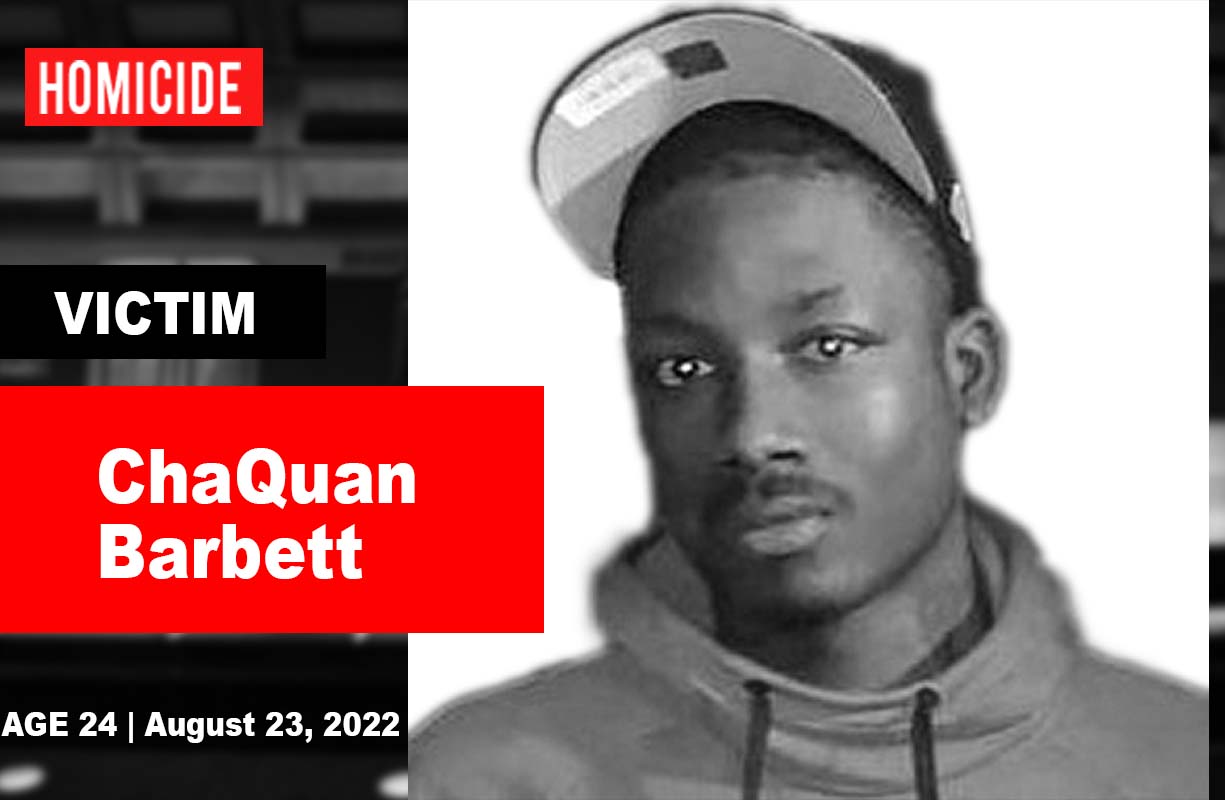
Jerome Israel, 22, is charged with first-degree premeditated murder while armed, possession of a firearm during a crime of violence or dangerous offense, unauthorized use of a vehicle during a crime of violence, and carrying a pistol without a license outside a home or business for his alleged involvement in the fatal shooting of ChaQuan Barbett, 24, on Aug. 23, 2022 on the 2300 block of Minnesota Avenue, SE.

A jury convicted Israel on March 7, 2025 of unlawful discharge of a firearm, unauthorized use of a vehicle, two counts of destruction of property worth $1,000 or more, carrying a pistol without a license outside a home or business, and leaving after colliding. The conviction stems from his involvement in an offense on Aug. 25, 2022. However, the jury could not reach a unanimous verdict on the charges related to Barbett’s death. 

At a hearing before Judge Ryan, Israel’s attorney, Lisbeth Sapirstein, informed parties that her client refused to appear in court. Sapirstein said they planned to discuss a “very generous plea offer” that the prosecution had extended to him. The terms of the offer were not discussed in court.

As a result of Israel’s absence, parties scheduled a new date and planned to reconvene on Oct. 2.

‘Carrying An Illegal Firearm in The Streets of Our City Puts Everyone in Danger,’ Judge Declares

DC Superior Court Judge Jason Park sentenced a defendant to 18 months of probation on Sept. 18 for a gun possession offense.

Niko Lancaster, 26, pleaded guilty on July 15 to carrying a pistol without a license outside a home or business for an offense on the 1200 block of Valley Avenue, SE on April 12. Lancaster initially faced second-degree murder while armed for his alleged involvement in the fatal shooting of 29-year-old Levon Livingston. 

Judge Park sentenced Lancaster to 15 months of confinement and three years of supervised release, both suspended in favor of 18 months of probation. Lancaster must register as a gun offender in DC, comply with mental health treatment recommendations, and a substance abuse evaluation. 

According to court documents, Livingston and his wife had ongoing domestic violence issues. Livingston reportedly arrived at his wife’s home and broke through her bedroom window before she asked him to leave. An altercation allegedly ensued between Lancaster and Livingston, and shots were fired.

At sentencing, Judge Park noted Lancaster’s sentence range was between six-to-24 months of confinement, with a probationary sentence permissible under the guidelines. 

The prosecutor asked for Lancaster to serve 18 months in prison, followed by three years of supervised release. He noted the case started as a felony one matter, but after investigation the prosecution extended the possession plea deal to Lancaster.

According to the prosecutor, they did not attempt to justify their sentence request with the events inside the apartment. However, they argued the judge could consider them.

The prosecutor urged Judge Park to consider “what gun possession really means,” and said it’s “an ability to kill, ability to take a life.” Rules and regulations exist “because of the fact that guns are so dangerous,” the prosecutor asserted.

“The gun that [Lancaster] possessed that night is still out there,” the prosecutor added, because investigators were unable to recover the weapon. 

Lancaster’s attorney, Kevin Mosley, noted that despite the prosecutor’s statement to the contrary, “they’re asking you to consider the circumstances of that night.” 

According to Mosley, Livingston, a very large man, broke into the house and Lancaster justifiably used the firearm to save his life. “When this large man came at him, he defended himself,” Mosley stated. 

There’s no basis to consider the circumstances for Lancaster’s sentence, Mosley argued, and a probation sentence is routine for the offense he pleaded to.

Mosley also noted Lancaster’s lengthy history of trauma that included his mother’s death from drug abuse and his post-traumatic stress disorder diagnosis.

Lancaster simply replied, “No thank you,” when Judge Park offered him an opportunity to speak.

Judge Park acknowledged that Lancaster’s gun possession resulted in a loss of life. However, the prosecution acknowledged they could not disprove self-defense beyond a reasonable doubt. As a result, the judge found the prosecutor’s arguments for their requested sentence unpersuasive.

“Carrying an illegal firearm in the streets of our city puts everyone in danger,” Judge Park affirmed.

The judge agreed with Mosley that in a typical possession case, a defendant would receive a probationary sentence.

No further dates were set.

Prosecutor Asserts ‘It’s Pretty Clear’ Infanticide Defendant Should Stay Away From Children

DC Superior Court Judge Jason Park released a defendant accused of her infant’s death to a halfway house on Sept. 15, but required she stay away from children under 10-years-old.

Valencia Duke, 25, is charged with first-degree felony murder and two counts of first-degree cruelty to children. The charges stem from Duke’s alleged involvement in the death of her 13-month-old daughter, Mazouri Jones, on Jan. 18 on the 4700 block of Southern Avenue, SE. Jones and her twin brother, who survived, experienced malnourishment and dehydration due to neglect.

At a Sept. 3 preliminary hearing, testimony revealed that the incident was first reported through a 911 call from Duke, in which she audibly cried and yelled.

Jones’ death was ruled a homicide on April 3.

Judge Park found probable cause for the charges against Duke, but determined the law favored her release. However, the judge expressed hesitancy without clear release conditions. The prosecutor communicated concerns because Duke is six months pregnant with another child.

At the Sept. 15 felony status conference, the prosecutor argued that “it’s pretty clear that [Duke] shouldn’t be around children.” 

Duke’s attorney, Kevin O’Sullivan, disagreed and noted there was no direct physical or sexual abuse of his client’s children in the case. “There isn’t evidence that she poses a risk to children generally,” O’Sullivan contended. 

O’Sullivan also argued the age limit set in the prosecution’s proposed stay-away order was overly restrictive. The prosecution asked that Duke stay away from children under 16-years-old.

Judge Park determined that the prosecution’s suggestion was too broad and ordered Duke to stay away from children under the age of 10-years-old.

The judge’s order will not prohibit Duke from communication with her own children, who she has permission to see with supervision from the Child and Family Services Agency (CFSA). 

CFSA will determine Duke’s contact with her unborn child.

With the stay-away order, Judge Park ordered Duke’s release from the DC Jail and placement in a halfway house. 

The parties also agreed upon details about how and when CFSA will be notified when Duke’s child is born.

The parties are slated to reconvene on Dec. 11.

Defendant ‘Wasn’t in Danger’ When He Fatally Stabbed Coworker, Prosecutor Argues

A jury started deliberations for a homicide case the defense attests was self-defense before DC Superior Court Judge Danya Dayson on Sept. 15. 

Wali Shabazz, 51, is charged with second-degree murder while armed and carrying a dangerous weapon outside a home or business for his alleged involvement in the fatal stabbing of 41-year-old Martin Gross Jr. The incident occurred on April 27, 2024 on the 100 block of T Street, SW.

Shabazz and Gross worked together at Bike Valet DMV outside of Audi Field.

In their closing argument, the prosecution presented surveillance footage that captured the full interaction between Gross and Shabazz. 

The prosecution argued ,“Mr. Shabazz wasn’t in danger” when he fatally stabbed Gross. As a result, they asserted that Shabazz’s use of deadly force wasn’t reasonable. 

To legally justify the use of deadly force in self-defense, the prosecutor reminded jurors, Shabazz had to reasonably believe his life was in imminent danger or serious bodily harm.

Shabazz’s attorney, Michelle Stevens, used the same video footage to argue that her client felt “fear” throughout the interaction. Stevens claimed Shabazz tried to walk away when Gross approached and attacked him. Shabazz “reasonably” acted in self-defense and protected himself, Stevens concluded. 

Stevens reminded jurors that investigators found a ginger ale bottle in Gross’ bag, but completed no testing on the item or its contents. However, Stevens emphasized Gross had ethanol and alcohol in his system.

The defense argued that Shabazz “couldn’t slow anything down” in the moment and didn’t have many choices when Gross approached him.

In their rebuttal argument, the prosecution stated that any potential substance in Gross’ system “doesn’t matter.” They redirected jurors’ attention to whether or not Shabazz had to use that amount of force. 

The prosecution urged the jury to find that Shabazz should not have used deadly force because it wasn’t necessary. 

Fear “isn’t the legal standard,” the prosecutor concluded.

Before the closing arguments, the prosecution called the Metropolitan Police Department (MPD) officer who responded to the crime scene outside of Audi Field to testify. The officer identified Shabazz in the courtroom as the suspect at the scene. 

When the officer responded, he described that Shabazz was on the ground with his arms outstretched and backpack and jacket by his side.

The prosecution played the officer’s body-worn camera footage from when he arrived at the scene and another clip of Shabazz on the ground.

The officer told prosecutors he asked Shabazz questions about the location of the knife. However, investigators never recovered a knife or sharp object on the defendant, in his belongings, or in the surrounding area. 

The prosecution focused on the defendant’s backpack and jacket found next to him. Upon investigation, the officer testified that only a work ID was found and no knife was discovered.

In cross-examination, the defense presented a video of the testifying officer searching Shabazz’s belongings. The video showed nothing in the jacket, but a variety of items such as a comb, folders and notebooks, water, nail file, in the backpack. 

“What was the tone or– energy of Mr. Shabazz,” the prosecution questioned during redirect. The officer replied, “upset.” 

Parties are slated to reconvene when the jury reaches a verdict.

Trial Continues for Fatal Shooting at Georgetown Marijuana Pop-Up

A murder victim’s friend testified about a pop-up marijuana shop they hosted together at a Georgetown house in a trial before DC Superior Court Judge Michael Ryan on Sept. 15. 

Michael Sanders, 32, and Darnell Resper, 33, are charged with conspiracy, first-degree felony murder while armed, assault with a dangerous weapon, attempt to commit robbery while armed, three counts of possession of a firearm during a crime of violence, and unlawful possession of a firearm with a prior conviction of more than one year. The charges stem from their alleged involvement in the fatal shooting of Youness Zarouaki, 30, on the 1000 block of Thomas Jefferson Street, NW on Feb. 18, 2021. 

According to the family friend, Zarouaki lived in California, but was in DC to visit. The friend testified that he knew Zarouaki for over 10 years and they considered each other cousins. 

The two attempted to run a pop-up marijuana shop in Georgetown. The friend stated that Zarouaki wanted to bring his knowledge of California’s marijuana business to the East Coast. According to the friend, a man lent the group his house to operate the store, but was not involved in the business otherwise. 

While Zarouaki was the main person to communicate with clients via text, they had an additional person act as a doorman to the pop-up.

As a result of time constraints, the friend’s testimony is slated to continue on Sept. 16.

Prosecutors also called a Department of Forensic Sciences (DFS) crime scene scientist to confirm evidence she collected from a silver Mercedes that reportedly belonged to Zarouaki’s family friend. The DFS employee was not asked to preserve any biological evidence, but searched for firearms. 

While no firearms were discovered, she found cell phones and compartments under the front seats that were large enough to fit firearms or illicit substances. 

An MPD homicide detective, who explained that his only involvement in the case was to use a license plate database to search for a plate registered to a black Honda Accord, the vehicle prosecutors allege Sanders and Resper drove to the scene. 

A former crime scene examiner with DFS explained that he logged the black Honda Accord and its belongings into photo and DNA evidence. He was tasked with searching for weapons, but found none in the vehicle.

The former DFS examiner found trash, liquor bottles, COVID-19 masks, a title to the Honda that belonged to the person prosecutors claim drove the car to the shooting, as well as mail addressed to Sanders.

In cross-examination, Sanders’ attorney, Daniel Kovler, said the DFS examiner did not swab the COVID-19 masks and liquor bottles found in the vehicle for DNA.

Prosecutors then brought a forensic firearm examiner to the stand for expert testimony. He told jurors his conclusions in the case about five bullets he examined from the scene and the victim. 

The firearms examiner stated that at least two bullets came from the same or similar firearms, two came from potentially different firearms and were either partial fragments or not suitable to identify, and that one was a .38 caliber bullet. 

In cross-examination, Kovler confirmed with the expert that a ghost gun could have fired any of the bullets. 

A ghost gun is a custom firearm assembled from a combination of manufactured and homemade parts. These firearms lack a serial number, but could leave the same trace from bullets or casings as a commercial firearm.

Kovler then asked the expert whether factors similar to rust or dirt could also affect the ability to conclude what firearm a bullet originated from. The expert confirmed this was true, but highly unlikely.

In continued testimony from Sept. 14, the defense cross-examined a witness who was a resident at the incident location. Resper’s attorney, Jason Clark, discussed the witness’ timeline. The witness emphasized that when he went downstairs after he heard the gunshots, he did not see or hear anyone in the house, and no one entered through the front door until the police arrived. 

Clark also asked the resident about text messages he exchanged with the individual who ran the marijuana pop-up shop, his involvement in the shop, and differences in his prior statements at the police station. To each question, the resident testified that he did not remember. 

Kovler emphasized that the witness could not recall many details from the incident. The witness told Kovler he was unaware how a box of marijuana was moved upstairs. Kovler insinuated that if the witness couldn’t recall but had not denied any involvement.

He could have moved the box, Kovler suggested. The witness stated that he was a victim of the crime, and experienced severe trauma that affected his memory of the experience.

Kovler, frustrated by the witness’ lack of answers, asked if he was threatened with deportation or promised benefits for his testimony. The witness, who is originally from Morocco, stated that he had no concerns about deportation. 

In redirect, the prosecution asked why the witness could not recall information from six years ago, to which the witness emphasized the length of time since the incident. The prosecution also confirmed with the witness that he was never threatened to testify.  

Parties are set to resume on Sept. 16.

‘I Just Want to Go Home,’ Says Victim to Eyewitness

Multiple eyewitnesses testified about a fatal stabbing outside of Audi Field in a trial before DC Superior Court Judge Dayna Dayson on Sept. 14. 

Wali Shabazz, 51, is charged with second-degree murder while armed and carrying a dangerous weapon outside a home or business. The charges stem from his alleged involvement in the fatal stabbing of Martin Gross Jr. on April 27, 2024 on the 100 block of T street, SW. 

In Shabazz’s trial, the prosecution called an eyewitness who observed the fatal altercation outside of Audi Field.

The eyewitness testified that she was in a conversation with another person, heard two men arguing, and walked towards them to ask if everything was okay. According to the witness, when the men didn’t respond, she turned back, walked towards her prior conversation, and heard a louder noise. 

The witness realized both men were on the ground with the victim was punching the suspect, who had a knife. She said she noticed the suspect was stabbing the victim. The witness said she moved closer to the men and told them to “stop.”

After the altercation ended, the suspect and another man walked into the entrance of Bike Valet DMV while the witness stayed with the victim. The witness saw the suspect return to the street a short time later, and alerted security, who stopped him. 

She reported that the victim did not realize he’d been stabbed. She told him to stay in place and wait for help to arrive. 

As the witness choked up on the stand, she recalled that the victim told her he was getting tired and said “I just want to go home.” The witness said she told him not to fall asleep because she believed he wouldn’t be able to recover from his injuries.

In cross-examination, Shabazz’s attorney, Lisbeth Sapirstein, confirmed that the witness did not see or hear how the physical altercation began. 

The prosecution also called Shabazz and Gross’ coworker and another eyewitness to testify. The witness, victim, and defendant worked at Bike Valet DMV together.

The witness identified himself in video evidence standing near Shabazz during the entire altercation. 

At approximately 6:12 p.m., the video showed Gross in Shabazz’s face before Shabazz shoved him. The coworker claimed he disarmed the situation by calling his boss and requesting Gross be sent home, saying he was difficult to work with. 

The coworker confirmed that while Gross was usually very animated, he had arrived late to work and was more “exacerbated” and “energetic” on the day of the incident. The witness assumed Gross might have been drunk. The coworker also claimed that he did not expect a fight to happen, and that Shabazz only sounded annoyed and dismissive. 

After Gross was told by his boss to leave work, he approached Shabazz and his coworker sitting on a bench at approximately 6:20 p.m. After Gross got close to Shabazz’s face and said he was off work, the coworker recalled the two pushed one another and began fighting. 

When they fought, the coworker said he told Gross and Shabazz to stop but did not step in. He said he hoped the altercation would dissolve on its own. While the two were on the ground, he counted down from three in an effort to get them to let go of each other. 

After the incident, the coworker stated that he told Shabazz in a random offhand comment that he should probably get rid of the knife. 

In cross-examination, Shabazz’s other attorney, Michelle Stevens, emphasized with the coworker that Shabazz appeared annoyed but not fearful.

The prosecution called a forensic pathologist to provide expert testimony about Gross’ autopsy. The expert stated that Gross sustained 12 sharp force wounds: one to his right ear, one to his right chest, three near his left armpit, two on his lower left hip, two on his upper left back, two on his left torso, and one on his left shoulder. 

According to the forensic pathologist, the most severe wound was to Gross’ right chest and led to 1,000 milliliters of blood in his lung.

The expert determined Gross’ cause of death was stab wounds and the manner of death was homicide. 

Stevens confirmed with the expert that her analysis was not a legal definition, but the medical conclusion that “a person killed another person.” 

The prosecution also called the case’s lead homicide detective from the Metropolitan Police Department (MPD) to the stand to confirm video evidence. The detective responded a few minutes after the incident occurred, and arrived to see yellow tape and investigators set up to preserve evidence. After searching the scene, she stated that detectives could not immediately locate and identify the murder weapon. 

As a result of time constraints, the detective is set to resume her testimony when parties resume on Sept. 15.

‘Coincidence After Coincidence’ Proved Murder Defendant’s Guilt

After less than two days of deliberations, jurors informed DC Superior Court Judge Neal Kravitz on Sept. 10 that they reached a guilty verdict for a homicide defendant.

David Key, 39, was initially charged with first-degree felony murder while armed, first-degree premeditated murder while armed, and attempt to commit robbery while armed. The charges stemmed from his involvement in the fatal stabbing of 33-year-old Devon Greenfield on April 1, 2024 on the 300 block of 61st Street, NE.

Greenfield died from seven sharp force injuries: three to his chest, two to the upper back, one to his lip, and one to his jaw.

The jury found Key not guilty of first-degree felony murder and attempt to commit robbery. However, they found Key guilty of the lesser-included offense of second-degree murder while armed and first-degree premeditated murder.

In closing statements on Sept. 8, the prosecution asserted that “coincidence after coincidence” is evidence of Key’s guilt beyond a reasonable doubt. 

The prosecutor claimed Key said “You think I’m fucking playing with you,” and “out your pockets,” when he attempted to rob Greenfield. “Those were the last words that Devon Greenfield heard” before he died, the prosecutor reminded jurors.

When Greenfield didn’t comply fast enough, the prosecutor argued Key decided to kill him. “You don’t stab someone three times to the heart unless you are trying to kill them.”

After the murder, prosecutors highlighted video footage that showed the suspect’s flight path back towards Key’s house on 59th Place, NE.  

Before the offense, in a video at 6:51 p.m., prosecutors claimed Key carried a plastic water bottle to the scene. In footage of the murder, the suspect tossed the plastic water bottle and it landed where investigators later recovered it.

An expert attributed DNA from the lip and cap area of the bottle to a mix of two individuals, including Key. The prosecution asserted it did not matter who the unknown contributor was.

Two days after the murder, police stopped Key in the same neighborhood and seized physical evidence from him. The prosecution emphasized that Key’s black boots, black backpack, grey jacket, and black hat matched the suspect’s attire in the footage. 

In addition, the prosecution said police seized a knife from Key that an expert concluded was consistent with the type of weapon used to inflict Greenfield’s wounds.

“We ask that you hold him accountable,” the prosecution concluded.

Key’s attorney, Howard McEachern, acknowledged that the prosecution was not required to prove motive. However, McEachern asserted there was no evidence for why his client would kill Greenfield. Before, or on the day of, the incident, there was no animosity between the two.

Although police confiscated items from Key and investigators completed tests, McEachern asserted that no evidence from the police stop connected Key to the murder. “There lies the problem,” McEachern emphasized.

For example, there was no evidence of Greenfield’s DNA on the knife recovered from Key, McEachern said. Key’s clothes also had no blood on them.

McEachern also reminded jurors that the prosecutors’ expert said Key had a “common knife.”

In regards to the plastic water bottle, McEachern argued Key did not have to touch or drink from the bottle for his DNA to appear. The DNA expert found two contributors. Another person, the suspect, drank from the bottle, McEachern asserted. 

McEachern told jurors to “accept that invitation,” to hold prosecutors to their burden of proof and find Key not guilty.

“Is David Key the unluckiest man in the world?” the prosecution asked jurors in their rebuttal argument. 

The prosecution highlighted that the murder occurred in the neighborhood where Key lived and spent time. Two days after the offense, Key was arrested in the same area, with a knife capable of the crime and dressed in almost the same clothes. 

Key’s trial had no pivotal, explosive moment, but the evidence proved a consistent theory, prosecutors asserted. The evidence pointed to one person, Key, the prosecutor said.

Key’s sentencing is scheduled for Nov. 20.

Defense Questions Uninvestigated Attic, Fingerprint Evidence in Georgetown Homicide Trial 

Defense attorneys in a co-defendant trial questioned witnesses about a homicide investigation before DC Superior Court Judge Michael Ryan on Sept. 14.

Michael Sanders, 32, and Darnell Resper, 33, are charged with conspiracy, first-degree felony murder while armed, assault with a dangerous weapon, attempt to commit robbery while armed, three counts of possession of a firearm during a crime of violence, and unlawful possession of a firearm by a convict for their alleged involvement in the fatal shooting of 30-year-old Youness Zarouaki on the 1000 block of Thomas Jefferson Street, NW on Feb. 18, 2021. 

An unexamined attic at the crime scene emerged as a key point of contention throughout the continued trial of Sanders and Resper, who are accused of entering a residence where Zarouaki was throwing a party and firing multiple gunshots that ultimately led to his death.

The prosecution presented photographs in court of the Georgetown house where the shooting occurred that showed a pull-down ladder that extended up into the attic.

Resper’s attorney, Jason Clark, questioned a forensic scientist from the Department of Forensic Sciences (DFS) about the decision, asking, “You did not go up into the attic?” The witness canvassed the scene the day of Zarouaki’s murder.

The prosecution also showed jurors images of suspected blood splatter, marijuana, stacks of cash, vape pens, and snowy footprints that led away from the crime scene. 

A resident, who lived at the location, testified about waking up to the sound of a “deafeningly” loud gunshot. Then, the witness said he took a moment to collect his thoughts, walked downstairs, and saw broken glass.

The witness, choked up on the stand, verified images of his residence that showed a sliding glass door shattered with blood on the carpet. 

As he slightly opened his front door, he “saw Youness bleeding from the neck” and “the blood was like a fountain, and it was very disturbing,” the witness said.

He said he knew Zarouaki through mutual friends and the Moroccan community, and would often see him at the pop-up marijuana parties. 

After seeing Zarouaki bleeding profusely, the witness said he yelled, “What is going on,” shut the door and returned to his bedroom. There he testified about hiding under his bed until authorities forced entry and the witness came down the stairs to be “held at gunpoint.”

In cross-examination, Clark asked the witness about the attic. The witness recalled how he personally didn’t use the attic, but his roommate did to store a Christmas tree and decorations.

As a result of time constraints, the witness continued his testimony on Sept. 15.

Fingerprints recovered from the crime scene were also recovered and examined. 

The prosecution called an expert fingerprint examiner who compared seven prints that he received in the case to known prints from Sanders, Resper, and Zarouaki. 

According to the expert, one print was recovered from below the handle of the sliding glass door and determined inconclusive for comparison. Three additional prints on the sliding glass door were identified as Zarouaki’s. 

A print located on the lock of a cash box was determined inconclusive for comparison. The remaining two prints, the location of which the expert did not specify, had strong support for excluding Sanders, Resper, and Zarouaki as contributors. 

Sanders’ attorney, Daniel Kovler, questioned the fingerprint expert about excluding Sanders, as there was no support for him as a match.

The expert denied Kovler’s assumption, providing that Sanders is not a “100% exclusion.”

The trial is scheduled to resume on Sept. 15. 

Case Acquitted: Judge Acquits Defendant’s Conspiracy Charge, Murder Remains

Editor’s note: Robert Baskerville was acquitted of all charges by a jury on Sept. 15, 2026.

DC Superior Court Judge Todd Edelman granted a defense request to acquit a conspiracy charge for a first-degree murder defendant on Sept. 11.

Robert Baskerville, 33, is charged with first-degree premeditated murder while armed, possession of a firearm during a crime of violence, and carrying a pistol without a license. The charges stem from Baskerville’s alleged involvement in the fatal shooting of 28-year-old Darron Holmes on April 16, 2022 on the 1200 block of Southern Avenue, SE. Holmes died from four gunshot wounds to his neck, wrist, butt, and ear.

For her alleged involvement in the same offense, Baskerville’s former co-defendant, Tamera Brown, 30, is charged with conspiracy, first-degree premeditated murder while armed, two counts of threatening to kidnap or injure a person, and obstructing justice.

Baskerville was formerly charged with conspiracy before Judge Edelman granted the defense motion for judgement of acquittal on the charge.

Baskerville’s attorney, Christen Philips, argued that both the conspiracy and first-degree murder charges should be acquitted. Philips also argued to acquit the possession charge at a previous hearing, but Judge Edelman denied her request.

To grant a motion for judgement of acquittal, the judge must interpret the evidence in the light most favorable to the prosecution and find that no reasonable juror could find Baskerville guilty beyond a reasonable doubt.

For the conspiracy charge, prosecutors argued that Brown reportedly yelled the words, “I’m going to get someone to do something to you,” to Holmes before she allegedly returned with Baskerville in her car. The prosecution claimed that this demonstrated Brown’s intent to harm Holmes and that she must have conspired with Baskerville on the drive to the scene.

According to Judge Edelman, the prosecution’s evidence of conspiracy was nothing “more than speculation” and was not sufficient to present to a jury. 

Philips said that the first-degree murder charge should also be acquitted because there was not sufficient evidence to show premeditation. Judge Edelman disagreed. He called the prosecution’s evidence, “somewhat thin,” but acknowledged that, if the prosecution’s theory was credited, some testimony pointed towards Baskerville waiting before shooting Holmes.

Judge Edelman also considered some evidence proposed by the prosecution. They requested to show the jury a recording of Baskerville and Brown having an intimate conversation about love months after the pair had been arrested for Holmes murder.

Prosecutors said that the recording would counteract Baskerville’s theory that Brown “coached her children” to lie against him. Judge Edelman was not convinced, but asked them to write a more cohesive argument and send it to him.

Parties are slated to return on Sept. 14 for closing arguments.

‘She’s a Hustler, She’s a Liar,’ Defense Doubts Key Witness’ Credibility in Georgetown Homicide Trial

Defense attorneys in a co-defendant homicide trial urged the jury to doubt a witness who accepted a plea deal in exchange for her testimony before DC Superior Court Judge Michael Ryan on Sept. 10.

Darnell Resper, 33, and Michael Sanders, 32, are charged with conspiracy, first-degree felony murder while armed, assault with a dangerous weapon, attempt to commit a robbery while armed, three counts of possession of a firearm during a crime of violence, and unlawful possession of a firearm with a prior conviction.

The charges stem from their alleged involvement in the fatal shooting of 30-year-old Youness Zarouaki on Feb. 18, 2021 on the 1000 block of Thomas Jefferson Street, NW. Zarouaki died from multiple gunshot wounds, including one to his neck.

In opening statements, the prosecution told jurors that on a snowy, quiet day, Zarouaki “lost his life,” and alleged the defendants “killed him in the course of a robbery.” 

According to prosecutors, Zarouaki immigrated to the US from Morocco in high school and worked as a marijuana sales entrepreneur. Between 1:30 p.m.-and-2 p.m. on the day of the shooting, Zarouaki, his friend, and two of his cousins hosted a pop up marijuana party at a house in Georgetown with an unarmed individual as security outside. 

That afternoon, armed individuals in surgical masks arrived at the pop up and demanded money and drugs, the prosecutor said. Zarouaki attempted to comply. “I can’t tell you exactly where things went wrong,” the prosecutor told jurors, but shots were fired that struck Zarouaki in his neck and shoulder.

The suspects arrived in a black Honda Accord, according to prosecutors, driven by Sanders’ former girlfriend who he shared a child with. “She’s no nun,” the prosecutor acknowledged, but said the witness accepted a plea deal that required her truthful testimony. The prosecutor argued that the driver’s testimony will align with other witnesses and forensic evidence. 

Sanders and Resper “were ready, armed, and prepared,” and the jury should “convict them of their crimes,” the prosecution concluded.

Respers’ attorney, Jason Clark, said the driver’s story was “bought and paid for.” As a cooperating witness, she “has made the deal of a lifetime” and anticipates no jail time in exchange for her testimony, Clark claimed.

The cooperating witness’ agreement requires her to tell the truth. However, Clark noted, the prosecutors decide whether her testimony meets the plea deal requirements.

“The only master that she must serve is the United States Attorney’s Office,” Clark argued.

Clark noted that Resper’s DNA and prints were not in the suspected vehicle or at the scene. The jury will hear a “lack of competent and credible evidence” from prosecutors, Clark asserted.

Sanders’ attorney, Daniel Kovler, echoed Clark’s characterization of the cooperating witness. “She’s a hustler, she’s a liar,” but in the best light, she’s a survivor with a tragic upbringing, Kovler claimed. 

According to Kovler, in previous cases, the driver’s story changed as she learned what investigators knew.

“She could talk a rat off a piece of cheese,” Kovler said. “You can smell a lie,” he told jurors.

Kovler concluded that Sanders is “an innocent man.”

The trial is scheduled to resume on Sept. 14.

Judge Describes Domestic Violence Murder as ‘Every Woman’s Nightmare’

DC Superior Court Judge Neal Kravitz sentenced a defendant to 25 years in prison on Sept. 11 for a homicide that stemmed from decades of domestic violence.

Michael Garrett, 71, pleaded guilty on March 19 to second-degree murder while armed for his involvement in the death of 71-year-old Sylvia Diane Matthews at her home, on the unit block of Elmira Street, SW on Dec. 3, 2021. Matthews succumbed to her injuries on Dec. 4, 2021.

According to court records, Garrett assaulted Matthews with a cane.

As part of the plea deal, parties agreed to a sentence between 21-and-26 years in prison for Garrett.

At Garrett’s sentencing, Matthews’ niece said her aunt raised her, felt like a second mother, and was a constant throughout her life. 

“Please remember Sylvia Diane Matthews for more than the way she died,” her niece asked. She described Matthews as “quiet, sweet, and incredibly gentle.”

The one place Matthews should have felt safe, her own home, “became the place where her peace was destroyed,” her god sister emphasized. 

“Diane I love you, I miss you, and I will carry you with me for the rest of my life,” Matthews’ god sister said. 

Matthew’s cousin described her death as “unfathomable” and said the family lacked closure because they never viewed Matthews’ body. According to her cousin, the hospital and morgue employees discouraged her from looking at Matthews’ body because of the gruesome nature of her injuries. Mathews was identified through her fingerprints. 

“Ms. Matthews is a typical domestic violence victim,” the prosecutor said and detailed Garrett’s lengthy history of violence against her. According to the prosecutor, the two met at Lorton Prison, where Matthews worked, while Garrett served his sentence for a 1994 burglary. 

After they had a brief relationship, the prosecutor reported that Garrett committed a rape, assault, and burglary against Matthews in the 1990s. When he was released from prison in spring 2021, the prosecutor claimed Garrett harassed Matthews and asked her for money. 

The prosecutor said the violence from Garrett culminated on Dec. 3, 2021, when Matthews’ “morning of terror started at 7 a.m.” Through video and photo evidence the prosecutor said Garrett tried to enter Matthews’ front door, she refused to open it, he pounded on the door, and harassed her. 

When Matthews wouldn’t let him in, the prosecutor said Garrett turned to “plan B” and broke the glass of her back door. The police responded to Matthews’ call, she told them what happened, and officers canvassed the scene but didn’t see Garrett.

The police left, Matthews left to fix her car that Garrett had destroyed, and he returned to her home. When Matthews returned, she put her purse down and was “attacked and assaulted,” the prosecutor said.

After a “vicious assault,” Garrett “left [Matthews] in a complete blood bath,” the prosecutor said. They requested Garrett serve 26 years in prison.

“The prosecution has misstated a great deal of what she considers to be facts. They’re not facts. That’s her assumption. That’s her assertion,” Garrett argued. 

Garrett asserted that he did not kill Matthews but that she fell down the stairs and was alive when he last saw her. 

“I simply want to express my deep sorrow to her family,” Garrett said. “Their loss is also my loss,” because “she was all I had.”

Matthews’ family disputed Garrett’s notion that he was her “best kept secret.”

Garrett’s attorney, Wole Falodun, asked for his client to serve 21 years in prison. Falodun noted that Garrett “will still be a very old man if he ever leaves prison” and five years could differentiate between him dying in prison or the possibility of leaving custody. 

Falodun noted that Garrett never intended for Matthews to lose her life and he will live with the consequences of what happened.

Judge Kravitz described Matthews’ death as “every woman’s nightmare.” He sentenced Garrett to 25 years in prison, followed by five years of supervised release.

No further dates were set.

Homicide Defendant Rejects Plea Deal, Trial Delayed for Defense Ballistics Testing

A defendant accused of a fatal shooting rejected a plea offer from the prosecution before DC Superior Court Judge Neal Kravitz on Sept. 11.

Morris Jones, 41, is charged with conspiracy, first-degree premeditated murder while armed with the aggravating circumstances that the offense was committed during a drive-by or random shooting, five counts of assault with intent to kill while armed, six counts of possession of a firearm during a crime of violence, four counts of unlawful possession of a firearm with a prior conviction, and destruction of property worth more than $1,000 while armed.

The charges stem from Jones’ alleged involvement in the fatal shooting of 38-year-old Tiffany Wiggins on the 3800 block of Minnesota Avenue, NE on April 17, 2022. Wiggins died from a single gunshot wound to her lower back that exited through her chest.

At the hearing, the prosecution said after continued negotiations they offered Jones a plea deal that would have required him to plead guilty to second-degree murder and assault with a dangerous weapon. The agreement carried a 23-to-28 year prison sentence.

Judge Kravitz confirmed that Jones rejected the offer and decided to proceed to trial.

Jones’ attorney, Mani Golzari informed parties that he identified and spoke with a firearms examiner who estimated the tests would take four months. According to Golzari, approximately 30-to-40 shell casings and a few bullets were recovered in connection to the case. The defense plans to examine all of them.

As a result, parties rescheduled Jones’ Oct. 19 trial for April 19, 2027.

The parties are scheduled to reconvene on Oct. 30 for a status hearing.

Judge Sentences Shooting Defendant to 7 Years Amid Cancer Battle  

DC Superior Court Judge Rainey Brandt sentenced a shooting defendant to seven years on Sept. 11. 

On Jan. 29, Marcus Martin, 29, pleaded guilty to aggravated assault while armed and possession of a firearm during a crime of violence for his involvement in a shooting that occurred on the 4200 block of East Capitol Street, NE on Jan. 11, 2024. One individual sustained gunshot wounds during the incident. 

Parties requested Judge Brandt sentence Martin to 84 months for aggravated assault, and 72 months for possessing the gun, to run concurrently. 

The prosecution presented a video of the incident, which depicted Martin walking out of a building as the victim pulled into the parking lot. As the victim exited his vehicle to go into the building ostensibly to purchase marijuana, Martin shot him multiple times “almost from point-blank range,” before running away, shooting a few more times, and leaving the scene. 

“This was a very dangerous offense, it was a serious offense,” the prosecutor told Judge Brandt, stating the victim suffered a partially amputated finger, a broken arm, arterial damage on his leg, and still has bullet fragments lodged in his body. 

“The victim almost passed away that day,” the prosecutor continued, adding that it is particularly concerning that Martin doesn’t come into this sentencing “with a clean slate.” He was previously convicted of voluntary manslaughter and assault with a dangerous weapon. “He has previously taken a life,” the prosecutor stated. 

Quo Judkins, Martin’s attorney, agreed with the prosecutor’s sentencing request, stating despite it taking Martin a while to realize he “used a disproportionate amount of force,” he has taken responsibility. 

Judkins explained Martin has been a victim of multiple attacks at the jail, which further delayed the case, and despite being in solitary confinement for the better part of a year, he achieved success in programs, including cell-phone repair and culinary school. 

“He has learned from this, and is looking to better himself,” Judkins stated, alerting Judge Brandt of a cancer diagnosis Martin recently received. 

“I’m sorry about that, and I hope your recovery is indeed a recovery,” Judge Brandt told Martin. 

Martin told Judge Brandt he is undergoing treatment, and continuing to push himself to be a better person. “I’m trying to make it home,” he said, adding “I’m not the same kid I was years ago.”

“I won’t say I was the model citizen, yet I was striving for it,” he said, however, the environment he lived in was dangerous, and he felt the need to possess a firearm for protection. 

Martin mentioned his 11-year-old son, stating “he was only one year old when I left his life… I hindered myself from getting to know my son.”

“I’m a young Black man in a small city that is full of violence,” Martin continued, stating the people surrounding him don’t always have his best interests at heart. 

“I’m a different person, I just want to go home to my child,” Martin told Judge Brandt. 

“I’m really sorry about your medical diagnosis, because that is one word that frightens everybody and it becomes the great equalizer,” Judge Brandt said to Martin, adding “I see the person [in all defendants]. I know that since you have been locked up, you have done a lot of programming and a lot of self-improvement and wellness, because you do, you want to get back to your family. You want to get back to the community.”

“You made a mistake, and by your own words in that eloquent letter, you have taken responsibility. That is all any of us could ask for. It is what you do moving forward that matters,” Judge Brandt continued. 

“Never look back, because that’s bad luck,” Martin countered. 

“I think, Mr. Martin, you are on your way to rehabilitation – you have already started that road to rehabilitation,” Judge Brandt asserted. “I could’ve gone higher than I’m about to go, but I don’t believe that would serve a purpose here.”

She imposed a seven year sentence for the aggravated assault while armed, which will run concurrent to a six year sentence for possession of a firearm during a crime of violence – both have a five year mandatory minimum. 

Martin is also required to serve a five year supervised release period, register as a gun offender, and pay $200 to the Victims of Violent Crime Fund. 

“Good luck to you, you’re gonna do just fine,” Judge Brandt told Martin. 

No further dates were set.