Search Icon Search site

Search

Judge Releases 1999 Murder Defendant Amid Health Issues 

DC Superior Court Judge Rainey Brandt granted a homicide defendant’s unopposed motion for release on Sept. 11. 

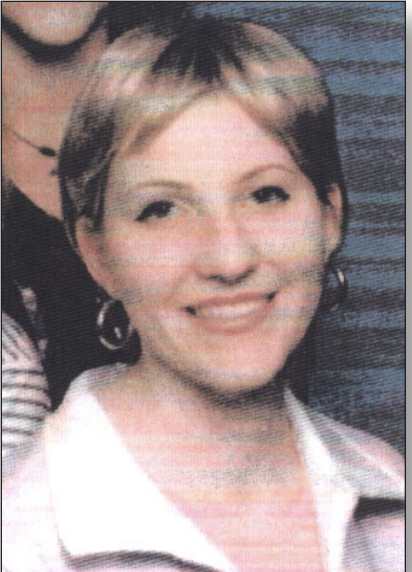
George Mudd, 72, is charged with first-degree premeditated murder and felony murder, with aggravating factors of being especially heinous or cruel while committing or attempting to commit a robbery. The charges stem from his alleged involvement in the fatal stabbing and rape of Susan Cvengros, 24, that occurred on May 21, 1999 on the 400 block of F Street, NE. Cvengros was found dead in her bedroom with six stab wounds. 

According to court documents, Mudd was arrested in 2025, allegedly connected by DNA evidence.

Mudd’s defense attorney, Jessica Willis, filed a motion for release in late August, citing multiple health ailments that Mudd is experiencing, and the “weak evidence” the prosecution has against Mudd. 

The prosecutors stated they don’t concede the evidence is weak, but alerted the court they would not oppose releasing Mudd with GPS monitoring to ensure he receives the treatment needed for his medical conditions. 

“Due to [a] factor, which includes multiple health related issues that have started to degenerate at this point in time, and seeing that there’s no opposition from the government, the court at this time finds that there is a condition or combination of conditions to ensure the safety of the community,” Judge Brandt told the parties, adding Mudd had remained in the community without issue for 26 years between his alleged involvement in the incident and his arrest. 

She ordered Mudd be placed on a GPS monitor, and allowed him to live at a senior residential facility.  

Parties are slated to reconvene Jan. 22. 

Case Acquitted: 10-Year Old Testifies That His Mother’s Boyfriend Fatally Shot His Father 

Editor’s note: Robert Baskerville was acquitted of all charges by a jury on Sept. 15, 2026.

A 10-year-old boy testified as an eyewitness to his father’s fatal shooting before DC Superior Court Judge Todd Edelman on Sept. 9.

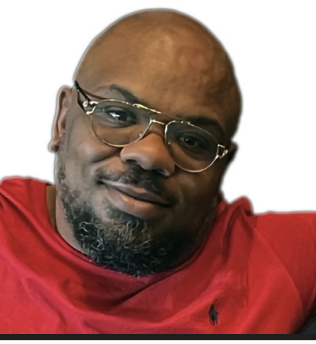
Robert Baskerville, 33, is charged with conspiracy, first-degree premeditated murder while armed, possession of a firearm during a crime of violence, and carrying a pistol without a license. The charges stem from Baskerville’s alleged involvement in the fatal shooting of 28-year-old Darron Holmes on April 16, 2022 on the 1200 block of Southern Avenue, SE. Holmes died from four gunshot wounds to his neck, wrist, butt, and ear.

For her alleged involvement in the same offense, Baskerville’s former co-defendant, Tamera Brown, 30, is charged with conspiracy, first-degree premeditated murder while armed, two counts of threatening to kidnap or injure a person, and obstructing justice.

Holmes’ son, a ten-year-old boy, was brought back to the witness stand for cross-examination. 

He testified that he only heard one shot and the shooter stood far away from Holmes. The witness told the jury that the shooter was a man named “Two,” his mother’s boyfriend.

According to prosecutors, a previous witness testified that “Two” was Baskerville’s nickname and that he dated Brown, Holmes’ ex-wife and the mother of the juvenile witness.

Baskerville’s attorney, Christen Philips, further clarified some of the witness’ prior testimony. In his direct examination, the juvenile testified that his parents were shoving prior to the shooting. Philips gave him his Grand Jury testimony, where he had said that his father “attacked” his mother. The young witness replied, “when I said attacking, I meant starting the conversation.”

Philips noted that the witness had met with prosecutors several times between his Grand Jury testimony and trial.

In his direct examination, the witness told prosecutors that both his mother and father fell during their altercation. Philips brought out the juvenile witness’ Grand Jury testimony again, reading to the jury that the witness only mentioned his mother falling. The witness responded that they were both rolling around on the floor. “You know how in the movies, two people roll over like they’re rolling down a hill.”

The witness said he found a shotgun in Holmes’ apartment on the morning of the shooting. Philips asked if prosecutors ever asked the witness follow up questions about the gun. The witness said they only asked him to describe it. 

The prosecution questioned Holmes’ son in redirect. The witness testified that he saw “Two” weekly at his mother’s apartment, but could not recall his face because the shooting was four years ago. 

The prosecution also brought back another witness for cross-examination, Holmes’ father who

testified that his son had given him a shotgun months before the shooting. He said there was no shotgun in Holmes’ house on the day of the shooting.

“My concern was for the boys,” he said, referring to Holmes’ two sons. The grandfather, a former Metropolitan Police Department (MPD) officer, currently has custody of Holmes’ sons.

Baskerville’s other attorney, Sylvia Smith, asked him about his prior conversations with prosecutors. According to Holmes’ father, prosecutors had spoken to him about a firearm in Holmes’ house. The witness recovered the firearm from Holmes’ home and eventually turned it in to detectives.

The prosecution redirected Holmes’ father and he testified that the name “Two” meant nothing to him. Prosecutors handed him a firearm on the stand, which the witness verified was the same one he recovered. He could not remember if it was unloaded when he retrieved it. 

Smith questioned the witness again and clarified that the firearm was in an evidence bag that was dated four months after the witness handed it off to MPD.

Without the jury present, Judge Edelman also considered several motions. Smith requested that the case be dismissed because the prosecution failed to disclose that they spoke to Holmes’ father about the firearm recovered from Holmes’ apartment.

According to prosecutors, they did not remember this phone call but acknowledged, “it would have been a better practice if I wrote it down.”

Judge Edelman agreed that they had a “significant issue,” but determined that dismissal was not the proper sanction. He instead asked parties to write out potential sanctions.

Smith also requested the charges be dismissed due to the prosecution failing to legally meet their burden. She argued that there was no premeditation, no conspiracy, that the prosecution could not disprove beyond a reasonable doubt that Baskerville was defending another person, and that no one directly identified Baskerville as the shooter.

Prosecutors argued that Brown told Holmes, “I’m going to get someone to do something to you,” before arriving at his apartment with Baskerville. According to the prosecution, that is evidence of conspiracy and premeditation.

Judge Edelman denied Smith’s claims about Baskerville’s defense of another person or lack of identification, but agreed to hear further arguments about conspiracy and premeditation at the next hearing.

Parties are slated to reconvene on Sept. 11 without the jury present.

In Audi Field Stabbing Case Openings, Defense Claims Self-Defense

Parties opening statements clashed before a jury in DC Superior Court Judge Danya Dayson’s courtroom on Sept. 10. 

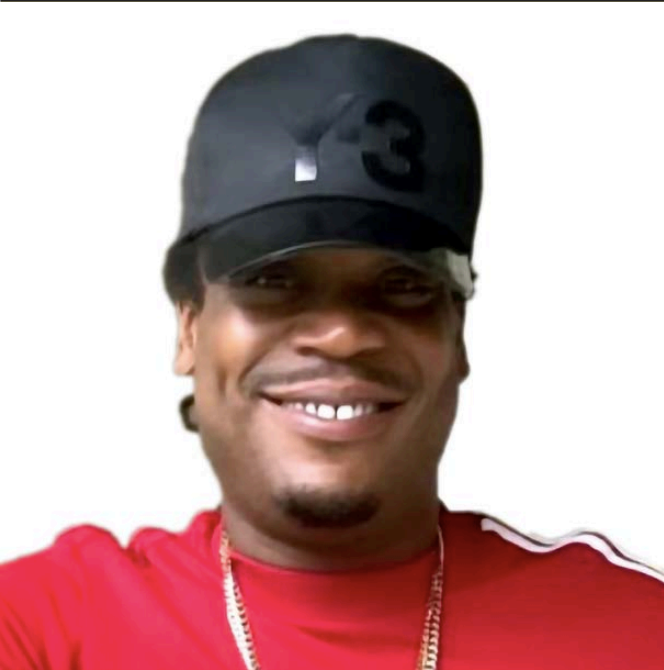
Wali Shabazz, 51, is charged with second-degree murder while armed and carrying a dangerous weapon for his alleged involvement in the fatal stabbing of 41-year-old Martin Gross on April 27, 2024 on the 100 block of T Street, SW. 

“You are here because of this gentleman,” the prosecution told the jury, showing them a picture of Gross. 

“Mr. Shabazz got mad and he acted out,” the prosecution claimed. According to the prosecution, Shabazz and Gross worked as bike valets for Bike Valet DMV, and were on the job at Audi Field on the day of the incident. The prosecution stated Gross arrived an hour late to his shift, which caused frustration among his co-workers. “That was really the beginning of the end,” the prosecutor stated. 

“Mr. Gross was being a jerk,” the prosecutor told the jury, adding “but that’s not a reason to kill him.”

Surveillance footage, presented to the court, showed that the individual identified as Gross “got in Shabazz’s face.” Due to the disruption, the prosecution claimed, the owner of the company was called and told Gross to go home. 

“These two, the defendant and the victim, were acting like children,” the prosecution continued, stating Gross approached Shabazz again while he sat on a bench. “All of a sudden, it got extremely strange and violent,” the prosecutor insisted. 

After Gross punched Shabazz, “Mr. Shabazz took a knife and slammed it down,” against Gross, before stabbing him multiple times as he lay on the ground. 

“Nothing that serious had happened, until Mr. Shabazz decided to take out a knife,” the prosecutor asserted.

The prosecutor told jurors they should consider two things; first, “Did Mr. Shabazz actually believe he was in danger? Was that reasonable?” She further argued the force used by Shabazz was “excessive.” 

Defense attorney Michelle Stevens disagreed with the prosecutor, stating “Mr. Shabazz is innocent… [he] acted as the law allows each and every one of us,” in self-defense. 

According to Stevens, Shabazz believed Gross posed a threat to him. She highlighted Shabazz’s attempt to walk away after each interaction they had, but “Mr. Gross just kept coming. He was not going to stop.” 

Stevens stated Gross antagonized Shabazz from the moment he arrived late to work by calling him the n-word and assaulting him multiple times by getting in his face and punching him. “[Shabazz] walked away multiple times. Mr. Gross just kept antagonizing him,” she asserted. 

Shabazz, who Stevens claimed was “slimmer and smaller” than Gross, didn’t know if Gross was armed at the time of the incident and feared for his safety. “Nobody is helping Mr. Shabazz,” Stevens claimed. 

“Mr. Shabazz lawfully defended himself,” she continued, adding his belief he’d suffer harm at Gross’ hands is “the heart of this case.” She urged the jury not to be distracted by emotional reactions aroused by the evidence, and suggested the only just verdict at the end of trial will be not guilty. 

Parties are slated to reconvene Sept. 14.

Defendant Takes Murder Plea After Victim Heard to Say, ‘I’m Not Afraid to Die’

In a brief Sept. 9 proceeding, Aubrey Canarte, 41, pleaded guilty to murder after DC Superior Court Judge Neal Kravitz explained that Canarte was waiving his constitutional rights for a brazen shooting in a busy Washington neighborhood.  

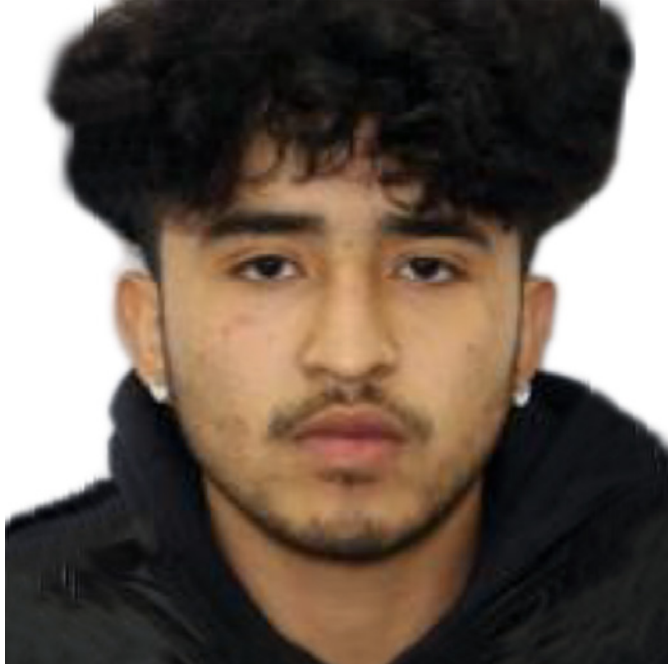
According to the police affidavit, at about 11:30 p.m. on Sept. 1, 2023, officers from the Metropolitan Police Department (MPD) responded to the sound of gunfire on the 100 block of Farragut Street, NW where they found Richard Ruffin III, 43, mortally wounded by as many as eight bullets.

Police were tipped off by several 911 callers who reported the incident took place in a residential area with several nearby businesses, noting that two individuals in a blue car, including Canarte, arrived at the incident scene where several people were congregating including Ruffin, seated in a lawn chair.  

At that point, according to police, Ruffin was advised to get out of the area since he was known to be “beefing” with a person known as “Lil Benny.”  At that point, the suspect, identified as Canarte, got out of the car with a gun in his hand.  Ruffin raised his hands and offered to go to an ATM in an apparent robbery, since the victim was known to be well off financially.   

According to court documents, a witness reportedly heard Ruffin say, “Why you bring that gun out?  I’m not afraid to die!” 

That’s when Canarte began shooting at Ruffin and continuing firing when he was on the ground.  A woman who was with Canarte in the car fled the scene. 

Canvassing the scene, police recovered 13 .40 caliber cartridge casings and remnants of the victim’s clothing.  However when the victim’s Chevy Camaro was searched, police found a silver Smith & Wesson .40 caliber semi-automatic pistol with a 14-round magazine.

Again, according to a witness, Carnate and Ruffin had a history in that Carnate allegedly pulled a gun on the victim in May 2023 at a candlelight vigil for a friend.  Carnate had also been implicated in an earlier shooting and reportedly had many other run-ins with the law.  In fact, the pair were co-defendants in a drug case in 2005 and served prison terms for the infraction. 

Based on a series of phone and witness interviews as well as surveillance video officers identified Carnate as a person of interest. 

During the hearing, Judge Kravitz detailed the prosecution’s plea agreement worked out with Carnate and his attorney, Elizabeth Weller.  As part of the deal, Carnate gave up his right to trial and a subsequent appeal if convicted.  

In return, Carnate admitted he was guilty of second-degree murder, and for their part the prosecution would drop the pending first-degree murder charge and won’t ask a grand jury to indict Carnate on greater charges. 

Subject to the judge’s approval, Carnate would serve 20 years in prison and five years of supervised release. However, the maximum sentence under DC law would be 40 years imprisonment and a $250,000 fine. 

The prosecutor, in her proffer, noted the premeditation of the act in which Carnate parked his car and deliberately walked toward Ruffin, shot him several times and kept shooting as the victim fell to the ground.  

“You intended to kill or injure  Mr. Ruffin,” said the prosecutor.  “You did not shoot him in self-defense.”

When Judge Kravitz asked Carnate how he intended to plead, his response was simply “guilty.”  

Judge Kravitz accepted the plea and set sentencing for Dec. 11. 

Detective Testifies Stabbing Witness Identity a Mystery

A Metropolitan Police Department (MPD) detective testified on Sept. 2 that investigators never identified an individual captured in video footage of a homicide in a trial before DC Superior Court Judge Neal Kravitz.

David Key, 39, is charged with first-degree premeditated murder while armed, felony murder while armed with the aggravating circumstance that the offense occurred during the commission of a robbery, and attempt to commit a robbery while armed. The charges stem from his alleged involvement in the fatal stabbing of 33-year-old Devon Greenfield on April 1, 2024 on the 300 block of 61st Street, NE.

Greenfield died from seven sharp force injuries: three to his chest, two to the upper back, one to his lip, and one to his jaw.

The prosecution called a witness who testified about Google Nest camera footage from her home that she provided to police. 

The witness said on the day of the homicide, as she worked from home, her husband noticed police outside near their home. The witness then looked outside and described that she “saw sheets over a body.”

In the videos played by prosecutors, five individuals stood on the sidewalk across the street from the witness’ house. After two individuals walked out of the frame, the victim and suspect stood face-to-face for approximately five minutes before the suspect swung at the victim. 

When the offense ended, the video showed that the suspect and an individual who wore a bright orange-red jacket walked away from the scene, and the victim fell face down near the street.

In cross-examination, Key’s attorney, Howard McEachern confirmed that the witness did not observe the murder only in video footage after.

The MPD lead detective in the case testified that patrol officers had already secured the scene when he arrived. The detective said he learned through videos the direction in which the suspect fled and retrieved footage from five cameras at and near the scene. 

In footage prosecutors played from the 300 block of 60th Street, NE, the suspect and individual in the bright orange-red jacket walked through the frame at approximately 6:51 p.m. on the evening of the offense. The same camera showed the two running back towards the original direction at approximately 7:09 p.m. According to court documents, the homicide occurred at approximately 7:05 p.m.

The detective testified that he never identified the individual in the bright orange-red jacket. 

According to the detective, Greenfield was pronounced dead at the scene and investigators recovered his phone and wallet from his pockets. Greenfield’s wallet contained two $20 bills and two clear bags of suspected narcotics, the detective said.

A forensic chemistry expert testified that he tested two samples in the case and determined the white solid material was methamphetamine, also known as meth, and the plant-like material was marijuana.  

The prosecution also called an expert in latent print analysis who testified about five evidence samples he compared to Greenfeld and Key’s known prints. The print analysis expert confirmed that all comparisons were inconclusive. However, Greenfield and Key could not be excluded as sources of the prints.

A Department of Forensic Sciences (DFS) forensic scientist testified on Sept. 1 that the evidence samples were from a pair of sunglasses and a plastic water bottle found at the scene.

Key’s trial is scheduled to resume on Sept. 3.

Judge OK’s Prosecution Release Request for Shooting Suspects

DC Superior Court Judge Michael Ryan granted the prosecution’s request to release two non-fatal shooting defendants on Sept. 3. 

Xavionte Cockrell, 20, and Jamari Kelly-Lean, 16, are charged with assault with intent to kill while armed, assault with a dangerous weapon, and two counts of possession of a firearm during a crime of violence for their alleged involvement in the shooting of an individual on Aug. 23 on the 1500 block of Good Hope Road, SE. An individual sustained two gunshot wounds to the lower extremities during the incident. 

Kelly-Lean is charged as an adult under Title 16 which give prosecutors the option to charge juveniles as adults in more serious offenses. 

During the preliminary hearing, the prosecution requested the parties not proceed with a detective’s testimony, and that Judge Ryan release the defendants to home confinement with GPS monitoring in order for the prosecution to have more time to investigate the case. 

Lisbeth Sapirstein, Cockrell’s attorney, did not oppose the defendant’s release, but asked it be on his personal recognizance, without GPS. According to Sapirstein, she is in the process of collecting surveillance footage that could prove Cockrell was not involved in the shooting, or knows any of the suspects. 

Sapirstein claimed Cockrell was walking near the scene from a bus station when he encountered police who tackled him. “There’s actual innocence here,” Sapirstein asserted. 

She also stated the GPS and home confinement conditions weren’t necessary, citing Cockrell’s lack of criminal history. She called out Cockrell’s family in court, including his mother, girlfriend, and one-year-old son, highlighting their support. 

“I’m fairly confident he had nothing to do with this,” Sapirstein told Judge Ryan. 

Likewise, Henry Druschel, Kelly-Lean’s lawyer, opposed the prosecution’s request to postpone, stating if the reason for the delay is the prosecution not being prepared he’d be motioning for dismissal. 

“We’re using an abundance of caution to release the hold and ensure we have the evidence ready,” the prosecution countered. 

Druschel said he also has evidence that Kelly-Lean is innocent, providing surveillance footage of Kelly-Lean and another individual allegedly at a store at the time of the incident. 

Druschel also provided another video that he claimed showed Kelly-Lean with another person exiting a building and seating on steps. A few moments later, the suspect vehicle is seen arriving at the location where the suspects allegedly ditched it, and the two individuals, who Druschel claims are his client and his companion, began to run. 

The video further showed the four suspects run after the two kids on the steps, before all of them were apprehended by law enforcement. 

“He’s a 16-year-old child,” Druschel told Judge Ryan about Kelly-Lean. According to Druschel, Kelly-Lean should’ve been starting 11th grade, but has been unable to do so due to his incarceration. “He’s never been arrested or in trouble before,” Druschel continued, asking he be released without conditions. 

“I presume good faith,” Judge Ryan said about the prosecution’s decision to not go forward with the hearing, adding “it’s reasonable to give them more time to evaluate the evidence they have.” 

Judge Ryan further stated he understood the defense’s level of outrage, stating the defendants “[don’t] have aspects that demonstrates any concern for public safety.” He released Cockrell and Kelly-Lean on their own personal recognizance. 

Parties are slated to reconvene Sept. 14. 

Prosecutor Calls Homicide Defendants ‘Cowards,’ Defense Claims Self Defense 

Parties delivered opening statements in a re-trial for a homicide case before DC Superior Court Judge Rainey Brandt on Sept. 1. 

Demonte Gibson, 28, Tre’Quan Nelson, 26, and Asani Forte, 29 are charged with conspiracy, first-degree premeditated murder while armed, assault with intent to kill while armed, assault with a dangerous weapon, and destruction of property less than $1,000. The charges stem from their alleged involvement in the fatal shooting of 34-year-old Delonte King on Nov. 3, 2021 at the 2800 block of 14th Street, NW. Another individual sustained a gunshot during the incident but survived. 

Gibson and Nelson are also charged with three counts of possession of a firearm during a crime of violence, and Nelson with an additional charge of possession of a firearm by a convict. 

Gibson was convicted by a jury of possession of a firearm by a convict on May 7, 2025, however, the jury was unable to reach an unanimous verdict for all other charges in regards to Gibson and Forte. 

“Two armed cowards ran up behind [King] and shot him to death. We know who those two cowards are,” the prosecution told the jury, pointing at Gibson and Nelson. She deemed their acts that afternoon of “violence and savagery.” 

According to the prosecution, it was a “freakishly beautiful afternoon,” when Gibson, Nelson and Forte decided to attack. King sustained two gunshot wounds, while the surviving victim sustained one to his arm “inches from his heart.” 

“By the grace of God, only Delonte King was killed that day,” the prosecutor asserted to the jury. She argued the prosecution doesn’t have a motive for the shooting, but the jury will “be convinced it was them.” 

The prosecution claimed Gibson and Nelson were the shooters, while Forte, who is charged as an aider and abetter, stood as a “look-out” for the shooters, and helped them evade law enforcement after the shooting. According to the prosecution, surveillance footage shows Forte yelling at the shooters “Feds, Feds, go the other way,” as a U.S. Secret Service officer was responding to the shooting. 

“We see a little head poke out. Who does it belong to? Asani Forte,” the prosecutor narrated surveillance footage. 

According to the prosecution, Gibson and Nelson went one way, while Forte ran another way to meet at “their pre-arranged meeting place,” Forte’s apartment. 

She continued narrating surveillance footage, pointing to Forte making a “beckoning gesture” at the others. “‘Come on guys, follow me,’ and they did,” the prosecutor said. 

The prosecutor told the jury the defendants each identified themselves in surveillance footage presented to them by detectives from the Metropolitan Police Department (MPD). Gibson, according to the prosecutor, told MPD detectives he didn’t know what happened, but wanted to make sure he wasn’t shot. “We know he wasn’t shot, because he was doing the shooting,” the prosecutor asserted. 

“I see myself, that’s me,” the prosecutor claimed Nelson told detectives, after his girlfriend had already identified him to MPD. 

The prosecution also argued DNA evidence will link the defendants, with cartridges recovered from the scene having Nelson and Gibson’s DNA. “This guy, Demonte Gibson, is all over it,” the prosecutor insisted. 

“At the end of the trial I will ask you to find them guilty, because they surely are,” the prosecutor asserted. 

“There was no conspiracy, there was never any plan to do anything to anyone,” Elizabeth Paige White, Gibson’s attorney, told the jury. She argued Gibson came face-to-face with a dangerous man who was armed and high on phencyclidine (PCP) – a hallucinogenic that can cause violent behavior. “Mr. Gibson is innocent,” she declared. 

“He did what he was entitled to do under the law,” White continued, stating Gibson was only trying to go pick up his cousin when he ran into King. 

White claimed King had a history of getting high and stabbing “innocent strangers for absolutely no reason – which is exactly what he was doing to Demonte Gibson that day.” 

She highlighted multiple times where King was allegedly involved in stabbings, including an incident in which King allegedly approached a group of people playing cards in a public space and stabbed a man on the face, chest, and neck. 

“That’s who Mr. Gibson came face-to-face with that day,” White insisted. Kevann Gardner, White’s co-counsel, showed the jury a knife recovered from King at the scene, which she deemed a “large butcher knife, that by design is meant to hurt or kill people and things.” 

As for the investigation, she criticized MPD and the United States Attorney’s Office (USAO) for knowing King had been “running around injuring people,” and letting him remain in the community. “Self-defense never crossed their minds,” White claimed. 

She further argued there was no conspiracy among the defendants, stating “[Gibson] didn’t plan to have to defend his own life. He was put in that position.”

She added that what happened to the surviving victim was “tragic,” but “the only reason bullets happened that day was because the decedent attacked Mr. Gibson and he had to defend himself.”  

“He panicked and he ran,” White asserted. 

Likewise, Neveen Hammad, Nelson’s attorney, argued Nelson was “at the wrong place, at the wrong time,” and “they had no reason to expect they’d come face-to-face with a man who was high on PCP and armed.” 

“[King] posed danger to the people around him,” Hammad continued, urging the jury to pay attention to what the prosecution’s evidence doesn’t establish. She claimed the prosecution would ask the jury to fill holes with assumptions. 

“Justice requires more than an accusation,” Hammad stated. 

Susan Ellis, Forte’s attorney, stated he “sits here today an innocent man,” insisting he never possessed a firearm or shot at anyone. “There was no evidence anything was planned,” Ellis argued. 

She stated the prosecution will fail to prove Forte’s involvement, other than by his presence near the scene. 

Following opening statements, the prosecution called on King’s mother to testify. Prosecutors presented her with an image of King, to which she cried “that’s my son.” King’s mom stated she was notified of King’s PCP use and involvement in a stabbing by her sister after his death. 

Prosecutors also called a then-Secret Service lieutenant, who was the first person to respond to the scene. According to the lieutenant, he was around the corner from the incident location canvassing in connection to an unrelated matter, when he heard the sounds of “automatic gunfire.” 

He testified he saw a group of people run past him as he responded to the victim. The lieutenant stated he called for backup, with Secret Service Crime Scene Technicians responding to render aid to the victim. 

He was questioned by the defense regarding the knife recovered from King at the scene, which was depicted in an image tied to a string. According to the lieutenant, the knife was recovered from King after the officers removed his clothing – it was tied to King’s torso. 

An eyewitness stated she was walking north on 14th Street when she noticed two men coming towards her crossing the street. “They were walking together, conversing, and then they split,” the witness recalled, stating she felt “weirded out,” by the two individuals walking in front of her and behind her. 

After a minute, the witness said, the one walking behind her passed her and reconvened with the one walking in front. She testified their pace quickened as they walked towards an individual, later identified as King. 

“Something unexpected happened,” the witness claimed, stating one of the men pulled a gun out of their mid-area and waved it above his head back and forth. “My eyes went to that,” she stated, adding “I didn’t entirely know what to make of it.” 

She stated the person the suspects later shot looked “like a normal everyday person,” and “he didn’t look back or anything. He was just walking.” 

She further stated the individual waving his gun around shot at the victim. “I ducked behind a car because he kept firing,” she cried. She told the jury she couldn’t tell if the suspect was going to keep shooting the victim or go after bystanders. 

Once the gunfire stopped, the witness stated, the shooters ran past her. She continued on with her day since the “cops responded really fast,” but later reported she had been a witness when she saw a “see something, say something” sign walking back to the Metro. 

Due to time constraints, the witness was unable to conclude her testimony. 

Parties are slated to reconvene Sept. 2. 

Judge Denies Homicide Defendant’s Release in ‘Bizarre’ Case 

DC Superior Court Judge Michael Ryan denied a homicide defendant’s request for release on Sept. 2. 

Morris Ray, 53, is charged with second-degree murder while armed for his alleged involvement in the fatal stabbing of 29-year-old Keon Jones on the 400 block of I Street, SW, on April 29. 

During the hearing, parties discussed Andrew Ain, Rays’ attorney’s, motion for release. Ain requested Ray be released to 24 hour home confinement in order to continue mental health treatment, with which he claimed Ray complied leading up to the incident. 

The prosecution objected to the request, stating this was an “unprovoked attack,” and that the incident occurred because Ray allegedly tried to confront a person Jones was with and Jones attempted to calm the defendant down, before Ray stabbed Jones. 

“We don’t know why he engaged in this conduct,” the prosecutor told Judge Ryan, adding she’s concerned about his access to knives given that he was arrested in possession of three, and two additional ones were recovered during the execution of a search warrant at his home. 

“This is essentially not a one time offense,” the prosecutor continued, stating the defendant had been arrested more than a decade ago in connection to multiple assaultive incidents, including a vehicular homicide and two other stabbings. 

Judge Ryan agreed with the prosecution, stating his concern is “really [the] dangerousness to the community.” 

“The facts of the case, I have to say, are bizarre,” Judge Ryan stated, adding the defendant tested positive for phencyclidine (PCP) at the time of his arrest. He also highlighted Jones’ relationship with Ray, stating they were well known to each other. 

Judge Ryan added Jones was “somewhat defenseless to start with,” and claimed “there is no explanation for the behavior that resulted in a very violent and gruesome attack on Mr. Jones.” 

“There’s practically no explanation for what occurred in this case. It could be intoxication, I don’t know, I’d be speculating,” Judge Ryan continued. “I’m at a loss on how I can protect the community.”

“The peculiar and bizarre nature of this killing in my mind is one of the big factors that makes it difficult for me to say I can protect the community if I were to release Mr. Ray,” Judge Ryan told the parties. 

Parties are slated to reconvene Nov. 23. 

‘This Entire Murder Happened on Video,’ Prosecutor Tells Jurors 

The prosecution showed jurors video footage of an attempted robbery and fatal stabbing in a trial before DC Superior Court Judge Neal Kravitz on Sept. 1.

David Key, 39, is charged with first-degree premeditated murder while armed, felony murder while armed with the aggravating circumstance that the offense occurred during the commission of a robbery, and attempt to commit a robbery while armed. The charges stem from his alleged involvement in the fatal stabbing of 33-year-old Devon Greenfield on April 1, 2024 on the 300 block of 61st Street, NE.

Greenfield died from seven sharp force injuries: three to his chest, two to the upper back, one to his lip, and one to his jaw.

In opening statements, the prosecutor described a “quiet street” in “broad daylight” with “two men, face-to-face.” The prosecution alleged that Key then slashed the side of Greenfield’s face, Greenfield fell to the ground, and Key robbed him. 

When Greenfield reportedly did not cooperate with Key’s demands fast enough, the prosecutor claimed Key said “You think I’m f*cking playing with you.” The prosecutor alleged Key continued to assault, rob, and stab Greenfield for two minutes, then “left him to die” in the street gutter.

“This entire murder happened on video,” the prosecutor told the jury, then played the video. In the video, the suspect audibly demanded money as he assaulted Greenfield on the ground. As the suspect walked away, Greenfield stood up briefly before he fell face-first to the ground.

The prosecutor showed a still photo from security footage approximately 10 minutes prior to Greenfield’s murder. They claimed the photo captured Key wearing the same grey pants, black shoes, black backpack, and grey parka the suspect wore in the video of the offense.

To prove their case beyond a reasonable doubt, the prosecution said they would demonstrate the thoroughness of the investigation through a “slow march” of evidence. For example, prosecutors reported that DNA from a water bottle allegedly linked Key to the scene.

“This was a thoughtful choice to kill,” the prosecution asserted and asked jurors to find Key guilty. 

In a brief opening statement, Key’s attorney, Howard McEachern asserted his client is not guilty. McEachern pointed to prosecutors and said “the burden is right there at this table.” 

According to McEachern, no eyewitnesses will identify Key as the suspect and no one will identify Key as the suspect in the murder video. McEachern told jurors he would provide more detail in his closing argument about why the prosecution’s evidence is insufficient.

The prosecution then called Greenfield’s cousin to the stand who described him as an “overall stand up guy” and “a heartfelt individual.”

A scientist from the Department of Forensic Sciences (DFS) testified about evidence he collected from the scene that included a beer can, pair of sunglasses, disposable plastic water bottles, and a black knit hat that said “GOAT” on the front.

The prosecution showed jurors photos the forensic scientist took of the scene that included the aforementioned evidence. The photos also captured a trail of suspected blood, Greenfield’s phone covered in suspected blood, Greenfield’s driver’s license, and the bottom of Greenfield’s shoes.

According to the forensic scientist, Greenfield was found in the area of grass between the street and sidewalk.

A responding officer from the Metropolitan Police Department (MPD) testified that paramedics already attended to Greenfield when she arrived at the scene. The officer canvassed for cameras and potential witnesses.

The trial is scheduled to resume on Sept. 2.

‘My Intention Was Never for Anybody to Get Hurt,’ Defendant Expresses Remorse for Fatal Armed Robbery

DC Superior Court Judge Jason Park sentenced a defendant to 20 years in prison on Aug. 28 for his involvement in a robbery and fatal shooting.

Trenton Collins, 24, pleaded guilty on March 9 to second-degree murder while armed and assault with a dangerous weapon for his involvement in the fatal shooting of 41-year-old Philip Prendergast on March 27, 2024 on the 5100 block of Georgia Avenue, NW. Prendergast died from one shot to his abdomen that fractured his pelvic bone and damaged his small intestines.

According to court documents, another victim was held at gunpoint and robbed, but sustained no injuries.

As part of the plea deal, parties agreed to a prison sentence between 13-to-20 years, which Judge Park found appropriate for Collins. 

Prendergast’s mother said, “the grief follows me everywhere,” and described her son’s death as “carrying a loss that cannot be measured, repaired, or made sense of.” 

“With a smile that lights up every room,” Prendergast’s mother said, “my son has touched so many lives.” 

After the victims complied with the robbery, “Mr. Collins made a choice…to end a life,” Prendergast’s mother asserted. “Why couldn’t he just take the money and the goods, and spare my son’s life,” she questioned.

“Before he became a victim in your courthouse, sir, my son was a living, breathing person with a very bright future,” Prendergast’s mother told Judge Park, and asked him to impose the maximum sentence for Collins.

The prosecutor emphasized the numerous heartfelt letters she received from people who cared for Prendergast. 

In regards to the surviving victim, the prosecutor asserted that his silence did not indicate indifference, but rather reflected the difficulty he faced by appearing in court.

The prosecutor described Collins’ timeline around the offense as “incredibly troubling.” In 2021, Collins was convicted of carrying a pistol without a license and sentenced under the Youth Rehabilitation Act (YRA). The YRA allows sentencing flexibility for offenders under the age of 25 and the potential to have their convictions sealed upon successful completion of requirements.

Within three months of his release in the gun possession case, Collins committed the murder. The prosecutor emphasized that on the morning of the offense, Collins met with his probation officer from the Court Services and Offender Supervision Agency (CSOSA).

“I hope he is sorry, I hope he regrets what he did,” the prosecutor said. However, “actions are what matter, not words.”

Collins’ attorney, David Akulian, asked for his client to receive a total sentence of 15 years in prison under the YRA. Akuliuan noted there was no evidence that Collins planned to commit the homicide. Collins planned the robbery, said Akulian, but the gunfire was an accident.

According to Akulian, Collins had a “tremendously troubled background” and lived with unmedicated mental health conditions for most of his life, which contributed to the offense.

Collins apologized to Prendergast’s family and his own children and family. “My intention was never for anybody to get hurt,” Collins expressed.

“We are not defined by the worst thing that we do,” Judge Park stated. The judge felt Collins accepted responsibility and expressed remorse in a “genuine and mature way.”

The judge acknowledged that Collins had no intent to kill anyone that day but said the victims complied fully with the demands of their armed assailants. Although it was not played in court, Judge Park referenced video footage from the prosecution as evidence Collins was the shooter between the two suspects.

As a result of the offense’s violent nature and Collins previous sentence under the YRA, Judge Park found the YRA inappropriate in the case and denied Akulian’s request.

Judge Park sentenced Collins to 18 years in prison for murder and two consecutive years for assault, followed by five years of supervised release. Collins will be required to register as a gun offender upon his release.

No further dates were set.

Jury Convicts Suspect in Friend’s Stabbing

A jury in DC Superior Court Judge Rainey Brandt’s courtroom convicted a defendant on Aug. 26 for his involvement in a stabbing. 

John Scoggins, 55, was originally charged with assault with intent to kill while armed and aggravated assault while armed for his involvement in the stabbing of a friend on Dec. 9, 2024. The incident occurred at a bus stop on the 1700 block of Minnesota Avenue, NE. 

Throughout the trial prosecutors presented evidence, including testimony and footage, of moments leading up to, during, and after the stabbing. The prosecution proved Scoggins and the victim were close friends who engaged in a verbal dispute while they rode a Metro bus for 20 minutes before the incident. 

In videos recovered from the bus, Scoggins and the victim could be seen hassling each other, with Scoggins telling the victim at one point “I’ll tear your a** up,” before they left the bus and a physical fight ensued. 

Other surveillance footage showed Scoggins stab the victim multiple times, with the final blow hitting the victim’s chest.

The jury acquitted Scoggins of assault with intent to kill while armed, but convicted him of the lesser included charge of assault with a dangerous weapon, as well as aggravated assault while armed. 

The defendant, who has been on release since January of 2025, will remain on release pending sentencing. 

Parties are slated to reconvene on Oct. 30. 

Judge Finds Probable Cause in Co-Defendant Murder Case 

DC Superior Court Judge Danya Dayson found the prosecution had sufficient evidence to find probable cause for second-degree murder while armed in a shooting case on Aug. 28. 

Abdoulie Jawneh, 25, and Daniel Foxworth, 23, were originally charged with first-degree murder while armed for their alleged involvement in the fatal shooting of 28-year-old Aaron Brown on July 11, at the 4000 block of Minnesota Avenue, NE. Brown succumbed to his injuries in the early hours of July 12.

During an Aug. 27 hearing, the lead detective for the Metropolitan Police Department (MPD) testified regarding their investigation into Brown’s homicide. According to the detective, Brown parked his car near the scene hours before the homicide, and walked over to a strip mall across the street, where he spent a few hours hanging out with people. 

The detective testified that during that time, two individuals, who he identified as Jawneh and Foxworth, were at an apartment building across the street from the shops wearing distinctive clothing, which matched that of the shooter and his accomplice at the time of the incident. 

According to the detective, Jawneh and Foxworth were captured by surveillance footage in the hours leading up to the shooting riding an electric scooter and a rented Veo bike. Veo records, presented to the court, showed Foxwroth rented the bike between 7:20 and 7:50 p. m. The movements of the bike matched that of Foxworth’s cell phone. 

The detective further testified that around 9:10 p. m., Jawneh was seen on his electric scooter scouting where Brown was before returning to an apartment with Foxworth. 

At 9:15 p. m., according to the detective, Jawneh and Foxworth parked a BMW, which had been reported stolen in Prince George’s County, Maryland, months earlier, behind the victim’s vehicle. There, the detective claimed, Jawneh, who was driving, and Foxworth, in the passenger seat, waited for Brown to return to his car for more than 10 minutes. 

Surveillance footage, and the detective’s testimony, depicted Brown returning to his car, opening his trunk, and Jawneh and Foxworth getting out of their vehicle. The individual identified as Jawneh was seen approaching Brown, who managed to close the trunk, and “shooting at point blank range,” according to the prosecution. Foxworth was allegedly seen racking his gun by the passenger door before aiming the firearm at Brown, however, he did not shoot. 

After shooting, the individual identified as Jawneh attempted to get access to Brown’s trunk but couldn’t. The suspects got back in the BMW and drove away. 

Brown sustained a gunshot wound to his abdomen, and succumbed to his injuries at a hospital. 

According to the detective, the BMW was later recovered on July 12 in Fort Washington, Maryland, and a gasoline container was located in the back seat of the vehicle. 

Further analysis of the vehicle determined that Jawneh and Foxworth’s phones were reportedly connected to the car’s entertainment system for hours after the shooting. Prosecutors also presented photos recovered from the defendants’ phones that depicted them in the vehicle before the incident date. 

Prosecutors also provided images of evidence recovered from Foxworth during the execution of a search warrant. According to the detective, a backpack was recovered from Foxworth’s residence, with his identification card inside, and a gun. A Cartier watch, which was depicted on surveillance footage of Foxworth leading up to the shooting, was also recovered. 

Steven Kiersh, Jawneh’s attorney, highlighted the detective’s assertion in an affidavit that MPD originally believed the person they identified as Jawneh in surveillance footage could be another person based on facial recognition technology. However, further investigation showed the person they believed may have been the suspect was incarcerated at the time of the shooting. 

Kevin O’Sullivan, Foxworth’s attorney, questioned the detective about Brown’s alleged involvement with marijuana. The detective stated he didn’t know if Brown was selling, buying, or just had marijuana on him around the time of the murder. 

Following the detective’s testimony, prosecutors told Judge Dayson they “have a compelling case,” and requested she find probable cause. They emphasized that the defendant’s phones were linked to the BMW on the day of the incident, and they were captured in the hours leading up to the murder wearing clothes consistent with that of the attackers. 

The prosecution highlighted the BMW being recovered with the gasoline container, and claimed “seems like the suspects were contemplating burning the car.” The prosecutor further stated “[the suspects] emerged from that BMW we know is linked to these two individuals,” pointing at Jawneh and Foxworth in court. 

Recalling surveillance footage of the incident, the prosecutor insisted “the moment [Brown] opened the trunk they emerged from the car,” and Jawneh shot from close range. As for Foxworth, the prosecutor claimed, he knew what was going to happen. “This wasn’t a surprise maneuver,” he insisted. 

“They obviously went there with an intention,” the prosecutor continued, stating despite Foxworth not shooting the victim, he racked his gun and aimed at Brown. 

“The waiting suggests and shows and proves premeditation and deliberation,” the prosecutor argued. “They had more than enough time to deliberate. They knew what they were doing. Jawneh shot him without a second thought.” 

Kiersh disagreed, stating the prosecution “has conclusions, but no evidence to support those conclusions.” 

Kiersh argued the shooters were masked, and were never identified by anyone using surveillance footage. 

Likewise, O’Sullivan disagreed with the prosecution, and stated they had little evidence that the individual they identified as Foxworth had the mens rea, or “guilty mind” mental state, required to commit a crime. 

O’Sullivan insisted the individual identified as Foxworth was not a principal actor of the shooting, and “just racking a gun doesn’t add anything,” because the shooter was in the process of shooting already. 

He further argued it’s possible the suspect thought the shooter would only try to fight, rob, or shoot at the victim, but not kill him. “There is nothing but mere speculation that [Foxworth] did anything,” O’Sullivan asserted. 

The prosecution rebutted that despite Foxworth not shooting the victim, he could be found guilty as an aider and abetter. 

On Aug. 28, Judge Dayson told parties she was unable to find probable cause for first-degree murder while armed, but found it for second-degree. She argued that despite the lack of identification of the defendants at the scene, there is enough circumstantial evidence to support probable cause. She highlighted the connection to the BMW through their phones, videos and photos of the defendants in the vehicle days before the homicide, and the defendants’ clothing matching that of the suspects. 

Judge Dayson argued that it is “beyond probable cause [for Jawneh] as to the mens rea” for second-degree murder, highlighting evidence that showed Jawneh exited the BMW with his gun already drawn, and shooting Brown at close range in the chest. She asserted he acted with the required intent for second-degree murder, which requires the suspect to have the intent to impose significant bodily harm or acted in conscious disregard for the victim’s well-being. 

She told parties she was unable to find probable cause for first-degree murder while armed because, despite the suspects waiting for the victim, there is no evidence Jawneh was waiting with premeditation and deliberation to kill Brown, rather than commit something else, like a robbery. 

Judge Dayson further stated she found probable cause for Foxworth as an aider and abetter, stating despite him not shooting, his racking of the gun proved “he wasn’t just armed, he readied himself to make use of the firearm in this case.” She argued he knowingly associated himself with the incident. 

As for detention, Judge Dayson stated she could not find a combination of conditions that would guarantee the community’s safety if Jawneh and Foxworth were to be released. She highlighted their prior convictions, and stated they were both on probation for prior gun related cases at the time of the murder. 

Parties are slated to reconvene before DC Superior Court Judge Neal Kravitz on Dec. 15.

Shooting Co-Defendants Accept Plea Deal 

Two shooting co-defendants accepted a plea deal before DC Superior Court Judge Danya Dayson on Aug. 28. 

Lorenzo Covington, 20, and Gregory Nelson, 19, were originally charged with assault with intent to kill while armed, assault with a dangerous weapon, endangerment with a firearm, unlawful discharge of a firearm, two counts of possession of a firearm during a crime of violence, four counts of destruction of property, carrying a pistol without a license, possession of an unregistered firearm, and unlawful possession of ammunition for their alleged involvement in a shooting. The incident occurred on Oct. 14, 2024, on the 700 block of N Street, NW. No injuries were reported. 

During the hearing, David Akulian, Nelson’s attorney, and Errin Scialpi and Karen Minor, Covington’s attorneys, alerted the court of their intent to accept a plea deal extended by the prosecution. 

Through the deal, parties agreed for the defendants to plead guilty to assault with a dangerous weapon and carrying a pistol without a license, in exchange for the prosecution dismissing all other indictment charges. Parties agreed to a sentencing range of two-to-five years of imprisonment. 

The prosecution also agreed to dismiss a case against Nelson, in which he faced gun and drug possession charges. Nelson is also eligible for a short-split sentence, meaning he can receive a shorter period of time of imprisonment, in exchange for a probation period. 

According to the prosecutor, had the case gone to trial, they would’ve proven beyond a reasonable doubt that on the day of the incident, the defendants and three other individuals, one allegedly identified as 20-year-old Zion Greely, lured the victim and produced firearms before shooting at the individual. Ballistics evidence proved four firearms were used during the incident. 

The defendants further agreed they have no evidence to contradict the involvement of Greely or their own, and they have no information that exonerates any of them. 

Covington and Nelson will undergo a Youth Act Study, which if adopted by the judge, would allow the defendants’ convictions to be sealed if they successfully complete all sentencing requirements. 

Parties are scheduled to reconvene Nov. 6. 

Greely is scheduled to appear Sept. 4. 

Fatal Shooting Co-Defendant to Receive Full Mental Evaluation at Jail

Based on a report from the Department of Behavioral Health (DBH), DC Superior Court Judge Jason Park ordered a full mental competency exam for a homicide defendant on Aug. 28. 

Corey Noble, 28, and Zion Humphrey, 26, are charged with first-degree murder while armed, attempted robbery while armed, and two counts of possession of a firearm during a crime of violence. The charges stem from their alleged involvement in the fatal shooting of 25-year-old Tre’Von Norman on March 20, 2025 on the 2400 block of Elvans Road, SE.

In court on Aug. 21, Judge Park granted Noble’s defense attorney Madalyn Harvey’s request and ordered a preliminary competency screening for Noble.

At the hearing, parties discussed a DBH report filed on Aug. 27. Harvey agreed with the DBH request for her client to undergo a full mental competency evaluation.

For Noble to be mentally competent to stand trial, he must understand the charges against him and be able to assist in his defense. 

The DBH report asked that Noble remain held at the DC Jail for the full evaluation, which parties voiced no objections with.

Humphrey did not attend the hearing but his attorney, Jesse Winograd, reiterated his client’s right to a speedy trial. 

The parties are scheduled to reconvene on Oct. 9.

Murder Defendant Indicted on Additional Charges 

A murder defendant pleaded not guilty to charges in a superseding indictment, an altered allegation, before DC Superior Court Judge Danya Dayson on Aug. 28. 

Alfred Paulino-Del Rosario, 23, is charged with felony murder, assault with a dangerous weapon, armed carjacking, attempt to commit robbery while armed, and four counts of possession of a firearm during a crime of violence, for his alleged involvement in the fatal shooting of 21-year-old Jhonatan Guzman Hernandez. The incident occurred on Dec. 30, 2022, on the 1400 block of Clifton Street, NW. 

During the hearing, Varsha Govindaraju, Paulino-Del Rosario’s attorney, alerted the court of his intent to plead not guilty to all charges, and asserted his constitutional rights. 

Parties are slated to reconvene Jan. 11.