Search Icon Search site

Search

Judge Imposes Partially Suspended Sentence in Union Station Manslaughter

DC Superior Court Judge Todd Edelman imposed a partially suspended sentence for a homicide defendant on May 15. 

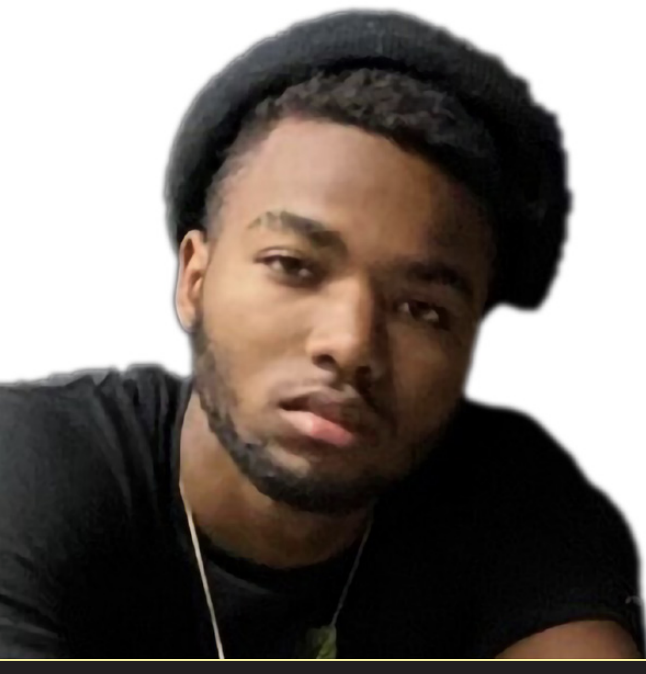
On Jan. 23, Faizon Mason, 23, pleaded guilty to voluntary manslaughter and carrying a pistol without a license for his involvement in the fatal shooting of 18-year-old Wayne McDaniels The incident occurred on Feb. 10, 2025 at Union Station on the unit block of Massachusetts Avenue, NE. 

Many McDaniels’ family members provided victim impact statements during the hearing, including his mom, who stated, “Not a day goes by that I don’t miss my child.”

“To you, Faizon Mason, you took a big part of my life. Whatever went down, and how it went down… you chased my son down like an animal and killed him. You still have your life, right? Your mama can still talk to you, right? I can’t talk to my son, unless I talk to his ashes,” McDaniels’ mom cried

She continued, stating “Y’all have to stop and think about your actions before you do it. Carrying a gun doesn’t make you a man, it makes you a coward.” McDaniels’ mom further argued  the family’s disagreement with the plea deal, saying “I’m not happy with the verdict of manslaughter. My son was shot in the back, chased down.”

“Faizon Mason, you have a lot of thinking to do. A lot to think about while you’re behind bars. Whatever your sentence is today, I hope and pray that you learn your lesson from this. And I hope and pray that you never get out of jail,” she concluded. 

McDaniels’ girlfriend’s mom highlighted the suffering McDaniels’ and Mason’s families are enduring, stating “two lives lost, two mothers suffering.” 

The prosecution argued,“iI’s safe to say that this is obviously a very tragic case,” claiming it stemmed from McDaniels and a group of friends trying to rob Mason at Union Station at gun point, with surveillance footage depicting McDaniels pressing a gun to Mason’s side. 

“This is a case of gun violence, that could’ve been easily preventable,” the prosecution insisted, stating Mason went to Union Station armed with a firearm he illegally possessed, and McDaniel swas attempting to commit a crime during the incident. However, they argued, when the shooting occurred, McDaniesl was no longer posing a threat to Mason, who still decided to shoot at him multiple times, surrounded by commuters who could’ve also been injured. 

“Firing as [McDaniels] is running away is extremely concerning,” the prosecution argued, asking for a guideline compliant sentence, which would be 48-to-120 months for manslaughter, and six-to-24 months for carrying a weapon, but did not provide a specific request. 

Destiny Fullwood-Singh, Mason’s attorney, highlighted the tragedy that was this case, but argued Mason took full responsibility for his involvement. She insisted Mason did not go to Union Station looking for McDaniels or for anything, and argued he was followed into an enclosed space and McDaniels attempted to rob him at gunpoint. 

“It was a wrong response to a real armed threat,” Fullwood-Singh said. She argued Mason has untreated complex post-traumatic stress disorder (PTSD) from repeated violence, has an IQ of 73, and was robbed twice earlier that week. 

She further argued that despite McDaniels running away, Mason didn’t feel safe because his threat detection response was harmed by years of violence and victimization. 

She requested Judge Edelman impose a sentence under the Youth Rehabilitation Act (YRA)  of 18 months for voluntary manslaughter, suspended, with a concurrent sentence for the carrying a pistol charge. 

The YRA allows for a defendant’s conviction to be sealed if they successfully complete all sentencing requirements. The defense highlighted several mitigating factors, including factor one, which allows for the defendant’s conduct to be partially excused if the victim was an aggressor, initiator, provoker or willing participant of the incident, in order to get a sentence below the sentencing guidelines. 

Fullwood-Singh also read a letter written by Mason, in which he stated “‘I’m sorry’ doesn’t feel like enough.” He argued he acted out of fear during the incident, stating McDaniels “still had the gun in his hand,” as he ran away. 

“This was a horrible mistake,” Mason said in the letter, adding he’ll spend the rest of his life regretting what he’s done. 

“This is just terrible,” Judge Edelman stated, arguing there were two lives impacted by this incident, with one being lost and the other being locked up. 

“It was reckless. This wasn’t something that just happened in the middle of the night in the corner of the street,” Judge Edelman said, stating everyone in Union Station was endangered. 

He stated that despite McDaniels being the aggressor, “losing someone like that is a tragedy.” 

“Respectfully, this was manslaughter,” Judge Edelman told McDaniels’ family, “the provocation was there by Mr. McDaniels, and I can’t ignore his violence.” 

“Mr. Mason, you took a life, and you did so in a way that also endangered other people, and I can’t ignore that,” Judge Edelman avowed. He imposed a partially suspended sentence to try to motivate Mason to do well. 

Judge Edelman imposed a 96 month sentence for voluntary manslaughter, everything suspended except for 36 months, and five years of probation. He is to serve a concurrent sentence of eight months suspended for carrying a pistol without a license. 

Judge Edelman further ordered Mason to get his GED while incarcerated, undergo substance abuse and mental health treatment, and complete 90 hours of community service. 

No further dates were set.  

‘I Ain’t No Menace,’ Says Murder Defendant at Sentencing

In a killing the prosecutor termed “entirely avoidable,” Tremon Jackson, 22, was sentenced to 120 months imprisonment for voluntary manslaughter before DC Superior Court Judge Danya Dayson on May 15.

Jackson was originally charged with second-degree murder while armed and possession of a firearm during a crime of violence for his alleged involvement in the murder of 20-year-old Charles Towles on the 1400 block of L Street, SE that occurred on Nov. 4, 2023.

Detailing the events leading to the killing with three surveillance clips, the prosecutor noted Jackson approached Towles outside an apartment building in a red Toyota Prius, appearing to have a casual conversation.  

Then inexplicably, Jackson and an unidentified suspect ran out of the building with loaded guns and attacked the victim. 

“Certainly [Jackson] provokes the confrontation,” said the prosecutor.  Then a tussle ensued  followed by two guns firing, continued the prosecutor. She said at that moment a mother and two children were walking into the building. 

“Jackson made the worst possible decision,” said the prosecutor.  She also said this wasn’t Jackson’s first contact with the criminal justice system in that he was previously arrested but not convicted on a gun charge.  Based on the circumstances, the prosecutor said a 15 year sentence was warranted in the return for dropping the murder charge in a plea bargain.

In a victim impact statement from a friend read by the prosecutor, Towles was eulogized as a good young man and his death was “a loss of hope and future to the world”.  The friend continued that a maximum sentence was critical to resolve the case. 


“This is a terrible, terrible situation,”said Russell Hairston, Jackson’s attorney.  “Our streets aren’t safe but everyone feels they have to have a firearm.” Arguing for a ten year sentence, he said, “If the court is lenient, the court won’t see [Jackson] again.  

Hairston asked that Jackson be sentenced under the Youth Rehabilitation Act (YRA) which gives judges more flexibility and allows a conviction to be sealed if a young offender successfully completes their term. . 

Jackson apologized for what happened to Towles and said that the situation left him speechless.

“Everybody looks at me as a menace,” he said “I ain’t no menace.”  I hold the family together,” he continued.  

Judge Dayson said she had a difficult time understanding what led Jackson to the point.

“I hope you use your time in order to find a different path,” she said.  The judge sentenced Jackson to 120 months for voluntary manslaughter.  He must also serve five years of supervised release, register as a gun offender and pay $100 to the Victims of Violent Crimes Fund.

No further proceedings are scheduled in the case. 

Defense Wants 2016 Murder Case Against Mentally Incompetent Defendant Dismissed

A defense attorney asked DC Superior Court Judge Neal Kravitz on May 15 to dismiss a 10-year-old homicide case against his client after the court deemed him mentally incompetent to stand trial five years ago.

Brandon Byrd, 30, is charged with first-degree murder while armed and carrying a dangerous weapon outside a home or business for his alleged involvement in the fatal stabbing of his dad, 48-year-old Otis Byrd on Aug. 10, 2016 on the 100 block of Michigan Avenue, NW.

According to court records, pursuant to Jackson v. Indiana (1972), Brandon was found incompetent to stand trial on March 22, 2021. To stand trial, a defendant must understand the charges against them and be able to assist in their defense. After the Jackson finding, the court granted the prosecution’s request to commit Brandon to Saint Elizabeths Hospital for treatment under a civil commitment to restore his competency. 

The parties have since met once a year to check in about Brandon’s competency and renew his mental status.

At the hearing, Judge Kravitz acknowledged the five year mark had passed since the Jackson finding, but because of the seriousness of the charges, the law did not require him to dismiss the case.

Brandon’s attorney, Craig Hickein, made an oral request to dismiss the charges without prejudice, meaning the prosecution can refile them at a later date. Hickein argued it would cause no harm to prosecutors and noted Brandon’s in-patient commitment to Saint Elizabeths for at least the next year.

The prosecutor opposed dismissal but said if Hickein filed a written motion, they would respond, and parties could litigate the issue. Judge Kravitz agreed that the defense should file their request and if necessary, he would schedule a hearing.

The parties are scheduled to reconvene on May 14, 2027.

Defendant Waives DNA Testing in Confessional Intern Murder Case

One of three suspects in the murder of a Congressional intern waived his right to perform independent DNA testing on May 15 before DC Superior Court Judge Danya Dayson.

Naqwan Lucas, 19, his brother Jailen Lucas, 17, and Kelvin Thomas, 17, are charged with conspiracy, first-degree premeditated murder while armed in a drive-by or random shooting, four counts of assault with intent to kill while armed, three counts of aggravated assault knowingly while armed, assault with a dangerous weapon, and nine counts of possession of a firearm during a crime of violence, for their alleged involvement in the fatal shooting of 21-year-old Eric Tarpinian-Jachym on June 30, 2025 on the 1200 block of 7th Street, NW. 

The shooting also injured a woman and a 16-year-old juvenile male. 

According to a release from the U.S. Attorney’s Office, Tarpinian-Jachym was caught in the line of fire when “three armed suspects exited a stolen vehicle and began firing shots at two young men” in downtown DC. Tarpinian-Jachym was hit four times and died the following day. 

Jailen and Thomas are charged under Title 16, which allows prosecutors to try juveniles as adults for certain serious offenses. 

Judge Dayson explained to Naqwan that if he chose not to do his own DNA testing, he would not likely be able to do so if he were convicted. 

Represented by Megan Allburn, Naqwan declined to test the prosecution’s evidence in the high-profile case, an option guaranteed by the Innocence Protection Act (IPA).   Judge Dayson accepted his decision. 

At a hearing on April 16 the prosecutor detailed DNA testing of items conducted after the co-defendants were arrested. They include two firearm cartridge casings reportedly implicating Jailen, a Bic Lighter linked to Jailen and Naqwan Lucas, and recovered DNA from the car allegedly tied to Kelvin Thomas. 

Profiles derived from DNA analysis can generate a high statistical probability that evidence in a case comes from the defendant. 

An eight-page filing submitted by the U.S. The Attorney’s Office also in April listed hundreds of pages of evidentiary items to be introduced at trial including a mouth swab to extract Naqwan’s DNA.  The prosecution sent the results to the defense teams for each co-defendant. 

The next hearing in the case is scheduled for Aug. 28

Stabbing Defendant on Suicide Watch Misses Hearing

A defense attorney informed DC Superior Court Judge Neal Kravitz that his client in a stabbing case was on suicide watch after he failed to appear for his hearing on May 15.

Rubin Holman, 32, is charged with assault with intent to kill while armed and aggravated assault knowingly while armed for his alleged involvement in a stabbing on Oct. 4, 2022 on the 600 block of Pennsylvania Avenue, SE. The victim sustained a wound to his neck.

Throughout his case, Holman missed hearings on multiple occasions. According to court records, since Holman’s arrest in the case in December 2023, he refused to appear in court for at least seven hearings as well as being a “medical scratch” at least seven times.

At the current hearing, Judge Kravitz noticed Holman’s absence and asked his attorney, Kevin Mosley, whether Holman would be present. Mosley informed parties that Holman was on suicide watch at the Correctional Treatment Facility (CTF), a medium security facility in the DC Department of Corrections (DOC) adjacent to the DC Jail. 

Mosley elaborated that Holman had one-on-one observation with a medical personnel at CTF and they could not transport him to the courthouse for the hearing. According to Mosley, it was not an isolated incident because Holman attempted to take his own life several times since his incarceration. 

Judge Kravitz asked whether the court could take any action to alleviate the situation. Mosley requested Holman remain held at CTF after he’s off suicide watch because most of Holman’s complaints related to his unit at the DC Jail. Judge Kravitz granted Mosley’s request and recommended Holman remain at CTF.

The prosecutor also revoked a plea agreement they extended to Holman because of the length of time without a decision. They did not read the terms of the offer on the record since Holman was absent.

To allow time for Holman’s health to improve, Judge Kravitz suggested scheduling a new hearing a month later.

The parties are scheduled to reconvene on June 12.

Judge Considers Release For Stabbing Defendant Showing Signs of Rehabilitation

DC Superior Court Judge Michael Ryan ​​took a motion to release a stabbing defendant under advisement on May 6 after the defense noted his extensive rehabilitative efforts while in custody.

Troy Scott, 35, is charged with assault with intent to kill while armed, aggravated assault knowingly grave risk while armed, three counts of assault with a dangerous weapon, and felony carrying a dangerous weapon for his alleged involvement in a stabbing on Aug. 5, 2024, on the 1600 block of 29th Street, SE. The victim sustained at least nine wounds.

A defense motion filed on May 3, asked for Scott’s release on 24-hour GPS monitoring.

Scott’s attorney, Rachel Cicurel, appeared alongside Theodore Shaw, who will serve as Scott’s new attorney because Cicurel is leaving DC’s Public Defender Service (PDS).

At the hearing, Cicurel requested Scott’s release to live with his grandmother, citing his completion of a substance abuse program and earning 25 culinary certificates at the DC Jail. 

Cicurel presented a letter from Unity Health Care which said Scott is focused on making positive changes and exhibits remarkable resilience. Scott also obtained certifications in anger management and entrepreneurship while in custody, Shaw said.

Cicurel argued that the alleged volatility in the case was specific to a relationship with the victim, who has since died from unrelated causes. She said surveillance audio shows the victim was motivated to harm Scott on the day of the incident.

Judge Ryan requested that the defense email surveillance clips of the incident for review before he rules on Scott’s release.

The assigned prosecutor was not present at the hearing due to a medical emergency, so the parties agreed to continue discussions regarding scheduling a new trial date at a later hearing. The trial, originally scheduled for May 11, was canceled due to the change in defense counsel. 

Parties are scheduled to reconvene on May 15.

Murder Suspect Waives Testing of Extensive DNA Evidence

Even though the prosecution detailed a number of items tested for DNA, a murder defendant waived his right to conduct his own analysis of the evidence in a hearing before DC Superior Court Judge Danya Dayson on May 15. 

Kevin Singletary, 47, is charged with first-degree murder premeditated while armed, possession of a firearm during a crime of violence, and unlawful possession of a firearm with a prior conviction for his alleged involvement in the  fatal shooting of Delonte Hazel, 31, on Sept. 10, 2021, on the 100 block of Kennedy Street, NW.

The judge noted that if Singleton were convicted, he might not be able to reclaim his testing right. 

“There’s no need to test anything,” Singletary affirmed. 

As stipulated by the Innocence Protection Act, the defense has the right to test all biological materials screened for evidence by the prosecution.  A DNA profile can create a high mathematical probability that a defendant is linked to the evidence. 

One exception raised by the prosecution was the recovery of a Glock 40 handgun that didn’t match the caliber of the murder weapon, so it will not be used as evidence.  

On the other hand, the prosecutor said there were numerous items tested for DNA including bullet casings, a blue face mask, body armor, a skull cover, a handgun in a vehicle, ammunition magazines and the blood of the victim.

Additional items included a mouth swab from Singletary, pants and shoes, the defendant’s car, phones and a scale. 

Earlier Singleton’s attorney, Andrew Ain, indicated the defense wanted to test the shell casings but there wasn’t enough detectable DNA remaining to do the study.

The next hearing is scheduled for June 10. 

Prosecutors Allege Deadly Gunfire Ambush Was Planned and ‘Executed With Precision’

The prosecution claimed co-defendants planned and carried out a fatal shooting as retaliation for their friend’s murder in a retrial before DC Superior Court Judge Danya Dayson on May 12.

Alonzo Brown, 29, and Naquel Henderson, 28, are charged with conspiracy to commit a crime of violence, first-degree murder while armed, four counts of assault with intent to kill while armed, and five counts of possession of a firearm during a crime of violence for their alleged involvement in the fatal shooting of 22-year-old Michael Taylor on Jan. 12, 2019 on the 1700 block of Benning Road, NE. Taylor sustained gunshot wounds to his head, thigh, and heel and two additional surviving victims sustained gunshot injuries.

Brown and Henderson are two of five men charged with Taylor’s death. Carlos Turner, 28, Stephon Evans, 25, and Tavis Alston, 32, all accepted plea deals and were sentenced.

DC Superior Court Judge Jason Park declared a mistrial on May 23, 2025 after the jury could not reach a unanimous verdict in Brown and Henderson’s first trial. 

In court, parties started Brown and Henderson’s retrial with contrasting opening arguments. The prosecution asserted Taylor’s murder was not random but a “planned attack” to retaliate for the murder of the defendants’ friend.

According to the Metropolitan Police Department (MPD), 19-year-old Shamar Marbury was fatally shot on Jan. 1, 2019 on the 4200 block of Barnaby Road, SE. Brown and Henderson were both pallbearers at Marbury’s funeral on Jan. 11, 2019, the day before Taylor’s murder. The prosecution claimed that “standing over the casket of their friend, they decided to retaliate.” 

According to prosecutors, the Pentacle Apartments, where the defendants lived, and Benning Courts Apartments were engaged in an ongoing feud. The defendants believed individuals associated with Benning Courts were responsible for Marbury’s death.

The day after Marbury’s funeral, prosecutors said, the five suspects entered a vehicle and drove around searching for targets in Benning Courts. Alston acted as the getaway driver, said prosecutors, and the four other defendants were all armed and “moving in formation, on a mission to kill.”

The complex had one way to enter and exit, emphasized prosecutors, and the “four armed men, dressed in black from head-to-toe,” blocked and trapped the victims inside. “They literally lit up the building” with gunshots, asserted prosecutors, as the victims ran up the stairs. In eight seconds the defendants fired 71 shots, said prosecutors, and they left behind smoke and debris, cartridge casings, bullet fragments, and “pools and pools of blood.”

The prosecution said the jury will see surveillance video, evidence from the crime scene, and witness testimony that corroborates their narrative. They will also hear from a key witness, a close friend of Brown and Henderson, who grew up with them, and “who actually pulled the trigger.”

The key witness will testify, alleged prosecutors, that Brown entered the apartment first, followed by Henderson, and they fired so many shots the key witness was worried they would hit each other. The key witness pleaded guilty, was sentenced, and is serving time in Virginia for an unrelated matter, said prosecutors. 

The defendants “planned this ambush” and “executed it with precision,” concluded prosecutors and asked the jury to find them guilty.

“There’s no doubt a tragedy occured,” noted Brown’s attorney, Steven Kiersh, but said the jury’s responsibility is to determine the facts and whether Brown is responsible. Kiersh asserted Brown is not guilty.

“The man who executed Michael Taylor is [the key witness],” said Kiersh. The key witness initially faced a first-degree murder charge which carries a mandatory minimum of 30 years in prison. Through a deal from prosecutors, the key witness pleaded guilty to second-degree murder which has no mandatory minimum. 

Kiersh claimed the key witness’ plea deal would disappear if he did not say Brown was involved in Taylor’s murder. Kiersh said after the key witness testified at Brown’s last trial, he received a fully suspended sentence in June 2025 and “walked right out of there.” In January, the key witness was arrested on unrelated drug charges and incarcerated again.

The key witness has “bias, prejudice, [and] motive” to fabricate his testimony, concluded Kiersh and asked the jury to doubt his narrative. 

Henderson’s attorney, Julie Swaney, echoed Kiersh’s statements about the key witness and asked the jurors to proceed with caution when listening to his testimony. Swaney also noted Brown and Henderson are two separate defendants and the jury should consider the evidence as it applies to each of them.

“Henderson was not involved,” asserted Swaney and said no forensic evidence ties him to the incident and very few witnesses will mention his name. Henderson was close with Marbury, noted Swaney, but that does not make him guilty.

“Don’t let emotions cloud you,” said Swaney and told the jury they should “demand proof” from prosecutors. 

The trial is scheduled to resume on May 13. 

Judge Issues Bench Warrant for No-Show Fatal Beating Defendant

DC Superior Court Judge Todd Edelman issued a bench warrant for a homicide defendant who failed to appear for a court hearing on May 4. 

Jose Ramos, 38, is charged with second-degree murder while armed for his alleged involvement in the fatal beating of 57-year-old Eduardo Cruz, on Jan. 25, 2022 on the 3700 block of Georgia Avenue, NW. 

Judge Edelman issued the writ during a pre-trial show cause hearing after the absent Ramos failed to to address allegations that he violated his release conditions. Ramos’ attorney, Alvin Thomas, said he did not know his client’s status. 

Judge Edelman said he received a request for judicial action the week prior to the hearing about reports of an escalating number of home confinement and curfew violations by Ramos. He noted that his “most concern,” was that Ramos’ GPS tracking device died on April 30. 

At the hearing, parties discussed the defendant’s apparent non-compliance with the terms of his pretrial release. Judge Edelman asked a representative from the Pretrial Services Agency (PSA) for any updates on Ramos’ status since the tracking device died.

The PSA representative said there had been no contact with Ramos since that report. He confirmed that the device remained dead and Ramos’ whereabouts were unknown.

Judge Edelman said the court could not effectively conduct the show cause hearing without the defendant’s presence. He issued the warrant to secure Ramos’ return to court.

Parties will reconvene when US Marshals execute the warrant.

Judge Orders New Mental Screening For Police Stabbing Defendant

DC Superior Court Judge Rainey Brandt ordered a mental competency screening for a defendant accused of stabbing a police officer on May 13 after his attorney raised concerns.

Ian Zephyrin, 46, is charged with assault with intent to kill while armed, aggravated assault knowingly grave risk while armed, three counts of assault with a dangerous weapon assault on a police officer while armed, possession of a prohibited weapon, attempt to commit robbery, and second-degree theft for his alleged involvement in a stabbing on June 24, 2025 at the intersection of Florida Avenue and Bohrer Street, NW. A Metropolitan Police Department (MPD) officer sustained a laceration to his head that required 30 stitches and another cut on his arm.

These violent acts include an aggravating factor since they were allegedly committed after Zephyrin had at least two prior felony convictions

Zephyrin’s attorney, Todd Baldwin, requested a preliminary mental evaluation because he was seriously concerned Zephyrin became mentally incompegtent in jail. To stand trial, Zephyrin must understand the charges against him and be able to help his attorney in his defense.

According to court records, a report from the Department of Behavioral Health (DBH) filed on Aug. 18, 2025 found Zephyrin competent. Baldwin initially disagreed with the findings but withdrew his opposition March 20.

Without objection from the prosecution, Judge Brandt granted Baldwin’s request and ordered another competency screening.

The court also formally arraigned Zephyrin on the charges against him. Baldwin waived formal reading of the indictment, entered into a plea of not guilty on his client’s behalf, and asserted Zephyrin’s right to a speedy trial. 

Parties are scheduled to reconvene on May 20 for a mental observation hearing.

Judge Calls 64-Month Sentence a ‘Gift’ in a Romance-Linked Shootout

Spurned romantic advances led to a non-fatal shooting with the defendant receiving a 64-month concurrent sentence before DC Superior Court Judge Andrea Hertzfeld in a hearing on May 13.  

Antoine Harmon, 27, was initially charged with assault with a dangerous weapon and possession of a firearm during a crime of violence and carrying a pistol without a license for an October 2 shooting at the intersection of I Street and Half Streets, SE.  Responding officers located an apparent victim with a gunshot wound on his left arm. 

Considering the circumstances, the judge called the outcome of a March 6 plea agreement a “gift.” Given his record, Harmon could have been sentenced to a maximum of 92 months.

The prosecutor, branding Harmon a potential danger to the community, detailed the events that led up to the violent encounter.  Harmon, who was romantically interested in a woman who already had a boyfriend, sent her messages on Instagram that were not reciprocated.

A week before the shooting there was a confrontation between Harmon and the woman’s boyfriend who allegedly pistol-whipped Harmon during the encounter. 

Using surveillance video to underscore her point, the prosecutor described Harmon’s actions the day of the crime. Initially, he was seen walking his mother’s dog while the victim’s girlfriend was waiting for her boyfriend to pick her up in a red Mercedes.  

As the couple prepared to leave, Harmon dropped the dog leash and charged toward the Mercedes, shooting into the vehicle seven times.  In retaliation, the victim used his own gun and shot back at Harmon five times.  He is also facing gun charges.

“It appears Mr. Harmon was trying to cause more damage than shooting [the victim] in the arm,” said the prosecutor who deemed the assault “incredibly concerning.”  Further, said the  prosecutor, Harmon had a previous conviction for a gun crime that was set aside under the Youth Rehabilitation Act (YRA).  The measure seals the record of a youthful offender who successfully completes his term and offers judges sentencing flexibility.  

While the woman involved in the incident wasn’t officially named as a victim, “She was terrified,” said the prosecutor who asked Judge Hertz to impose a 45-month sentence on the assault with a dangerous weapons charge, and 19 months concurrently for unlawful possession of a gun with a prior conviction of more than one year. 

Harmon’s attorney, Nikki Lotze, acknowledged that what Harmon did was wrong.  However, he says the victim lied about the shooting, at one point claiming his girlfriend did it.  Further, the girlfriend “can’t be trusted,” because she knew all along of Harmon’s intent to shoot the victim.  

Lotze said Harmon has worked hard with a psychiatrist to overcome anxiety and “be the best person he can be.” Further he was well on his way to becoming a carpenter.  Harmon’s mother and grandmother attended the proceeding in a show of support.

Pleading to the court, Harmon apologized to the victim for his “bad decision.”  

“Sadly I felt it necessary to protect myself,” he said, noting that he turned himself into the authorities. “I’m better than my worst mistake,” he continued.

Judge Hertzfeld said what happened to Harmon didn’t justify retaliation.  “You had a fresh start,” she said. “‘Here you are buying a gun which you shouldn’t have in the first place.”

“It’s a miracle that person wasn’t killed,” she said.  

There are no further hearings scheduled in the case.

Homicide Defendant Rejects Wired Plea Offer 

A homicide defendant rejected a wired plea offer before DC Superior Court Judge Michael Ryan on May 13. 

Byron Sneed, 41, is charged with first-degree murder while armed, drive-by or random shooting, for his alleged involvement in the fatal shooting of 18-year-old Raymond Washington on June 30, 2024 on the 4100 block of New Hampshire Avenue, NW. Washington sustained a single gunshot wound to his lower left back that damaged his heart and left lung. 

During the hearing, the prosecution alerted Judge Ryan they had extended a plea deal to Sneed and his co-defendant, Treshawn Herndon, 18, which would require Sneed to plead guilty to second-degree murder in exchange for the prosecution dismissing the other charge.

Through the deal, parties would have agreed to a sentence in the middle of the sentencing range. It is unclear what that range would be, as Sneed’s criminal history score was not discussed. 

Erin Scialpi, Sneed’s attorney, alerted the court that he did not want to accept it.  A “wired” plea means all defendants must agree to the terms for the deal to be valid.

Parties also discussed Sneed’s continued hospitalization. Judge Ryan stated he is compliant with all release conditions, and has consistently checked in with the Pretrial Services Agency (PSA). 

“Keep up the good work with your release,” Judge Ryan told Sneed, wishing him well with his recovery. 

Parties are slated to reconvene on Sept. 11. 

Homicide Defendant Claims Ineffective Counsel, Seeks New Trial

In a May 12 hearing, DC Superior Court Judge Michael Ryan established a litigation schedule to determine whether a convicted homicide defendant was the victim of ineffective assistance of counsel in his trial.

Deonte Patterson, 30, was convicted by a jury on March 28, 2025 of first-degree premeditated murder while armed, possession of a firearm during a crime of violence, and obstructing justice for his involvement in the fatal shooting of 32-year-old Ali Jamil Al-Mahdi on Aug. 23, 2021 on the 1800 block of 9th Street, NW. Al-Mahdi died from five gunshot wounds to his arm, chest, and trunk areas.

Following his conviction, Patterson wrote a letter to Judge Ryan, filed on May 30, 2025, that requested an appeal to his conviction as soon as possible and said “My lawyer worked against me the whole trial. Also made several comments saying she was not working hard because she was not getting paid. I also tried to fire her.” 

As a result, Judge Ryan dismissed Patterson’s former attorney, Cheryl Stein, on June 27, 2025, and appointed Destiny Fullwood-Singh to represent him. Fullwood-Singh then filed a motion on Oct. 3, 2025 that argued Stein provided ineffective assistance of counsel (IAC) and asked Judge Ryan to vacate Patterson’s conviction and grant him a new trial.

Fullwood-Singh’s motion states “Stein did not deliver an opening statement, conducted little meaningful cross-examination, had difficulty hearing the proceedings, and called no witnesses” to support Patterson’s self-defense claim. The motion further mentions that according to DC Department of Corrections (DOC) records, Stein did not visit Patterson between July 11, 2024 and March 22, 2025. Patterson’s trial started on March 18, 2025.

At the hearing, parties discussed an order from Judge Ryan on April 30 that granted the prosecution’s request for a limited waiver of attorney-client privilege between Patterson and Stein to allow the prosecution to understand and respond to the issue. 

Judge Ryan emphasized his responsibility to ensure that if he granted a retrial, Patterson would be in the same position as if the trial was error free the first time. As a result, Judge Ryan said if the prosecutor who tried the case the first time is involved in the IAC, she should not be involved in the retrial. A prosecutor from the United States Attorney’s Office (USAO) Special Proceedings Division said the trial prosecutor was assigned to Patterson’s case from the start and planned to remain until the conclusion. 

The special proceedings prosecutor asked whether the assigned prosecutor could be involved in the IAC unless there is privileged material. Judge Ryan emphasized that he could not make an anticipatory or hypothetical ruling without knowing what would occur at the IAC hearing or whether privileged information would arise.

The parties are scheduled to reconvene on July 10.

Homicide Defendant Arraigned, Released in Reopened Case 

A homicide defendant pleaded not guilty and was allowed to remain on release by DC Superior Court Judge Michael Ryan on May 13. 

Darrion Blake, 29, is charged with conspiracy, first-degree murder while armed, robbery while armed, and two counts of possession of a firearm during a crime of violence for his alleged involvement in the fatal shooting of 44-year-old Denard Hartwell on Aug. 18, 2018, on the 4400 block of Livingston Road, SE. 

Blake was previously arrested in connection to the incident in October 2024, but his case was dismissed in July 2025 due to the prosecution’s failure to meet the indictment deadline. 

They have since indicted him and 33-year-old Delonte Samuels. Samuels is currently in the custody of the Bureau of Prisons (BoP) as he serves a sentence for an unrelated murder. Prosecutors are awaiting his transport from BoP to the DC Jail to arraign him. 

During the hearing, Erin Scialpi, Blake’s attorney, alerted the court of his intent to plead not guilty to all charges. She requested he remain on release, stating he has been a productive member of society, is gainfully employed, and has no history of escapes or bench warrants. 

The prosecution objected to the request, stating the allegations are severe, and he should be detained. 

Judge Ryan agreed the allegations are severe, but he stated Blake has demonstrated through his compliance that he is able to abide by the conditions set forth by the court. He ordered Blake to check in with the Pretrial Services Agency (PSA) and report to them as directed. 

He stated Blake won’t be required to be on a GPS monitor, as there are no facts that support an installation. However, he told the parties he’s willing to revisit the requirement if PSA states they need it. 

Parties are slated to reconvene July 15. 

Violence Interrupter’s Alleged Participation in Mass Shooting Was of ‘Small Acts, Big Impact’ 

Prosecutors argued before a jury in DC Superior Court Judge Rainey Brandt’s courtroom that a violence interrupter is guilty by association, participation and intent on May 12. 

Cotey Wynn, 45, is charged with first-degree premeditated murder while armed, three counts of assault with intent to kill while armed, and four counts of possession of a firearm during a crime of violence for his alleged involvement in a mass shooting at CRU Lounge, on the 1300 block of H Street, NE on Sept. 23, 2023. The shooting resulted in the death of 31-year-old Blake Bozeman and injuries to three surviving victims. 

According to prosecutors, Wynn allegedly aided and abetted the shooter by facilitating his entry into the club with the firearm.

The alleged shooter, Frank Johnson, 44, is charged with first-degree murder for his alleged involvement in the same incident. However, parties agreed to not mention his name during the trial, as they want to ensure the trial focuses on Wynn.

During the hearing, the prosecution argued that despite Wynn not being the shooter, he played a instrumental role in the incident. Prosecutors claimed his “small acts,” had a “big impact,” highlighting Bozeman being shot multiple times at point blank range. 

The prosecution deemed Wynn “the King of H Street,” stating he was well known and had a big influence in the area, alleging he often got preferential treatment over others. Video presented by the prosecutors showed Wynn and the shooter exit the lounge, which was manned by security, go to the shooter’s vehicle parked across the street and return to the lounge. 

Prosecutors alleged that with his influence, Wynn was able to persuade security staff not to pat down the shooter, which differs from their typical policy of searching all men. “That’s the kind of influence he had,” the prosecution insisted. 

Surveillance footage further depicted the shooting, during which the patrons in the lounge ducked and dove to the floor. However, prosecutors argued, the only one who didn’t react to the shooting was Wynn, identified as the man wearing a Buffalo Bills jacket in surveillance footage. 

“He knew what was going to happen, and he helped it happen,” prosecutors stated, adding knowingly associating himself in the crime, intending to help the actions of another person succeed, and participating in it make him guilty of all charges. 

Prosecutors insisted the shooting wouldn’t have been possible if it wasn’t for his influence and who Wynn is. “What was supposed to be a fun night out, turned into the worst night ever,” for Bozeman and his friends. 

“The bullets [Wynn] helped get into CRU ended Blake’s life,” the prosecutor stated, highlighting the chaotic scene. According to the prosecution, Wynn was “just standing there,” watching it all unfold. 

“Getting someone past security is a small act, but when that person has a gun, it’s a devastating act,” the prosecutor insisted. “The King of H Street is guilty of all counts,” he said. 

Brian McDaniel, Wynn’s attorney, disagreed, stating “Wynn is innocent.” 

He stated they agree Wynn was at the lounge when everything occurred. However, they don’t agree he was involved in any way. According to McDaniel, there is no way Wynn could have known what was going to happen. 

He questioned the investigation conducted by the Metropolitan Police Department (MPD), stating the lead detective originally believed Wynn had been the one to drive the shooter to the location, which McDaniel argued is shown to be untrue by surveillance footage. 

McDaniel insisted there was no coordination or planning on Wynn’s part, stating there is no evidence that Wynn ever told security to not pat the shooter down as they went back into the club. McDaniel highlighted that surveillance footage shows Wynn return to the spot where he originally was when he and the shooter return to the lounge. 

“Wynn didn’t have anything to do with it,” McDaniel asserted. 

Jurors heard from Bozeman’s mom, who testified Bozeman “is in heaven,” and recalled seeing him and his three kids on the day of his death. 

Bozeman’s mom remembered him as a loving and caring individual, highlighting his work with helping young people become first-time home owners, and mentoring young athletes. 

Prosecutors also called on Bozeman’s two best friends that were with him at the time of his shooting. 

His childhood best friend emotionally testified Bozeman was “my best friend, my brother,” adding “he was a part of me.” 

Both friends testified that they hadn’t originally planned to go to CRU lounge that night, stating they made a “pit stop,” to visit Bozeman’s college friend who managed the bar on their way to another friend’s birthday party. 

They testified their group did not have any disagreements or arguments with anyone at the lounge, but Bozeman’s childhood best friend testified that he felt “bad energy” in the place, and consistently felt and saw a man, who he identified as the man in the Buffalo Bills jacket, “mean mug” the group. McDaniel presented him with the video in the moments leading up to the shooting, in which the witness pointed out multiple times during which he believed Wynn was mean mugging him. 

McDaniel argued the witness was looking away in the video as he pointed it out, but the witness retorted “He was watching us for a while, and I could feel it.” 

The best friends explained that as they were leaving, they heard the first shot, believing it had been hookah falling from the bar, but they later realized it was a shooting when the sounds kept ringing. 

They testified they fell to the ground and crawled out of the bar. Looking for Bozeman, they noticed he was collapsed next to a vehicle on the road. They both stated that was the last time they ever saw him. One of them called Bozeman’s dad to tell him about the shooting.

Prosecutors also called on a police officer, who rendered aid to Bozeman at the scene. He stated he responded to the report of a shooting, and noticed Bozeman on the ground with multiple gunshot wounds. 

According to the officer, he used halo seals, which seal a gunshot wound to slow down bleeding, on the victim’s abdomen and back. He testified he didn’t do CPR because Bozeman was conscious and breathing. He later succumbed to his injuries at MedStar Washington Hospital Center. 

 Another officer testified he responded to the scene and was directed by security to the upstairs area of the lounge, where he located three surviving victims. According to the officer, he asked dispatch for three additional ambulances. 

Due to technological issues, the officer was unable to conclude his testimony.

Parties are slated to reconvene May 13.