Search Icon Search site

Search

Homicide Defendant Rejects Wired Plea Offer 

A homicide defendant rejected a wired plea offer before DC Superior Court Judge Michael Ryan on May 13. 

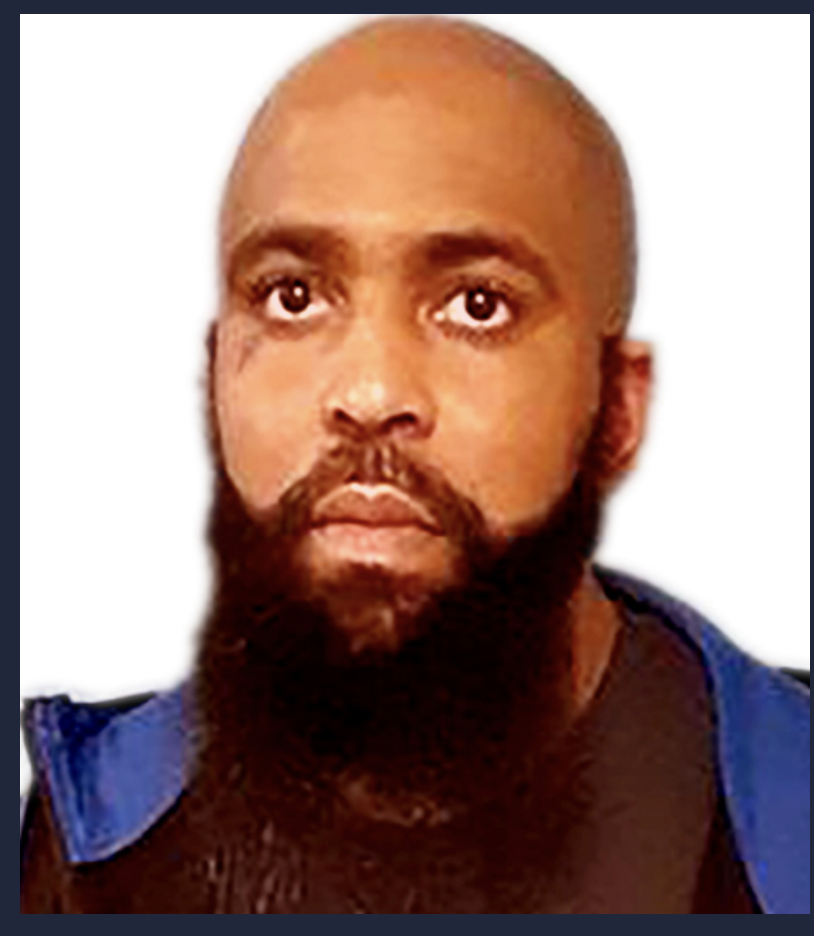
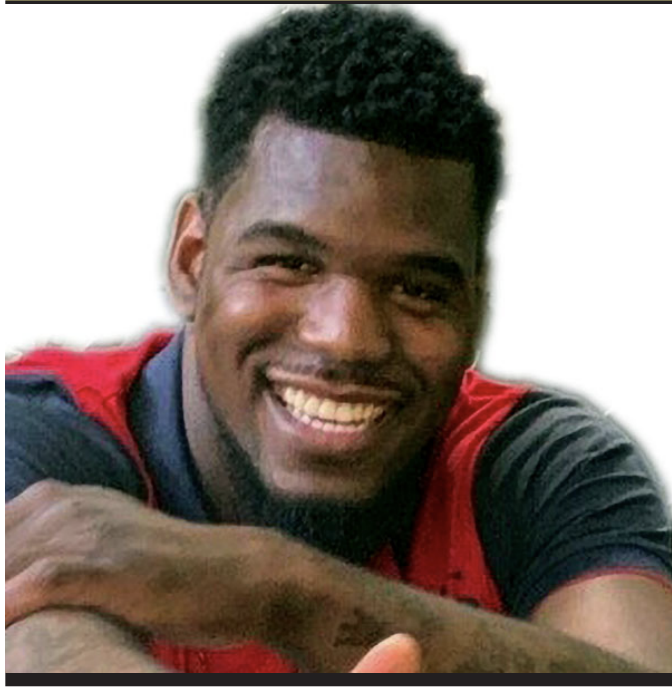
Byron Sneed, 41, is charged with first-degree murder while armed, drive-by or random shooting, for his alleged involvement in the fatal shooting of 18-year-old Raymond Washington on June 30, 2024 on the 4100 block of New Hampshire Avenue, NW. Washington sustained a single gunshot wound to his lower left back that damaged his heart and left lung. 

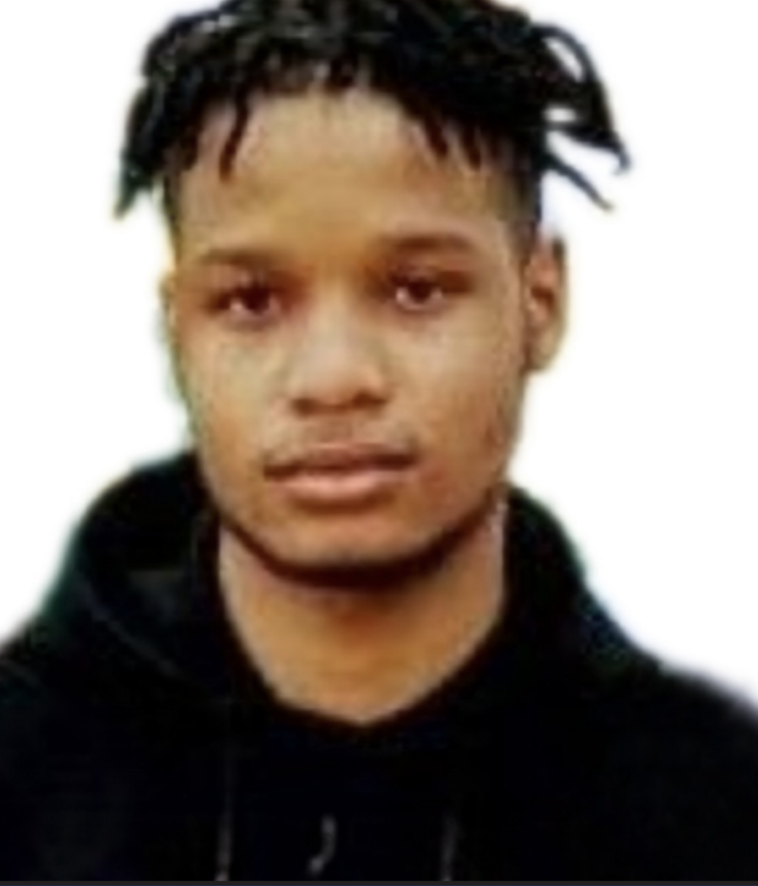
During the hearing, the prosecution alerted Judge Ryan they had extended a plea deal to Sneed and his co-defendant, Treshawn Herndon, 18, which would require Sneed to plead guilty to second-degree murder in exchange for the prosecution dismissing the other charge.

Through the deal, parties would have agreed to a sentence in the middle of the sentencing range. It is unclear what that range would be, as Sneed’s criminal history score was not discussed. 

Erin Scialpi, Sneed’s attorney, alerted the court that he did not want to accept it.  A “wired” plea means all defendants must agree to the terms for the deal to be valid.

Parties also discussed Sneed’s continued hospitalization. Judge Ryan stated he is compliant with all release conditions, and has consistently checked in with the Pretrial Services Agency (PSA). 

“Keep up the good work with your release,” Judge Ryan told Sneed, wishing him well with his recovery. 

Parties are slated to reconvene on Sept. 11. 

Homicide Defendant Claims Ineffective Counsel, Seeks New Trial

In a May 12 hearing, DC Superior Court Judge Michael Ryan established a litigation schedule to determine whether a convicted homicide defendant was the victim of ineffective assistance of counsel in his trial.

Deonte Patterson, 30, was convicted by a jury on March 28, 2025 of first-degree premeditated murder while armed, possession of a firearm during a crime of violence, and obstructing justice for his involvement in the fatal shooting of 32-year-old Ali Jamil Al-Mahdi on Aug. 23, 2021 on the 1800 block of 9th Street, NW. Al-Mahdi died from five gunshot wounds to his arm, chest, and trunk areas.

Following his conviction, Patterson wrote a letter to Judge Ryan, filed on May 30, 2025, that requested an appeal to his conviction as soon as possible and said “My lawyer worked against me the whole trial. Also made several comments saying she was not working hard because she was not getting paid. I also tried to fire her.” 

As a result, Judge Ryan dismissed Patterson’s former attorney, Cheryl Stein, on June 27, 2025, and appointed Destiny Fullwood-Singh to represent him. Fullwood-Singh then filed a motion on Oct. 3, 2025 that argued Stein provided ineffective assistance of counsel (IAC) and asked Judge Ryan to vacate Patterson’s conviction and grant him a new trial.

Fullwood-Singh’s motion states “Stein did not deliver an opening statement, conducted little meaningful cross-examination, had difficulty hearing the proceedings, and called no witnesses” to support Patterson’s self-defense claim. The motion further mentions that according to DC Department of Corrections (DOC) records, Stein did not visit Patterson between July 11, 2024 and March 22, 2025. Patterson’s trial started on March 18, 2025.

At the hearing, parties discussed an order from Judge Ryan on April 30 that granted the prosecution’s request for a limited waiver of attorney-client privilege between Patterson and Stein to allow the prosecution to understand and respond to the issue. 

Judge Ryan emphasized his responsibility to ensure that if he granted a retrial, Patterson would be in the same position as if the trial was error free the first time. As a result, Judge Ryan said if the prosecutor who tried the case the first time is involved in the IAC, she should not be involved in the retrial. A prosecutor from the United States Attorney’s Office (USAO) Special Proceedings Division said the trial prosecutor was assigned to Patterson’s case from the start and planned to remain until the conclusion. 

The special proceedings prosecutor asked whether the assigned prosecutor could be involved in the IAC unless there is privileged material. Judge Ryan emphasized that he could not make an anticipatory or hypothetical ruling without knowing what would occur at the IAC hearing or whether privileged information would arise.

The parties are scheduled to reconvene on July 10.

Homicide Defendant Arraigned, Released in Reopened Case 

A homicide defendant pleaded not guilty and was allowed to remain on release by DC Superior Court Judge Michael Ryan on May 13. 

Darrion Blake, 29, is charged with conspiracy, first-degree murder while armed, robbery while armed, and two counts of possession of a firearm during a crime of violence for his alleged involvement in the fatal shooting of 44-year-old Denard Hartwell on Aug. 18, 2018, on the 4400 block of Livingston Road, SE. 

Blake was previously arrested in connection to the incident in October 2024, but his case was dismissed in July 2025 due to the prosecution’s failure to meet the indictment deadline. 

They have since indicted him and 33-year-old Delonte Samuels. Samuels is currently in the custody of the Bureau of Prisons (BoP) as he serves a sentence for an unrelated murder. Prosecutors are awaiting his transport from BoP to the DC Jail to arraign him. 

During the hearing, Erin Scialpi, Blake’s attorney, alerted the court of his intent to plead not guilty to all charges. She requested he remain on release, stating he has been a productive member of society, is gainfully employed, and has no history of escapes or bench warrants. 

The prosecution objected to the request, stating the allegations are severe, and he should be detained. 

Judge Ryan agreed the allegations are severe, but he stated Blake has demonstrated through his compliance that he is able to abide by the conditions set forth by the court. He ordered Blake to check in with the Pretrial Services Agency (PSA) and report to them as directed. 

He stated Blake won’t be required to be on a GPS monitor, as there are no facts that support an installation. However, he told the parties he’s willing to revisit the requirement if PSA states they need it. 

Parties are slated to reconvene July 15. 

Violence Interrupter’s Alleged Participation in Mass Shooting Was of ‘Small Acts, Big Impact’ 

Prosecutors argued before a jury in DC Superior Court Judge Rainey Brandt’s courtroom that a violence interrupter is guilty by association, participation and intent on May 12. 

Cotey Wynn, 45, is charged with first-degree premeditated murder while armed, three counts of assault with intent to kill while armed, and four counts of possession of a firearm during a crime of violence for his alleged involvement in a mass shooting at CRU Lounge, on the 1300 block of H Street, NE on Sept. 23, 2023. The shooting resulted in the death of 31-year-old Blake Bozeman and injuries to three surviving victims. 

According to prosecutors, Wynn allegedly aided and abetted the shooter by facilitating his entry into the club with the firearm.

The alleged shooter, Frank Johnson, 44, is charged with first-degree murder for his alleged involvement in the same incident. However, parties agreed to not mention his name during the trial, as they want to ensure the trial focuses on Wynn.

During the hearing, the prosecution argued that despite Wynn not being the shooter, he played a instrumental role in the incident. Prosecutors claimed his “small acts,” had a “big impact,” highlighting Bozeman being shot multiple times at point blank range. 

The prosecution deemed Wynn “the King of H Street,” stating he was well known and had a big influence in the area, alleging he often got preferential treatment over others. Video presented by the prosecutors showed Wynn and the shooter exit the lounge, which was manned by security, go to the shooter’s vehicle parked across the street and return to the lounge. 

Prosecutors alleged that with his influence, Wynn was able to persuade security staff not to pat down the shooter, which differs from their typical policy of searching all men. “That’s the kind of influence he had,” the prosecution insisted. 

Surveillance footage further depicted the shooting, during which the patrons in the lounge ducked and dove to the floor. However, prosecutors argued, the only one who didn’t react to the shooting was Wynn, identified as the man wearing a Buffalo Bills jacket in surveillance footage. 

“He knew what was going to happen, and he helped it happen,” prosecutors stated, adding knowingly associating himself in the crime, intending to help the actions of another person succeed, and participating in it make him guilty of all charges. 

Prosecutors insisted the shooting wouldn’t have been possible if it wasn’t for his influence and who Wynn is. “What was supposed to be a fun night out, turned into the worst night ever,” for Bozeman and his friends. 

“The bullets [Wynn] helped get into CRU ended Blake’s life,” the prosecutor stated, highlighting the chaotic scene. According to the prosecution, Wynn was “just standing there,” watching it all unfold. 

“Getting someone past security is a small act, but when that person has a gun, it’s a devastating act,” the prosecutor insisted. “The King of H Street is guilty of all counts,” he said. 

Brian McDaniel, Wynn’s attorney, disagreed, stating “Wynn is innocent.” 

He stated they agree Wynn was at the lounge when everything occurred. However, they don’t agree he was involved in any way. According to McDaniel, there is no way Wynn could have known what was going to happen. 

He questioned the investigation conducted by the Metropolitan Police Department (MPD), stating the lead detective originally believed Wynn had been the one to drive the shooter to the location, which McDaniel argued is shown to be untrue by surveillance footage. 

McDaniel insisted there was no coordination or planning on Wynn’s part, stating there is no evidence that Wynn ever told security to not pat the shooter down as they went back into the club. McDaniel highlighted that surveillance footage shows Wynn return to the spot where he originally was when he and the shooter return to the lounge. 

“Wynn didn’t have anything to do with it,” McDaniel asserted. 

Jurors heard from Bozeman’s mom, who testified Bozeman “is in heaven,” and recalled seeing him and his three kids on the day of his death. 

Bozeman’s mom remembered him as a loving and caring individual, highlighting his work with helping young people become first-time home owners, and mentoring young athletes. 

Prosecutors also called on Bozeman’s two best friends that were with him at the time of his shooting. 

His childhood best friend emotionally testified Bozeman was “my best friend, my brother,” adding “he was a part of me.” 

Both friends testified that they hadn’t originally planned to go to CRU lounge that night, stating they made a “pit stop,” to visit Bozeman’s college friend who managed the bar on their way to another friend’s birthday party. 

They testified their group did not have any disagreements or arguments with anyone at the lounge, but Bozeman’s childhood best friend testified that he felt “bad energy” in the place, and consistently felt and saw a man, who he identified as the man in the Buffalo Bills jacket, “mean mug” the group. McDaniel presented him with the video in the moments leading up to the shooting, in which the witness pointed out multiple times during which he believed Wynn was mean mugging him. 

McDaniel argued the witness was looking away in the video as he pointed it out, but the witness retorted “He was watching us for a while, and I could feel it.” 

The best friends explained that as they were leaving, they heard the first shot, believing it had been hookah falling from the bar, but they later realized it was a shooting when the sounds kept ringing. 

They testified they fell to the ground and crawled out of the bar. Looking for Bozeman, they noticed he was collapsed next to a vehicle on the road. They both stated that was the last time they ever saw him. One of them called Bozeman’s dad to tell him about the shooting.

Prosecutors also called on a police officer, who rendered aid to Bozeman at the scene. He stated he responded to the report of a shooting, and noticed Bozeman on the ground with multiple gunshot wounds. 

According to the officer, he used halo seals, which seal a gunshot wound to slow down bleeding, on the victim’s abdomen and back. He testified he didn’t do CPR because Bozeman was conscious and breathing. He later succumbed to his injuries at MedStar Washington Hospital Center. 

 Another officer testified he responded to the scene and was directed by security to the upstairs area of the lounge, where he located three surviving victims. According to the officer, he asked dispatch for three additional ambulances. 

Due to technological issues, the officer was unable to conclude his testimony.

Parties are slated to reconvene May 13. 

Judge Postpones Severance Decision For Shooting Co-Defendants

DC Superior Court Judge Danya Dayson held rulings on multiple motions in abeyance during a status hearing for three shooting co-defendants on May 1.

Lorenzo Covington, 20, Zion Greely, 19,  Gregory Nelson, 20, are charged with assault with intent to kill while armed, assault with a dangerous weapon, two counts of possession of a firearm during a crime of violence, endangerment with a firearm, unlawful discharge of a firearm, carrying a pistol without a license outside a home or business, possession of an unregistered firearm, unlawful possession of ammunition, and four counts of destroying property less than $1000.

The charges stem from their alleged involvement in a shooting on the 700 block of N Street, NW, on Oct. 14, 2024. While no injuries were reported, gunfire struck three vehicles and the police recovered 27 shell casings from the scene.

During the proceeding, the prosecution said they turned over a compilation video to Judge Dayson that tracks the defendants from the 1300 block of 7th Street, NW, to the shooting location. The prosecution stated the video shows the three men wearing the same clothing seen in the surveillance footage of the incident.

Greely’s attorney, Diana Yu, argued that additional discovery, including phone extractions and Instagram search warrant returns, does not address the central issue for a motion to sever. Yu stated that while six individuals were present in the surveillance and four wore similar clothing, there were only three shooters.

Yu further indicated the defense intends to file a motion to suppress evidence from Greely’s phone extraction, citing significant Fourth Amendment issues regarding illegal searches and seizures.

Nelson’s attorney, David Akulian, presented a motion for reconsideration of release, arguing that Nelson has no prior criminal convictions and was fully compliant with home detention in a previous case. Akulian submitted letters of community support and argued that the burden had shifted to the prosecution to prove that no conditions could ensure safety.

The prosecution opposed the release, noting that Nelson’s request had been denied by two different judges and that he was on release for a gun case when he was arrested for this incident.

Judge Dayson declined to rule on the release or the motion to sever until all defense counsel had the opportunity to review the prosecution’s compilation video. Judge Dayson noted that the weight of the evidence is a factor in determining release conditions.

Covington’s attorneys, Karen Minor and Errin Scialpi, stated they would wait until the close of discovery to file their own motion to sever.

Parties are slated to reconvene for a status hearing on June 5.

Jury Convicts Vehicular Homicide Defendant on All Charges

A jury found a homicide defendant guilty on all counts that stemmed from a fatal vehicle crash before DC Superior Court Judge Rainey Brandt on May 6.

Spiro Stafilatos, 35, is charged with second-degree murder, aggravated assault knowingly grave risk while armed, and fleeing a law enforcement officer for his involvement in a vehicle crash on Dec. 30, 2022 at the intersection of 14th Street and New York Avenue, NW that resulted in the death of 31-year-old Shuyu (Sophie) Sui, and critically injured another pedestrian, Sui’s wife. 

After less than two days of deliberations, the jury found Stafilatos guilty of all three charges.

In the trial that started on April 28, prosecutors argued that Stafilatos consciously disregarded public safety by speeding through the intersection despite cross traffic and multiple red lights, causing Sui’s death. 

Stafilatos’ attorney, Brian McDaniel, argued that the incident unfolded in three seconds, and that Stafilatos–whose post-traumatic stress disorder (PTSD) was confirmed by psychologists from both side–did not intend to harm anyone and believed he could drive through the gap in traffic without injuring anyone.

The prosecution also argued that Stafilatos’ vehicle acted as a dangerous weapon through its misuse, and that the injuries sustained by the survivor would have proved fatal without surgery, satisfied the threshold for serious bodily injury. 

McDaniel argued that Stafilatos had no control over his vehicle after it was clipped by another car, causing his vehicle to spin into the victims.

The prosecutors argued that law enforcement signals were clear, and that Stafilatos voluntarily and recklessly sped away, with inevitable consequences. 

McDaniel argued that Stafilatos fled because his PTSD caused him to genuinely believe the officers were about to shoot him.

Parties are slated to reconvene on June 25 for sentencing. 

Robbery Gone Wrong Suspect Gets Partially Suspended Sentence

DC Superior Court Judge Todd Edelman imposed a partially suspended sentence for a shooting defendant on May 6. 

On Oct. 17, 2025, Christ Tchakounte, 21, pleaded guilty to aggravated assault knowingly while armed and possession of a firearm during a crime of violence for his involvement in a non-fatal shooting that occurred on Jan. 19, 2024, at the intersection of 16th and A Streets, SE. A juvenile sustained injuries, including to his head. 

Through the deal, parties agreed to a sentencing of up to 84 months of imprisonment. 

Prosecutors presented an Instagram direct message sent by Tchakounte’s account two days before the shooting, in which he stated “just bagged a [n-word] for his moose with no stick.” According to the prosecutor, stick is slang for gun, and a Moose jacket that retails for more than 1,000 dollars. 

According to the prosecution, the victim had been walking home after shoveling snow with his friends when Tchakounte approached him, became violent and shot him multiple times. An eyewitness allegedly told officers that the gunman, who was wearing a Moose jacket, had also pointed the gun at the victim as he emptied out the victim’s pockets. 

The prosecution requested Tchakounte be sentenced to 84 months for each charge, and did not oppose the sentences to run concurrently. However, they did oppose a sentence under the Youth Rehabilitation Act (YRA), which would allow the defendant’s sentence to be sealed if he successfully completes all sentencing requirements. 

“There’s no legal justification for his actions,” the prosecutor insisted, adding, “The victim is lucky to be alive.” 

Rachel Cicurel, Tchakounte’s attorney, stated this was his first time in the system, and has taken every chance he can to participate in programs at the DC Jail in the last 28 months. 

Cicurel argued Tchakounte wanted to take responsibility from the very beginning, but the prosecutor who first took on the case provided a plea deal that would have been unconstitutional and would put her at risk of being disbarred had she advised him to accept it. 

“He wasn’t trying to shoot or hurt a person,” Cicurel argued, stating “This wasn’t a roll up and shoot someone… He’s not someone who just had a firearm.”

She highlighted Tchakounte’s remorse, stating he told a pre-sentence report writer “I was an idiot.” 

“He consistently prays for the victim because he felt deeply horrible,” Cicurel stated. 

According to Cicurel, Tchakounte wanted two things, “Take responsibility and apologize.”

She requested Judge Edelman sentence him to 60 months, all suspended, under the YRA, arguing it was created for people “we shouldn’t give up on yet… people like Christ.”

“If Christ isn’t the poster child for the Youth Act, I don’t know who is,” Cicurel insisted. “He has the capacity for rehabilitation.” 

Tchakounte apologized to the victim and his own family in court, stating he takes full responsibility for his actions. He added he can’t repay the harm he caused, but requested a second chance. 

“This was a serious act of violence that punishment is needed for,” Judge Edelman stated. However, he highlighted Tchakounte’s ample certificates of completion from programs at the jail, for which multiple mentors stated he had been a dedicated kid. 

Judge Edelman imposed an 84 month sentence for both charges, with 48 months suspended, under the YRA, with credit for time served. He must also serve two years of probation. 

Tchakounte was ordered to participate in 90 hours of community service, vocational training, and have no contact with the victim. He must also pay $200 to the Victims of Violent Crimes Fund (VVCF). 

Judge Edelman also agreed to recommend he be placed in the Bureau of Prisons (BoP) block at the Correctional Treatment Facility (CTF) at the DC Jail for the remainder of his incarceration. 

Parties are slated to reconvene when Tchakounte is released for probation later this year.

Bus Stabbing Suspect Released but Who Was the Aggressor?

Questioning who was the actual aggressor in a stabbing on a city bus, DC Superior Court Judge Carmen McLean conditionally released a defendant in a hearing on May 5. 

Troy Ivy, 56, is charged with assault with a dangerous weapon for his alleged involvement in a non-fatal stabbing that occurred on April 14 on a Metro bus at the intersection of H and 2nd Streets, NE. The victim sustained a stab wound to his upper shoulder. 

According to court records, the victim and Ivy allegedly got into an argument after the victim accidentally bumped into Ivy on the bus. Ivy reportedly retrieved a knife from his pocket and waved it in the victim’s face, 

However, surveillance video suggests another interpretation of the incident.  Ivy is heard to say, “I have one too,” indicating the victim might also have been armed with a knife.  He is seen lunging toward Ivy. While it’s unclear whether the victim had a weapon, the prosecution opposed Ivy’s release.

“It does appear the victim was acting aggressively,” said Judge McLean after reviewing the video.  “However, I’m concerned that anyone would pull out a knife,” she continued.  

Meanwhile, the prosecutor entered a plea agreement for Ivy on the record.  Though the details weren’t immediately available, the range would be in the lower part of the guidelines.

“The moment you don’t appear in court or [if there’s a question of] safety. I will increase the level of supervision,” the judge told Ivy.

The maximum penalty for assault with a dangerous weapon is 10 years in prison and/or a fine of up to $25,000.

Judge McLean wanted to know if the prosecutor intended to bring charges against the victim. The prosecutor said the victim may be the subject of another case. 

The next hearing in Ivy’s case is June 10.

Stabbing Defendant Sentenced to 24 Months After Missing Intended Target

A woman attempting to stab her intended victim but wound up striking a good Samaritan who was trying to intervene was sentenced on  May 11 by DC Superior Court Judge Andrea Hertzfeld.

Tara Bellinger, 40, was convicted with assault with a dangerous weapon and misdemeanor assault on a police officer for her part in  a confrontation on the unit block of Forrester Street, SW.  In an agreement with the prosecutor, she pleaded guilty on March 5.

During the sentencing the prosecutor reviewed the sequence of events that led to Bellinger’s arrest. He said she showed up at the intended victim’s residence and started swinging a knife at her as soon as the door was opened. In the ensuing commotion a bystander tried to intervene and was cut in the hand. 

The prosecutor called Bellinger’s behavior “incredibly concerning” in that she just missed stabbing the second victim in the head. In addition, when officers from the Metropolitan Police Department (MPD) arrived, Bellinger began stomping and spat at the police.  

Given the nature of the offense, the prosecutor asked Judge Hertzfeld to impose a  24-month sentence for the assault with a dangerous weapons charge and 30 days for assaulting a police officer.

Further, the prosecutor said Bellinger was convicted in a PCP case and was the subject of three bench warrants.   

In response, defense attorney Matthew Hertz described Bellinger as “reflective, apologetic and polite.”  He characterized the episode as “a really bad night. It started bad; it ended bad.” 

He indicated that her son was monitoring the proceeding and Bellinger had family in the courtroom.  Hertz argued for a “short split sentence,” that would emphasize rehabilitation over incarceration.

“I’m sorry and apologetic for what happened,” Belllinger said. “I’m not the type of person who would make the same mistake twice.”  In addition, she wrote a letter expressing her remorse to Judge Hertzfeld.

The judge said she was impressed that Bellinger was apparently doing well in jail and appreciated the letter.

Still, she said, “The prosecutor was right.  It was an incredibly dangerous situation.  You could have killed someone.” 

The judge sentenced Bellinger to 24 months on the assault with a dangerous weapons charge with 12 months suspended.  For assault on a police officer Bellinger will get 30 days jail time consecutive to the other charges minus credit for time served. 

In addition, she must pay $250 to the Victims of Violent Crimes Fund and serve three years of supervised release. The judge also imposed a stay away order from the victims.

No further hearings are scheduled in the case. 

Judge Defers Ruling to Dismiss Indictment

DC Superior Court Judge Danya Dayson deferred a ruling on a defense motion to dismiss an indictment during a status hearing on May 1. 

Andrew A. Black, 53, is charged with assault with intent to kill while armed, aggravated assault knowingly while armed, assault with a dangerous weapon, three counts of possession of a firearm during a crime of violence, unlawful possession of a firearm by a convict, carrying a pistol without a license, possession of an unregistered firearm, and unlawful possession of ammunition. The charges stem from his alleged involvement in a non-fatal shooting on Sept. 9, 2023, on the 4600 block of Connecticut Avenue, NW.

According to court documents, a victim was shot in the abdomen and required multiple surgeries, including the removal of his gallbladder, spleen, and parts of his pancreas and intestines.

Darryl Daniels, Black’s former defense attorney, filed a motion to dismiss the indictment on June 16, 2025. The request asserts that the court lacks jurisdiction because the indictment fails to state an offense and is unconstitutionally vague. Daniels argued that the indictment is “multiplicitous,” specifically claiming the prosecution improperly charged three separate assault-based offenses for the same act.

The defense further contended that the District of Columbia’s assault statute is void for vagueness and that the prosecution unconstitutionally stacked multiple sentencing enhancements.

The prosecution responded on Oct. 21, 2025. Judge Dayson noted during the May 1 hearing that while she has reviewed the motion and is prepared to rule, the morning schedule was “a little bit heavy” to deliver the lengthy findings.

Stephen LoGerfo, Black’s current defense attorney, agreed to defer the ruling to the next hearing, noting that the defense plans to file additional motions. Judge Dayson indicated the ruling would not disrupt progress toward the Aug. 28 trial readiness date.

The prosecutor expects to meet the May 12 deadline for notice of experts expected to testify. When asked if the prosecution would meet the date, they said, “at this time? We do. Your honor.”
Parties are slated to reconvene on Aug. 28.

Judge Rules Police Misidentification of Mass Shooter is Irrelevant in Trial of Alleged Accomplice

DC Superior Court Judge Rainey Brandt ruled on May 5 that the defense cannot mention police misidentification of a mass shooter in the trial of a defendant charged with aiding and abetting the incident.

Cotey Wynn, 45, is charged with first-degree premeditated murder while armed, three counts of assault with intent to kill while armed, and four counts of possession of a firearm during a crime of violence for his alleged involvement in a mass shooting at CRU Lounge, on the 1300 block of H Street, NE on Sept. 23, 2023. The shooting resulted in the death of 31-year-old Blake Bozeman and injuries to three surviving victims. 

According to prosecutors, Wynn allegedly aided and abetted the shooter by facilitating his entry into the club with the firearm.

The alleged shooter, Frank Johnson, 44, is charged with first-degree murder for his alleged involvement in the same incident. 

The prosecution previously alleged the shooter was Antwan Shelton, 42, who was arrested on March 21, 2025 and charged with first-degree murder while armed. However, a month after his arrest, the prosecution dismissed the case against Shelton.

A motion filed by the prosecution on May 2, asked Judge Brandt to not allow the defense to mention the misidentification of Shelton as the co-defendant during Wynn’s trial. The prosecution’s motion states the defense intended to inform the jury that police mistakenly arrested Shelton and he spent time in jail as a result. 

In court, the prosecution argued that evidence of a co-defendant who no longer faces charges is not relevant to Wynn’s trial. There was no misidentification of Wynn, noted prosecutors, and the defense will confuse the jury with an irrelevant issue.

Wynn’s attorney, Randy McDonald argued Wynn has a fundamental right to challenge the detective’s investigation and argue the jury should not believe him because of his mistake. 

Judge Brandt acknowledged Wynn’s right to challenge the police investigation but said it would be a stretch that it would violate his rights for her to grant the motion that concerns the misidentification of another suspect.

In Wynn’s trial, Judge Brandt said the jury must determine whether Wynn was complicit and aided and abetted the shooter regardless of his identity.

The misidentification of the shooter would be highly probative in Johnson’s trial, but had little value in Wynn’s, said Judge Brandt. “Mr. Akulian would have a field day with that with the jury” and “he’d have a right to have that field day,” said Judge Brandt about David Akulian who represents Johnson. 

Wynn is not accused as the shooter, therefore the misidentification has no relevance in his trial, determined Judge Brandt and she granted the prosecution’s motion.

Wynn’s other attorney, Brian McDaniel, then noted that Wynn’s original arrest warrant mentioned phone records between Shelton and Wynn around the time of the shooting. Now, McDaniel said the prosecution planned to ask the jury to infer communication between Wynn and Johnson related to the shooting. McDaniel said the defense should be able to argue that because prosecutors were wrong about Wynn conspiring with Shelton, they are also wrong that he conspired with Johnson.

The prosecutor said they won’t present evidence of communication between Johnson and Wynn because it does not exist. 

Judge Brandt affirmed her ruling and said “We’re going to be reasonable minds and disagree on that point.”

The parties are scheduled to reconvene on May 11 for jury selection.

Judge Transfers Infanticide Defendant to Halfway House

DC Superior Court Judge Todd Edelman denied the defense’s request for an infanticide defendant to be released to home confinement, ordering she be transferred to a halfway house on May 6. 

Christen Borden, 37, is charged with felony murder and first-degree cruelty to children for her alleged involvement in the death of her son, five-month-old Kenneth Walton, on Feb. 11, 2023 at the 4000 block of Massachusetts Avenue, NW. Walton died from multiple blunt force injuries to the head.

During the hearing, the prosecutor stated they opposed the defense’s motion for release, stating Borden was recently charged with a bail reform act charge, for allegedly willfully failing to appear in court and compliance violations during the release.

According to the prosecutor, the conditions set by the court have not deterred Borden in the past, and there are no conditions she will follow, which they argued was evident by more than a year of non-compliance by the defendant. 

Megan Allburn, Borden’s attorney, stated Borden has been battling a severe addiction, has completed a 120-day in-person drug treatment program while at the Department of Corrections (DoC), and has experienced a moment of clarity. 

Allburn argued Borden understands the gravity of an escape charge, should she fail to follow conditions of release, and is looking to be a productive person. 

Allburn also stated Borden has lacked the discipline in the past to move forward, but her certificate of completion shows she has been, and can continue to be, successful. 

Judge Edelman agreed to transfer Borden to a halfway house, while still in custody of the DoC. There, Borden will be required to be monitored by GPS, and must continue to undergo treatment and drug testing. “It is an extremely structured program,” according to Judge Edelman. 

“This is not release, this is custody,” Judge Edelman stated. He argued the alleged crime is “horrific,” but it doesn’t show risk for anyone else in the community. 

Parties are slated to reconvene June 5. 

Judge Ends Probation For Stabbing Defendant Struggling With Addiction

DC Superior Court Judge Rainey Brandt terminated an unsuccessful probation for a stabbing defendant struggling with addiction during a hearing on April 29. 

William Johnson, 42, was sentenced on May 13, 2022 to 66 months in prison, all but 48 suspended, followed by two years of probation for assault with intent to kill. The charge stemmed from his involvement in a domestic violence related stabbing on Dec. 23, 2021, on the 2700 block of Langston Place, SE. The victim, Johnson’s younger brother, sustained a stab wound to his chest and arm.

Johnson was not present in court for the proceedings. His attorney, Wole Falodun informed Judge Brandt that Johnson called him that morning to advise he was at the Psychiatric Institute of Washington (PIW). Falodun noted that Johnson often seeks care at PIW when he is in “crisis mode.” 

Since his release from prison, Judge Brandt noted Johnson has had a serious alcohol problem. A community supervision officer (CSO) from the Court Services and Offender Supervision Agency (CSOSA), reported that although Johnson began an outpatient program on March 30, he tested positive for cocaine on April 3, and had consistent positive tests for alcohol through April 24.

The prosecution argued against terminating Johnson’s probation as unsuccessful, suggesting that additional prison time might serve as the “rock bottom” needed for his sobriety. Falodun countered that Johnson has not incurred any new criminal charges since his release.

Although she had that option, Judge Brandt expressed reluctance to send a defendant back to prison solely for addiction issues. “I can’t help someone who does not want to help themselves,” she said.

“I think it’s time for me to let this little bird fly and see what is going to happen,” Judge Brandt added. 

No further dates were scheduled.

\

Parties Debate Whether Fatal Pedestrian Crash Was Second-Degree Murder in Closing Arguments

The parties disputed whether a fatal pedestrian crash constituted second-degree murder in a homicide trial before DC Superior Court Judge Rainey Brandt on May 5. 

Spiro Stafilatos, 35, is charged with second-degree murder, aggravated assault knowingly grave risk while armed, and fleeing a law enforcement officer for his alleged involvement in a fatal car crash on Dec. 30, 2022 at the intersection of 14th Street and New York Avenue, NW. The incident caused the death of 31-year-old Shuyu Sui, and critically injured another pedestrian, Sui’s wife. 

The prosecution asked jurors to consider the difference between an accident and a crime. They argued that Stafilatos was looking for a way out at every turn, emphasizing his choices versus specific intent to kill. They noted that the focus of the case was on his disregard for public safety, not on premeditation.

The prosecution pointed to Stafilatos’s four prior convictions, including two DUIs and a hit-and-run, as evidence that he understood the danger of impaired driving. They argued his varying accounts of when he consumed cocaine were undermined by toxicology showing it was in his system, and that his decision to enter the intersection despite cross traffic demonstrated conscious disregard. The prosecution further contended that his lack of a valid license, which predated the traffic stop, was itself evidence of knowing disregard.

The prosecution also argued, regarding Stafilatos’ post-traumatic stress disorder (PTSD), that triggering must be measured against a reasonable person standard, not a reasonable person with PTSD. They noted that while both the expert clinical psychologist witnesses agreed on the diagnosis, they disagreed on how and when it manifested, and cautioned jurors they were not required to defer to expert opinion. 

Stafilatos says he suffered PTSD as a result of a beating he sustained from police while he was in custody in Montgomery County, Maryland which left him in fear of the authorities.

The prosecutors alleged there were several inconsistencies in Stafilatos’ testimony, including claims about his ability to see pedestrians, his suicide attempts, and what he had to drink. They encouraged jurors to use their common sense in evaluating his credibility.

Continuing the prosecution addressed each charge in turn, arguing that a car can act as a dangerous weapon through its misuse, and that Stafilatos’ injuries to Sui’s wife, who would not have survived without surgery, satisfied the threshold for serious bodilyy injury. Regarding the fleeing charge, they argued that law enforcement signals were clear, that Stafilatos sped away voluntarily and recklessly and that driving his vehicle into traffic made death inevitable. 

The prosecutors displayed a photo of the victims and asked jurors to hold Stafilatos accountable for the expected consequences of his choices.They closed by reminding jurors that driving is a privilege, not a right, and asked them not to give him a way out. 

In his closing argument, Stafilatos’ attorney, Brian McDaniel asked jurors to consider the context of the incident. He emphasized that Stafilatos’s PTSD diagnosis was not self-reported, it was confirmed by two paid experts from both sides who agreed, which he described as unusual. McDaniel noted that records showed Stafilatos was still in fear of law enforcement as recently as Dec. 21, 2022, just eight-to-nine days before the incident, and that his continued medication further corroborated the diagnosis.

McDaniel argued that the prosecution overcharged Stafilatos, contending that the evidence supported vehicular negligent homicide, not second-degree murder. He questioned why if the prosecution was sure about the cocaine in Stafilatos’ system, Stafilatos was not charged with a DUI. McDaniel concluded the prosecution was simply out to charge someone for the sad nature of the case at hand. 

He also told jurors that the car accident unfolded in three seconds, and that it was unfair to analyze the video footage in a sterile courtroom environment rather than from Stafilatos’ perspective at the time. McDaniel asked jurors to consider Stafilatos’ mindset that he could make the gap in traffic and that, had he done so, no one would have died. McDaniel cited this as evidence that Stafilatos did not have an intent to kill.

Regarding the PTSD defense, McDaniel argued that its effects on Stafilatos’ thinking were uncontested, and that the prosecutor’s own expert acknowledged in her own words that PTSD can produce a “startled response.” He contended that the officer’s hand movements during the traffic stop led Stafilatos to believe he was about to be killed, and that his subsequent actions were not a normal response, and Stafilatos was not a normal person. 

McDaniel also reminded jurors that Stafilatos was confronted with all of his prior convictions openly, that many predated his diagnosis, and that the 2009 incident the prosecution relied on was not independently recalled by the officer who testified about it.

McDaniel argued that, even if jurors believed Stafilatos bore some responsibility, the question was not guilt in the abstract but whether the evidence proved the specific charges beyond a reasonable doubt, and that the answer was no.

In the prosecution’s rebuttal, they pushed back on McDaniel’s reading of the law, arguing he cited two legal doctrines as one. They contended that the video of Stafilatos’ leaving the scene was the best evidence of calm, deliberate planning, not a PTSD episode. Prosecutors told jurors that the case came down to credibility, asked them to review the footage, and argued that a finding of guilt on second-degree murder was supported by the evidence.

Judge Brandt then excused the jurors to begin deliberation and parties will reconvene when the jury reaches a verdict. 

Homicide Defendant Accepts Plea Deal Following Mistrial

A homicide defendant accepted a plea deal extended by prosecutors before DC Superior Court Judge Todd Edelman on May 6. 

Jakiem Miller, 28, was originally charged with first-degree premeditated murder while armed, two counts of assault with intent to kill while armed, aggravated assault knowingly while armed, assault with a dangerous weapon while armed, five counts of possession of a firearm during a crime of violence, unlawful possession of a firearm with prior crime of violence, and obstructing justice for his involvement in the fatal shooting of 30-year-old Avon Perkins on the 2400 block of 18th Street, NW, on Dec. 17, 2022. A woman sustained injuries during the incident, but survived. 

On Feb. 13, Judge Edelman granted the defendant’s motion for a mistrial due to a defense attorney’s personal emergency. 

During the hearing, Megan Allburn alerted Judge Edelman of Miller’s intent to accept an agreement which required him to plead guilty to voluntary manslaughter while armed and assault with a dangerous weapon in exchange for a dismissal of all other charges. 

According to the prosecution, had they re-tried the case, they would have proven beyond a reasonable doubt that after an incident at a bar, Miller and Perkins got into a discussion on the street, during which Perkins punched Miller on the face. As Perkins attempted to leave the area, Miller shot at him multiple times, striking him twice, and injuring the woman who was leaving a pizza shop next door. 

The prosecution argued Miller did not act in self-defense, and had no legal justification for his actions. 

Parties are slated to reconvene July 10.