After searching for a murder suspect for three weeks, the Metropolitan Police Department arrested a man they believe is connected to a homicide that occurred in April.
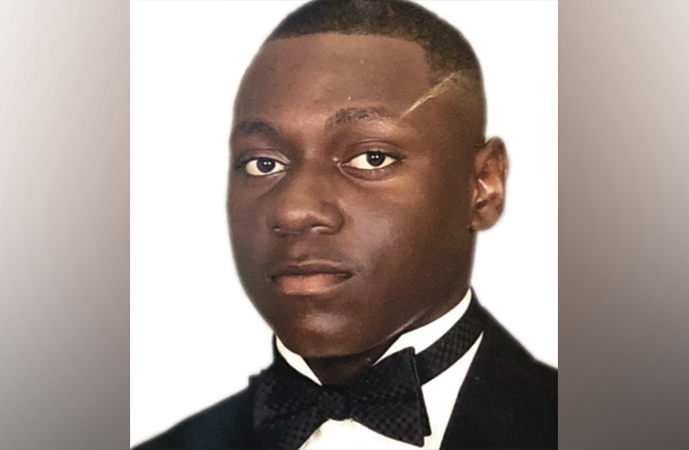
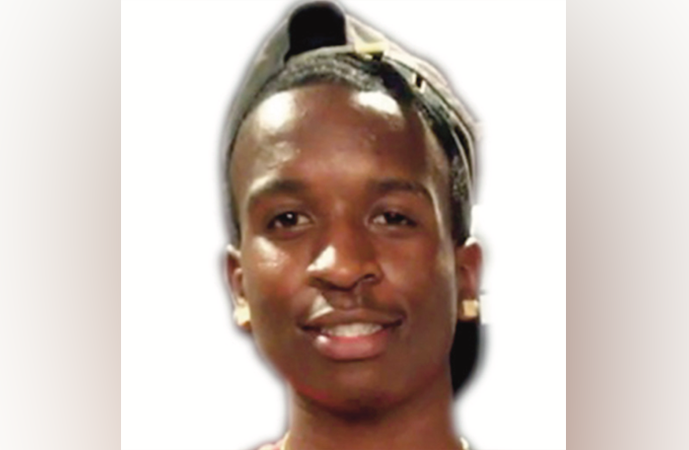
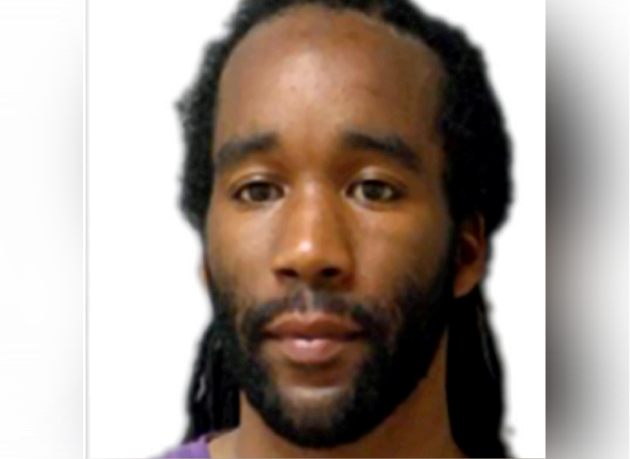
According to a press release, 20 year-old Keonte Johnson was apprehended and charged with first-degree murder while armed (felony murder) on May 15. Johnson allegedly shot 24 year-old Deandre Hawkins on the 5300 block of E Street, SE on April 22.
An arrest warrant, initially issued for Johnson on April 24, was closed on May 16, according to DC Courts. Johnson was also assigned a lockup number number and is scheduled to appear in court on May 16 as well.
During a trial readiness hearing May 15, the prosecution argued to continue a murder trial by at least six months because their eyewitness is unfit to testify.
Dewayne Chatman, 32, is charged with first-degree murder while armed and mayhem while armed, among other charges, for his alleged role in the death of 29-year-oldEvan Williams on the 4000 Block of 3rd Street, SE in 2016. Chatman’s trial was initially scheduled to begin on May 13.
The prosecution said the man who was shot during Williams’ murder would be called as a witness. Apparently, the man was shot in the head.
The prosecutor said the man’s doctor said the man has had multiple brain surgeries and needs a 6-12 month recovery period.
The prosecutor said the witness’ most recent surgery was merely a month and a half ago and that he is experiencing long term and short term memory loss. The prosecutor also said the witness has difficulty understanding questions and trouble focusing. Apparently, the witness also becomes agitated and struggles to sit still.
The prosecution also told DC Superior Court Judge Danya Dayson that they are not prepared to decide whether or not they are going to call the witness given the uncertainty of his condition.
In response, the defense argued against the continuance, saying the witness will “never” be competent to stand trial.
Defense attorney Dominique Winters, who also spoke with the witness’s doctor, said the witness has had the same issues dating back to 2016, when the murder occurred. Winters said it’s unclear whether the witness’s “agitation” is a result of the surgeries or from the fact that he’s self-medicating with alcohol and “street drugs.”
Winters said the witness always had long term and short term memory problems and that the issue has only gotten worse over time. She also said that the prosecution was “leaning toward” not calling him as a witness for multiple reasons, including the fact that the witness was intoxicated at the time of the murder, he has long term memory issues and his repeated conflicting testimony.
Judge Dayson said she needs to speak with the witness’ doctor before deciding whether or not to continue the trial. The trial readiness hearing is scheduled to continue on May 16, when she is expected to make a ruling.
During a motions hearing May 15, a DC Superior Court judge granted a murder defendant’s request to withdraw his guilty plea.
In September,Alton Rivers pleaded guilty to voluntary manslaughter for his role in the death of 68-year-old Anthony Anderson on the 3600 block of 14th Street, NW on July 27, 2018.
Judge Judith Bartnoff said she granted the motion because of the “factual disputes” in the case. She noted that Rivers’ alleges Anderson was the initial aggressor and that he swung first. She also said the prosecution’s version of the events was unclear about who the initial aggressor was and whether or not Rivers was defending himself.
According to Judge Bartnoff, Rivers’ previous defense attorney knew he was hesitant with pleading guilty. Judge Bartnoff said she also noticed his “uneasiness” and noted that when he accepted the plea agreement he made statements about acting in self-defense. She said Rivers’ pre-sentencing report also raised questions about his guilt.
Rivers’ previous defense attorney, Madalyn Harvey, motioned to withdraw from the case two days before he his Dec. 8 sentencing. Defense attorney Lisbeth Sapirstein was appointed on Jan. 8, DC Courts states.
In response, the prosecutor said witnesses saw the confrontation between Rivers and Anderson and support their assertion that Rivers is responsible for Anderson’s murder.
According to court documents, Rivers told police that Anderson initiated the confrontation, began jumping around and put his hands behind his back. He said he believed Anderson was reaching for a weapon, so he pulled a screwdriver out of his pocket and stabbed Anderson once.
A witness told police Rivers pulled out what appeared to be a knife and repeatedly stabbed Anderson in the chest, the documents state.
During the hearing, Sapirstein also spoke with Judge Bartnoff at the bench about Rivers’ competency. Judge Bartnoff ordered Rivers to undergo a preliminary competency screening and scheduled a mental observation hearing on May 17.
Nearly two weeks into February, the mother of a 16-year-old murder victim stood before a crowded courtroom inside the H. Carl Moultrie Courthouse and reminisced about her daughter. She told the court that the system failed her for a range of reasons, including when it allowed the person responsible for her daughter’s death to be placed in a juvenile facility.
Dekale BowmanTaiyania Thompson
In February, Dekale Bowman, 19, pleaded guilty and was sentenced to nearly 10 years in prison for shooting his 16-year-old girlfriend, Taiyania Thompson in January of 2018.
“Bowman is a threat to himself and society,” Thompson’s mother said.
Pursuant to the Comprehensive Youth Justice Amendment Act of 2016, under Chapter 23 of Title 16 of the Code of the District of Columbia, DC Jail transferred all Title 16 youth or youth age 16 or older who were charged as adults to juvenile facilities. The mandate went into effect on Oct. 1, 2018.
The regulation shift is part of a nationwide reform to comply with the Juvenile Justice Reform Act of 2018, according to Marcy Mistrett, chief executive officer of Campaign for Youth, a nation-wide initiative that advocates to end youths being charged, sentenced and incarcerated as adults.
The policy, enacted on Dec. 21, mandates that states place juveniles charged as adults in juvenile facilities. While the country has three years to comply with the statute, Mistrett said multiple states have already implemented the change or have such legislation pending.
One of the purposes of the legislation is to “reauthorize and improve” the Juvenile Justice and Delinquency Prevention Act of 1974, which sought to “prevent delinquency and improve the juvenile justice system,” as stated by the U.S. Department of Justice.
Bowman, who was 18 years old at the time of his arrest, was transferred to New Beginnings, a Maryland based juvenile facility, prior to the legislation’s implementation in March of 2018 after his attorney made arguments that weren’t disclosed in open court.
Two months later, in May, Bowman was transferred back to DC Jail. D.C. Witness previously reported that a prosecutor said Bowman got into an altercation with a juvenile at New Beginnings and broke the juvenile’s jaw.
Between January of 2019 and April of 2019, one juvenile suspect was arrested and charged in connection to a DC homicide.
According to D.C. Witness data, there were 15 defendants who were arrested when they were 17 or younger between Jan. 1, 2018, and April 30 in connection to a DC homicide. Pursuant to recent legislation, the Department of Youth Services (DYRS) has custody of 12 of the 15 defendants.
Of the 12 who are in DYRS custody, nine are charged as adults. The remaining three juvenile defendants, who are not charged as adults, are being tried in family court.
Of the three defendants who are not being held in DYRS, Elijah Jarmon, who turned 18 in October, was removed from New Beginnings and placed at DC Jail. In February, D.C. Witness previously reported that Judge Danya Dayson said the law was clear and ordered Jarmon’s removal from the juvenile facility because he aged out of the system. Jarmon is charged with first-degree murder while armed for his alleged role in the death of 18-year-old Taquan Pinkney on the 2800 block of Stanton Road, SE in 2018.
Another defendant, Shelby Jones, who is being held in DC Jail was arrested when he was 17 years old, prior to the legislation change in April of 2018. Jones, who turned 18 in July of 2018, has remained in DC Jail throughout the entirety of his case.
The remaining juvenile who is not placed in DYRS custody was released under the high intensity supervision program (HISP).
According to Akeyah Dickson, DYRS public information officer, juveniles within DYRS custody are placed in one of two facilities, including New Beginnings, a Maryland-based juvenile facility that opened in May 2009, or the Youth Services Center (YSC), a juvenile facility and alternative school based in Northeast DC. According to YSC personnel, the facility has been open since the 1950s; however, D.C. Witness was not able to confirm the date with DYRS.
While DC Courts does not disclose the location of juveniles for security concerns, among other reasons, D.C. Witness data shows that multiple defense attorneys have argued, in open court, for their client to be placed in the New Beginnings facility. As stated in DC Courts, a defense attorney on behalf of Titus Iracks, 17, requested that his client be placed in DYRS in July of 2018.
According to D.C. Witness data, three of the juveniles who are charged as adults, who are currently being housed at DYRS, even though they have surpassed their 18th birthday. Meanwhile, following his 18th birthday, Jarmon was transferred from DYRS custody to DC Jail.
When asked to comment on the inconsistency of placing defendants in DC Jail after their 18th birthdays, the United States Attorney’s Office of the District of the Columbia declined. Furthermore, the Public Defender Service declined to comment on whether or not they’ve noticed a trend.
When faced with the inconsistency, Mistrett said it’s likely the prosecutors think the charges will lead to dismissal or amount to a sentence of time served. She said it’s also possible the prosecution didn’t realize the juvenile turned 18.
D.C. Witness reached out to the Department of Youth Rehabilitation Services (DYRS) to inquire about incidents rates for youth held at New Beginnings. D.C. Witness also inquired about the training provided to staff so they could better serve the incoming Title 16 population. As of April 30, DYRS has not responded to the inquiries.
However, according to a May 2018 DC Council Committee Budget Report, DYRS employees have said they were apprehensive that DYRS had not “fully prepared” them for the incoming Title 16 youth. The report made a point to note that the security staff had concerns.
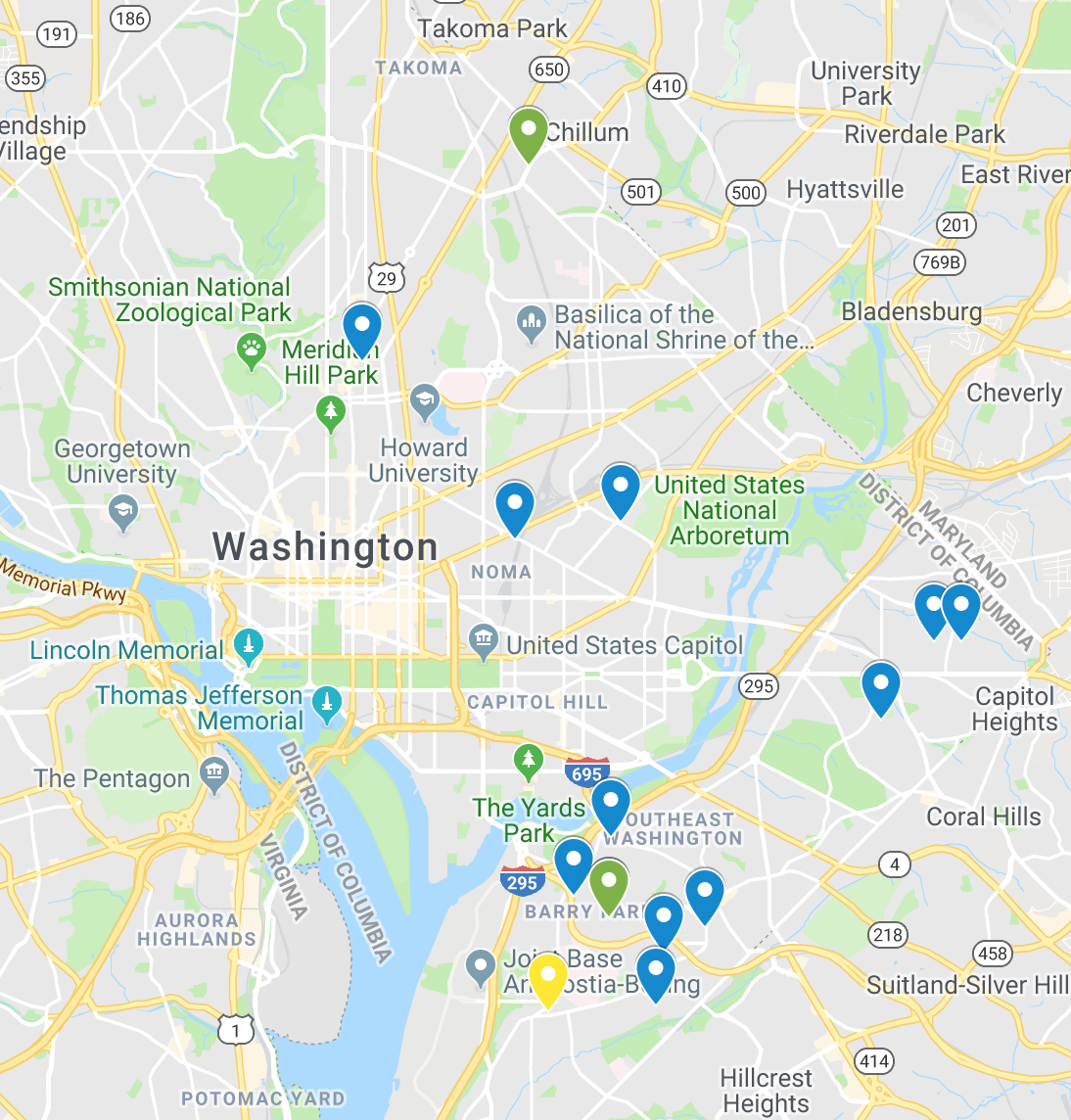
The map above pinpoints the location of the homicides that DC juveniles have been arrested charged in between Jan. 1, 2018 and April 30.
The report also states that staff believed there was a lack of communication from superiors concerning where Title 16 youth were going to be placed and whether they would be able to “intermingle” with the general population at New Beginnings.
According to the report, which was issued on May 3, 2018, DC Councilmember and chairperson of the Committee on Human Services Brianne Nadeau concluded that the committee was “concerned that not all staff members feel fully prepared to receive Title 16 Youth.”
The report also notes the DYRS staff began targeted training to “ensure they are able to securely manage and address the perception that Title 16 youth are more dangerous or physically aggressive than the current population of youth that they manage.”
Between August of 2018 and December of 2018 seven juveniles suspects were arrested and charged in connection to a DC homicide.
“The additional group of kids is always a little bit harder because they’ve experienced one facility and now you’re moving them to a different facility,” Mistrett, the CEO of Campaign for Youth, said. “ So there is usually an adjustment period with kids where they’re retesting boundaries, seeing where the rules are, seeing where the line in the sand is as typically adolescents do.”
Mistrett, who is involved and familiar with New Beginnings and DYRS, said the juvenile facility instituted a higher staff ratio, acknowledging that the incoming youth would be a transition for the facility. However, Mistrett said the higher ratio was only requested during the transition period.
In response to the notion that Title 16 youth are in some way especially “aggressive,” Mistrett noted that there will be reports of fights in a juvenile facility but within context the instances of violence are minor.
“We can always focus on the outliers, the one bad situation,” Mistrett said. “ I think (DYRS) was pretty clear that the first week or two the kids were testing. There was some pushing and shoving, there were some fights but they got it under control.”
Mistrett, who advocated for the Comprehensive Youth Amendment, said the impact adult facilities have on juveniles was a large portion of her efforts to push legislation for all juveniles, charged as adults and otherwise, to be held in juvenile facilities.
“It’s awful. There have been studies on this time and time again that minors that go into adult facilities, jail or prison, are subject to much higher rates of sexual assault and abuse… higher rates of suicide, less access to families and any sort of support services,” she said.
Between March of 2018 and July of 2018 seven juveniles suspects were arrested and charged in connection to a DC homicide.
Mistrett also points to a report issued by The Ridley Group and Associates, a private consulting group that went into DC Jail for a three month period beginning in April 2013. The organization took note of the conditions juveniles underwent and offered recommendations to improve the facility.
The report detailed various problematic areas including, juveniles being served breakfast at 3 o’clock in the morning, a lack of college programs and “insufficient” programming. The report also took juveniles and staff’s account of the facility into consideration. Some of the juveniles complained of not being able to have face-to-face contact with their families and instead of having to do “video visitation.”
According to Mistrett, following the release of the report, there were shifts in the programming as well as overall policies in the facility. Overall, Mistrett said there has been positive growth in juvenile justice. Beginning with the juveniles being moved to their own section of adult facilities in the early 2000s and then moved to their own facilities and eventually to gain better programming.
While progress has been made, Mistrett noted that there is still much to be done.
“(The juveniles) said a lot of people come here to collect a paycheck but at least here you can find somebody who cares about you,” she said summarizing the account of a minor currently housed in a juvenile facility.
On May 15, a DC Superior Court judge along with counsel set a new felony status conference date for a murder case.
Jerome Myles is charged with second-degree murder while armed for allegedly shooting Antonio Dixon on the 900 block of 5th Street, SE on Oct. 20, 2018. Myles, 20, is being held without bail at DC Jail. He is pending a grand jury hearing.
During the hearing, counsel told the judge that they agreed on scheduling another court date in the case to assess what direction the case was headed. Another felony status conference is scheduled to occur on June 10.
Defense attorney, Brandi Harden, also told Judge Todd Edelman that she was working with the prosecution to receive evidence in the case.
Harden said she planned to file a motion to reopen Myles’ preliminary hearing based on undisclosed issues in the case.
A trial date has not been set in the case.
According to court documents, Dixon, 19, was shot in the hallway of a building after what appeared to be a confrontation with the defendant. On Nov. 29, 2018, Myles was interviewed by detectives at the Metropolitan Police Department. A DNA test was conducted, and he was placed under arrest.
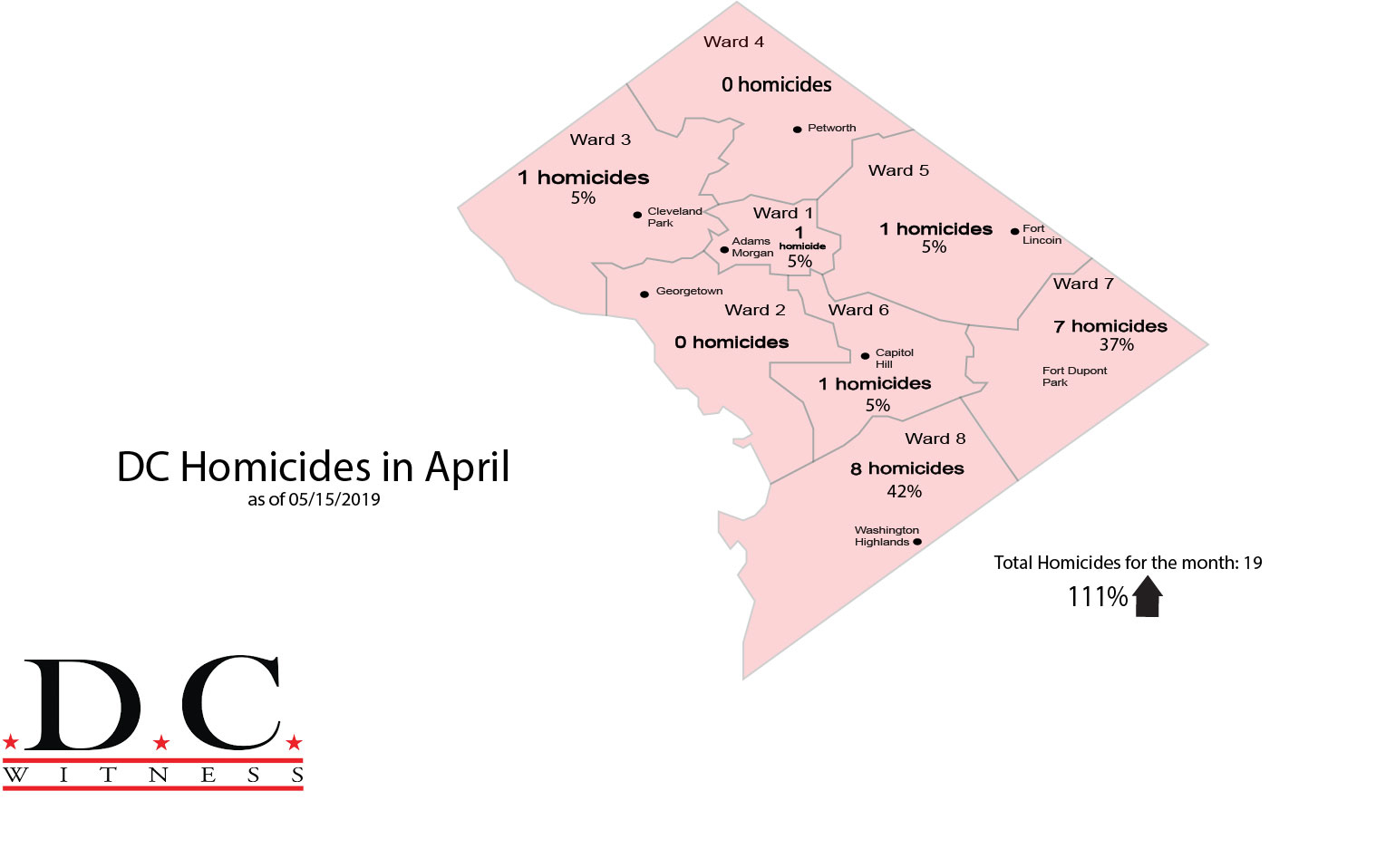
Homicides in Washington, DC increased by more than 100 percent in the month of April.
According to D.C. Witness data, there were 19 homicides in April. April’s total was ten more than the nine homicides that occurred in March and nine more than the 10 homicides that occurred at the same time last year.
Data shows there were 10 shootings, five stabbings, one death that resulted from blunt force trauma and two traffic homicides. Of the 10 shootings that occurred in April, six happened in Ward 7.
The Metropolitan Police Department has arrested suspects in seven of the 19 homicides.
*This article has been updated to show an additional arrest that occurred on May 15.
A murder defendant pleaded guilty May 14 to his role in a 22-year-old man’s death.
Carlos Turner pleaded guilty to second-degree murder while armed and conspiracy to commit a crime of violence for his role in the shooting of 22-year-old Michael Taylor on the 1700 block of Benning Road, NE on Jan. 12.
Per the terms of the plea agreement, the prosecutor agreed to downgrade Turner’s first-degree murder while armed charged to second-degree murder and also add the conspiracy charge.
As stated in the 2018 voluntary sentencing guidelines Turner, 21, could face a maximum sentence of 40 years in prison for second-degree murder while armed and a maximum of 15 years for the conspiracy charge.
Alonzo Brown and Stephon Evans are also charged in connection to Taylor’s death. Brown and Evans are scheduled for a felony status conference on July 2.
According to court documents, surveillance footage shows four armed men walking near an apartment complex on Benning Road. The men then stood in a line, shooting towards the top of a staircase.
A witness identified Brown, 22, who he knew as “Spark Plug Shawty,” as one of the shooters. Police officers identified Evans and Turner from surveillance footage.
During the investigation, police learned Brown and Evans, 18, were linked to the “Big Walk Down Gang” and so was their friend, Shamar Marbury, documents state. Marbury, 19, was killed on Jan. 1 and his family members told police they believed there would be “retaliation” for his death.
During a status hearing May 14, the defense and prosecution in a murder case said they were in the midst of discussing potential plea agreements.
Co-defendants Titus Iracks and Dearren Dawkins, 22, are charged with first-degree murder while armed and conspiracy while armed, among other charges, for allegedly shooting Larry Harrell on the 1200 block of Mount Olivet Road, NE on June 13, 2018. Iracks, 17, is being charged as an adult.
The potential terms were not disclosed.
During the hearing, Dawkins’ attorney, Ronald Resetarits, also told DC Superior Court Judge Danya Daysonthat he received evidence from the prosecution. He said he may file a protective order, but he did not disclose the details of the order.
According to court documents, Dawkins, who was with Iracks, said Harrell pulled out a gun and opened fire first. Fearing for his safety, Dawkins said he pulled out his own gun and returned fire. At the time of the alleged murder, Iracks was wearing a GPS tracking device which placed him near the crime scene.
Iracks and Dawkins are scheduled for a status hearing on July 19.
A DC Superior Court judge denied defense counsel’s request to release a defendant who previously worked for the Metropolitan Police Department.
Ronnika Jennings is charged with conspiracy to commit first-degree murder and obstruction of justice for her alleged involvement in the shooting of Andrew McPhatter on the 3500 block of Wheeler Road, SE in 2017. Jennings’ co-defendants include Duan Hill and Marshay Hazelwood, who are charged with conspiracy and obstruction of justice, and Derek Turner, who is charged with first-degree murder while armed.
During the status hearing May 13, Judge Craig Iscoe ruled on defense counsel’s bond review motion, saying Jennings’ knowledge of the legal system and willingness to interfere with law enforcement left no safe conditions for release. The motion was brought up during a status hearing on April 30.
The judge’s ruling coincided with the prosecution’s theory, stating that Jennings is a danger to the community because of her knowledge with Metropolitan Police Department procedures and her ability to gain access to legal information to aid violent criminals.
Even though the defense says that Jennings wasn’t a danger because she is no longer employed at MPD and has not had any contact with any member of the Wahler Place crew, the judge said the defense’s argument was not a rebuttal to the fact that Jennings could still pose a danger to the community.
The Washington Post reported that Jennings’ defense attorney, Dorsey Jones, said Jennings was only doing her job when she accessed police files. He bought the notion up again during the status hearing on May 13.
According to court documents, Jennings allegedly contacted Turner, who was a member of the Wahler Place neighborhood crew. He is charged with allegedly shooting McPhatter, who was a member of the Trenton Park neighborhood. Apparently, the two neighborhoods were revivals.
Documents also state that Jennings accessed police files 35 times and talked with Wahler Place associates 85 times.
Jennings, Hill, Turner and Hazelwood are scheduled for a status hearing on July 12. They are slated to begin trial on March 23, 2020.
During a preliminary hearing May 13, a DC Superior Court judge found substantial probability that a 29-year-old man intentionally killed a man nearly twice his age.
Terrance Barnes is charged with premeditated first-degree murder while armed for his alleged role in the death of 57-year-old Barry Holmes on the 5100 block of Southern Avenue, SE on April 17.
Judge Craig Iscoe said he made his decision based on the evidence outlined in court documents. Judge Iscoe said Barnes intentionally followed Holmes and pulled out a gun. He said Barnes made no attempt to retreat at any point.
According to the lead detective, Holmes was working with a paving crew on Southern Avenue. The detective said a witness told police Barnes and Holmes got into an argument and that Holmes walked away. Another witness said Barnes later followed Holmes, there was a struggle and that a gun went off.
Court documents state that, during a police interview, Barnes admitted that he and Holmes got into an argument. According to the defense, the argument stemmed from Holmes insulting Barnes’ religion. Apparently, Barnes said he walked away to “cool off” but that he later returned and continued arguing with Holmes.
Barnes told police that he had a gun and that he pulled it out because Holmes swung a street sign at him. Barnes said they struggled with the gun and that Holmes pulled the trigger, shooting himself in the process.
Defense attorney, Jeffrey Stein, refuted the judge’s ruling, arguing that Barnes had no intention of shooting Holmes and that his client only pulled out a gun to “display force.” Stein said there was one shot and that it was fired at Holme’s chest and not his back, which is consistent with a struggle.
Judge Iscoe noted Barnes’ lack of a criminal history. He referenced letters written in support of Barnes release, including a letter from his step-son who credits his 3.5 high school GPA to Barnes’ active role in his life. However, Judge Iscoe said he has a “great deal of concern” regarding the danger Barnes presents to the community.
Judge Iscoe ordered Barnes held without bail and noted that Barnes confessed to police following the shooting that he fled, threw the murder weapon in a river and burned his clothes. Judge Iscoe said Barnes’ actions indicate impulsiveness and an inability to follow the law.
The judge also noted two unrelated 2017 civil protective orders. While the cases were ultimately dismissed, Judge Iscoe said the orders were based on threatening and impulsive behavior. Apparently, Holmes choked and punched his girlfriend and threatened to “blow her away.” Judge Iscoe said Holmes also threatened to beat up the girlfriend and her parents.
Barnes is scheduled for a felony status hearing on July 19.
A DC Superior Court judge cited a new directive from the Court of Appeals May 13 to find probable cause a murder defendant shot a man in October of 2018
Judge Edelman’s ruling was based on a new directive from the Court of Appeals that says that probable cause can be found if the defendant could be convicted, in trial, of an offense eligible for detention.
During the preliminary hearing, Judge Todd Edelman said probable cause with substantial probability was based on the fact that the only evidence of self defense comes from the defendant. He ordered Marable should continue to be held at DC Jail without bail.
According to court documents, the defendant told police that the woman he was romantically involved with, who was walking with him from the gas station, said, “he pointing at you, he pointing at you.” The defendant said he started shooting when he heard those words.
A detective with the Metropolitan Police Department said the victim was associated with two individuals who were shot at four days before the homicide. Apparently, the shooting was a block away from the crime scene. The detective said the individuals previously assaulted Marable.
The detective also said casings from both crime scenes were identified as a match through a national firearms database. Although the match was never confirmed, the detective said the match is very likely.
According to the police, there was no ballistics evidence that indicates a gun was fired from the lot of the gas station where the victim was sitting in the passenger seat of a car. The detective also said there was no visible evidence of projectiles on the buildings that surrounded the alley Marable and his ex-girlfriend was walking toward.
Casings on the scene were all shot from the same weapon, court documents state.
The defense said the shooting was in self defense because Marable had reason to believe his life was in danger, noting that the victim was staring at the defendant, crouching in an offensive position and associated with people who previously assaulted Marable. The defense also told the judge that the defendant’s ex-girlfriend jumped under a car because she believed a shootout was about to occur.
However, the prosecution said Marable had “no reasonable belief to use deadly force. No reason to turn around and shoot. No reasonable belief [his] life was in danger.”
Marable is still pending a grand jury hearing. He is scheduled for a felony status conference on July 19.
A murder defendant’s newly appointed defense attorney told a judge May 13 that she received evidence from her client’s previous attorney. The attorney requested a later trial date.
Mark Bowser is charged with first-degree murder while armed and obstruction of justice, among other charges, for allegedly stabbing 39-year-old Tracy Womack on the 4600 block of Benning Road, SE in 2014.
As a result of the counsel change, Bowser, 39, is now slated to go to trial on April 20, 2020. Bowser was originally scheduled to begin his trial on May 13.
During the status hearing, Ballester also rejected a potential plea agreement from the prosecution. According to Ballester, the prosecutor said she would possibly extend a plea offer that would include second-degree murder while armed.
Court documents state that Bowser allegedly entered Womack’s apartment as she was sleeping and attacked her. Police found Womack with her pants pulled down, suffering from more than 40 stab wounds.
Bowser is scheduled for a trial readiness hearing on April 3, 2020.
On May 13, per defense counsel’s request, a DC Superior Court judged pushed a murder trial back by nearly four months.
Denzel Grandson is charged with first-degree murder for allegedly shooting 36-year-old Simwone Milstead on the 2700 block of Langston Place, SE in 2014. Grandson is also charged with possession of a firearm during a crime of violence and unlawful possession of a firearm during a crime of violence.
The new trial date is scheduled on Sept. 30. It was initially scheduled to begin on May 28.
Andrea Antonelli and Charles Murdter, Grandson’s defense counsel, requested that Judge Juliet McKenna push back the trial date because more time was needed to review additional evidence. Defense counsel also said they were still looking for an expert with knowledge on cartridge case markings.
Defense counsel also requested that Grandson, 26, be released to the high intensity supervision program (HISP). However, the prosecution objected to the defendant’s release because of his prior firearms convictions in Washington, DC and Maryland.
Grandson has been held without bail at DC Jail since May of 2018. According to court documents, he was transferred from Maryland while serving a sentence for an unrelated conviction.
Judge McKenna denied the defense’s request for Grandson’s release because of his criminal history and prior convictions, including his convictions in DC for carrying a pistol outside a home or business, unlawful possession of a firearm with a previous conviction and armed robbery.
Grandson is scheduled for a trial readiness hearing on Sept. 13.
During a hearing on May 7, a DC Superior Court judge modified a murder defendant’s conditions of release due to employment issues.
Victor Carvajal is charged with first-degree murder while armed for his alleged role in the shooting death of 21-year-old Michael Francis Taylor on the 600 block of Farragut Street, NW in 2008. Mason Binion, 32, and Joshua Massaquoi, 31, are also charged with first-degree murder while armed in connection to Taylor’s death.
Carvajal, 32, was released under the high intensity supervision program (HISP), which required him to wear a GPS monitor.
DC Superior Court Judge Todd Edelman agreed to release Carvajal on HISP and remove the GPS monitor requirement after the defense said the GPS was causing issues with Carvajal’s employment. Judge Edelman said Carvajal hasn’t had any “infractions” to prohibit the modification.
As part of his modified conditions, Carvajal is now required to report to Pretrial Services weekly by phone.
According to court documents, witnesses told police Taylor was involved in a “botched” drug deal with a group that included Binion, Carvajal and Massaquoi. Apparently, the group paid for marijuana but never received it. A witness told police that Taylor got into a vehicle with a group of people, including Binion, shortly before his murder.
Binion and Carvajal are scheduled for a status hearing on July 12 and trial on Jan. 21, 2020. Massaquoi has not been scheduled for trial as of May 10. He is scheduled for a status hearing on July 12 before Judge Hiram Puig-Lugo.
During closing arguments in a murder trial, the prosecution said a defendant ‘orchestrated’ the murder of her 38-year-old boyfriend.
Carmelita Henderson is charged with first-degree murder while armed for her alleged role in the death of Levi Kinte Davison the 4200 block of East Capitol Street, NE in 2015. According to court documents, Davis and Henderson, 52, were in an intimate relationship prior to Davis’ murder.
“She set him up. He died in her car, outside her apartment in her parking lot,” the prosecutor said. “She made sure she was there to watch it go down.”
The prosecution said multiple witnesses testified about Henderson’s demeanor, saying she was “calm” after the shooting, refused to go back to the car and did not ask about Davis.
“She had no emotions. She didn’t cry. She didn’t scream. That’s not consistent with someone who just lost her boyfriend,” the prosecution said. “Her first words after the murder were ‘it’s all good.’ She seemed more upset about her car than the man inside.”
According to the prosecution’s theory, Henderson hired two men to kill Davis because they had a “bad, hurtful relationship.” The prosecution said Davis got Henderson fired from her job in the DC Jail mailroom after he exposed their relationship to jail personnel.
“He had cost her not only her job, but a government job that came with a retirement plan,” the prosecution told the jury.
A witness testified that he was previously in a sexual relationship with Henderson and said she confided in him. The witness said Henderson told him about planning Davis’ murder.
Henderson’s defense attorney, Michael Madden, said his client was not involved in Davis’ death and said he could explain his client’s behavior after the shooting.
“She was in a daze,” Madden said. “It was apparent to everyone who testified in this case that when they looked in the car, [Davis] was not breathing.”
Madden said Henderson was also scared of blood, which explains why she didn’t go back to the car to check on him.
Madden also said Henderson had no motive to kill Davis because he was her “ticket” to getting her job back. Apparently, Davis wrote a letter to the jail denying his relationship with Henderson.
“[That witness] is the entire case. They have absolutely no case without him,” Madden said, referring to the witness who alleges Henderson confessed.





 The report also states that staff believed there was a lack of communication from superiors concerning where Title 16 youth were going to be placed and whether they would be able to “intermingle” with the general population at New Beginnings.